When it comes to books, there’s a big range of different genres out there. But when the topic is sci-fi, very few manage to reach such a high level of quality. And even fewer are the ones that don’t just create far-off, galaxy-spanning or dystopian universes, but actually redefine what the genre can be when it deals with politics, religion, survival, and other themes on an interplanetary scale, for example. No coincidence, the one we’re talking about ended up being expanded into even more books, becoming one of the biggest sagas ever written. Very few people have actually read them, and that’s because this story is often considered highly complex for most readers to stay engaged with. But it’s that complexity that makes it a masterpiece.
Videos by ComicBook.com
This book series originally emerged in the ’60s from an author deeply interested in ecology, religion, and politics, and it became a central reference point in pop culture and modern sci-fi with global influence. You probably already have an idea of what it might be, since it has only gained more traction in the last few years — especially with its first book, which, interestingly enough, is still difficult for the rest of the series to surpass.
The Dune Saga Is a Sci-Fi Landmark, but the Original Still Wins
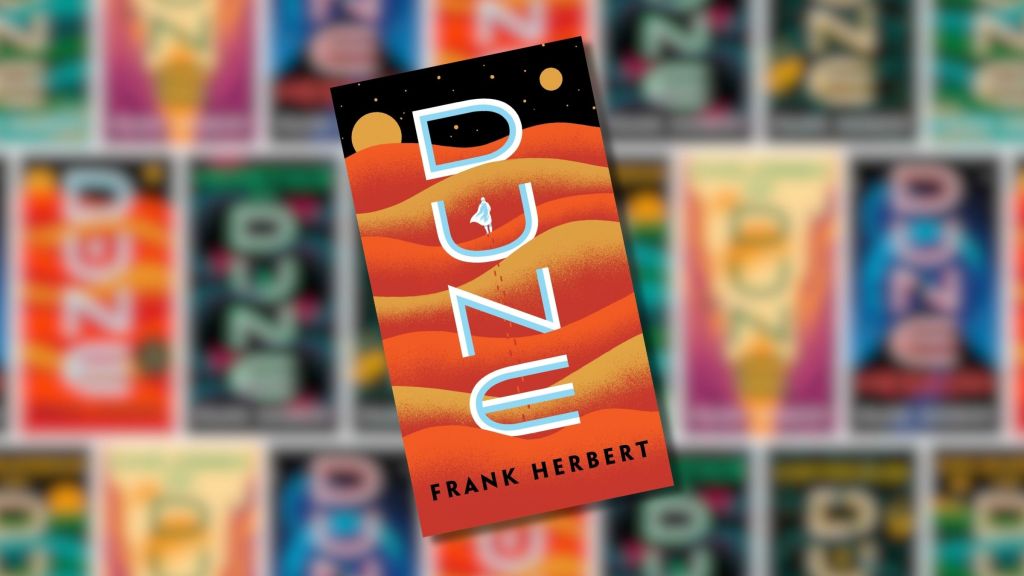
When Frank Herbert published Dune in 1965, he wasn’t just trying to write another space adventure novel. He was building an entire system of ideas about how civilizations function, how religions can be completely manipulated, and how natural resources define who actually holds power. And that already shows up in the basic premise of the book: the planet Arrakis, a nearly absolute desert, is the only known place in the universe where the spice melange exists (a substance essential for space navigation and for the political survival of the empire). So controlling Arrakis basically means controlling everything. And that’s exactly the playing field the Atreides family is thrown into, kicking off a chain of events that turns Paul Atreides into a messianic figure with huge consequences.
However, the problem starts when the universe expands beyond the original book. Written by the author himself, there were 5 more books that followed. And after his death, the universe continued to be expanded by his son Brian Herbert and Kevin J. Anderson. From there, it became 17 additional books — prequels and sequels that try to fill in gaps and explore both earlier and later events in the main storyline.
In theory, this should enrich the material, right? But in practice, what often happens is a dilution of the core themes. The mystery and ambiguity that make the original so powerful end up being replaced by more direct, more literal explanations that are often far less interesting (no wonder that a large part of the fanbase isn’t exactly on board with the additional books). When you over-explain a universe that originally worked the way it did, you lose part of its narrative strength. Of course, this was never a major problem, especially since the original author himself continued the story. Still, getting anywhere near the level of the first Dune is basically impossible. And this isn’t about nostalgia or personal preference, but a question of narrative structure.
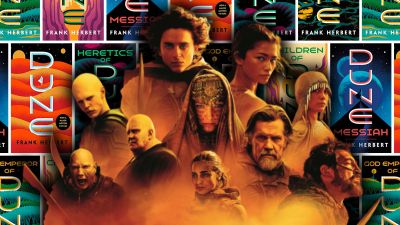
The first book stands out because it doesn’t try to please the reader all the time. Instead, it challenges you, demands full attention, and never gives you answers about who is right or wrong (let alone about the characters’ fate). Everything is built around ambiguity, especially when it comes to Paul: he’s not presented as a traditional hero who grows, learns, and saves the day. From the very beginning, there’s something different about how he fits into this world; after all, he’s the product of genetic manipulation, prophecies, and political interests that existed long before he was even born. And the bold move here is that the book doesn’t try to resolve that for you. Instead, it drops you into this universe and forces you to sit with the idea that “the chosen one” and a political instrument can be the same thing.
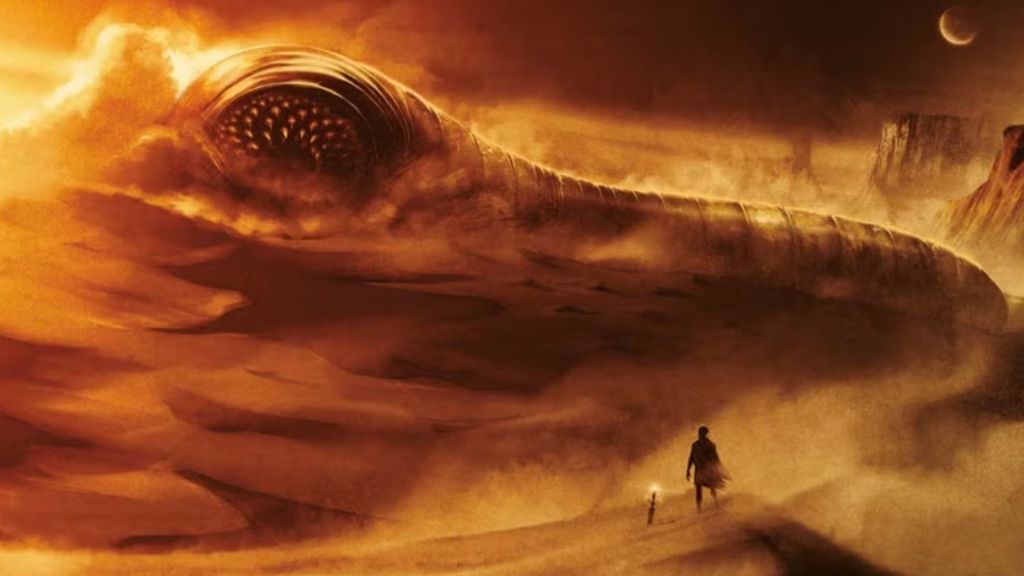
Nothing is fully clear or neatly wrapped up, and that’s exactly what makes the reading experience so demanding. You’re not just following a hero’s journey, because you’re always being pushed to question what you’re seeing and to rethink your interpretations as the story unfolds. But the sequels start to show just how difficult it was to maintain that level of narrative precision: the follow-up books written by Frank Herbert himself still carry that intellectual weight and broaden the universe in ways that, in many cases, the 17 expanded works simply can’t match. But at the same time, they also become more abstract and less accessible. And it’s not that this is necessarily worse — it’s just a shift in purpose.
The first Dune is a perfect example of world-building built through storytelling. The later books, in large part, become works of deconstruction and philosophical expansion of that same system. And when you move from building something to breaking it down and analyzing it, you lose some of that immediate impact. Overall, the original book is dense, but emotionally readable at the same time. It’s the point where everything is in perfect balance, with idea, story, and form working together without any one of them overpowering the others. After that, the author starts to tilt the scale more toward ideas, so the experience inevitably shifts.
The Dune Saga Has Even Been Hard to Adapt for Film and TV
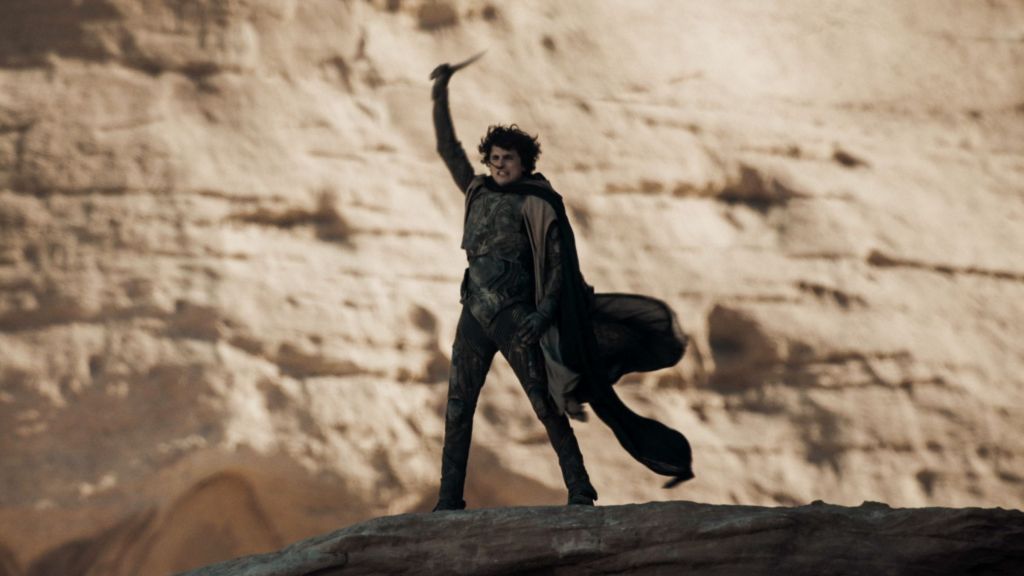
And when it comes to adaptations, all of this becomes even easier to understand. Dune is notoriously difficult to adapt because it relies heavily on internal thought and layers of information that don’t easily translate into action.
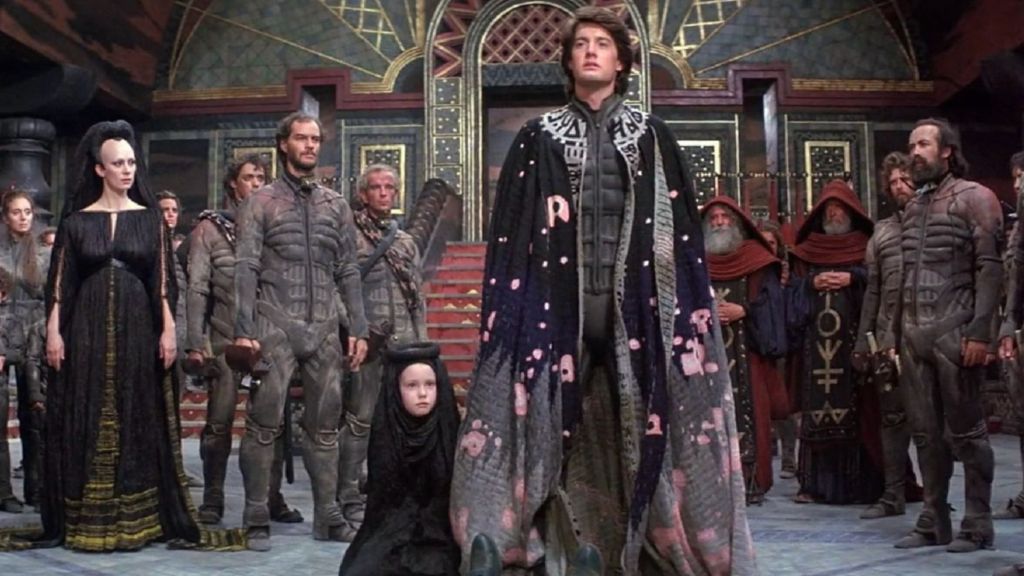
David Lynch’s 1984 version tried to compress everything into a single film and ended up being seen as confusing and uneven. Frank Herbert’s Children of Dune miniseries had more room to work with, especially since it adapted parts of the second and third books, but still couldn’t fully capture the density of the source material. The more recent version by Denis Villeneuve gets closer to the ideal balance. However, even though it’s brilliant, it still had to restructure certain elements here and there due to the structural challenge of translating a book that works so much on subtext without losing cinematic pacing.
What makes the Dune saga, especially the first book, so important and so hard to replicate is the level of control Herbert had over every layer of the story. This isn’t just a book about war or destiny — it’s a book about systems. Everything works like an interconnected mechanism, and that’s exactly what ended up influencing pretty much all modern sci-fi that came after it, such as Star Wars in its broader political scope. The difference is that many of those works only took pieces of the formula, while Dune functions like a complete organism. In other words, you can’t just copy one element and expect the same result.
At the end of the day, it all comes down to vision, not just writing quality. The first Dune isn’t just about plot or characters, but about how everything connects into a coherent system of ideas. The sequels can expand this universe, can even add context, but they always hit a limit: the fact that the original already said everything it needed to say in a highly efficient way. And when a book sets that kind of standard, any attempt to surpass it within the same universe ends up feeling like a variation, not an evolution.
What do you think? Leave a comment below and join the conversation now in the ComicBook Forum!
More Movies
-
Image Courtesy of Marvel -

Image Courtesy of Cinedigm -

IMAGE COURTESY OF WARNER BROS.