The Toy Story franchise has just gotten even bigger with Toy Story 5, which, in addition to providing some significant character updates, has introduced a brand-new threat to Andy’s/Bonnie’s toys: Technology. This new story centers not only on the introduction of Lilypad, a new tablet that threatens the toys’ place in Bonnie’s life, but also on the impact of tech more broadly on all children. One of the central themes in Toy Story has always been what it means for children to grow up, change interests, and ultimately replace or give up their toys.
Videos by ComicBook.com
By adding technology to the mix, Toy Story 5 has only made this concept all the more intimidating, especially because gadgets like tablets and plain old access to the internet are pushing kids to grow up faster and faster, thus abandoning their toys earlier and earlier. This was a compelling new obstacle for the toys to face, and it certainly felt topical. However, by focusing on technology as a new threat, Toy Story 5 has also made the overarching timeline of Toy Story movies make no sense.
Toy Story Was Canonically Set in 1995

The movie that started it all, Toy Story, was released in 1995, but the story is also canonically set in that same year. There have been several details that have proven this timeline for the first movie. In Toy Story, those hints include blink-and-you-miss-it dates on the tags for Andy’s mom’s car, which show both the month of November and the year 1995. This means that, at the very least, the movie is set between November of 1994 and 1995.
However, when the movie concludes on Christmas, it’s clear that a fair bit of time has passed, suggesting that the entire movie is indeed set in 1995. The spinoff movie Lightyear ultimately put this argument to rest, confirming that Andy received his Buzz Lightyear toy in 1995 with the opening text, “In 1995, a boy named Andy got a Buzz Lightyear toy for his birthday.”
Andy is about six years old in Toy Story, and Toy Story 3 takes place just before he goes to college, meaning he is around 18 years old. It’s therefore safe to assume that Toy Story 3 is set right around 2007. With Bonnie attending Sunnyside Daycare in that movie and then heading to kindergarten in Toy Story 4, the latest Toy Story 4 could be set is about 2009. These dates also make sense based on the toys, technology, and other details shown in those movies—that’s what makes Toy Story 5 such a problem for the timeline, though.
Toy Story 5 Is Clearly Set in the Modern Day

The exact year in which Toy Story 5 is set isn’t confirmed. According to the timeline, however, it shouldn’t be much later than about 2013. Bonnie is estimated to be around eight or nine years old in this latest installment. Assuming she was 5 years old in 2008 or 2009, 2013 is actually the very latest the movie should be set. Yet, the movie certainly doesn’t feel like it’s set in 2013, for myriad reasons. If anything, it feels like Toy Story 5 jumps to around 2026.
Yes, tablets already existed by 2013, but Toy Story 5 goes far beyond just introducing Lilypad to the mix. The new Buzz Lightyear toys are connected by Wi-Fi, kids are messaging one another and playing modern games online together, and—most notably—everyone is absolutely addicted to screens. Again, this technology existed in 2013, but the extent of the kids’ obsession with screens and the pervasiveness of technology in all facets of the story suggest that the movie is set much closer to the modern day than to the early 2010s.
In fact, the toys that new character Blaze, who is also around Bonnie’s age, has abandoned feel much more in keeping with the early to mid-2010s than the narrative does. Toy Story 5 therefore marks a drastic change in the Toy Story franchise’s larger timeline, one that has potentially meant a jump a full decade (and perhaps a little more) into the future. While that may seem inconsequential, it actually has some interesting and potentially troubling implications for the franchise’s future.
This Decision Makes Sense, But It’s Still Frustrating
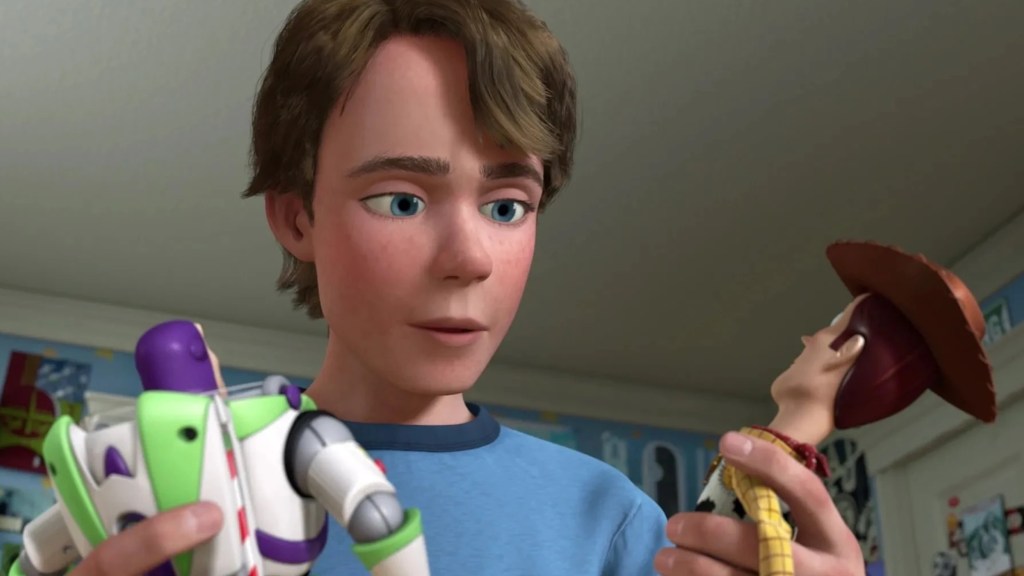
In fairness to Toy Story 5, the rationale for leaping forward in time is understandable. Setting the movie in the mid-2010s likely wouldn’t appeal to larger audiences (especially kids) or feel nearly as relevant as this storyline does. Yes, it messed with the timeline, but it undoubtedly did so in an effort to make the Toy Story franchise feel like it still has its finger on the pulse. In that sense, the ends arguably justify the means when it comes to this change. However, the impact on the timeline is still a frustrating one.
For one, among the best things about Toy Story more broadly was that it truly allowed its audience to grow up with the movies. With Toy Story 3 hitting theaters in 2010, for example, kids who had been around Andy’s age when Toy Story came out were actually facing the realities of early adulthood and leaving their childhoods behind around the time that this movie was released. More important than that, though, is what this change may mean for Toy Story moving forward.
Already, conversations about Toy Story 6 are happening, including the idea that another sequel would round out and conclude Bonnie’s story, just as Toy Story 3 had done with Andy. If that’s the case, then presumably, Toy Story 6 would be set about 10 years after Toy Story 5, around the time that Bonnie would also be approaching adulthood and/or going to college. However, with the changes to the timeline, this would actually require a jump to the future (assuming Toy Story 6 doesn’t take 10 years to come out, which seems unlikely for multiple reasons).
Yet, a setting in the future is something that Toy Story hasn’t done before, and it would frankly just feel weird. In that sense, while the change to the Toy Story timeline in Toy Story 5 may seem like no big deal, it actually could mean trouble ahead for this beloved franchise.
What do you think? Leave a comment below and join the conversation now in the ComicBook Forum!
More Movies
-

Image Courtesy of DC Comics -

Image Courtesy of Marvel -

IMAGE COURTESY OF UNIVERSAL -
Courtesy of 20th Century Studios