While widely beloved for giving us one of the best Trek villains of all time, Star Trek II: The Wrath of Khan is also remembered for the death of Spock. Released in 1982, the movie emerged at a crossroads for the franchise. The Motion Picture was proof the series could succeed on the big screen, but it also warned how easily Trek could become bloated and expensive. The Wrath of Khan was a corrective measure towards a new Trek that was leaner and more emotionally driven, putting Spock’s mortality and sacrifice at its heart.
Videos by ComicBook.com
Yet fans have always wondered about the way Wrath of Khan handles Spock’s “death.” The film not only builds to a devastating farewell, but also opens with one. Before the detonation of the Genesis Device or Spock stepping into a radiation-flooded engine room, the movie gives us the scene in which Spock appears to die at the hands of the Klingons. For years, viewers have assumed this to be a clever misdirect or even foreshadowing. But in reality, it was the result of a behind-the-scenes negotiation, a last-minute rewrite, and a single demand from Leonard Nimoy.
How Leonard Nimoy and One Leaked Plot Point Changed Star Trek Canon Forever
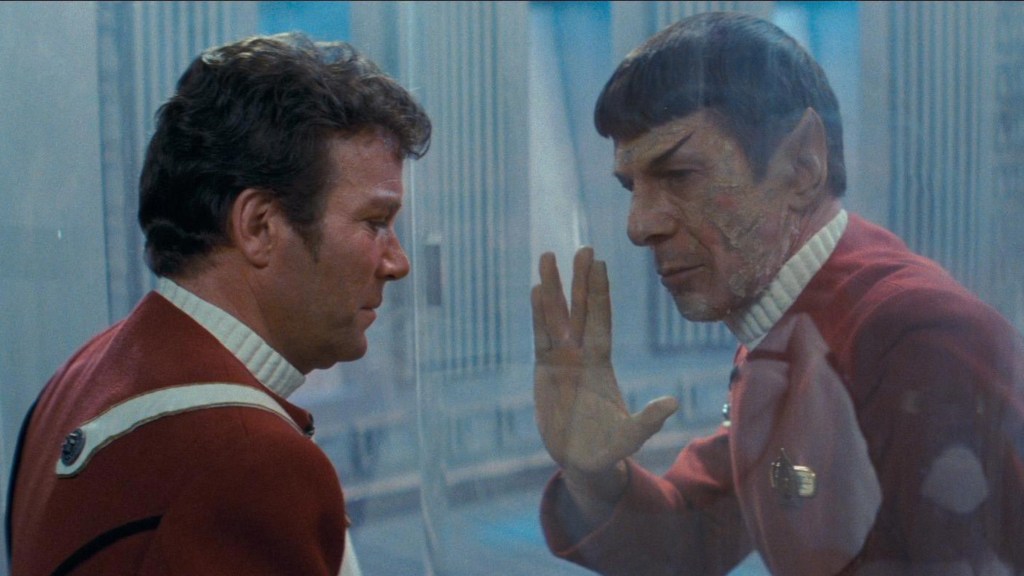
It’s odd that before we ever even reach Spock’s resurrection in Star Trek 3, we are essentially teased twice with the “death” of the fan favorite. However, the reason The Wrath of Khan “kills” Spock twice comes down to the simple fact that Leonard Nimoy only agreed to return to the role if Spock died. By the early 1980s, Nimoy had a complicated relationship with Star Trek. He loved Spock, but was deeply frustrated at being typecast and by how thoroughly the character had eclipsed his other work. After more than a decade of playing the Vulcan (across multiple seasons of TV, an animated series, and one feature film), Nimoy felt he had taken the character as far as he could. When Paramount began developing Star Trek 2, he made it clear that he would participate only if the story gave Spock a definitive ending.

Originally, his final ending was meant to come almost immediately. Early drafts of the script reportedly had Spock dying at the beginning of the film, establishing the serious stakes and signaling to the audience that Trek wasn’t messing around. However, when word of this idea leaked and rumors spread like wildfire through the fanbase, the writers decided to find a way to subvert audience expectations anyway. Thus, the Kobayashi Maru was introduced.
Rather than ignore the leak, director Nicholas Meyer and the writers leaned into it. By “killing” Spock in the opening minutes (in a simulated rescue mission), they satisfied audience expectations right away, then immediately pulled the rug out by revealing it was all a test. In hindsight, it’s incredible to think that the writers’ decision to weaponize the rumors gave us such an iconic sequence. A real death was always going to come due to Nimoy’s request, but the fake-out was added to The Wrath of Khan as a clever twist from the minds behind the show.
Why Leonard Nimoy Came Back for Star Trek III: The Search for Spock

Despite Nimoy’s conviction and the emotional devastation in The Wrath of Khan, the actor ultimately returned for Star Trek III: The Search for Spock. While some fans assumed Nimoy was simply getting cold feet about retirement, the comeback reportedly has more to do with his evolving relationship with the character and the newfound creative control he has secured.
After shooting The Wrath of Khan, Nimoy supposedly found he’d enjoyed the experience more than he had anticipated. Paramount Pictures already had a third film in the works almost immediately after Khan’s enormous success, and despite the actor’s former resolve, the studio execs approached Nimoy about participating again. Rather than simply reprise Spock, however, he seized the opportunity to direct the next installment. When asked if he wanted to return, he famously responded, “You’re damned right, I want to direct that picture!” before making it an explicit condition of his participation.
Nimoy had reportedly wanted to direct for years. Both he and William Shatner had sought directorial opportunities back in the original Star Trek series, but were never given the chance. By Star Trek 3, he had some leverage, and directing offered him a way to shape Star Trek and his character’s narrative from behind the camera. Paramount’s then-studio chief, Michael Eisner, was initially hesitant, in part due to a myth that Nimoy “hated” Star Trek and only participated in Wrath of Khan because of the death scene. Nimoy had to persuade Eisner otherwise before he was entrusted with the director’s hat. Once attached, Nimoy worked closely with producer Harve Bennett on the script, helping to define how Spock’s katra could be preserved and reunited with his body. A fan-favorite retcon if there ever was one.
By the time The Search for Spock was complete, Nimoy had proven himself as a director, and his work was strong enough that Paramount asked him to direct Star Trek IV: The Voyage Home as well. It turns out Spock’s fake-out death, real death, and eventual resurrection were not only key events in Nimoy’s legacy as Spock, but also as one of the major architects of Star Trek’s transition from TV into movies into one of sci-fi’s most enduring franchises.
Is Spock’s death in The Wrath of Khan the most iconic moment in Star Trek history? Leave a comment below and join the conversation now in the ComicBook Forum!
Most Viewed
-

Image Courtesy of Studio Bones -
Image Courtesy of Image Comics -

Image Courtesy of Sunrise/Enishiya -
Image Courtesy of Science SARU