
If there’s one genre that can go in a million different directions, explore every idea to its fullest, teach the audience something, or just entertain people who love a story that isn’t so straightforward, it’s sci-fi. And in many cases, those endless possibilities are exactly what makes a movie too complex to understand after just one watch. Some films feel like they weren’t designed to “click” right away, whether it’s because of fractured storytelling, time paradoxes, alternate realities, or even plot twists that leave you stunned, but also loaded with more questions than answers. There’s so much information that you need a new perspective, and suddenly, you realize you just rewatched something brilliant.
Videos by ComicBook.com
Several productions fit that description, including ones we’ve already highlighted before. But here’s a list of 5 more mind-bending sci-fi movies that are absolutely worth watching again. You’ll see how they fooled you the first time, how they planted clues from the very beginning, and how you missed half of what was really happening. And honestly? That feeling is incredibly rewarding.
5) Timecrimes

You may not have heard of Timecrimes, since it’s a Spanish film. Still, it’s absolutely worth checking out because it’s straightforward, tightly crafted, and widely praised by the people who’ve seen it. But even though it’s simple on the surface, it’s also surprisingly complex. How? The story follows Héctor (Karra Elejalde), an ordinary guy living in an isolated house who, after noticing something strange in the woods, ends up getting involved with a time machine. And the movie doesn’t use time travel just for fun, but as punishment. In other words, Héctor starts out trying to figure out what’s going on, but realizes he’s trapped in a cycle where every decision leads to an even bigger disaster.
Timecrimes is built like a domino effect: one move knocks down the next. The complexity doesn’t come from heavy scientific explanations, but from the way the script reveals information piece by piece, forcing you to constantly re-evaluate what you think you understand in real time. And once you decide to rewatch it, you’ll notice Héctor was surrounded by clues from the very beginning — the movie was playing fair the whole time. That’s the beauty of its simplicity and complexity working together. So the second watch is even more satisfying than the first.
4) Dark City
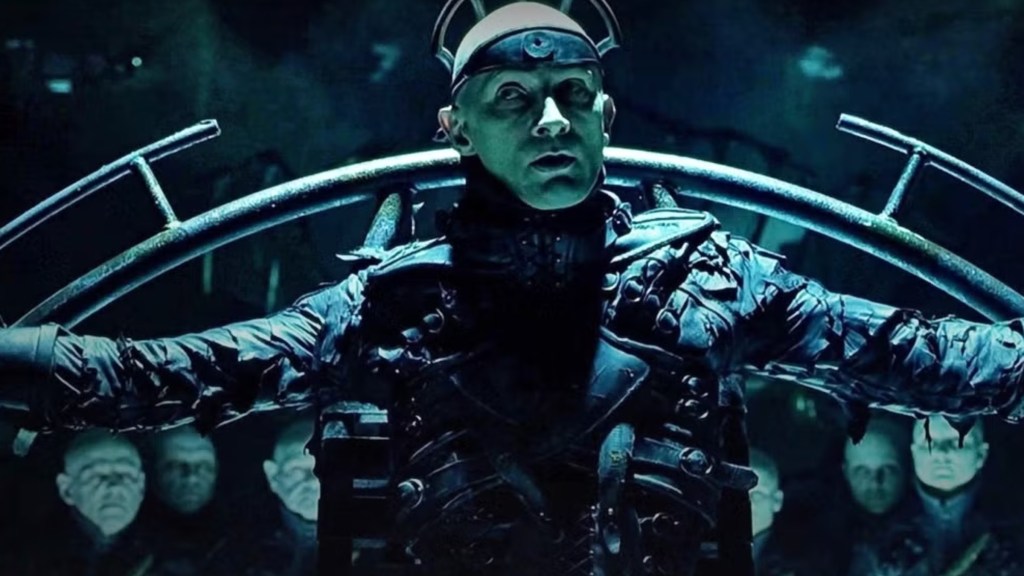
Sci-fi has its classics, and Dark City is definitely one of them, even if it’s not the first title most people bring up. This is basically a movie that feels like a lucid nightmare: you can tell something is wrong from the very beginning, but you can’t quite put your finger on what it is. The main character, John Murdoch (Rufus Sewell), wakes up with no memory in a hotel room and finds out he’s being hunted for murder. As he tries to escape and figure out who he really is, he realizes he’s living in a city where night never ends, and where bizarre figures (known as the Strangers) are literally manipulating everything.
The complexity comes from the fact that the movie doesn’t hand you its world on a silver platter. Instead, it drops you straight into the chaos and forces you to follow the logic as best as you can, almost like you woke up with amnesia too. And once the rules of this world start to become clear, it only gets more interesting and unsettling. Dark City is the kind of movie that becomes better after you know the twist, because that’s when you start noticing how much was right in front of you the whole time (from character behavior to the overall vibe of the city). It’s old-school, paranoid sci-fi, and way smarter than it seems at first glance.

3) Annihilation

Here, it feels like you’re about to watch a pretty standard scientific mission — the kind of setup you’ve seen a hundred times before. However, things start getting uncomfortable fast. Annihilation follows Lena (Natalie Portman), a biologist who enters a strange zone (known as The Shimmer), where a mysterious phenomenon is distorting the environment and killing (or changing) anyone who goes in. She joins a group of scientists, and the goal is to reach the center and figure out what’s happening. The problem is that this place doesn’t just mutate nature, but messes with their minds too. And once that starts, you already know things are going to get complicated in the worst (and best) way, right?
This movie doesn’t want to be a typical mystery. Instead, it operates on an almost biological logic of transformation: nothing inside The Shimmer is exactly what it seems, and the human body and identity are really fragile. Overall, Annihilation is a sci-fi that refuses to explain everything since it wants you to leave with your brain spinning, especially because the ending is basically an open invitation for theories. But on a second watch, you realize the movie had been building toward a very specific idea the entire time.
2) Donnie Darko
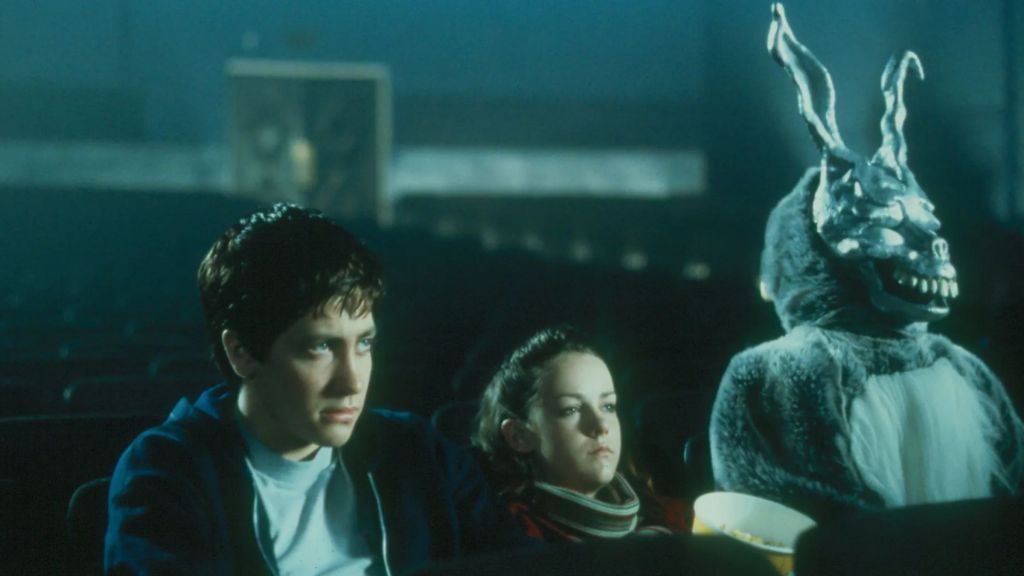
A cult classic, Donnie Darko has that exact vibe: you watch and enjoy it, but then you can’t stop thinking about the insanity you just witnessed. The movie introduces Donnie (Jake Gyllenhaal), a smart, weird, clearly unstable teenager who starts having visions of a creepy rabbit named Frank. And Frank doesn’t show up just to scare him; he tells Donnie the world is going to end in a few days. And from that point on, everything turns into a full-on puzzle full of drama and paranoia. Strange, seemingly random events keep piling up, and you’re constantly trying to connect the dots, even when nothing feels like it makes sense.
So what actually makes Donnie Darko so complex? It always feels like it’s running on two different frequencies at once. On one hand, it’s a story with its own set of rules and time-related logic. On the other, it plays like a psychological portrait of a teenager who might be spiraling into a mental breakdown. And the movie never tells you which interpretation is the “correct” one, because the whole point is to trap you somewhere in between. By the time it ends, you’ll feel like you understood it, but not completely. Then you rewatch it and realize it’s packed with clues and foreshadowing, sometimes hidden in lines of dialogue that seemed totally random the first time.
1) Mr. Nobody

Mr. Nobody basically takes that classic “what if I had chosen differently?” concept and turns it into a nearly three-hour experience that refuses to play by normal storytelling rules. The movie is set in a future where Nemo (Jared Leto) is the last mortal human alive, and a journalist tries to interview him. The catch is that Nemo doesn’t tell his life story in a straight line. Instead, he tells multiple versions of it, as if they all happened. Depending on one decision he makes when he’s young, his entire life changes — different romances, different paths, different outcomes, and even different deaths. And the movie keeps jumping tracks, making it impossible to settle into one timeline for too long.
It’s not just a film that’s hard to follow because of the premise itself, but also because the execution is intentionally overwhelming. It feels like a massive puzzle you’re forced to organize in your head: which version of Nemo are we watching right now? Which wife? which future? which tragedy? And even when you think you’ve figured out the pattern, the movie scrambles everything again. But Mr. Nobody deserves a second watch because it’s always pointing toward something bigger: you notice it isn’t just trying to confuse you, but trying to make you aware of every possible version of yourself that never got to exist.
Have you ever rewatched any of these movies? Leave a comment below and join the conversation now in the ComicBook Forum!
