The X-Men movies were a revolution for the superhero genre, helping to blaze a trail in the entertainment industry during the early 2000s that the Marvel Cinematic Universe would later be able to walk down. However, it’s become increasingly clear in the modern superhero movie era that the X-Men films took some very big departures from the comic source material. As a result, there were a lot of X-Men characters who got their powers and power levels reshuffled by the films; some of them came out looking less impressive onscreen than on the page, while others became way overpowered when adapted for the screen.
Videos by ComicBook.com
We will be looking at every movie that exists within the X-Men franchise, up to and including Deadpool & Wolverine. The key thing here is looking at how much of a power gap exists between the character we know from the comics, compared to the version we got onscreen. Here are 7 examples of X-Men movie characters who got way too overpowered when adapted for the films.
7) Sebastian Shaw
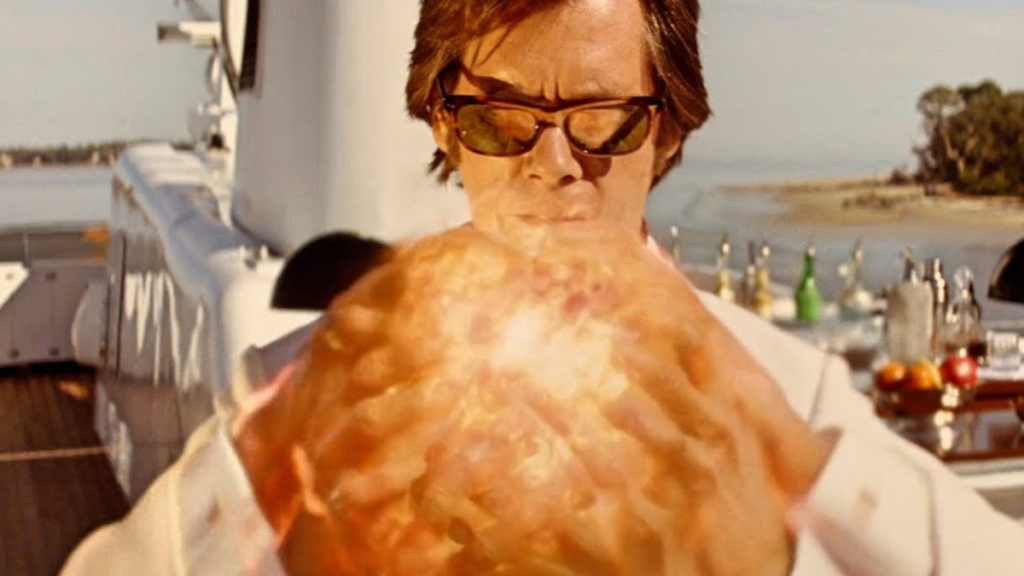
On the comic book page, Sebastian Shaw is an aristocratic mutant from a wealthy elite family who has a simple mutant ability: any kinetic energy he’s struck with (from hand-to-hand hits to explosions, energy blasts, or other projectiles) and converts it into incredible strength, speed, stamina and durability. In short, the harder you hit Sebastian Shaw, the more powerful he becomes. It turned the X-Men’s natural abilities against them, forcing the team to often use their intelligence, cunning, and teamwork to counter Shaw’s abilities.
Everyone loves Kevin Bacon as an actor (to some degree…), and few could’ve nailed the smarmy elitist air of Shaw better. However, Bacon wasn’t really an action movie actor, and so director Matthew Vaughn tweaked Shaw’s powers to make the villain a deadly powerhouse who had to do far less actual brawling. The movie version of Sebastian Shaw took kinetic energy that could be converted into bomb-sized explosive blasts, capable of destroying an entire building with the stomp of his foot, or annihilating a near-invulnerable mutant (Darwin) from the inside out, with a touch. The weird hyper-speed movements when Shaw used his powers never made sense, visually, and the power set was so much bigger and more outrageous than the comic source material that it’s never stopped being a talking point with fans. Ironically enough, X-Men comics have helped balance the scales by adding Shaw’s explosive blasts as a “secondary mutation” ability he’s unlocked.
6) Lady Deathstrike
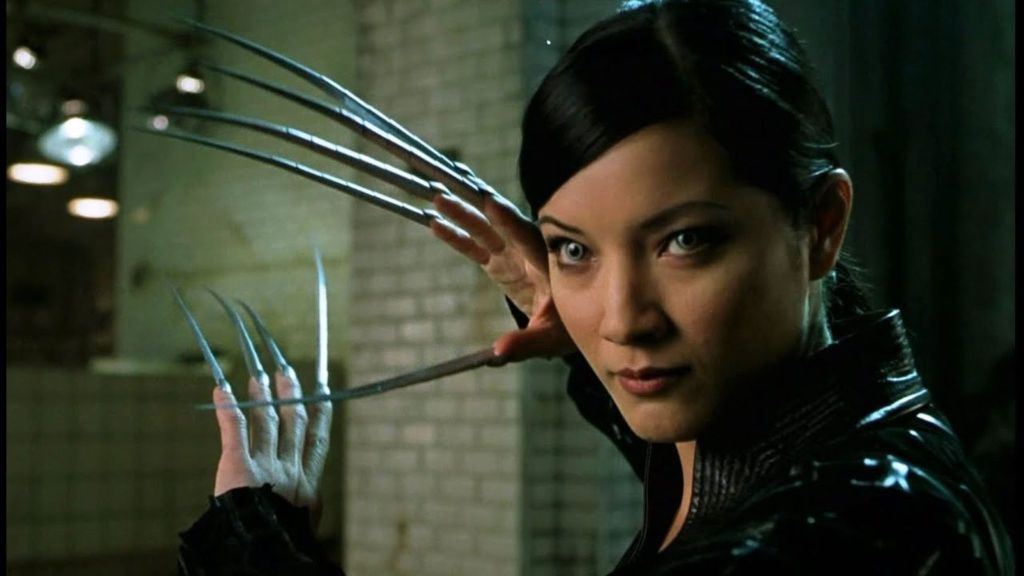
In the comics, Yuriko Oyama is a formidable threat to Wolverine because she is a ruthless cybernetically-enhanced killer, with Adamantium fingernails and a reinforced skeleton that make her as durable and deadly as Logan. However, when Lady Deathstrike got her chance at the big screen in X2: X-Men United, the movie chose instead to make her much more of a direct Wolverine clone: a mutant with a healing factor and blade-like protrusions like Logan’s, reinforced by an Adamantium skeleton. Like so many of the early X-Men movies, the creators didn’t trust in Deathstrike’s comic characterisation enough to make it a direct adaptation: they had to boost her power levels to be a direct match for Wolverine.
Deathstrike and Wolverine’s duel in X2 was much more impressive than Logan’s battle with Sabertooth in X-Men (2000). However, the character flip would start a very divisive trope in X-Men movies of rolling out different Wolverine copcats, whether it was the bastardised version of “Dead Pool” in X-Men Origins: Wolverine, or the actual clone, X-24, that we saw in Logan.
5) Mastermind
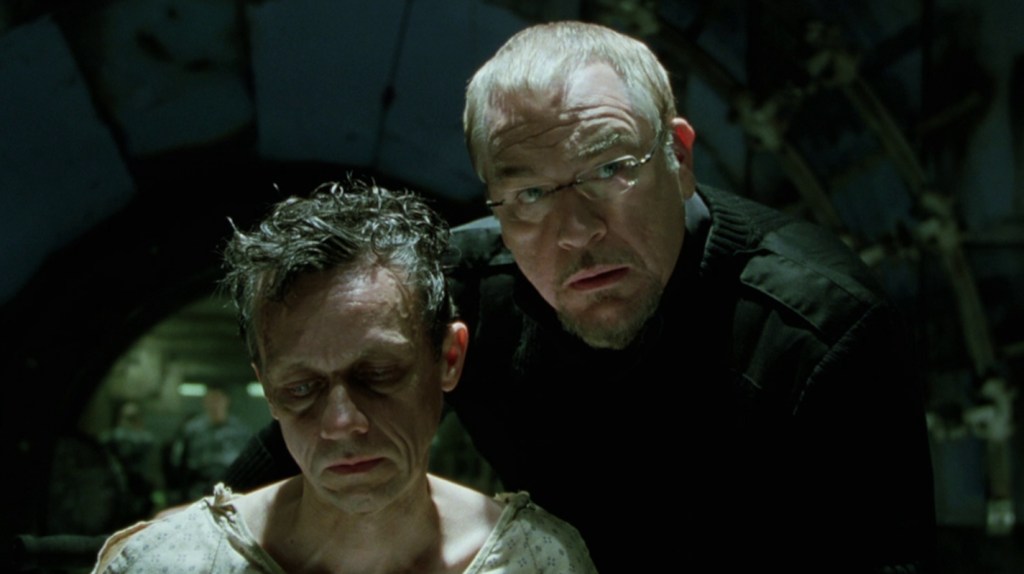
In the comics, Jason Wyngarde has been one of the X-Men’s most troublesome foes because of his mutant ability to literally play mind games with people. Jason is a psychic whose particular expertise is illusions so powerful and convincing that even higher-level psychics like Jean Grey haven’t been able to see through them. The joy of a character like Mastermind is seeing his twisted narcissist sociopath mind expressed through the false realities he creates as psychological playgrounds for his targets. They serve as fun character studies – most notably when Mastermind got into Jean Grey’s head when she was The Phoenix, convincing her to unleash her darker side and become the Black Queen of the Hellfire Club, and ultimately the Dark Phoenix.
X2 stripped Mastermind of his conman appeal and self-engrandising psychosis, turning him into a tool of mass destruction. In his retconned origin, Jason Wyngarde became “Jason Stryker,” son of Col. William Stryker, one of the most infamous anti-mutant figures in X-Men comics. To illustrate the depths of Col. Styker’s inhumanity, he lobotomized his own son and kept him as a living weapon, who could do little else but attack and invade the mind of anyone in the room with him. Jason, using his illusions and persuasions on Charles Xavier, led both mutants and humans to the brink of extinction. That was a massive escalation of any threat Mastermind has ever presented in the comics. All power, no personality.
4) X-23

On the comic book page, Laura Kinney/X-23 is a female Wolverine who first appeared on the scene as a teenager/young adult. She has proven to be every bit as brave and formidable as Wolverine, and has rightly earned her place as a fan-favourite member of the X-Men or other various X-teams.
Logan did the noble work of making X-23 into a much bigger icon than she ever was, and a lot of that was thanks to the one-of-a-kind talent of young actress Dafne Keen. However, the movie’s decision to introduce Laura at an adolescent age and still make her as deadly and formidable as Hugh Jackman’s Wolverine was a clear case of overpowering the character. A kid shouldn’t be able to stand toe-to-toe with two Wolverines and a small army of cyborg mercenaries.
3) Cassandra Nova

Deadpool & Wolverine was a pretty faithful adaptation of X-Men comics and lore – heck, the team-up film finally gave Hugh Jackman’s Wolverine his proper comic book costume after nearly a quarter-century of waiting and hoping for that moment. We also got to see one of the X-Men’s newer foes, Cassandra Nova, get her big-screen debut.
A lot of what Deadpool & Wolverine did with Cassandra was on par with the comics: an omega-level psychic and the “twin” of Charles Xavier, whose telepathic and telekinetic powers are unimaginably strong. The film even nailed finer points of Nova’s power set, like phasing or her gross method of tactile mind-control/alteration. However, in the comics, Cassandra Nova is quite literally an evil psychic entity that steals or creates physical forms to house her essence, most often a diminutive elderly woman who looks like Charles Xavier. Deadpool & Wolverine took the character to cartoonish levels of power, with seemingly limitless durability, power, speed, psionic energy, and the ability to psychically rip a person’s entire skin off, on a whim. Guess those extreme levels of power were better onscreen than a bunch of psychic warfare.
2) Jean Grey

Jean Grey is supposed to be one of the most powerful X-Men around and one of the most powerful characters in the entire Marvel Universe, and still, the movies managed to make her OP. Jean is like so many of the psychic characters who appear on this list, in that she was clearly given a power boost so that the character could work better on a blockbuster movie scale – mind games just weren’t going to get it done.
Jean was played by two different actresses (Famke Janssen and Sophie Turner) during different eras of the X-Men films, but the issues with the character remained pretty consistent. In both (failed) attempts to tell the “Dark Phoenix Saga” story onscreen, Jean’s psychic might became a psionic disintegration force that wiped out any and everything it touched (X-Men: The Last Stand). The second attempt, Dark Phoenix, tried a deeper character study of Jean and her powers, but still climaxed with the character basically being able to disintegrate everything around her. Jean was so overpowered that the X-Men films never really figured out how to handle her, other than using her as an executioner who killed off some major characters.
1) Professor Xavier
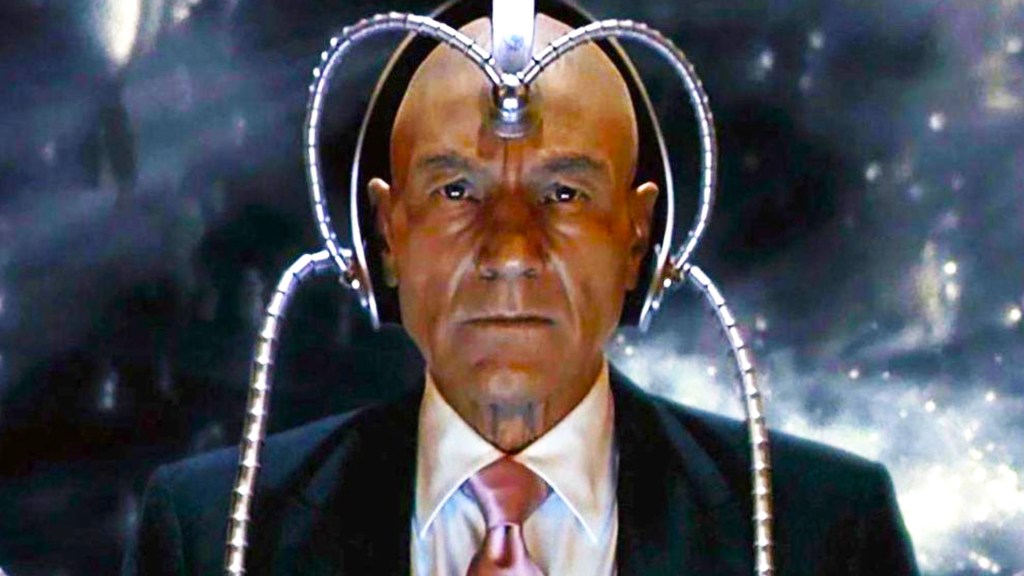
Charles Xavier is an omega-level mutant in the comics, who possesses one of the most powerful minds on Earth. However, the X-Men movies have put Xavier through some ludicrously overpowered paces that are almost hilarious when you add them all up. X2 turned Xavier’s brain into a potential weapon of mass destruction: all he has to do is concentrate hard enough while wearing his Cerebro computer helmet, and an entire species (human or mutant) would cease to exist. In X-Men: The Last Stand, Xavier is vaporised by Dark Phoenix Jean, but is still able to transfer his consciousness into a comatose man (in a post-credits scene). In Logan, even his “psychic tremors” as an ageing man losing his mind are powerful enough to incapacitate every brain in an entire casino (Logan).
Prof. X has survived battles with powerful mutants like Sebastian Shaw (X-Men: First Class) and Apocalypse (X-Men: Apocalypse), multiple battles with his frienemy Magneto, and was even one of the last mutants standing in the dark, Sentinel-infested future of X-Men: Days of Future Past, and was a powerful figure of the Illuminati in Doctor Strange in the Multiverse of Madness. And he did most of it without ever leaving his chair. The X-Men comics get away with being able to keep Xavier out of the fray a lot of the time; the X-Men movies have had to keep him part of the action. Avengers: Doomsday may make Professor X even more overpowered to stand against Doctor Doom and the MCU Avengers. It’s been a generational run, and it’s not over yet.
The X-Men movies are now streaming on Disney+.
Most Viewed
-
Courtesy of David Production