While the broad public typically associates the comic book medium with the long-standing corporate legacies of DC and Marvel, a significant portion of the industry’s most innovative work originates from independent publishers. Image Comics remains the preeminent sanctuary for these creator-owned projects, offering a structural model that allows writers and artists to retain total control over their intellectual property. This freedom facilitates the development of narratives that are untethered from the restrictive continuities and work-for-hire limitations of the “Big Two.” Consequently, the Image catalog has become the primary source for stories that challenge traditional genre boundaries, merging disparate elements like high fantasy, gritty noir, and speculative science fiction into cohesive, standalone epics.
Videos by ComicBook.com
The commercial viability of Image’s alternative model is already evident through several major adaptations that have reached global icon status. Audiences recognize The Walking Dead as a definitive cultural force and Invincible as a pillar of adult-oriented animation, yet both properties began as independent Image publications. Similarly, properties like the supernatural detective drama Happy! or the cult-classic Spawn demonstrate the publisher’s ability to translate complex narratives into successful screen media. Despite these successes, the Image vault remains filled with high-concept narratives that possess the scale and character-driven stakes necessary to anchor new cinematic universes.
7) The Wicked + The Divine

Created by writer Kieron Gillen and artist Jamie McKelvie, The Wicked + The Divine presents a vibrant reinterpretation of mythology through the lens of modern celebrity culture. The narrative centers on a group of twelve gods, known as “The Pantheon,” who are reincarnated as teenagers every ninety years. In this cycle, these deities become the ultimate pop stars, commanding global adoration and intense controversy for two years before their inevitable deaths.
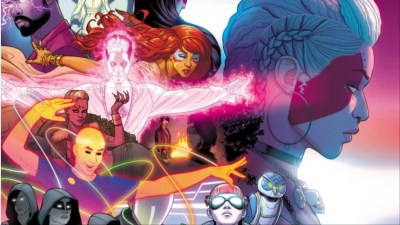
The Wicked + The Divine‘s premise allows the story to investigate the intersection of divinity and fandom, using a kaleidoscope of diverse characters to explore how humans handle absolute power and the looming shadow of mortality. The series is particularly noted for its distinctive fashion and visual energy, which provides a tangible framework for a high-budget aesthetic. Universal Television optioned the rights for a television adaptation in 2015, but there’s been no news of the project. That means there’s still hope of The Wicked + The Divine getting the movie franchise it deserves.
6) Nocterra

Scott Snyder and Tony S. Daniel delivered a visceral high-concept thriller with Nocterra, a post-apocalyptic series set in a world of eternal night. The story begins ten years after a cataclysmic event known as “The Big PM” plunged the Earth into a permanent darkness that transforms living creatures into monstrous entities called shades. The protagonist, Valentina “Val” Riggs, serves as a “ferryman,” navigating an illuminated semi-truck through unlit territory to transport goods and survivors. This setting creates a constant sense of atmospheric dread, where the scarcity of light functions as the primary source of tension.
In late 2021, Netflix announced that it was developing a live-action series based on Nocterra, with Roberto Patino serving as the showrunner and writer. The production is a collaboration with James Wan’s Atomic Monster banner, signaling a commitment to the intense horror-action tone established in the comic. Still, as of 2026, the project has not materialized.
5) Black Science
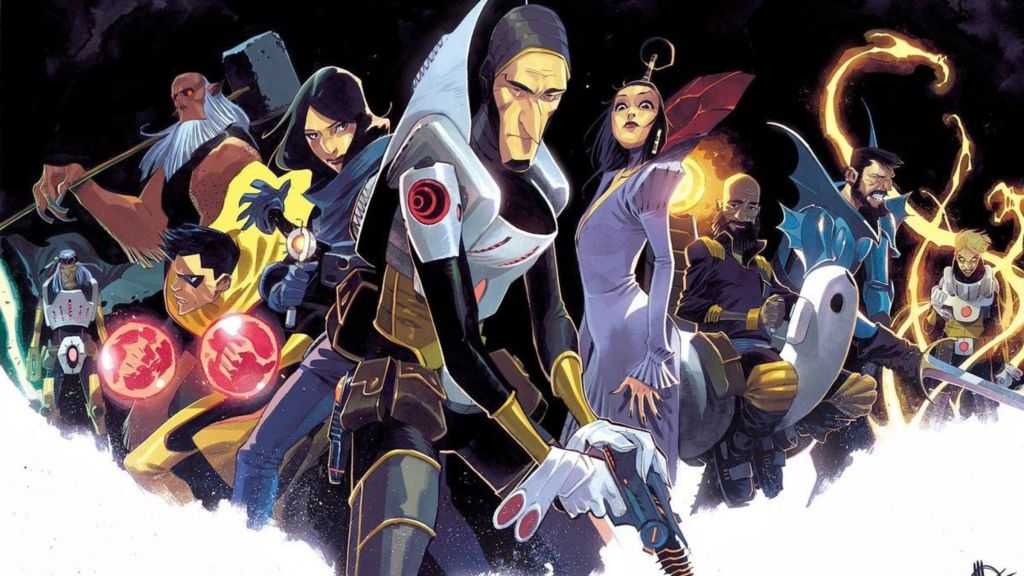
Rick Remender and Matteo Scalera utilized Black Science to create a sprawling multiversal epic that prioritizes character dysfunction alongside high-concept physics. The narrative follows Grant McKay, an anarchist scientist who invents a device called the “Pillar” to punch through the barriers of reality, only to have his team and family stranded across a series of increasingly hostile dimensions. Unlike many modern multiverse stories that rely on cameos, this series treats its “Eververse” as a dangerous and alien frontier where every leap presents a new biological and environmental threat. The visual diversity of the comic, featuring everything from robotic Native Americans to parasitic fungi, provides a blueprint for a monumental production design.
Remender has previously teased that an animated adaptation of Black Science could be in the works, and critics frequently cite the property as a natural fit for big-budget sci-fi dramas. While a live-action feature has yet to be officially greenlit, the completed forty-three-issue run offers a definitive and emotionally resonant ending that makes it a perfect candidate for a multi-season cinematic commitment.
4) East of West
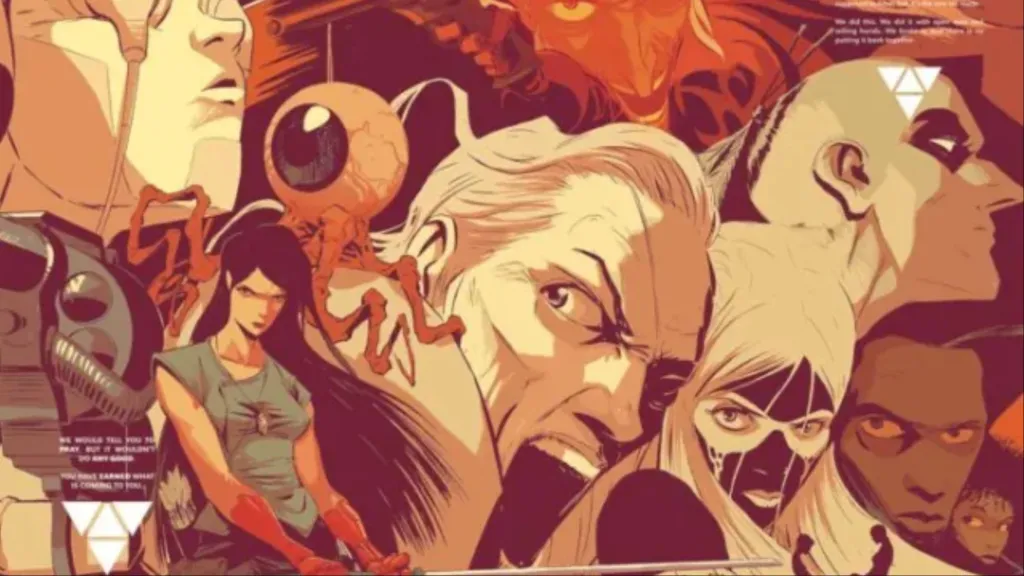
Combining the grimy textures of a Western with the high-concept scale of science fiction, East of West is a masterpiece of world-building from writer Jonathan Hickman and artist Nick Dragotta. Set in a dystopian America divided into seven distinct nations, the story depicts an alternate timeline where the Civil War never truly ended and the Four Horsemen of the Apocalypse roam the Earth. The narrative centers on Death, a monochromatic gunslinger who has betrayed his siblings to search for his lost wife and son.
East of West‘s epic scope balances intricate political maneuvering between sovereign states with a supernatural countdown to the end of the world. Amazon Studios initially optioned the series for a television project in 2018, but the production eventually stalled, and Hickman confirmed in 2019 that the deal was no longer moving forward. Despite this setback, the series continues to sell well, and its unique blend of apocalyptic mythology and political drama remains a highly coveted property for studios seeking an adult-oriented genre epic.
3) Monstress
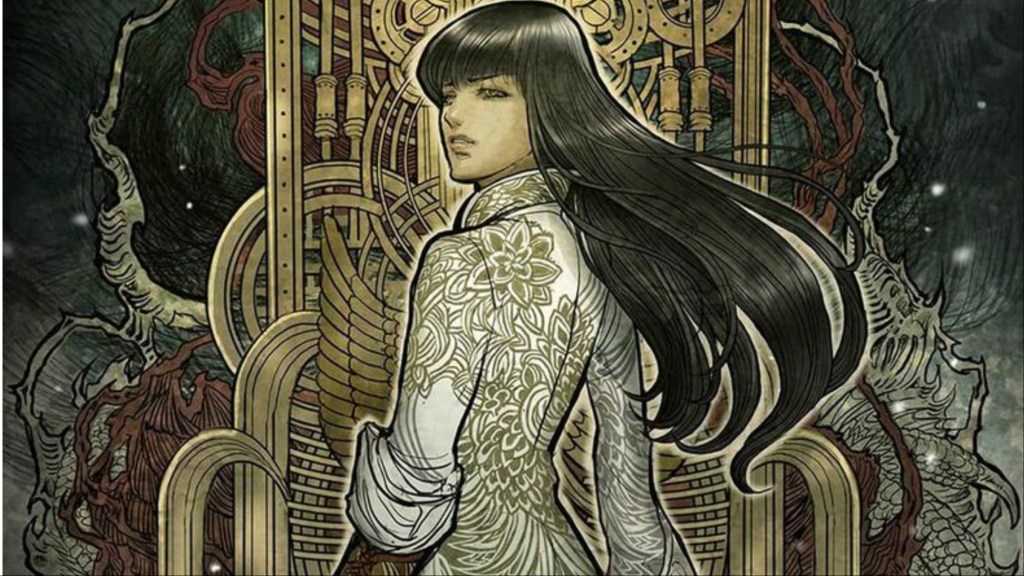
Celebrating its tenth anniversary in 2026, Monstress by Marjorie Liu and Sana Takeda stands as one of the most visually stunning and narratively complex works in the Image library. The series takes place in an alternate, matriarchal 1900s Asia where a devastating war between humans and Arcanics—magical beings who can pass for human—has left the world in ruins. The protagonist, Maika Halfwolf, is a survivor who shares a psychic link with an eldritch monster of immense power, forcing her to navigate a landscape of steampunk technology and kaiju-sized deities.
Takeda’s intricate art deco-infused aesthetic provides Monstress with a specific visual identity that would require a massive budget to replicate on the big screen. While the creators have remained focused on the ongoing comic, which has surpassed sixty issues, the series’ consistent presence on bestseller lists has made it a constant subject of adaptation rumors. Its ability to weave together themes of racial prejudice, war trauma, and cosmic horror makes it a foundational text for a new kind of mature fantasy franchise that prioritizes global cultural perspectives.
2) The Department of Truth

James Tynion IV and Martin Simmonds crafted a chillingly relevant narrative with The Department of Truth, a series that posits that collective belief can physically alter the fabric of reality. The story follows Cole Turner, a former FBI agent recruited into a secret government organization tasked with ensuring that dangerous conspiracy theories do not become “truth.” From the JFK assassination to the Flat Earth movement, the series examines the fragility of objective history in a world where the loudest narrative wins. This psychological thriller is highlighted by its abstract, painterly art style, which evokes the paranoia of 1970s cinema.
In 2021, the production company Sister—known for the acclaimed series Chernobyl—secured the film and television rights to The Department of Truth in a highly competitive bidding war. Tynion is reportedly attached to write the script and executive-produce the project, which is currently in development. Given the modern climate of misinformation, the narrative’s exploration of how lies can reshape the world provides a timely and terrifying foundation for a prestigious cinematic franchise.
1) Saga
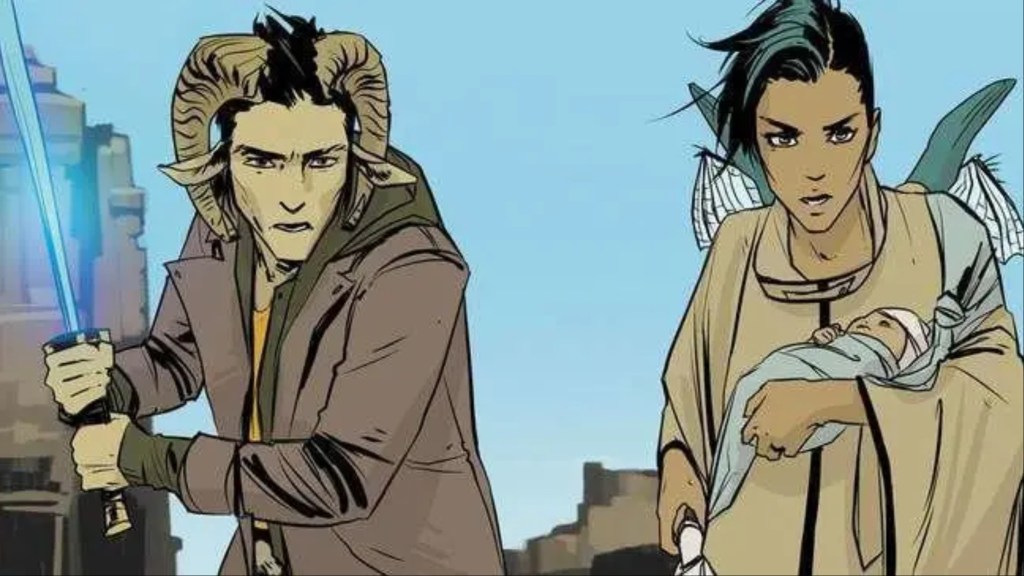
Often described as Star Wars meets Romeo and Juliet, Saga is the definitive Image Comics blockbuster that has yet to hit the screen. Written by Brian K. Vaughan and illustrated by Fiona Staples, the space opera follows Alana and Marko, two soldiers from warring alien races who fall in love and have a child named Hazel. The family must flee across the galaxy to escape the military forces of their respective governments, encountering a bizarre cast of characters that includes a spider-woman assassin and a royal family with television sets for heads.
Saga is a monumental success, winning dozens of Eisner and Hugo awards while maintaining a dedicated fanbase. Despite the constant demand for a film or television version, Vaughan and Staples have famously remained protective of the property, stating that the series was designed specifically to be a comic. However, the writer has noted that they would consider an adaptation if a creator managed to “crack” the unique challenges of the source material. As the comic prepares to enter its final story arc in 2026, Saga remains the most prestigious unadapted property in the industry.
Which Image Comics series do you think has the most potential to become the next massive cinematic universe? Leave a comment below and join the conversation now in the ComicBook Forum!
More Movies
-
Image Courtesy of Marvel Comics -
Image Courtesy of Netflix