Before Daniel Craig came along, Sean Connery was pretty much universally seen as the number one actor to ever play James Bond. And, even in a post-Craig world, plenty of people still see things that way. But, as great as Connery was, his movies were far from equal in the quality department. They were all certainly well made, but some installments are undoubtedly more entertaining than others, just as some pushed the franchise forward in ways more profound and impactful than others. There are also several eras in Connery’s seven-film Bond filmography. There were the first five installments from Eon Productions, followed by Connery’s passing of the torch to George Lazenby, who then passed it back, at which point Connery returned for Diamonds Are Forever and then, after over a decade, he returned for his final film (and the only one not released by Eon).
Videos by ComicBook.com
The first era was the best era, but it’s not to say there was merit to be found after that. The question is, just how much better was that first five-film run?
7) Never Say Never Again
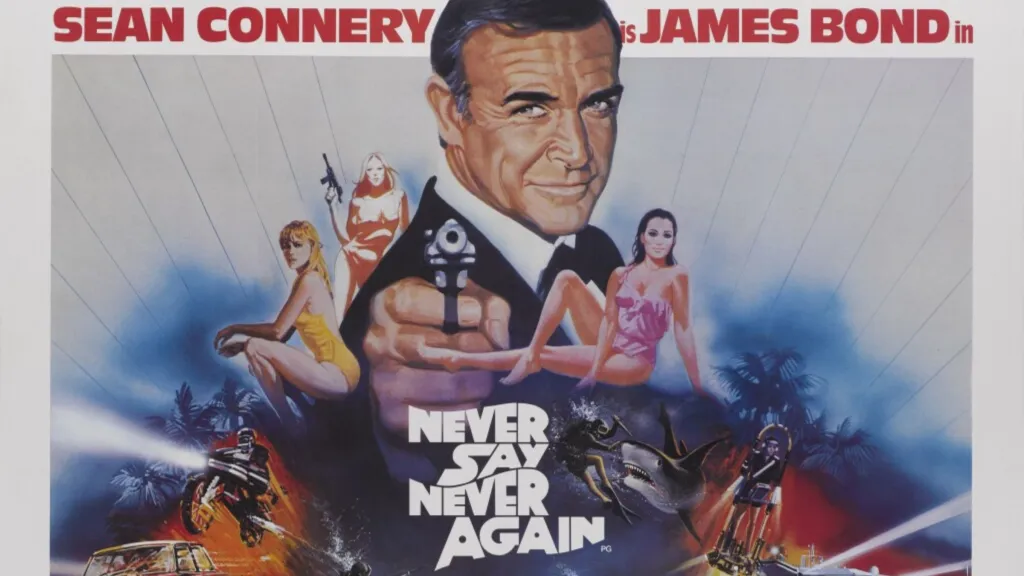
Never Say Never Again isn’t canon, and that’s exactly how it feels. The reason the film exists is because Bond author Ian Fleming had worked with two others on the script for a 007 movie called Longitude 78 West. That project was abandoned and then Fleming took some of the ideas tossed around and put them in the Thunderball book. For instance, SPECTRE and Blofeld, which are of course massively important to the canon. However, Fleming failed to credit the two other individuals (independent producer Kevin McClory and screenwriter Jack Whittingham). So, when Eon started making Bond movies, they had to work with both Fleming and McClory when it came time to start work on Thunderball. The deal with McClory was that he would produce Thunderball, but if he wanted to make another cinematic take on that story, he would have to wait at least 10 years.
So, essentially, Never Say Never Again is just a remake of Thunderball that lacks certain trademarks of the 007 franchise, from the opening gunshot towards the audience to John Barry’s consistently excellent scoring. It just comes across as someone making a half-rate attempt at a real Bond movie. The film is also visually unimpressive, which is surprising considering that, if you adjust Diamonds Are Forever‘s 1971 budget to 1983 dollars, Never Say Never Again had twice the price tag. Worse yet, while people were happy to have Connery back in the role, he was simply too old for the part at 52. It’s not quite as glaring as Roger Moore’s aged-out presence in A View to a Kill, but it comes close. But at least A View to a Kill was fun (a quality for which it doesn’t get enough credit).
6) Diamonds Are Forever
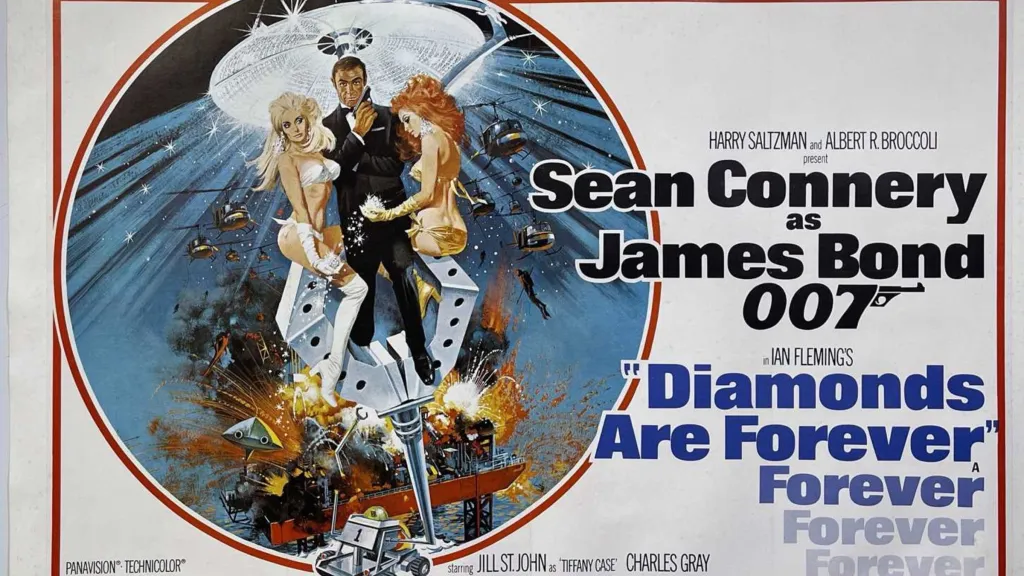
Diamonds Are Forever is a bit of an odd duck. It feels like a placeholder Bond movie even though it’s actually fairly integral to the canon. It picks up on the final thread of On Her Majesty’s Secret Service but be it the more serious tone or the new actor, that movie felt very disconnected from the first five Connery films. So, by extension, Diamonds feels disconnected from Secret Service. But it also feels disconnected from the first five Connery movies, both because Connery had aged noticeably between throughout the four years between this and You Only Live Twice and because Blofeld was recast.
Speaking of the recast Blofled, Charles Gray was an excellent actor but his performance as the Bond big bad is just…off. Even if it wasn’t he would still be a step down from Donald Pleasence. Worse yet is Jimmy Dean, whose Willard Whyte is the biggest caricature of a character in the franchise at that point (though he would be outdone in the next movie, Live and Let Die, by the insufferable Sheriff J.W. Pepper). But at the center of it all is Connery and, while he’s game enough, it’s also perpetually obvious that he was tired of playing the character, and that it was only the record-setting sum he earned that put him back in the tux.
5) Dr. No
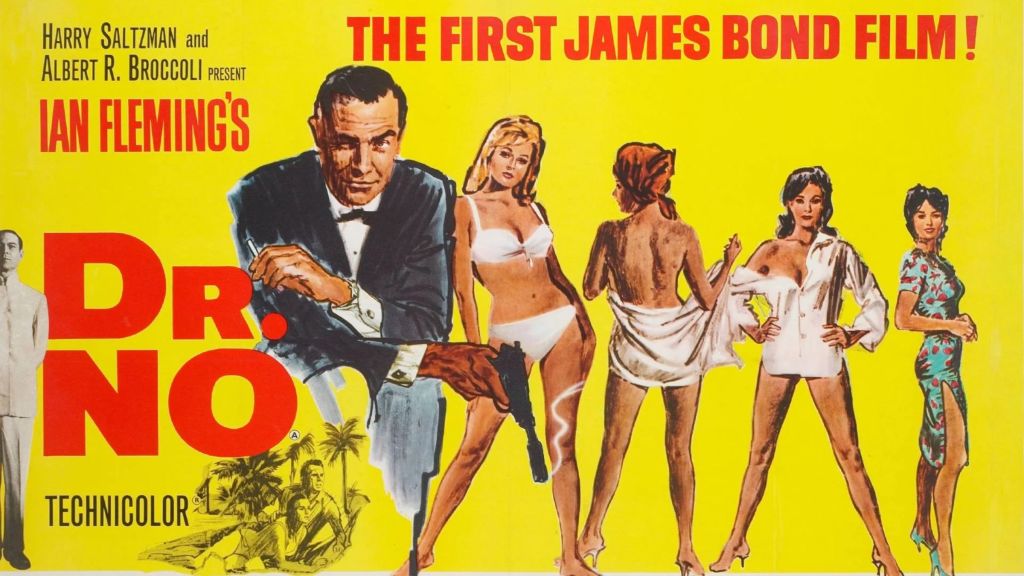
To be fair to Dr. No, it was the very first official 007 movie. The vast majority of the traits that have made the franchise iconic had yet to be established. There were kinks that had yet to be ironed out, especially when it comes to how these movies should be paced.
So, yes, Dr. No can be very slow in spots, and it isn’t as exciting even when it is moving as Connery’s best. But it does possess a considerable novelty factor. It’s like the pilot of a sitcom. No one has fully settled into their characters and learned how to make them stand out and stand apart, but first steps are necessary to get a foot through the door. It’s fun to watch something storied learn what it is that could make it great, and that’s what Dr. No is doing.
Stream Dr. No on MGM+.

4) You Only Live Twice
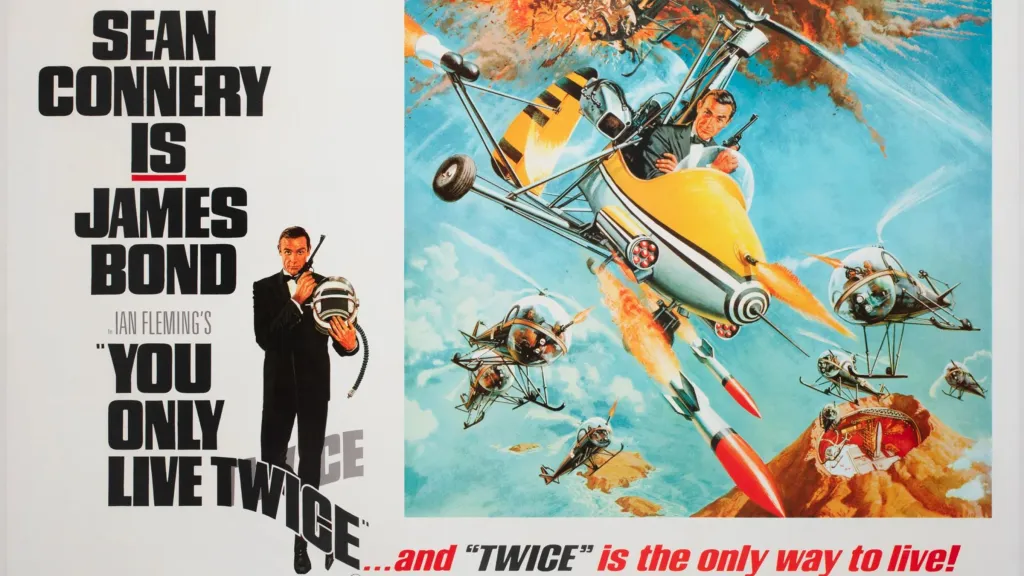
You Only Live Twice is a mixed bag. It’s undoubtedly one of the more entertaining Connery Bonds, and it feels more narratively important than the previous four movies since it finally makes good on the previously only hinted-at Blofeld, but it’s also arguably a little too silly for its own good.
Then there’s the racism elephant in the room. While it’s not as problematic as Fleming’s books, the scene where Bond is disguised as a Japanese man/ninja is pretty rough. It’s also unintentionally hilarious considering the technique was basically “Grab the black hair dye. Pour it all on!” Even still, we get a bombastic final battle and Halloween‘s Donald Pleasence as Blofeld. It feels like what it’s trying to be, which is the culmination of Connery’s Bond era so it can move on. And, because of that, You Only Live Twice only serves to make Diamonds Are Forever look even more pointless than it already plays as.
3) Thunderball
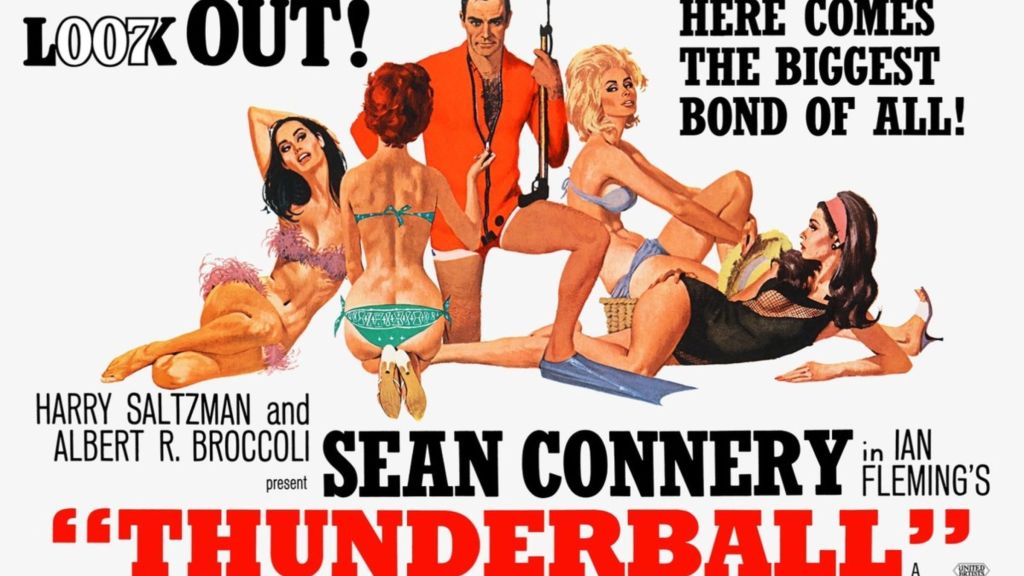
Coming off of Goldfinger, Thunderball was certainly a step down. But this was still peak Connery Bond. The franchise hadn’t yet gotten quite as absurd as You Only Live Twice, but it does show itself unafraid to delve into a bit of camp. Afterall, it is punctuated by a bunch of people swimming with spearguns in hand. If that’s not one of the more bizarre final battles, what is?
But Thunderball really stands out thanks to the cast. This was Connery at his best as Bond. By this point he had fully made it his and throughout the runtime actor and character feel inextricably linked. Nearly as good is Adolfo Celi as Emilio Largo. The eyepatch-donning villain feels truly intimidating, ruthless, and deadly every time he’s on screen, making him yet another winner of a villain from the Connery years.
2) From Russia with Love
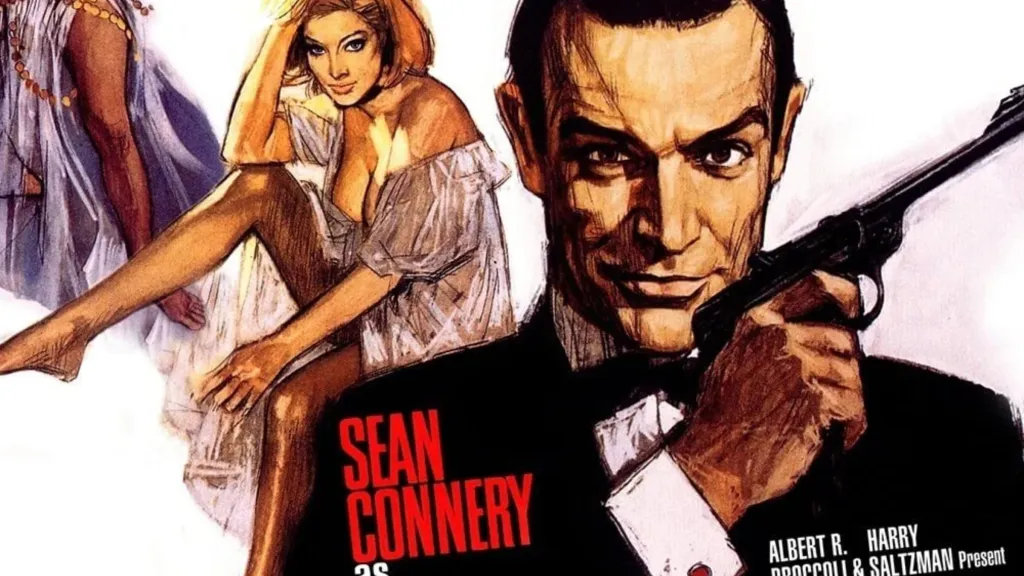
To a degree, From Russia with Love suffers from the same pacing problem that hurt Dr. No. But From Russia with Love gets away with it because it isn’t nearly as silly in tone or narrative. This is a relatively restrained spy adventure. It seldom feels like a big movie, instead actively seeking to take itself seriously. There’s nothing here that doesn’t feel as though it could have actually happened in the Cold War, and time has allowed that nature to really stand out, especially once we got to the more bombastic Moore and Brosnan Bonds.
And, oddly enough, lacking a true big bad actually works to accentuate its unique nature in the overall canon. Yes, we get our first little taste of Blofeld, but he’s not nearly present enough to be considered a big bad. Instead, we get Quint himself, Robert Shaw as assassin Red Grant. He’s a henchman positioned as the film’s top antagonist, but all he and Bond do is have a conversation on a train and a brief fight. And that’s enough, because the dialogue they share is so well-written that we find ourselves just as glued to the screen as we would if they were in two armored helicopters blasting each other out of the air.
Stream From Russia with Love on MGM+.
1) Goldfinger

Undoubtedly the most important 007 movie, Goldfinger was the one that really established the formula. This was when the franchise settled into a specific personality, figured out what worked about itself and what didn’t, and kept going with a set template.
This is where we got the concept of an ultra-expensive car loaded with defense mechanisms and weaponry. This is where we got the tendency to have one big bad and one similarly memorable sidekick villain. Then there’s Goldfinger‘s handful of top-tier iconic scenes, from Bond being strapped to a table with a laser slowly moving up towards his genitals to his interfering with Goldfinger’s cheating in cards during the opening and subsequent gold-coating of the woman who betrays said villain. Throw in the fact that Connery seemed very comfortable in the role by this point and the film’s blurring the lines between serious and silly (we both see a man with a hat that can decapitate people and the aforementioned horrible death of the innocent Jill Masterson) and you get the best 007 movie of all time.
Stream Goldfinger on MGM+.
Most Viewed
-

Courtesy of Sony Pictures Animation / McDonald's -

Image Courtesy of Netflix -

Images courtesy of Warner Bros. Pictures -

Courtesy of Sony Pictures Animation / McDonalds -

Image courtesy of The Pokemon Company