There are plenty of movies that have become cinema classics, and The Wizard of Oz is one of them — but it goes far beyond that. This is one of the most recycled, reinterpreted, and creatively fought-over stories of all time. It all started in 1900 with the book The Wonderful Wizard of Oz, written by L. Frank Baum, which quickly became perfect source material just as cinema itself was being born. Since then, this fictional world has gone through silent films, experimental takes, large-scale musicals, animated versions, unconventional reimaginings, and even prequels that completely reshaped how audiences see the story. As a result, there’s now a surprisingly large catalog of productions that use, adapt, or outright twist Oz far more than most people realize today.
Videos by ComicBook.com
When you think about this story, most immediately jump to the 1939 film and Wicked — and stop there, right? But the truth is that cinema has never really known what to do with Oz. Sometimes it tries to copy the original, sometimes it tries to “fix” it, and other times it goes out of its way to distance itself from everything audiences associate with the tale. With that in mind, here are the most famous and well-known Wizard of Oz movies, ranked from worst to best. Which one still stands above the rest?
13) Legends of Oz: Dorothy’s Return

Legends of Oz: Dorothy’s Return is an animated movie built around the idea that Dorothy goes back to Oz after the familiar story has already ended, only to find the kingdom in crisis following the Wicked Witch of the West‘s defeat. But while the premise is mildly intriguing, the execution misses the mark almost entirely. In practice, it feels like something pulled straight from the assembly line of generic animated films from the last decade, complete with flat characters, poorly timed humor, and a story that never finds a real reason to exist beyond the Oz name. It’s not offensively bad by any means, but it is completely forgettable (which might be even worse for a universe this rich). In the end, it plays like a studio-driven sequel with no real passion or identity.
12) The Wizard of Mars

Despite the title promising a creative sci-fi reimagining, The Wizard of Mars uses Oz purely as bait — and that’s where the connection basically ends. The story follows an astronaut who crash-lands on Mars and encounters figures loosely inspired by the classic tale, but any real resemblance stops there. Why? The movie never makes an effort to translate The Wizard of Oz‘s core themes into its sci-fi setting, instead leaning on poorly developed ideas and cheap-looking environments. Essentially, it grabs familiar references without knowing what to do with them. Is it interesting at all? Briefly (maybe for five minutes), before it quickly becomes exhausting. It’s a film that exists more as a curiosity than as a worthwhile adaptation.

11) Dorothy and the Witches of Oz

In this version, Dorothy is an adult living in the real world who discovers that Oz was never a dream — and that the witches are about to unleash chaos in New York City. It’s a concept that’s genuinely fun on paper, but Dorothy and the Witches of Oz never quite finds the right balance between fantasy, adventure, and thriller. The effects are extremely limited, the pacing is all over the place, and the story often feels like it’s being made up as it goes. There are some interesting ideas scattered throughout, but none of them are developed enough to turn the film into something truly memorable.
10) Journey Back to Oz

This is another animated take that sends Dorothy back to Oz to face a new threat while her old friends — the Lion, the Scarecrow, and the Tin Man — are in danger, making it a pretty straightforward continuation of the classic. However, the main issue with Journey Back to Oz is that it rarely goes beyond the basics. The animation is simple, the plot is predictable, and it lacks the sense of wonder or storytelling spark that makes Oz feel magical. There’s real nostalgic value here, and it’s far from bad (especially as one of the earliest attempts to expand the universe beyond the 1939 film). However, compared to other adaptations that aimed higher and took more creative risks, this one is hard to strongly defend.
9) The Wonderful Wizard of Oz

In 1910, the story received a silent adaptation with The Wonderful Wizard of Oz, but it’s less a watchable movie by modern standards and more a historical record of the story’s early popularity in cinema. The film presents a heavily condensed version of Dorothy’s journey through Oz, relying on simple visual tricks for the time and a fragmented narrative. There’s little room for character development or emotional impact, but what makes it interesting is how clearly it shows that Oz was already seen as viable cinematic material just a decade after the book’s publication. It doesn’t really function as a proper adaptation, because it’s primitive. On the other hand, its historical significance is undeniable.
8) The Wizard of Oz (1925)

This is another silent-era take, but one that turns Oz into a chaotic slapstick comedy, with Dorothy being kidnapped and the Wizard taking on a more active role as a villain. As a result, The Wizard of Oz (1925) drifts far from the source material, fully committing to broad gags and exaggerated visuals. Today, the movie works more as a historical artifact than as entertainment, and when compared to the version that would arrive just a few years later, it falls short in both tone and overall quality. Still, it’s fascinating to see how early on the Oz universe was already treated as flexible and open to reinvention, even in the earliest days of cinema.
7) Oz
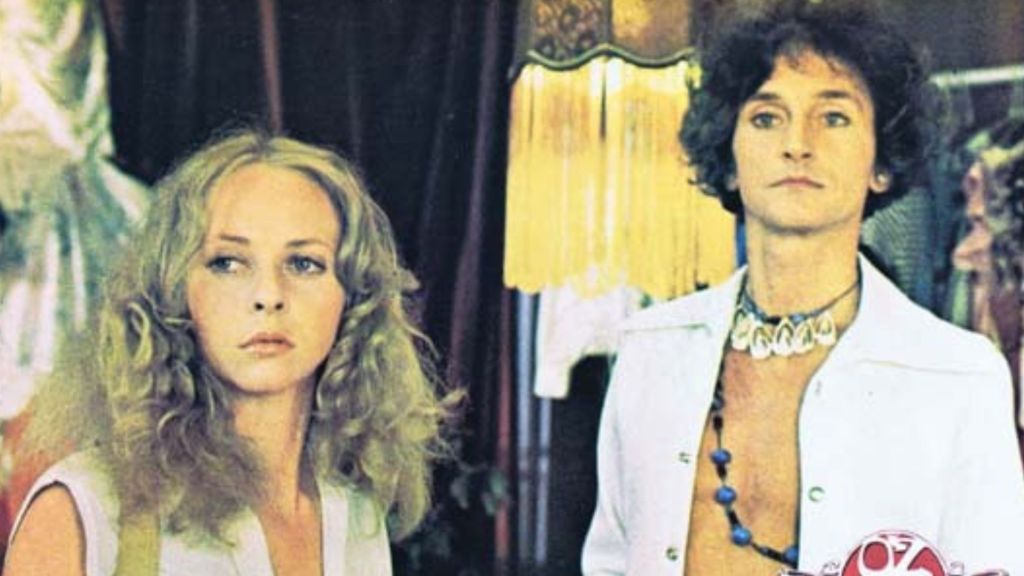
A full reinvention, Oz is an Australian take on the classic that never tries to adapt the story in a traditional way. Instead, it reimagines the entire narrative as a more adult, psychedelic fantasy, following a young woman on a surreal journey through a distorted version of Oz. The film leans heavily into a fragmented structure and is packed with symbolism and some genuinely strange creative choices (which definitely push part of the audience away). That said, it earns its place in the ranking by showing how the Oz myth can be reinterpreted outside of Hollywood and far from the standard formula. It’s a strong example of how universal this story really is, and how many different forms it can take.
6) The Muppets’ Wizard of Oz

The Muppets are classics in their own right, and when it comes to reworking existing stories, they’re usually at their best. In this case, The Muppets’ Wizard of Oz centers Dorothy as an aspiring singer who ends up in Oz and meets puppet versions of the classic characters, while keeping the basic structure of the original story intact. The smartest thing the movie does is knowing it doesn’t need to compete with the iconic ’30s film. Instead, it leans into self-aware humor and, of course, the Muppets’ natural charm. Not every joke lands, honestly, but the lighter tone and lack of ambition work in its favor. It’s an adaptation that understands its audience and delivers exactly what it promises.
5) Oz: The Great and Powerful

This is where things start to move into more ambitious, higher-quality territory — and a movie that clearly knows what it’s trying to do. The premise of Oz: The Great and Powerful is to show how the con man Oscar Diggs became the famous Wizard of Oz, focusing on his arrival in the land and his involvement with the witches before Dorothy’s story begins. Visually, the film is impressive and clearly in love with the 1939 classic, but it’s not without its flaws. It stumbles when it comes to developing its protagonist, who never becomes as compelling as the world around him. Still, when viewed from a broader perspective, this remains one of the most ambitious attempts to expand Oz in modern cinema (even if it doesn’t always stick the landing).
4) The Wiz

The Wiz might be the most radically different take of them all, since it takes the basic structure of the story (Dorothy lost in a strange world while trying to find her way home) and completely rebuilds it within an urban, musical, and culturally specific context. Set in a stylized version of New York City, the movie trades fairy-tale imagery for soul, funk, and a strong sense of identity. There’s no denying it struggles with pacing at times, but what ultimately makes it shine is its refusal to play it safe. That willingness to be bold and innovative is exactly why it earns such a high spot in the ranking. In the end, it stands as one of the most genuinely interesting entries in the Oz universe.
3) Return to Oz
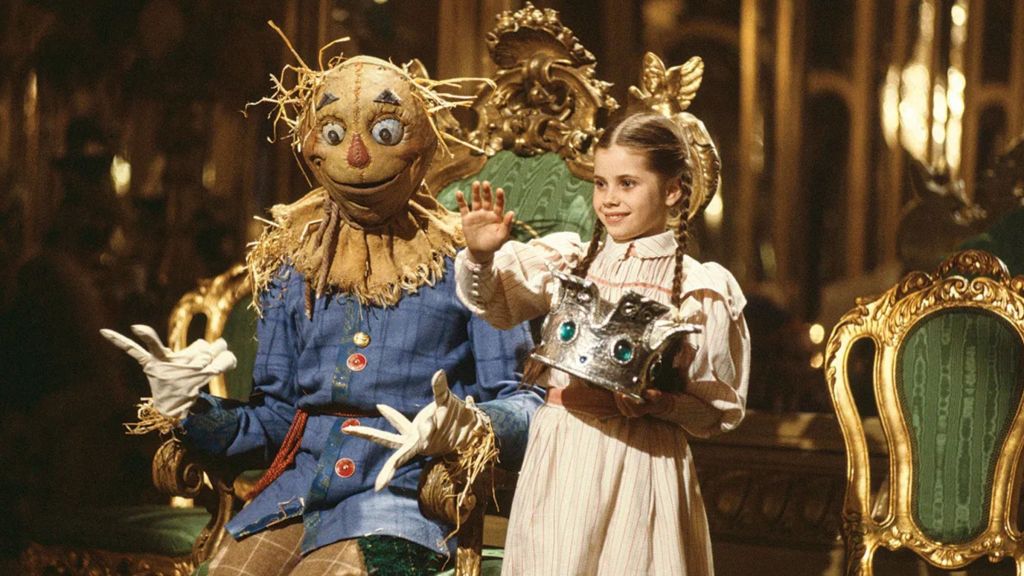
Have you ever imagined this universe in a much darker light? Instead of repeating the familiar sense of magic that many adaptations lean into, Return to Oz shows Dorothy coming back to a world we recognize — only now it’s broken, eerie, and ruled by new villains. As a result, the film can feel genuinely unsettling for some viewers, downright terrifying for kids, yet deeply beloved by fans who appreciate its faithfulness and unsettling imagery. It also drops the musical numbers entirely, choosing instead to be a fantasy that’s far closer to the tone of the original books. It earns its Top 3 spot because it’s bold, confident, and knows how to continue the classic while preserving the core of the story.
2) Wicked/Wicked: For Good

It’s almost impossible not to place the newest major adaptation of this world near the very top of the ranking. Faithfully based on Gregory Maguire’s novel (itself a spin-off of the original story), Wicked (and its second part, Wicked: For Good) shifts the focus to Elphaba and Glinda before and during the events of The Wizard of Oz. What these films do so effectively is flip the myth on its head. The story follows the rise of the so-called Wicked Witch of the West while questioning who gets to decide who’s a hero and who’s a villain. And even without Dorothy at the center, the films stay in constant conversation with the classic, adding political and emotional layers to a world we thought we already knew. It’s a smart expansion that proves Oz still has plenty left to explore.
1) The Wizard of Oz (1939)

The 1939 movie almost has to sit at the top of the ranking. This is essentially everything that many adaptations of Baum’s book tried to achieve and rarely managed to pull off with the same level of mastery. The Wizard of Oz (1939) follows Dorothy as she’s swept from Kansas to Oz, forms unexpected friendships, and learns that everything she’s been searching for was already inside her. The execution is so precise that it became the definitive template for fantasy films. Its songs are iconic and timeless, it has permanently cemented the characters in pop culture, and its storytelling still serves as a reference point for modern cinema. Basically, anything made about the world of Oz has to look back at this version first — whether it’s trying to replicate it, subvert it, or escape its shadow entirely.
Did you know about all these Wizard of Oz versions? Leave a comment below and join the conversation now in the ComicBook Forum!
Most Viewed
-
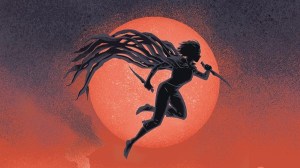
Image courtesy of Tor Books/Macmillan -

Official art by Bastien Lecouffe-Deharme