News of a new Anaconda movie from Columbia Pictures was a shocking development, but the reveal that it was both a comedy and one that would star Jack Black and Paul Rudd made the world collectively believe madlibs had come to life. The idea seemed unbelievable: comedians in a reboot of a ’90s monster movie that has become meme fodder in recent years. Is this the world we’re in now? Where comedians have to reboot movies that aren’t even that good just to get a studio comedy made? Apparently, so, but the good news is that the result is actually funny, even if the journey to the big screen is slimy.
Videos by ComicBook.com
Cynically, Anaconda proves that the studio comedy can still exist, as those kinds of movies have largely vanished from movie theaters and been stuck on streaming platforms or expanded into TV shows. Not only is Anaconda very much in the mold of movies that Black and Rudd previously starred in (shades of Saving Silverman and Role Models are present throughout), but it has to package it as a revival of a franchise from a totally different genre to even get made. One part Tropic Thunder, another part actual Anaconda movie, and with a scoop of that Raiders of the Lost Ark fan film that went viral in the 2000s, the new Anaconda arrives as a palate cleanser for audiences seeking holiday entertainment that can make you laugh one minute and jump from a giant snake the next.
Rating: 3 out of 5
| PROS | CONS |
|---|---|
| Jack Black and Paul Rudd are hilarious throughout | Drags when it tries to do too much |
| Roasts Hollywood’s dependence on reboots | Some characters literally have nothing to do |
It’s really that simple; Anaconda‘s not doing a whole lot more than what’s on the tin. Though it does have some funny things to say about the tendency of Hollywood to fall back on remakes and reboots, that’s not its entire game. What the new Anaconda does prove is that there’s a new playbook for movie reboots in Hollywood, not just one that acknowledges through a meta-lens how tired and annoying it is to keep seeing these movies get made, but one that ironically revives an old Hollywood concept in a new way.
Anaconda Delivers a Surprising New Detour for Reboots
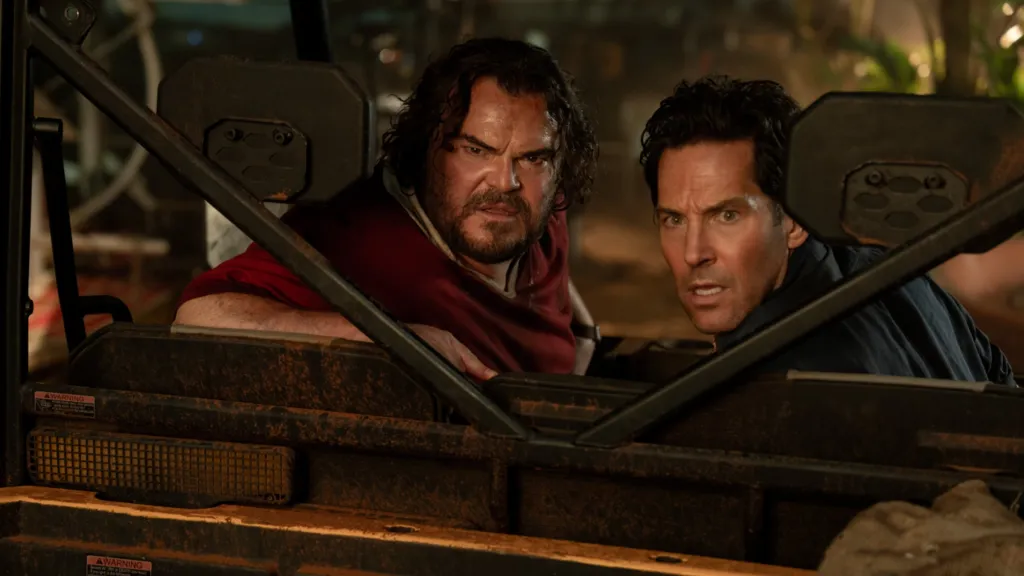
In Anaconda, Paul Rudd stars as “Griff,” a struggling actor in Hollywood whose dreams of making it big have been hampered by barely working and getting minuscule parts when he does manage to get something going. His best friend back in Buffalo, Doug (Jack Black), still works at his father’s wedding video business, though his ambitions remain much more cinematic. When the pair are reunited for Doug’s birthday, and Griff remembers what it’s like to hang out with his old friends (Steve Zahn as Kenny and Thandiwe Newton as Claire) and the films they used to make with each other, he drops a bomb on them: he has obtained the rights to Anaconda, allowing them to make their own version of the 1997 monster movie.
The set-up is ludicrous, but is it any more absurd than what we find in the original Anaconda movie? By fully acknowledging the stupidity of the premise and allowing its stars to simply push for laughs where they can, Anaconda gives us something that has been missing from movie theaters: actual jokes. The first 20 minutes of the film are not only full of great punchlines and quotable gags (Rudd being asked if one of their home videos is appropriate for kids, prompting the reply “Eh, who gives a sh-t?” feels like the movie itself giving you permission to have fun), which mostly continue for the entirety of the film with some stumbles along the way.
Anaconda Falls Apart When It Tries to Get Too Big
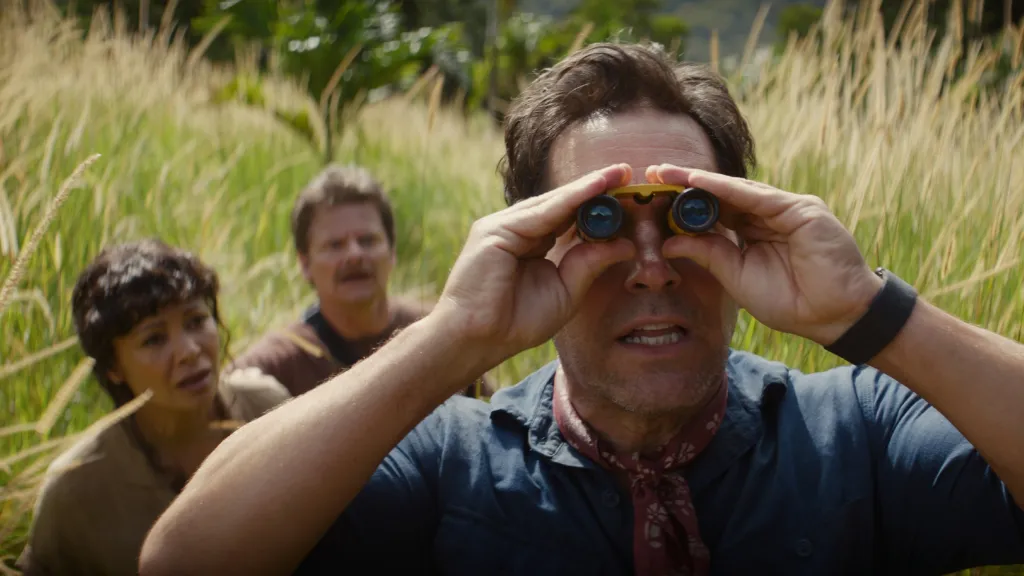
Anaconda opens with a tense, dramatic sequence in the backdrop of the Amazon jungle. It introduces Daniela Melchior and her mysterious character into the fold and sets up the setting for where the movie will eventually arrive. Once the title appears on screen, though this scene may as well be forgotten, with only sporadic reminders through the rest of the first act and into the second that it even occurred. Melchior, in fact, despite driving the boat that the rest of the cast are on and filming their movie, disappears for major sections of the movie, doing almost nothing until the film decides that it’s time to fully reveal her subplot.
Once confirmed, this story goes nowhere, and in fact, the movie could be no different if it had cut out these elements entirely. It’s a frustrating angle because it means this comedy has to stop in its tracks to explore a narrative thread that ultimately has no bearing on anything else, but which also prevents many of the actual jokes of the movie from carrying on. The laughs do continue, but the gags per minute plummet as it explores this subplot, with no real payoff beyond a meal for the titular serpent. That result may be enough for some to sit through the tired addition to the movie, but when it’s bookended by genuinely hilarious moments that also happen to feature the anaconda, they feel tired and like studio interference.
There’s also the larger element of the film that it has to play with, the fact that this is a giant snake movie that is promising audiences a twinge of thrill. Never outright scary, and dependent entirely on a CGI construction for its title antagonist (the 1997 at least had a practical snake in some scenes), Anaconda‘s thrilling moments work only as jolting jump scares to keep the audience engaged until the next joke. By the end, the snake’s presence isn’t even in the Top 5 most memorable things about the movie, further proving this is just a studio comedy disguised as a blockbuster reboot.
Anaconda Is at Its Best When It Just Focuses on the Leads
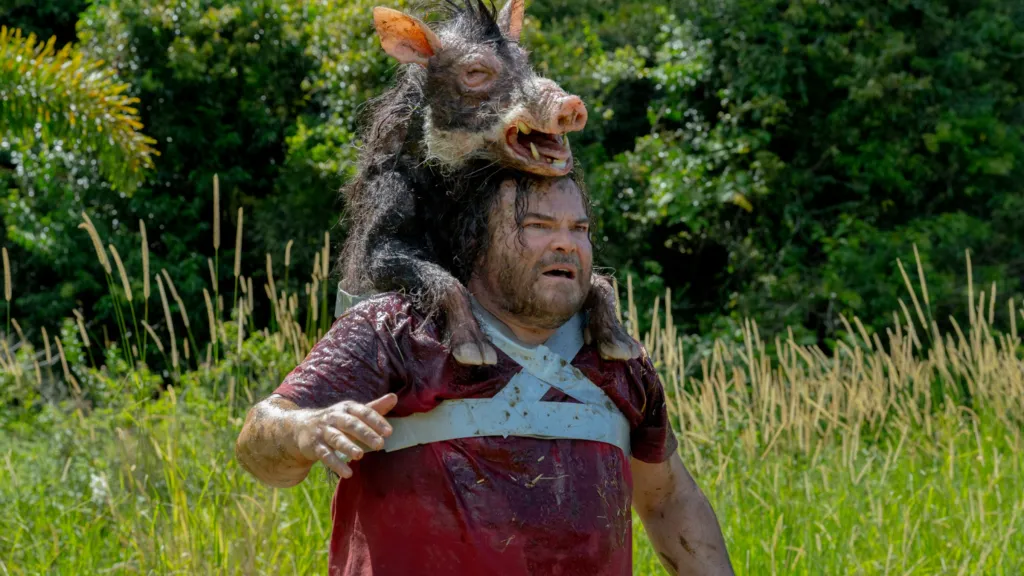
The opening act of Anaconda, a decent chunk of the middle, and the finale of the film keep the scope of the movie smaller, focusing on just Rudd, Black, Zahn, and Newton, and the movie is better for it. Any time it gets bigger than that, it largely suffers, except for the times it loops in Selton Mello’s snake handler for some gags that feel reminiscent of Jon Voight’s absurd accent from the original Anaconda.
Black exudes his trademark charm and wit, channeling the persona that we all know and love from seeing him on talk shows and YouTube into an actual character that has all of his charisma and confidence. It may not feel like a stretch for him as a performer to embody the antics that fans have seen him display, but it proves how many tools he has in his kit. There are layers not only to the jokes across Anaconda, but in Black’s commitment to making them work. Rudd is just as funny in the film as well, falling back on some of the antics from his Wet Hot American Summer character at times, while also embracing the fact that he’s lampooning a Hollywood leading man after fully becoming one in the MCU.
Anaconda really is a two-hander, though its cast is bigger than that, which means that despite some funny jokes from Steve Zahn, his character is underserved, and his hit ratio is not the same as Black and Rudd. By that same notion, Newton’s character exists to be the fourth friend, giving the film the facade of a character arc for Rudd, and with not much to actually do for herself, yet again. This is the biggest weakness of the movie on the whole in its construction; it has two great actresses front and center, but doesn’t offer either of them much to do in the story itself or even in its best moments, be it the funny or thrilling ones.
In 1948, Universal Pictures released Abbott and Costello Meet Frankenstein, a comedy send-up of their classic monster movies that combined the thrills of those gothic tales together with the slapstick characters created by those iconic performers. It was so successful that it spawned multiple follow-ups, they met The Invisible Man, Dr. Jekyll and Mr. Hyde, the Mummy, and more. What Anaconda proves is that this trick still works nearly eighty years later. Not only can you successfully reboot a movie by winking at the audience over the fact that you’re falling back on a reboot of a classic movie, but you can also inject comedians and real jokes into the thrills of these tired franchises to the point that they gain new life.
Most Viewed
-

Image Courtesy of HBO Max