Over two hundred years after Mary Shelley’s novel, the idea of the “Bride of Frankenstein” largely remains a piece of lore that has gone untapped. This is due primarily to James Whale’s 1935 film and Elsa Lanchester’s iconic shriek and hair, which remain a focal point for the horror genre itself. Though other adaptations have toyed with the idea of a bride or mate for the Creature, it’s largely been that 91-year-old image that remains tucked in the back of our collective consciousness. Though totemic, it’s far from being a complete sacred cow, meaning that any reinterpretation has a lot of potential to expand the original story.
Videos by ComicBook.com
This weekend, filmmaker Maggie Gyllenhaal arrives with a total rework of the Bride of Frankenstein, a frenetic fever dream of a film that dabbles in gangster movie conventions, old Hollywood style, punk rock aesthetics, and a cavalcade of timeless themes. Central to it all, though, is Jessie Buckley as the titular Bride, delivering a frenzied performance that is never dull, even though the film throws every idea it has at her.
Rating: 3 out of 5
| PROS | CONS |
|---|---|
| Jessie Buckley is phenomenal | The narrative never becomes cohesive |
| Distinct avant-garde style | Some actors perform like they’re in a totally different film |
The Bride Is a Fever Dream Grounded in Jessie Buckley’s Performance
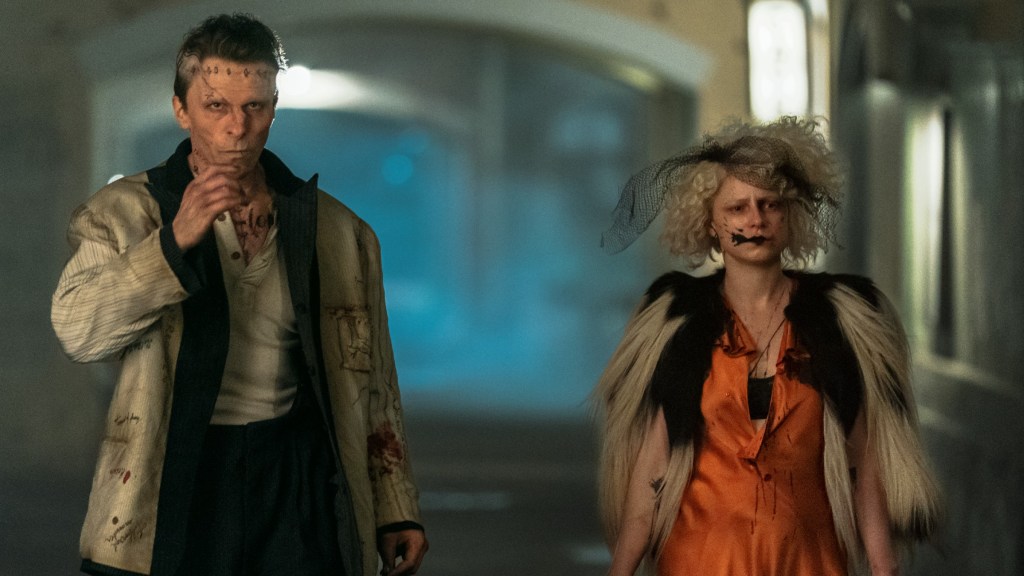
As The Bride! begins, we meet Buckley’s character, Ida, a woman who finds herself caught in a web of powerlessness, courtesy of the local mob in Chicago. Her outbursts one night (more on those later) culminate in her taking an unplanned tumble down the stairs, with death only the beginning of her story. Not long after her demise, Frankenstein’s monster (a robust and explosive Christian Bale, as usual) arrives in town to convince Dr. Euphronious (Annette Bening in a surprising role) to create a mate for him based on her own studies and work. After the two dig up Ida’s body, the Bride is born.
Jessie Buckley has made a name for herself over the past six years for her distinct performances, none of which resemble each other in the slightest, confirming that her range is vast and seemingly endless. With The Bride!, Buckley has to walk the line of being a woman who is at war with the world around her, but also her own mind. She’s captivating in nearly every scene and endlessly entertaining.
One of the most interesting elements of The Bride! is that it begins not unlike James Whale’s own 1935 film, but instead of Mary Shelley appearing alongside Percy Bysshe Shelley and Lord Byron to wax poetic about the idea of a sequel to her novel, she’s stuck in the darkness of some undead abyss. Buckley appears as the author in this sequence, playing dual roles in the film just like Lanchester did in The Bride of Frankenstein. Convinced that her captivity in this realm can be broken by crafting a new story, she sets the stage for The Bride! in a way that surprisingly remixes Whale’s film, but also allows Buckley to push her range even further.
Though Buckley’s shadowed take on Shelley appears throughout the film, with a maniacal laugh destined to be sampled in songs for the rest of time, the most impressive element of her performance is how it bursts out of her while she’s in character as Ida/The Bride. Buckley’s transformative role is one that’s splintered, with no clear line between where one character stops and the other starts.
With this idea of Shelley’s ghost inhabiting Ida and driving her steps, Gyllenhaal has introduced a pretty distinct meta flavor into her film, with the author not only directly inserting herself into the “story” as the script simultaneously plays with the idea of an author being in conversation with their own work. What’s it about? What influence do I have? What’s me, and what are my characters? The trouble is that as distinct as this element of The Bride! really is, it quickly becomes one of several ideas thrown into the blender of the film itself, all of which meld together into something not wholly satisfying.
The Bride’s Storytelling Never Fully Comes Together
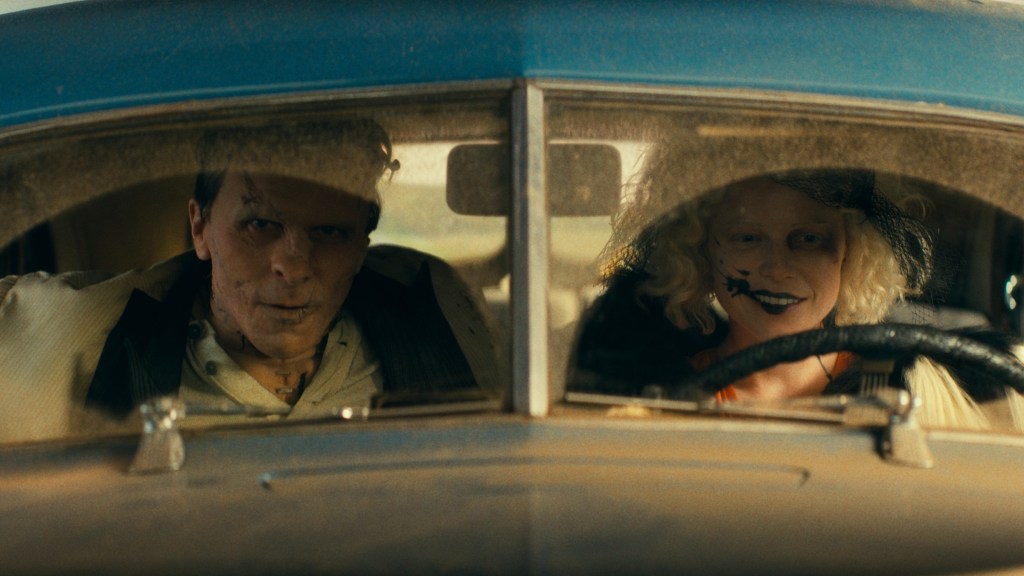
One of the other major elements of the film is how Frankenstein’s monster has survived for more than a century since the events of the novel, in part because of his love for watching performers and their craft (his favorite being Ronnie Reed, played by Maggie Gyllenhaal’s brother, Jake). This leads to one of the most clever elements of The Bride!, as “Frank” routinely imagines himself on the big screen, either in the background or as the star. His attempts to replicate what he’s seen as larger-than-life on film often lead to disaster, though, especially when he finally meets Ronnie Reed in person and fails to make an impression despite the profound meaning he’s derived from the actor’s work. It’s one of the many skewers found within The Bride! that is interesting in the moment, but it’s ultimately shooed away in favor of exploring other themes, of which there are many.
Another key piece of The Bride! is how Ida’s previous life, and the abuse she suffered and saw, collide with the anger she now feels as a resurrected woman. The film uses it as a springboard to comment on female rage, confronting patriarchal control and the male gaze, and even begins a subplot about how the Bride goes viral to a degree, influencing women around the country to follow in her footsteps by taking up violence (while wearing her iconic black splotch on their faces). Yet this element is abandoned just as quickly as it’s introduced.
The absolute weakest element of The Bride! is Peter Sarsgaard as Det. Jake Wiles, a Chicago cop who’s on the hunt for Frankenstein and his Bride, with his secretary, Penélope Cruz’s Myrna Mallow, in tow. Their subplot arrives far too late in the film to naturally belong in the plot, but also strikes a distinct tonal note that feels completely at odds with everything else. Sarsgaard is fine in the role, but his and Cruz’s performances are so jarring and out of place that it often feels like they only exist to clumsily fill any narrative gaps, with any larger significance to the story excised for runtime.
Frank’s ideas of a perfect life, influenced by watching movies, and Ida’s attempt to reckon with male control collide, of course, but only for a fleeting moment. This is where the weaknesses of The Bride! as a whole can be seen, though, as it’s a film with a lot of different ideas, but doesn’t have enough time to thoroughly explore them. By the time the movie needs to offer a real narrative conclusion, every storyline and character gets shoved together for a final confrontation that feels like it happens simply for the sake of viewer expectation.
The best parts of The Bride!, though, are when the film flies in the face of expectations. Buckley and Bale have hilarious moments of levity as flesh made living, and their attempts at a normal life are unique in the larger Frankenstein pantheon. The Bride! is often quite gorgeous to look at, with killer production design and a gritty neon motif, and there’s a dreamlike quality to the storytelling where pieces remain memorable, but the end product isn’t cohesive by comparison. Leaving the theater after watching The Bride! can best be compared to trying to recall all the images your mind conjured while you were sleeping, complete with inconsistencies and bizarre detours.
Most Viewed
-
Image courtesy of MAPPA -
Image courtesy of Daybreak Game Company