In April 2009, a nine-week-old ABC sitcom aired an episode in which a corporation installs motion-activated light sensors to save money, and the sensors do not detect employees with dark skin. Management’s position is that this is not racism, because the system is not discriminating against anyone, it is merely ignoring them. The proposed fixes escalate from a segregated drinking fountain, abandoned as too obviously Jim Crow, to assigning white employees to follow Black employees around the building so the sensors trip. That one collapses on its own arithmetic, because hiring white shadows means hiring proportionally more Black employees, which means hiring more shadows, and the chart at the end of the loop has everybody on Earth working for the company. The argument that finally kills it is that there would not be enough parking. Nothing in the episode is resolved by anyone deciding to do the right thing. It is resolved by a cost projection, and the show is completely clear-eyed about the difference.
Videos by ComicBook.com
The show was Better Off Ted, created by Victor Fresco, and about 4.2 million people were watching that night. It never did much better, and it usually did worse. ABC produced 26 episodes and broadcast 24 of them. Seventeen years later the thing reads less like a sitcom than a documentary about the decade that followed it. That episode is not a one-off either. Veridian Dynamics, the company at the center of the series, spends two seasons doing things that played in 2009 as absurdist corporate satire and read now as a list of things that actually happened at real companies to real people. What follows is the case for a comedy almost nobody watched. That includes the structural reason it kept getting better while its audience kept shrinking, an honest accounting of what The Office does better than it does, the specific piece of scheduling bad luck that helped bury it, and the genuinely irritating problem of how you are supposed to watch the thing in the first place.
The Best Workplace Comedy Nodbody Saw Predicted Algorithmic Bias In 2009

That episode is called “Racial Sensitivity.” It is the fourth episode of the first season, it aired on April 8, 2009, and it is the sharpest half hour of television anyone made about corporate America that decade. What makes it hold up is not that it is brave. It is that the satire is aimed at the right target. There is no villain in it. Nobody at Veridian Dynamics wants to exclude anyone, and the series is careful about that, because its actual subject is a system that produces a discriminatory outcome with no bigot anywhere in the chain, and an institution whose instinct is to bolt increasingly absurd remedies onto the broken thing rather than replace it. The company never does fix the sensors. It reverts to the original system, writes a cheerful item about the whole affair in its internal newsletter, and moves on, which is the most accurate thing in the episode.
And then the argument that wins is cost. Not conscience, not policy, not anybody’s better nature. A spreadsheet. Every story about facial recognition failing on darker skin, every soap dispenser that will not see a hand, every hiring model quietly filtering resumes, has that exact shape. The idea was not new to researchers even in 2009, because computer scientists had been writing about bias built into automated systems since at least 1996, and a British medical school had already been investigated for an admissions program that screened out applicants by name and place of birth. What had not happened yet was any of it reaching the public. The studies and investigations that put the problem in front of ordinary readers were still years off, and none of the vocabulary that now arrives with it existed on network television at all. A cancelled ABC comedy got there first, and seventeen years on it still has people asking for it back.
The Show Was Getting Better Right Up Until A Game 7 Took Its Last Two Episodes Off The Air

The numbers are grim and instructive. The pilot drew 5.64 million viewers on March 18, 2009, which trade coverage at the time called the lowest-rated sitcom premiere ABC had launched that year. It went down from there. By the time the network finished burning off the rest of the first season the following summer, the show was averaging a shade over two million viewers a week, and the season one finale drew 2.41 million on a Tuesday night in August. What is strange is that the critical record moved in the opposite direction. The reviews warmed as the show went on, the second season is the half that people who know it tend to name as the better one, and the writing kept tightening while the audience kept draining away. It got better and fewer people came. That combination is not supposed to happen, and when it does it usually means almost nobody was ever told the show existed.
Fresco has been plain about why, saying he thinks not enough people knew about it, and that the ones who did find it, in his words, “liked it a lot.” The scheduling did not help him. The show launched on Wednesday nights behind Scrubs, then moved to Tuesdays in June for the summer stretch networks use to clear out episodes they have stopped promoting. The second season came back on Tuesdays in December and went out in a pattern that looks like a drawer being emptied rather than a season being aired: a single episode on New Year’s Day, then two stacked together on January 5, then two more stacked on January 12. The last episode ABC ever broadcast went out on January 26, 2010. Nothing about that run suggests a network that still expected anyone to follow along, and the ratings behaved accordingly, sliding a little further with almost every stacked pair the network put out.
Then it got worse in a way that is almost too neat. ABC did not announce the cancellation until the middle of May, nearly four months after the last episode had aired. Two episodes were still sitting finished and unbroadcast. The network said it would run them back to back on June 17, and attached a condition: only if the NBA Finals did not go to a seventh game. The Finals went to a seventh game, ABC carried it, and the two episodes were never rescheduled. They premiered in Australia that August instead, and reached American viewers later through digital stores and home video, but never once on the network that paid for them. Neither one is a finale in any satisfying sense, and neither was written to be, which somehow makes the ending worse rather than better. A show about a company that makes inconvenient things quietly disappear was itself made to quietly disappear, by basketball.
What The Office Does Better, And Why It Is Not The Same Contest
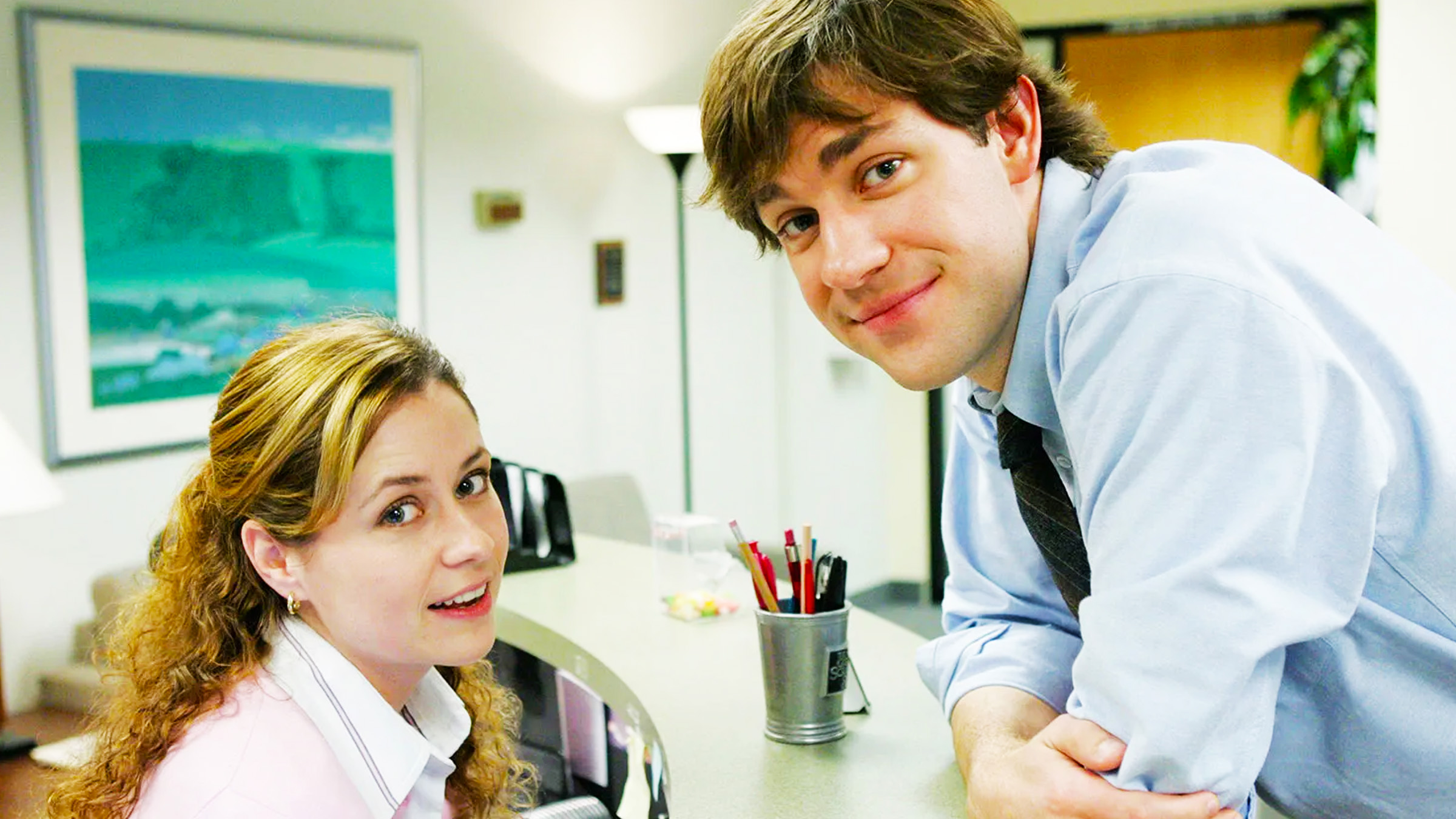
The Office earned every bit of what it has, and the record is not close. It ran nine seasons and 201 episodes, took 42 Emmy nominations and won five, including Outstanding Comedy Series in 2006, and peaked at 22.9 million viewers with the episode that followed the Super Bowl in February 2009. Then it managed something almost no network sitcom has, which is to get bigger after it was finished. Nielsen measured 52.1 billion minutes of it streamed on Netflix in the United States across 2018, the most of any show that year and roughly twenty billion minutes clear of second place. The following year NBCUniversal’s streaming service agreed to pay around $100 million a year for five years to move it in-house, topping a reported Netflix bid for a show its own studio had produced all along. That is $500 million spent largely shifting money from one corporate pocket to another, and it was still judged worth doing.
That is not a fluke of nostalgia. The Office is a character show, one that took a few seasons to become great, and it spent nine years building people you worry about. Jim and Pam are the reason it gets rewatched rather than merely remembered. When this site put together seven workplace comedies to watch if you miss it, Better Off Ted was not among them, which is the whole problem in one data point. It has nothing like The Office‘s emotional engine and never wanted one. It is a machine for jokes about systems, it runs about nine hours end to end, and it will not make you cry. Those are different achievements and pretending otherwise would be dishonest. The claim here is narrower and, I think, defensible: as a piece of writing about how organizations actually behave, Better Off Ted is the sharper show, and it is sharper because it never had to be loved.
You Are Going To Have To Buy It, And That Is Part Of The Story

Here is the frustrating part, and there is no way to soften it. Better Off Ted is not on a single subscription service in the United States. Not Hulu, which carried it until a couple of years ago and no longer has a page for it. Not Prime, despite what a number of older articles still say. Not Peacock, not Netflix, and not any of the free ad-supported services where forgotten network comedies usually wash up eventually. It is buy-only, about ten dollars a season on Amazon, Apple or Fandango At Home, which comes to roughly twenty dollars for the whole run. Twenty dollars is not a large amount of money. It is, however, a real decision, and it is not a decision many people make about a show they have never heard of on the say-so of a stranger. For a series whose entire subject is institutional forgetting, being genuinely hard to see is an almost unbearably fitting fate.
It is also why the headline is true rather than rhetorical. You probably have not seen it, and that is not because you missed it. It is because for most of the sixteen years since it ended there has been nowhere easy to find it. If paying for it is a dealbreaker, the first two seasons of Party Down stream free with ads on Prime Video and cover a fair amount of the same ground, though the 2023 revival season sits behind a Starz subscription. It is worth noting what has happened to this material in the meantime, though. Severance is the most decorated workplace show of the decade so far, with 41 Emmy nominations and ten wins, and a great deal of what it does with the language of corporate cheerfulness is a version of what Fresco was doing on ABC in 2009, with a fraction of the budget and none of the goodwill.
Fresco did this twice, incidentally. Before Better Off Ted he made Andy Richter Controls the Universe for Fox, another sharp, strange comedy about working somewhere absurd, and Fox cancelled it in 2003 after 19 episodes, only 14 of which it bothered to broadcast. Two networks, two shows, the same shape of failure, and in both cases finished episodes that were paid for and then simply never aired. The consolation is that the second one turned out to be about something that only got more true with time. Veridian Dynamics is a company that will do anything, to anyone, for any reason, provided the math holds, and it says so cheerfully in its own commercials. In 2009 that was an absurd exaggeration of the way a large organization talks about itself. It plays now as a fairly ordinary description of one, which was the joke all along and is also the reason almost nobody was ready to laugh at it.
More TV Shows
-
20th Century Studios