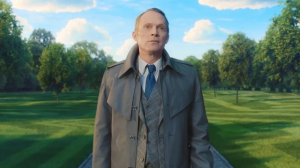
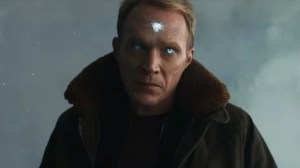
Spoilers for HBO’s Lanterns follow:
In addition to its central mysteries about the Manhunters and the history of the Green Lantern Corps, HBO’s Lanterns has also included several more subtle lines and plot points that continue to flesh out the world of the new DC Universe. Despite being set mostly in Rushville, Nebraska, the series has referenced DC’s Gotham City and related comics mythology particularly often, and the latest episode features the most direct reference so far to the latter town’s Dark Knight Detective. While criticizing Guy Gardner (Nathan Fillion), his successor as Earth’s Green Lantern, Hal Jordan (Kyle Chandler) notes how a method of communication Guy’s established with the people of Rushville blatantly copies a system Batman pioneered to help fight crime in Gotham. Fans still know very little about how Batman will fit into the DCU and this name drop doesn’t provide any additional clues about that, but it does call to mind an iconic interaction Batman has with Guy in the comics.
Videos by ComicBook.com
Lanterns Episode 6, “Bad Optics,” reveals that John Stewart (Aaron Pierre) and Hal had a tense reunion in Rushville shortly before the latter was murdered in 2026. When John discovers Hal doesn’t intend to apologize for his actions during their disastrous mission to Rushville ten years earlier, the discussion ends with the pair still at odds. However, John does not noticeably disagree with Hal’s criticisms of Guy’s public exploits as the new Lantern. Speaking about a specialized floodlight that shines the Green Lantern logo into the sky which Guy “donated” to Rushville to use should the people ever need him, Hal says Guy, “Ripped off that bat guy over in Gotham, too.” He’s referring, of course, to the Bat-Signal, a similar floodlight that Gotham police use to call for Batman’s assistance. The Bat-Signal’s one of the most famous and long-standing elements of Batman lore, well-known even to audiences with casual knowledge of DC Comics, so as soon as the scenes of Guy’s modified version started to appear in promotional material for Lanterns it was recognized as an obvious Easter Egg. But Guy’s lack of originality being equally as obvious in-universe could be setting him up to have as adversarial a relationship with Batman as he does in the comics, and in turn lead to an adaptation of a famous scene.
Guy Gardner Feuded With Batman in Justice League International
Following DC Comics’ Crisis on Infinite Earths and Legends events, the ongoing Justice League comic was rebooted in 1987. The new series followed a reimagined version of the League known as the Justice League International or JLI, created by Keith Giffen and J.M. DeMatteis, with the comic’s title soon changed to match. The new team was officially sanctioned by the United Nations and its storylines often explored intersections between traditional superhero storytelling and more grounded depictions of global politics. However, the series is ultimately most famous for its tone, which was more broadly comedic than most contemporary superhero comics, and its eclectic cast. Editorial plans prevented some of DC’s most recognizable heroes like Superman and Wonder Woman from being members of the new League, though JLI was permitted to feature Batman.
Guy was also one of the original members of the JLI, and the series is often given much of the credit for developing his most recognizable characteristics and personality traits. Though Guy had been portrayed as extremely confident and sometimes brash since his introduction in the 1960s, JLI heightened these qualities significantly, building off of a recent storyline in which the character’s personality began to change due to brain damage from a head injury. JLI cemented Guy’s egotism and obnoxiousness as some of his most defining traits, and many subsequent comics have continued to emphasize how most other heroes dread having to work with him, even though he does consistently prove his heroism in the most dire of situations.
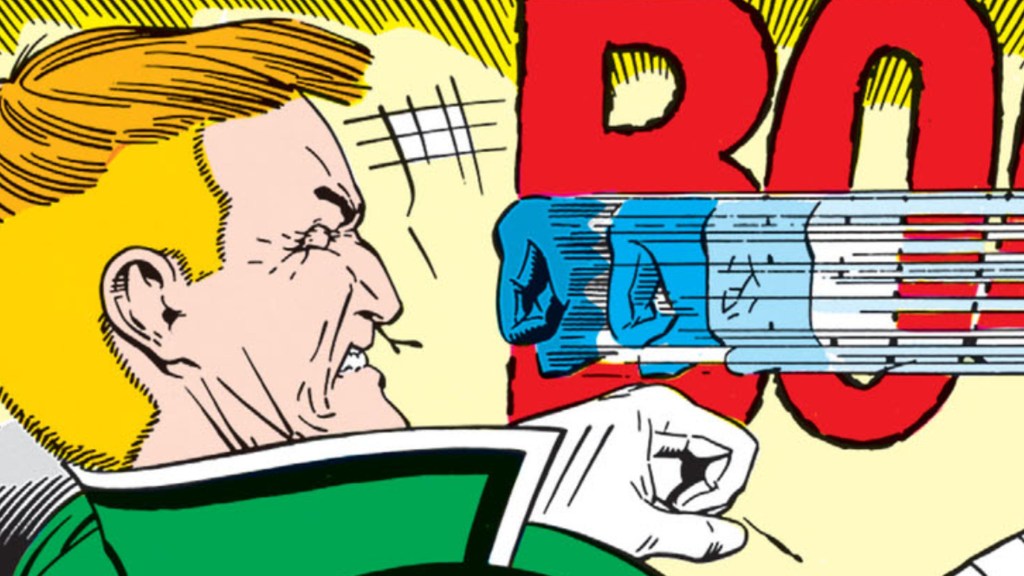
In the earliest issues of JLI, Guy was fixated on becoming the team’s leader, becoming increasingly frustrated when the group instead tended to follow Batman’s orders and strategies. In issue #5 Guy goes so far as to challenge Batman to a fist fight to determine who the true leader is, for which he agrees to remove his Green Lantern power ring. Though Batman had mostly ignored Guy’s earlier provocations, this time he punched him in the face, knocking Guy to the ground, dazed, so that his machismo would no longer distract from the team’s mission. Other members of the team found Guy’s humiliation to be a hilarious comeuppance, with Ted Kord/Blue Beetle, in particular, frequently emphasizing that it only took Batman “one punch” to defeat him.
Could the DCU Adapt Batman and Guy Gardner’s Famous Fight Scene?
The “one punch” scene is arguably the most famous in Guy’s entire comics history, having been frequently called back and paid homage to, even in stories involving unrelated characters. Given how faithfully the DCU has adapted Guy’s infamous reputation in the superhero community, and the obvious influence of the JLI comics on the franchise as a whole, and especially James Gunn’s personal projects, it would not be surprising if the scene were adapted in the future. That being said, Batman’s involvement in the moment could be hard to pull off in live action.
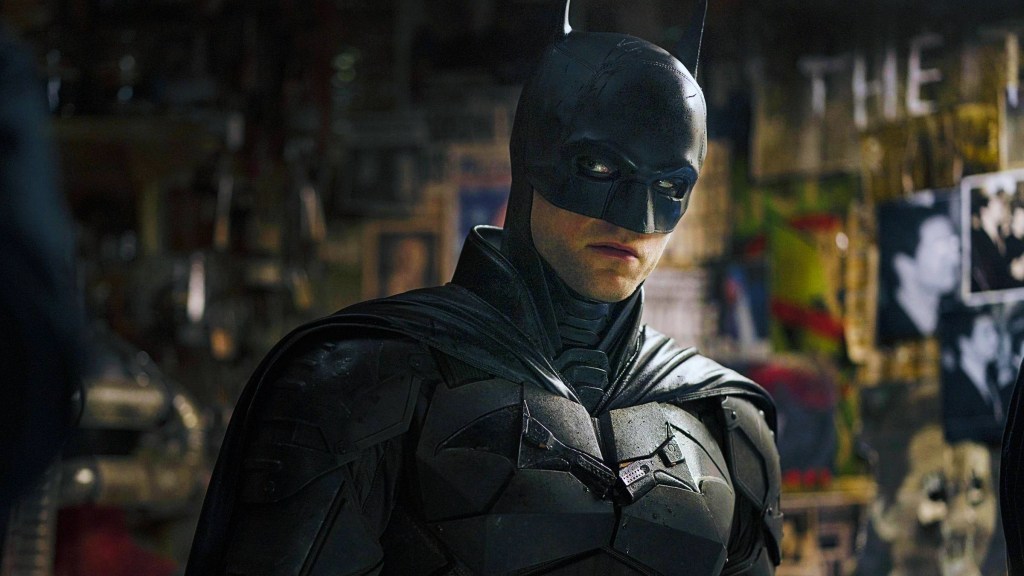
Although he’s still set to headline the slowly developing film The Brave and the Bold, fans don’t know what actor will play the DCU Batman or if he’ll be fully introduced in any earlier projects. Many still hope that DC Studios will change plans and fold Robert Pattinson’s version into the franchise, believing his Bruce Wayne would share a compelling dynamic with David Corenswet’s Superman. But Pattinson himself recently explained why he doubts his iteration would work well outside of Matt Reeves’ The Batman films. And even if the DCU’s Batman is a bit more lighthearted and at home in a world of superpowers, the “one punch” scene could still be problematic. Bruce is not petty enough to care about Guy copying his signal, and turning to physical violence, even briefly, to shut Guy up could easily make Bruce seem less mature and dignified than moviegoers expect him to be. But if provoked in a believable way it could also be an instantly iconic scene and great payoff to the running joke of Guy bothering his peers.
Do you think the DCU will deliver this iconic but goofy fight? Let us know in the comments.
More TV Shows
-
IMAGE COURTESY OF LUCASFILM