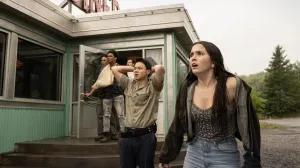
Very few TV shows today can pull off what Stranger Things has managed over almost a decade, and it’s fiercely sustaining now with its fifth and final season. However, even with fans hyped for the story’s conclusion and buzzing over the first four episodes already out, the truth is you can’t crown it a 10/10 victory just yet. Why is that? Because the show is now facing a level of pressure few series ever do: justifying nearly three years of waiting, a massive marketing campaign, and the promise of a “worthy” finale. Especially considering the history of huge TV productions that ended up disappointing (no one forgets Game of Thrones), we’ve already learned that it’s complicated to give a final verdict on whether the series is completely perfect at this point.
Videos by ComicBook.com
Stranger Things has been through a lot: it’s had its praise, but also its fair share of criticism. And for the finale, on top of all the hype, there were promises from the Duffer Brothers. So it’s really a matter of waiting to see how it all plays out. But based on what’s been released so far, you can definitely get a sense of whether the long wait was worth it. To figure that out, there’s a lot to unpack.
Warning: Spoilers below for Stranger Things 5, Volume 1.
Was the Long Wait for Stranger Things Season 5 Really Worth It?

With the Volume 1 episodes, the show does what it does best: fast-paced storytelling, energetic character beats, and some solid twists — yet without delivering anything so massive or narratively daring. Still, there’s a real sense of reunion. The season’s opening basically works as a calculated reintroduction, almost like a promise to the audience that the final journey will be worth it even if it doesn’t feel fully there yet. And okay, if there’s one thing the Duffer Brothers know, it’s how to make an impact, and hitting the peak isn’t obviously something you do in a second.
But up to this point, Stranger Things has proven why it’s such a bingeable, addictive phenomenon. The first episode nails the series’ blockbuster TV approach: massive sets, a genuinely creepy Demogorgon, quick dialogue that keeps tension high, and all balanced with strategic pauses to humanize the characters. It’s not revolutionary, but it’s an efficient return to the core of what hooked audiences from day one. The season opens with energy, backed by a cast that’s fully in control of their roles, and a narrative that, while not completely new, finally seems ready to move forward without dragging (the premiere proves this clearly).

Still, all that familiarity doesn’t hide the fact that Volume 1 trips over some of the same old problems: Stranger Things still loves splitting characters into long-separated storylines, which dulls some of the emotional impact that should hit immediately. This was heavily discussed with Season 4, where almost everyone was divided into separate threads, barely crossing paths (or not at all). That could be forgiven then, because, overall, that batch of episodes is often regarded as the best so far. It was a strategy that worked in a way and made sense in the context of the story. But repeating it now leaves a bit of a déjà vu (the same goes for the army storyline, which is getting pretty worn out, especially with the scientists’ obsession with Eleven (Millie Bobby Brown). It doesn’t ruin the overall experience, but it reinforces that the show could be bolder — especially after such a long break.
Even so, when the season aims high, it really hits. It’s clear the Duffer Brothers are finally setting up conversations Stranger Things has avoided for years. Will’s (Noah Schnapp) arc, for instance, is no longer passive; he’s fully engaged in the emotional stakes, with moments hinting at a more daring payoff than expected. Max’s (Sadie Sink) storyline, on the other hand, makes a surprising return, now with Holly’s (Nell Fisher) help, which, while still tense, moves a character that fans were dying to know the fate of. Overall, it feels like the show has stopped hiding behind pure nostalgia and is finally confronting its themes head-on, without hesitation.

It’s also worth noting that the group’s dynamic feels way more mature as well, as if the showrunners acknowledge the characters can’t just function as pieces on a board anymore. In the early seasons, they mostly acted to serve plot beats without much emotional depth or consistent growth (Eleven solving a problem, Mike (Finn Wolfhard) uncovering something, or Dustin (Gaten Matarazzo) providing comic relief, for example). Season 5 changes that immediately: everyone has purpose and agency. Their experiences over the years have made them more complex, so their reactions, decisions, and consequences now make sense for their personal stories, not just to move the plot forward. But even though the overall tone is more adult, it still balances the series’ charm — the light humor that has always defined Stranger Things is still there.
And even though the show still leans on occasional unnecessary one-liners, Volume 1’s pacing keeps you hooked. There’s a newfound confidence in longer scenes and meaningful pauses, which helps build tension more steadily.
Stranger Things Season 5 Still Has a Long Way to Go to Fully Satisfy Fans
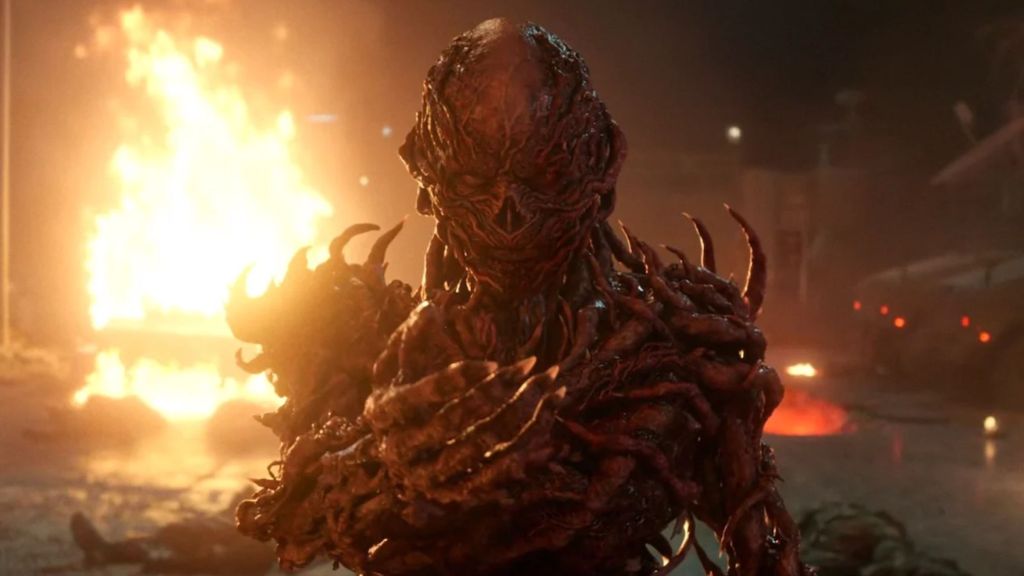
But even with all this, the question remains: after years of waiting, is it enough? Partially. The season’s start has quality, delivers solid moments, and absolutely hits when it wants to be emotional — but it doesn’t explode. The Duffer Brothers’ start is solid, competent, fun, and full of potential, with the characters hatching a plan and wasting no time putting it into action, Dustin dealing with the grief over Eddie’s (Joseph Quinn) death, the Demogorgon crashing into the Wheelers’ house, Will connecting with Vecna (Jamie Campbell Bower) and the Hive Mind, Max managing to hide in Henry’s memory, the return of Kali (Linnea Berthelsen), and so on.
However, it’s not the game-changing event fans expected after such a long hiatus. It feels more like a warm-up than a climax, like the series is pressing the gas but still keeping the brake slightly on. And that’s not necessarily a mistake; it seems deliberate. Volume 1 works as meticulous preparation: the episodes set up the idea that something big is coming, and you can feel the care in building the conflicts. It is basically saying, “Relax, the wait is worth it, but the full payoff isn’t now.” And in a way, it works, especially since the series is split into three parts and Volume 3 is the ultimate finale. In the end, using these first four episodes as a foundation isn’t a narrative crime. So, as mentioned before, it’s only partially enough.

The bigger challenge is probably audience expectation. People have waited so long that, naturally, they were expecting a bigger punch right away. In that sense, the season doesn’t fully justify its absence. It delivers technical quality, sharper performances, the joy of seeing beloved characters again, and promises deeper thematic discussions, but it doesn’t give that immediate shock to make the return feel historic (even though Episode 4 ends on a huge cliffhanger, which is basically what everyone’s focused on talking about now). It offers a strong, comfortable, promising start, yet still tethered to some old habits.
So, in the end, did Stranger Things Season 5 (or at least the beginning of it) justify the wait? If you look at Volume 1 on its own, not exactly. But if you consider it as part of something that’s expected to be big, then the answer is yes. Because even though it’s basically an introduction to an epic, emotional series finale, it still made a strong entrance. It shows the series still has enough energy, style, and charisma to carry the final chapter with confidence.
What do you think of Season 5 so far? Leave a comment below and join the conversation now in the ComicBook Forum!
Most Viewed
-

Courtesy of Eight-Bit -

Courtesy of Crunchyroll -
Image Courtesy of Netflix -

Courtesy of Kadokawa / Shosetsuka ni Naro -
Image Courtesy of Marvel Comics