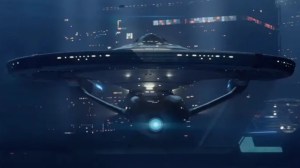
Right from the moment the first USS Enterprise took us to the stars and we were introduced to Starfleet, the intergalactic peace-keeping and humanitarian organization of the future, Star Trek fans wondered one thing: Is Starfleet truly a diplomatic organisation, or a military one? The characters we know and love serving within Starfleet tend to insist that it is nothing but a peaceful exploratory and scientific enterprise, however one doesn’t have to look too closely to see that, at times, Starfleet presents much more like a kind of de facto ‘space’ branch of the armed forces, complete with ranks, uniforms, courts-martial, and battleships. The franchise itself has spent decades talking around this issue. Enemies of Starfleet tend to declare that it is more of an invading colonial force than a force for good.
Videos by ComicBook.com
Now, more than 60 years later, Star Trek appears to have finally put this long-running debate to rest. Star Trek: Starfleet Academy introducing a separate War College that is also a feeder school to Starfleet, means the franchise has finally acknowledged what fans have long suspected: Starfleet may not define itself as a military force, but it absolutely functions like one. But this contradiction was never accidental. It was baked into Star Trek from the very beginning, thanks in large part to Gene Roddenberry’s own somewhat conflicted vision.
Roddenberry’s Uneasy Relationship with the Military

Roddenberry was a World War II veteran, and his experiences had made him deeply skeptical of militarism. When he created Star Trek, he imagined Starfleet as something better and more sophisticated than Earth’s current armed forces — an enlightened organization focused on exploration, diplomacy, and scientific discovery. Starfleet officers might have been armed, but they weren’t primarily supposed to function as soldiers. They would defend themselves if needed, but were explorers first.
This philosophy famously meant Roddenberry famously disagreed with many of the creative choices in Star Trek II: The Wrath of Khan. Nicholas Meyer’s film leaned heavily into naval imagery, from the use of naval terminology to Khan’s sarcastic jibe that “We’re one big happy fleet,” (though it’s hardly surprising one of Starfleet’s most formidable adversaries would see them as a threat!), and Roddenberry was reportedly very much opposed to this picture of Starfleet.
But the genie was already out of the bottle. Once Star Trek leaned into a more militaristic guise, it was hard to unsee. The uniforms, the ranks, the strategizing, if it walks like a duck, quacks like a duck… well you get the picture.
A Contradiction Star Trek Never Fully Resolved
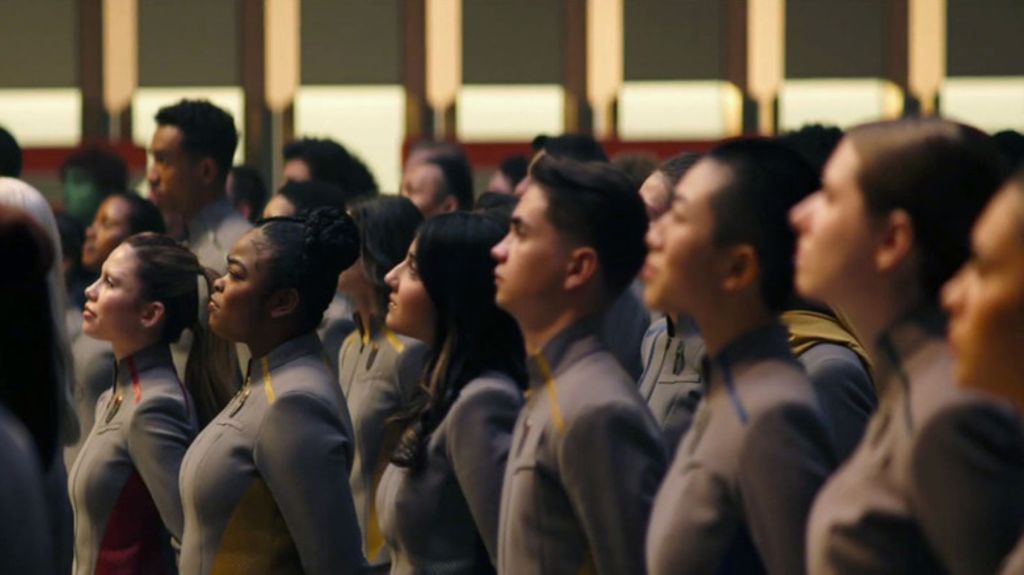
In many ways, it certainly feels like Star Trek has tried to have its cake and eat it where Starfleet is concerned. The Admirals at headquarters would claim peaceful intent, even as they sent heavily armed starships capable of planetary devastation to the border of Federation space to square off against the Klingons. But no, Starfleet was “totally not the military,” just an organization that happens to fight wars, maintain command hierarchies, and train officers for combat…. But no, not an army…
It’s laughable when you think about it, but in many ways, this debate might be part of what makes Star Trek so enduring. The ambiguity and opposing views on its role are reflective of the real world around us and the complexity of real-world diplomatic relations. The debate became part of the franchise’s DNA — endlessly discussed but never really settled. Until now.

Starfleet Academy’s War College Changes Everything
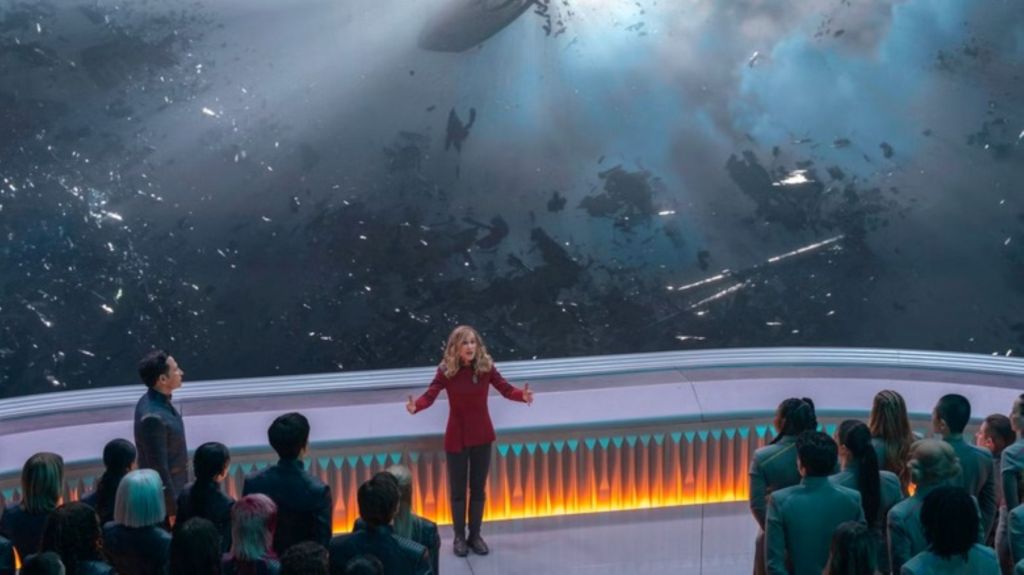
Shows like Deep Space Nine began to confront the contradiction head-on, using the backdrop of the Dominion War to examine what happens when Starfleet is forced to get its hands dirty and portraying Starfleet as an institution struggling with what it had become in wartime.
But Starfleet Academy goes a step further still. Against the backdrop of a society still recovering from the “Burn,” (a cataclysmic event of the early 3000’s which saw the majority of dilithium used to power warp drives destroyed), the show has introduced a quiet but monumental shift in diplomatic policy with the existence of a ‘War College’. An institution dedicated to training young cadets for war having arisen from this dark period and now operating alongside the Academy, might seem like a simple world-building detail on the face of i,t but look closer, and it fundamentally reframes Starfleet’s identity.
The War College is explicitly focused on strategy, conflict, and warfare. It exists to train officers for military leadership. And crucially, it isn’t separate from Starfleet — like Starfleet Academy, it’s a feeder school. Graduates of both Starfleet Academy and the War College will ultimately go on to serve the same organization, with graduates of the War College presumably taking on most of the security and defence roles.
This single storytelling decision does what decades of dialogue never could. It acknowledges that Starfleet encompasses both ideals: exploration and defense. Diplomacy and war. Science and strategy. By creating parallel educational paths, Star Trek no longer has to pretend those functions don’t exist within Starfleet. After all, the reality doesn’t have to be black or white. Being prepared for war doesn’t stop Starfleet aspiring for peace — but it stops it from being evasive about the truth of its capabilities and function when it needs to step up in times of war.
This is a notable departure from Roddenberry’s original instincts, but it’s also a refreshing new honesty in the face of how we’ve seen the franchise evolve. Humanity of the future has faced potentially catastrophic threats too often for Starfleet’s military role to be understated. The Earth-Romulan war, the Klingon War the Dominion War, ever-present threats like the Borg — these weren’t problems solved with tricorders and good intentions alone sadly.
By formalizing a War College and its role, Star Trek implicitly admits that Starfleet prepares for war as a matter of policy. That doesn’t make it a warmongering force, but it does make it a military organization in function if not philosophy.
And that distinction matters. It allows Star Trek to finally stop arguing semantics and start asking more interesting questions: How does an organization dedicated to peace justify its capacity for violence? How do officers trained for war coexist with those trained for exploration? And what happens when those priorities clash?
Showrunners Alex Kurtzman and Noga Landau have spoken about how The War College also serves a crucial narrative function within the show, after all, every good school drama needs its rival school. We can’t wait to see Starfleet cadets and War College face off in a much-anticipated Parrises squares tournament (Go cadets! Go, go, cadets!)
In this sense, Star Trek isn’t abandoning Roddenberry’s vision. Starfleet Academy still exists. The ideals of curiosity, diversity, and cooperation remain. But the franchise is no longer pretending that those ideals exist in a vacuum.
Starfleet is, at last, being portrayed as what it has always been: a hybrid institution, shaped by both hope and necessity. After all these years, Starfleet hasn’t betrayed its philosophy, but it’s finally admitted it’s prepared to defend it, whatever the cost.
What do you think? Leave a comment below and join the conversation now in the ComicBook Forum!
Most Viewed
-

Courtesy of Sony Pictures Animation / McDonald's -

Courtesy of Sony Pictures Animation / McDonalds -

Images courtesy of Warner Bros. Pictures -

Image Courtesy of Netflix -

Image courtesy of The Pokemon Company -

Image Courtesy of Marvel Comics