Star Trek: Starfleet Academy Season 1 has come to a triumphant conclusion, finally confronting the question that has dogged the entire Alex Kurtzman era. Gene Roddenberry envisioned the Federation as a utopian future for the human race, one where we’d outgrown so many of today’s problems. Most of the conflict is with other races and societies, and the Prime Directive subtly hints that these societies were to be coded as “less developed.” It’s true that some stories hinted at a darker side, but these have been the exception rather than the rule.
Videos by ComicBook.com
The Alex Kurtzman era has been very different. Star Trek: Discovery wasted little time focusing in on Section 31, the covert CIA-analog who turned out to be responsible for so many of the galaxy’s problems. Since then, Kurtzman’s stories have really explored the tension between the Federation’s supposed ethics and the hard reality of acting as a galactic power (galactic realpolitik if you will). He’s continued that theme into the late 32nd century, further on in the Star Trek timeline than we’ve ever seen before. Now, though, Starfleet Academy feels like a coda to the entire Kurtzman era.
Starfleet Academy’s Finale Literally Puts the Federation on Trial

Starfleet Academy Season 1 has built to a head in dramatic fashion, with the show’s half-Tellarite, half-Klingon villain Nus Braka engineering one of the Federation’s greatest-ever defeats. He successfully stole a potential superweapon, Omega 47, from a Federation research outpost; then, Nus Braka’s scientists reverse-engineered this, creating a series of mines that they used to cordon off Federation space. If a single Starfleet vessel tried to fly through, the resulting explosion would devastate subspace in that region and make warp travel impossible.
There is so much more to Nus Braka’s plan, though, as revealed in the Starfleet Academy finale. His goal is to put the Federation on trial before the rest of the galaxy, judging Starfleet for its many failures. Braka swiftly adapts when he discovers Chancellor Ake’s USS Athena wasn’t boxed in, using Ake as a representative of the Federation and even persuading Caleb’s mom, Anisha Mir, to act as a witness against her. What follows is an intense trial, with the future of the Federation at stake.
Braka really has three incidents to use as weapons against the Federation. The first is the mere existence of the Omega 47 superweapon, one of the most powerful weapons in Star Trek history, which he argues the Federation should never have developed. On a personal note, Braka points to a Federation attack on his own homeworld – a former strontium mining colony – after his father attempted to get their attention. Finally, there is Anisha’s testimony of how her family has suffered due to Federation heavyhandedness.
Star Trek Finally Stood Up Against Nus Braka’s Accusations

Any Star Trek fan can probably count to two-dozen more examples, particularly from the Kurtzman era, but these specific charges are clearly intended to be representative of them all. In a delightful twist, though, Nus Braka loses control of the trial when Caleb arrives. This gives Ake a chance to argue back, even successfully undermining Braka’s role as judge. She claims the Federation intended Omega 47 as a new power source, and Braka was the one who weaponized it. Ake makes the tremendously effective point that the galaxy can’t trust someone as unstable as Braka with his finger on the trigger of a superweapon.
Anisha Mir’s testimony is effectively undermined by the fact her own son is now a Starfleet cadet, however much Braka protests at “brainwashing,” and Ake points out that Anisha was a willing participant in killing a Federation officer all those years ago. She wasn’t imprisoned for nothing; she was jailed because she had been party to a murder, and the Chancellor demonstrates her familiarity with the charges brought against Anisha by confronting her with the story of the man who was killed. Anisha’s imprisonment was heavyhanded, but it was not unjust, and Caleb has flourished in the Federation’s care.
Ake’s final argument, though, is the most effective. She picks up on one subtle detail in Braka’s own account, namely the red blasts he saw streaking across the sky when he believed the Federation was attacking. That isn’t the color of Federation weapons; it’s the color of strontium burning up in the atmosphere. Ake deduces that Braka’s father attempted to create a strontium weapon, but it backfired, decimating the planet. Braka has been blaming the Federation for a tragedy caused by his own father.
It’s a convincing defense, although there are gaps in it; we know Ake was lying about Omega 47, for example. The superweapon was set up in episode 6, where Braka raided Starbase J19-Alpha. There, Admiral Vance revealed that specific starbase was “an experimental platform new weapons systems,” not a place for developing new energy sources. Starfleet Academy‘s defense of the Federation isn’t quite as complete in the eyes of viewers as it is to the galaxy, although it’s unclear whether this is intentional or a slip-up in writing. Regardless, Braka proves himself by trying to detonate the mines – but the crew of the Athena have managed to deactivate them, stabilizing the Omega 47.
Starfleet Academy Season 1 Feels Like a Code For the Entire Kurtzman Era

Starfleet Academy Season 2 has already wrapped production. Oddly, though, the Season 1 finale feels more like a series finale – and, frankly, a coda to the entire Kurtzman era. The episode carefully wraps up all the different character dynamics, and the credits all discuss the “graduating class” of 3196, as though the cadets have all successfully completed their training. There’s even a bizarre hint that Nus Braka is eventually redeemed after a fashion while in custody, which certainly isn’t set up in the story itself.
As strange as this may be, we can only hope that Starfleet Academy Season 2 drops the critique of the Federation. It’s been overdone during the Kurtzman era, and this season finale feels like a pretty satisfactory way of wrapping it up for good. It’s time for the story to move on – and, with Star Trek now entering a hiatus in production after more than a decade under Kurtzman, it’s possible Season 2 will serve as a launchpad for whatever comes next.
What do you think? Leave a comment below and join the conversation now in the ComicBook Forum!
Most Viewed
-

Official art by Bastien Lecouffe-Deharme -
Image courtesy of Tor Books/Macmillan -
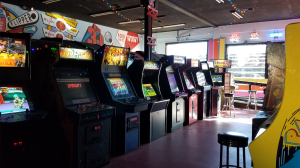
A photo of the Retrovolt Arcade taken in 2017, showing several classic arcade cabinets and stools.