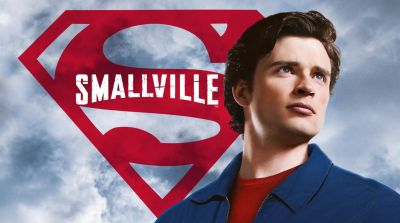
Smallville arrived on television in 2001, before the modern obsession with interconnected cinematic universes dominated the global box office. Developed by Alfred Gough and Miles Millar, the series successfully navigated ten seasons and 217 episodes, establishing a template for the serialized superhero dramas that now proliferate on streaming platforms. By stripping away the cape and the costume under the famous “No Flights, No Tights” mandate, the production forced audiences to engage with the humanity of Clark Kent (Tom Welling) before he became the Man of Steel. This grounded approach to the Superman mythos allowed the show to build a massive following that remained invested in the evolution of characters like Lex Luthor (Michael Rosenbaum) and Chloe Sullivan (Allison Mack) for a full decade.
Videos by ComicBook.com
The historical significance of Smallville comes from its ability to reinvent the classic DC Comics hierarchy for a younger demographic while respecting the core tenets of the lore. Throughout its run, the series introduced a sprawling roster of iconic figures, including Oliver Queen (Justin Hartley) and Lois Lane (Erica Durance), long before they were staples of mainstream media. Today, the show remains a foundational text of genre television, possessing a high rewatchability factor due to its character-driven storytelling and the technical ambition of its most significant chapters. Some episodes, however, are easier to enjoy as standalone entries in the canon, due to their dramatic excellence, fun factor, or mythological importance to the narrative of Smallville.
10) “Luthor” (Season 10, Episode 10)

The tenth season of Smallville utilized the concept of the multiverse to deliver a stark contrast between heroism and entitlement. In “Luthor,” Clark Kent is transported to a parallel reality where he was discovered and raised by Lionel Luthor (John Glover) instead of the Kent family. This narrative shift allows the production to explore a dark version of the protagonist known as Clark Luthor, providing a fascinating “what if” scenario that rewards long-term viewers. The episode is highly rewatchable because it serves as a showcase for the range of the lead actor, who effectively differentiates the two versions of the character through body language and vocal tone. The inclusion of the mirror universe also highlights the fundamental importance of the Kents in shaping the savior of humanity, grounding the high-concept science fiction in the show’s core emotional themes.

9) “Transference” (Season 4, Episode 6)

Body-swap tropes often result in comedic filler, but Smallville used the device to escalate the psychological warfare between its lead characters. When a Kryptonian stone causes Clark Kent and Lionel Luthor to switch bodies in “Transference,” the result is a chilling exploration of power and deception. The episode stands out due to the remarkable performances of both actors, particularly Glover, who captures the youthful confusion and moral fortitude of Clark with startling accuracy. Simultaneously, Welling delivers a menacing performance as a man possessed by the ruthless ego of a billionaire patriarch. This role reversal forces the audience to view the familiar farm setting through a predatory lens, making the eventual resolution both satisfying and narratively significant for the ongoing conflict regarding the stones of power.
8) “Onyx” (Season 4, Episode 17)

The duality of Lex Luthor is the central tragedy of Smallville, and “Onyx” literalizes that conflict through the use of Black Kryptonite. After a laboratory accident splits Lex into two separate entities—one representing his conscience and the other his uninhibited ambition—the show provides a terrifying glimpse into the villain he is destined to become. Rosenbaum dominates the screen, portraying Alexander as a calculating sociopath who possesses no empathy for his friends or family, while the gentler Lex persona tries to minimize the chaos rapidly spreading. The episode remains a fan favorite because it confirms that the darkness within Lex was not merely a product of his environment, but a sentient part of his psyche waiting to be unleashed. The high-stakes confrontation between the two versions of Lex serves as a precursor to the global threat he eventually poses to the world.
7) “Memoria” (Season 3, Episode 19)

“Memoria” functions as a deeply emotional origin story that connects the traumatic childhoods of both Clark Kent and Lex Luthor. By utilizing a memory-immersion tank, the episode reveals the tragic circumstances surrounding the death of Lex’s infant brother and the subsequent emotional abuse Lex suffered at the hands of Lionel Luthor. At the same time, Clark experiences a vision of his biological mother, Lara (Helen Slater), providing a rare moment of connection to his Kryptonian heritage. “Memoria” is celebrated for its cinematic visual style and its refusal to simplify the complex relationship between fathers and sons. By uncovering buried secrets, the narrative adds a layer of tragic inevitability to the friendship between the two leads, making it an essential chapter for understanding their future motivations.
6) “Reckoning” (Season 5, Episode 12)

The landmark 100th episode of Smallville, “Reckoning,” delivered a seismic shift in the status quo by forcing Clark Kent to choose between his personal happiness and the natural order of life and death. After Clark reveals his secret to Lana Lang (Kristin Kreuk) and proposes marriage, a series of tragic events leads to her death, prompting Clark to beg his biological father for a chance to reset the timeline. The cost of this temporal interference is the life of Jonathan Kent (John Schneider), whose sudden heart attack remains one of the most devastating moments in Smallville‘s history. This episode is a mandatory rewatch because it marks the end of Clark’s adolescence and the beginning of his adult responsibilities. The emotional weight of the funeral scene, combined with the permanent loss of a core mentor, defines the moral trajectory of the remaining seasons.
5) “Crimson” (Season 6, Episode 13)

Red Kryptonite episodes are consistently entertaining due to their ability to strip away the inhibitions of Clark Kent, and “Crimson” adds the chaotic energy of Lois Lane (Erica Durance) to the mix. After being exposed to a Red Kryptonite-infused lipstick, Lois becomes obsessively infatuated with Clark, leading to a series of public confrontations that disrupt a dinner party hosted by Lex Luthor. The episode is a highlight for the chemistry between Welling and Durance, offering a playful yet revealing look at the underlying attraction between the two characters. Beyond the humor, the narrative also pushes Clark to voice his frustrations regarding the relationship between Lex and Lana Lang, resulting in a physical altercation that further erodes the remnants of their former friendship.
4) “Rosetta” (Season 2, Episode 17)

Technical innovation and legendary casting converged in “Rosetta” to create one of the most culturally significant episodes of Smallville. That’s because the appearance of Christopher Reeve as Dr. Virgil Swann serves as a literal passing of the torch from one generation of Superman to the next. In this chapter, Clark Kent finally learns the name of his home planet, Krypton, and receives a message from his biological father regarding his destiny on Earth. The inclusion of the iconic score by John Williams during the meeting between Reeve and Welling provides a sense of mythic weight that few television shows can replicate. This episode is an essential rewatch because it validates the place of Smallville within the wider Superman legacy while expanding the internal mythology of the series beyond the borders of a small Kansas town.
3) “Homecoming” (Season 10, Episode 4)

“Homecoming,” the 200th episode of Smallville, is a celebratory retrospective that utilizes time travel to honor the past and glimpse the future. Guided by Brainiac 5 (James Marsters), Clark Kent visits his high school reunion and eventually travels to the year 2017, where he witnesses his future self as a fully realized superhero at the Daily Planet. In addition, the episode successfully balances nostalgia with narrative progression, allowing Clark to move past his guilt regarding the death of Jonathan Kent. The sight of a confident, bespectacled Clark Kent interacting with a future Lois Lane provides a cathartic reward for the decade-long investment of the audience in the character. By the end of the hour, the show effectively positions Clark for his final transformation into the Man of Steel, making it a high point of the final season of Smallville.
2) “Run” (Season 4, Episode 5)

Introducing the concept of other superpowered individuals outside of the meteor freak category was a pivotal moment for Smallville, and the arrival of Bart Allen (Kyle Gallner) in “Run” provided an energetic jolt to the fourth season. As a teenage thief with superhuman speed, Bart challenges Clark Kent to consider the broader applications of his abilities. The episode is famous for the competitive dynamic between the two speedsters, culminating in a footrace where Bart demonstrates that Clark is not the fastest person on the planet, by far. This interaction serves as the first step toward the eventual formation of the Justice League, expanding the scope of the Smallville universe into a larger superhero community. The lighthearted tone and the visual effects used to depict the Speed Force make “Run” one of the most consistently fun episodes to revisit.
1) “Pilot” (Season 1, Episode 1)

The debut episode of Smallville remains the definitive entry point for the series, establishing a high bar for production value and characterization that few pilots ever achieve. Directed by David Nutter, the episode masterfully juxtaposes the cosmic horror of a meteor shower with the intimate struggles of a boy who just wants to fit in. From the iconic image of Clark Kent being tied up in a cornfield to the fateful meeting between Clark and Lex Luthor on a bridge, the episode lays the foundation for every major conflict that followed. The visual language of Smallville is also established here, blending the warm hues of the Kent farm with the cold, industrial aesthetic of LuthorCorp. Decades later, the pilot holds up as a standalone piece of cinematic storytelling that perfectly captures the wonder and the burden of being Clark Kent.
Which Smallville episodes do you find yourself going back to most often? Leave a comment below and join the conversation now in the ComicBook Forum!
More TV Shows
-

Image Courtesy of Paramount -

Courtesy of Paramount+ -

Courtesy of 20th Century Animation