When it comes to TV shows in the wider DC Universe, there are few titles that can boast the longevity of Smallville. Running for ten seasons, Smallville spent a full decade on screens around the world, spinning its complex reimagining of Superman’s origin story in appropriately dramatic and action-packed fashion. The best episodes of Smallville are fondly remembered by audiences, while its less impressive stories are still appreciated by the show’s loyal contingent of fans. Looking back on Smallville, it’s easy to see why the show was so successful, as it took well-known DC characters and put a whole new spin on their established stories.
Videos by ComicBook.com
Of course, there are Smallville episodes worth skipping over the show’s ten-year run, but the vast majority of its stories are truly incredible. From its doomed Clark-Lana love story and Clark and Lex’s doomed friendship to the original stories of Lionel Luthor and Chloe Sullivan, Smallville had plenty of twists and turns up its sleeve that other DC adaptations have never been able to replicate. In fact, certain episodes of the show continue to stand out for delivering better DC moments than any other comic book movie or show has managed before or since, further proving its lasting quality.
10) “Apocalypse” (S7 E18)
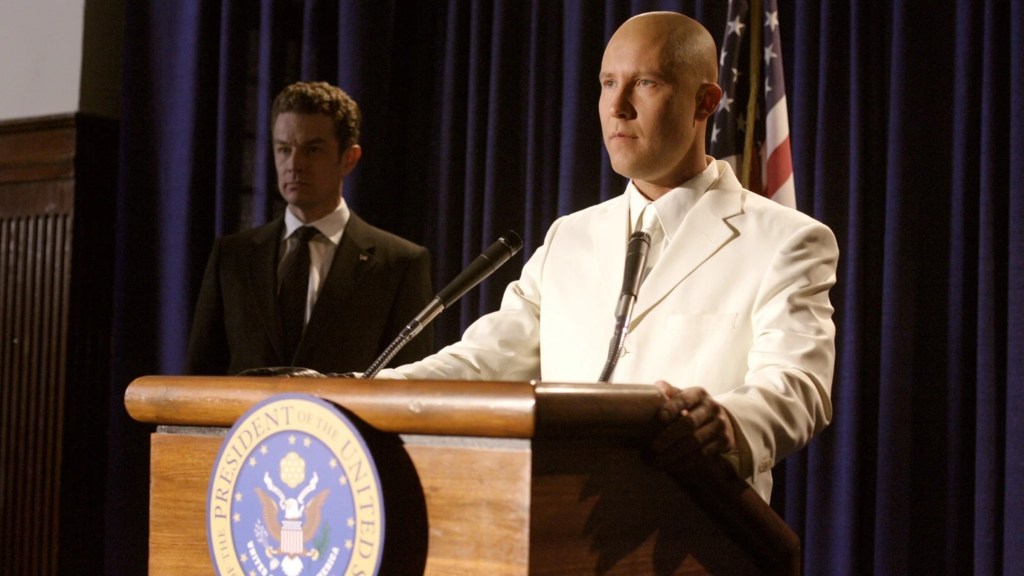
Season 7’s “Apocalypse”, Smallville‘s landmark 150th episode, was directed by Clark Kent himself, Tom Welling. It saw Jor-El send Clark, who was wracked with self-pity, to an alternate world in which he had never arrived on Earth. Naturally, Clark soon learns how much worse the world would be without his heroics, offering a glimpse into Lex Luthor’s villainous presidency and Braniac’s plan to travel through time to murder Clark as a baby.
What “Apocalypse” does better than other DC adaptations is its speculative premise. The whole idea of a DC What If…? moment is great, and Smallville executes it perfectly within the confines of its own continuity. The closest any other DC release has come was in the Snyderverse’s Knightmare sequences, but they lacked the narrative depth of “Apocalypse”. In that regard, the episode offered DC fans something no other adaptation has quite managed.
9) “Run” (S4 E5)

Smallville‘s season 4 episode “Run” took the show in an exciting new direction. As the show began to explore broader narrative arcs and move away from its early villain-of-the-week format, it began to incorporate other DC characters into its continuity. “Run” saw Clark Kent meet a fellow DC icon in the form of a young Bart Allen, with the pair bonding over their abilities, each learning something from the other about what it truly means to be a hero.
Featuring a classic Smallville needle drop moment, “Run” sets itself apart from other shows and movies featuring the Flash by using Bart Allen instead of Barry. The Bart Allen iteration of the hero is rarely used as a major character, whereas Smallville opted to make him its go-to version of DC’s iconic Speedster. The introduction of Bart Allen and his friendship with Clark is something that other DC movies and TV shows have never managed to come close to.
8) “Absolute Justice” (S9 E11 &12)
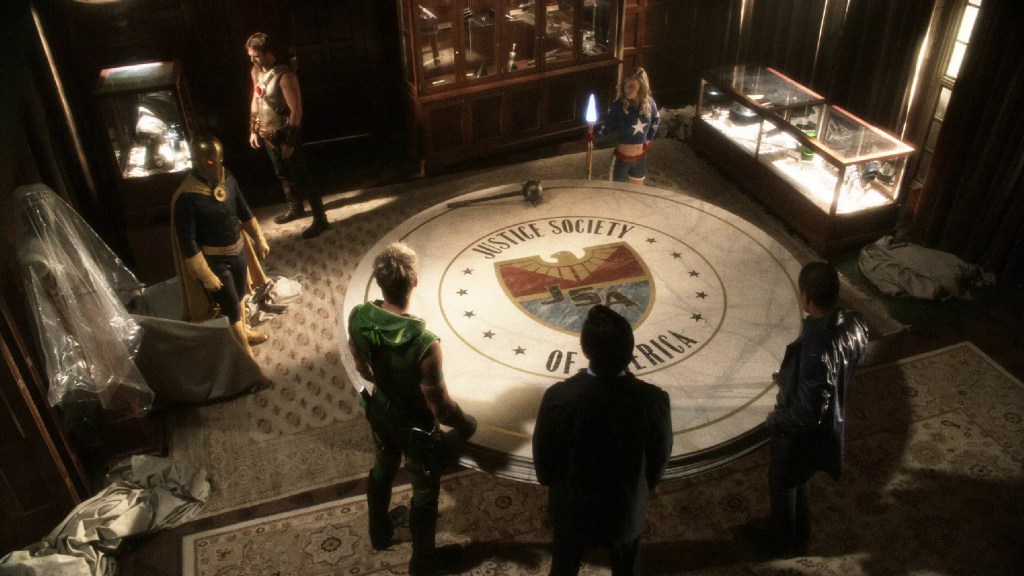
There has been a rich history of side characters stealing DC TV shows, and Smallville is no exception. Over the show’s run, it introduced many figures from the DC Universe, and one of its best examples came in season 9’s two-part episode, “Absolute Justice”. It saw Clark, Green Arrow, and the Martian Manhunter encounter the aging members of the Justice Society of America before helping them take down a dangerous villain.
While the two-part episode might not be flawless, it firmly established that Smallville‘s story existed within a much wider world of DC heroes and villains. The implications of introducing heroes that predated Clark Kent were subtle but massive, creating the outline of one of the most complete and accurate depictions of a wider DC shared universe to date. Of course, the DCU will likely surpass “Absolute Justice” in the near future, but for the time being, the episode remains a groundbreaking DC moment.
7) “Jinx” (S4 E7)

Smallville‘s use of many DC characters over its run is no secret, nor is the way that it reworked many of their stories to better fit the show. As well as Smallville‘s meteor freaks, the show introduced more established figures from Superman’s rogues’ gallery, including in season 4’s “Jinx”, which introduced Mikhail Mxyzptlk. A reimagined version of Mister Mxyzptlk, Mikhail is a metahuman capable of manipulating behavior via verbal commands and an ultrasonic frequency.
What “Jinx” does better than other DC adaptations is adapt a difficult character to better fit its world. Mikhail is only loosely inspired by Mister Mxyzptlk, but the character feels organic to Smallville‘s world and original enough to be interesting without completely disrespecting the source material. It’s a fine line to walk, and it’s a change that Smallville manages to make not out of a needless desire for grittiness, but rather an innovative decision that makes the character feel a natural part of the show’s continuity.
6) “Perry” (S3 E5)
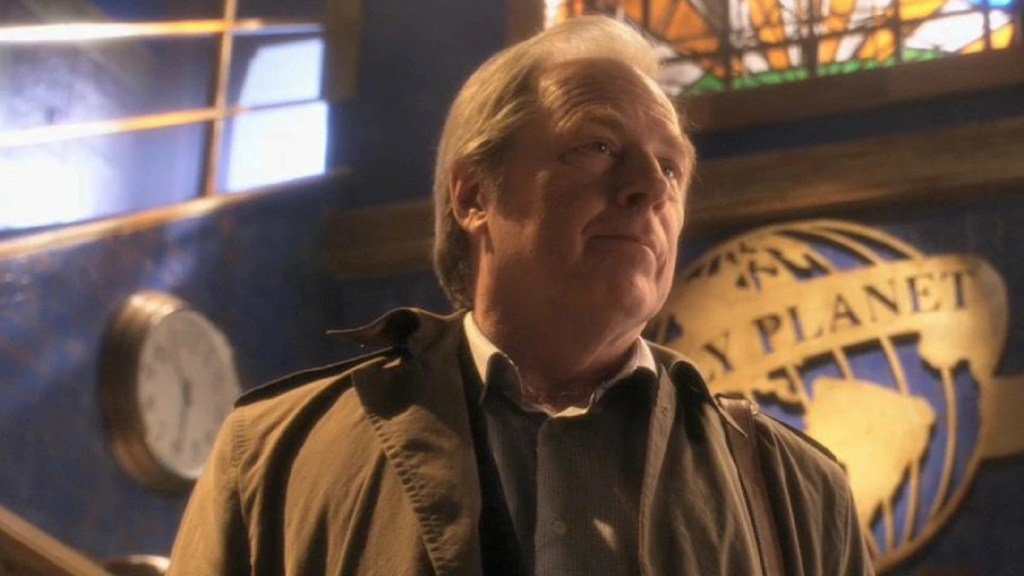
Over its ten seasons, Smallville had its share of controversial DC moments. Season 3 introduced Perry White, the legendary editor of the Daily Planet and Clark and Lois’ future boss. However, the show’s version of the character arrived with a considerable dependency on alcohol and lacking the moral scruples many expected of White in his younger years. Interestingly, the episode actually does the character better than any other adaptation to date.
What Smallville manages to do with Perry White is add depth to him that most stories fail to even attempt. Seeing the future editor struggling to keep his career afloat due to his stagnant reputation is tough, but his interactions with Clark shape his future in a way that puts him on the path to being the character fans know. In that, the episode offered an otherwise superficial character much greater depth than other live-action depictions have ever managed.
5) “Crusade” (S4 E1)

Where the first three seasons of Smallville had introduced many uses for Kryptonite and repeatedly featured Clark pining after Lana Lang, season 4 started by introducing the character fans had been desperate to see. Erica Durance’s debut as Lois Lane was incredibly strong, and came in an episode that saw Clark reborn as his Kryptonian alter-ego Kal-El. “Crusade” stands out to many as one of the best episodes of Smallville‘s entire run, largely because of Clark and Lois’ immediate on-screen chemistry.
Simply put, no other introduction to a version of Lois Lane has ever been quite so exciting. There’s a good reason that Durance’s iteration of the character is often considered one of the strongest, as she is, from her very first appearance, more of an equal to Clark than a damsel-in-distress figure who needs saving. That all begins in “Crusade”, kicking off one of the best representations of Clark and Lois’ relationship in live-action with an outstanding hour of television.
4) “Justice” (S6 E11)

Season 6 of Smallville finally saw its young versions of various DC heroes join forces. “Justice” saw Clark team up with Green Arrow, Bart Allen’s Impulse, Aquaman, and Cyborg to form a precursor to the Justice League. Banding together to thwart one of Lex Luthor’s dangerous experiments, the team came together in live-action in a way that no other DC project has been able to beat.
Having introduced each of the characters over a period of multiple years certainly helped, as each was given at least one episode’s focus to establish them as an individual. Seeing Clark step up as the leader of a superhero team made for a triumphant moment, and it was only made better by the show’s unique depiction of each hero. In terms of the episode being an origin story for DC’s most iconic superhero team, “Justice” remains one of the wider DC Universe’s best TV show moments.
3) “Pilot” (S1 E1)

As well as being known for its impressive 10-season run, Smallville is remembered for delivering one of the best pilot episodes in fantasy TV history. The show first aired in 2001, establishing the story of how a young Clark Kent befriends Lex Luthor after saving his life. Knowing that their friendship is doomed from the start only adds another layer to Smallville‘s incredible pilot, which remains one of the best live-action DC origin stories to date.
It’s littered with subtle references to Clark’s destiny as a hero, but remains firmly grounded in its core story. The way the episode introduced reimagined versions of well-known DC characters was truly groundbreaking, and immediately established Smallville as one of the most exciting live-action comic book adaptations of all time. Its depth, its reverence for the source material, and its bold willingness to take iconic characters in a new direction all stand out as far more daring than any other DC movie or show before or since.
2) “Reckoning” (S5 E12)

Season 5’s “Reckoning” remains one of the most emotionally devastating episodes in Smallville‘s entire run. It’s an episode that sees multiple storylines come to a head, resulting in an explosive gut-punch that no Smallville fan will ever forget. After Lex gets Lana killed, Clark has the opportunity to reverse time, ignoring the warnings of dire consequences. Doing so results in the sudden and shocking death of his father, Jonathan Kent, serving as a huge narrative development and an important learning experience for Clark.
The episode’s handling of Jonathan Kent’s death is the best of any DC adaptation to date. It packs considerable emotional heft, especially with regard to Clark’s guilt over his choice. “Reckoning” sees Clark learn that abusing power for personal reasons is never worth the risk, dealing him a blow that he never truly recovers from. When it comes to devastating DC moments, “Reckoning” has every other show and movie in the DC Universe beat.
1) “Descent” (S7 E16)

Smallville featured many critical moments for its various DC characters, where they took important steps toward their ultimate destiny. Season 7’s “Descent” marks Lex’s final transformation into a true villain, with the character symbolically killing his younger self and embracing his ruthless, dangerous nature. The episode begins with Lex murdering his father, and ends with him coming to terms with his role as the villain of the story.
There have been many live-action versions of Lex Luthor, but none have been explored in as much depth as Michael Rosenbaum’s. “Descent” is the episode that finally allows the character to become the figure fans knew he would eventually come to be, paying off the gradual whittling away of all of his better qualities over the show’s previous seasons. No other DC Universe movie or TV show has ever given Lex such a comprehensive origin story, and “Descent” is the Smallville episode that really cemented how well the show brought him to life.
What do you think? Leave a comment below and join the conversation now in the ComicBook Forum!
More TV Shows
-

Image courtesy of Syfy -

Image Courtesy of Marvel -

Image courtesy of Prime Video -

Image courtesy of Prime Video