Television is a business, and when a series connects with an audience, the industry’s first instinct is to order more of it. Likewise, if a show fails to find an audience fast, producers are quick to pull the plug, a process that has only accelerated in the streaming era. Sci-fi is no different, with the genre’s most successful shows being graced with multiple seasons. Some sci-fi classics prove they can keep their quality across hundreds of episodes, as it happens to Stargate SG-1 and Star Trek: The Next Generation. Lost and The X-Files, by contrast, launched as cultural phenomena before their later seasons fractured the audience. At the opposite extreme, genuinely ambitious series like Netflix’s 1899 and Fox’s Firefly were killed after a single season, denied the time required to find the broader audience.
Videos by ComicBook.com
The nature of the industry means that discovering a short, finished series that managed to wrap the narrative in less than 30 episodes is rare. That’s even rarer in sci-fi, which demands extensive world-building and detailed investigations of technology. Still, there is a handful of sci-fi gems that manage to tell a self-contained story and still be among the best entries in the genre.
5) Maniac
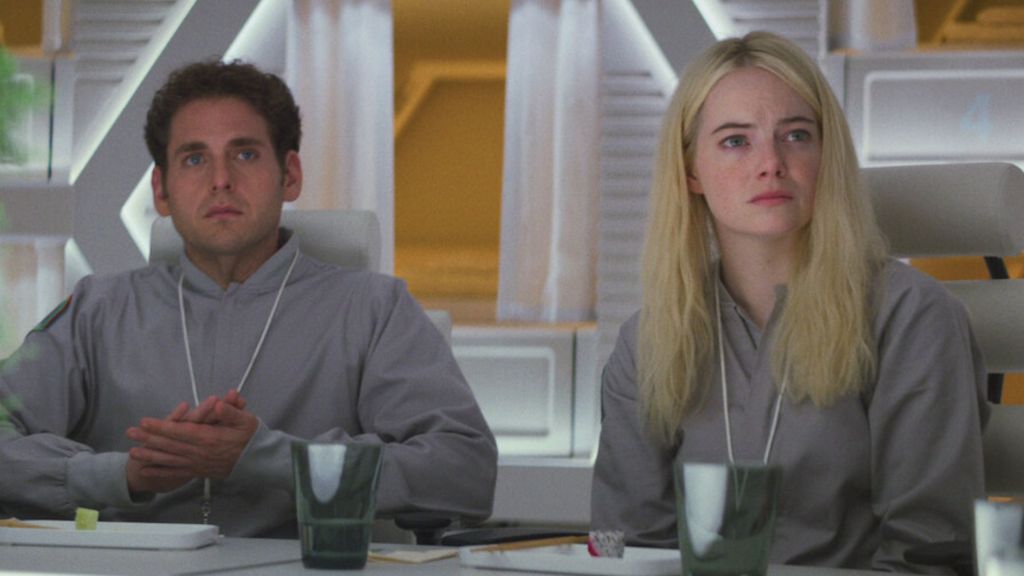
Patrick Somerville adapted the Norwegian series Maniac for Netflix as a limited 10-episode event. Directed by Cary Joji Fukunaga, the series follows Annie Landsberg (Emma Stone) and Owen Milgrim (Jonah Hill), two strangers enrolled in a pharmaceutical trial conducted by Neberdine Pharmaceutical and Biotech, which promises to cure their respective psychological wounds through a sequence of guided dream states. Each phase of the trial plunges the characters into a different genre simulation—a Long Island heist, a fantasy quest, a séance—while the real-world trauma anchoring each participant gradually surfaces. The series uses its finite episode count to cycle through these nested realities without ever losing track of the central relationship, letting Stone and Hill build a damaged chemistry that sells the absurd premise. Because the show was conceived as a closed narrative, the experimentation never feels indulgent, and every tonal swerve serves the portrait of two people learning to see each other clearly.
4) Devs
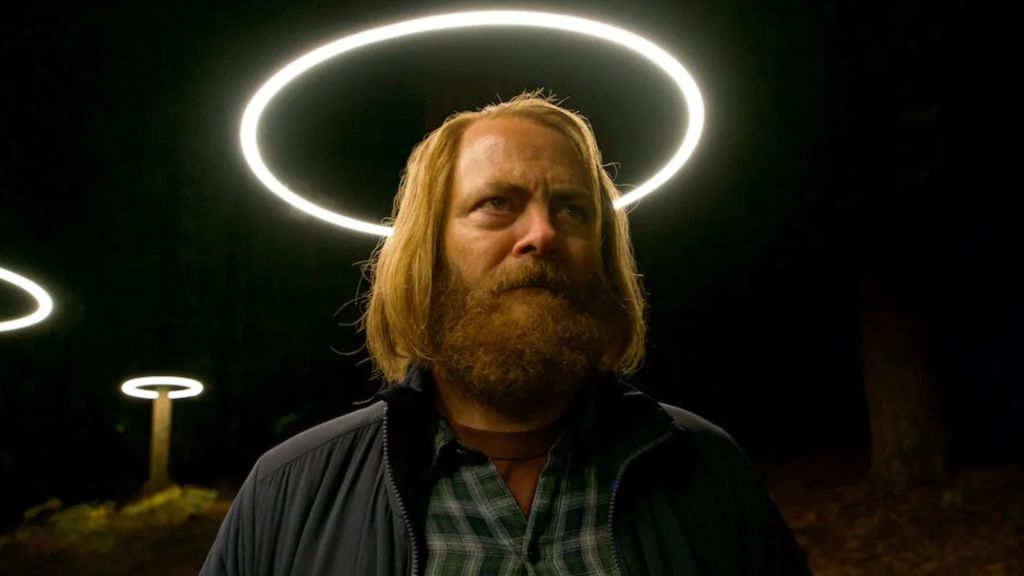
Alex Garland wrote and directed all eight episodes of Devs for FX, crafting a tight thriller around a quantum computing company called Amaya and the secretive development lab at its core. The series stars Sonoya Mizuno as Lily Chan, a software engineer who begins investigating the apparent suicide of her boyfriend Sergei (Karl Glusman) after his first day working inside the Devs facility, a sealed laboratory where a team led by Forest (Nick Offerman) is building a machine capable of reconstructing the past. Garland withholds the full mechanics of the system across the season, parceling out revelations about determinism and simulation theory through the procedural logic of a conspiracy investigation. However, by confining the story to a single season, Garland forces every philosophical digression to pay off within the investigation’s momentum, grounding the most abstract questions in Lily’s need to understand what her boyfriend died for.
3) Station Eleven

Station Eleven aired as a ten-episode limited series on HBO Max, adapting Emily St. John Mandel’s novel into a post-apocalyptic narrative that restructured the source material across two primary timelines. The series opens with a devastating flu pandemic that collapses civilization in a matter of days, then jumps twenty years forward to follow Kirsten Raymonde (Mackenzie Davis), an actress traveling with a Shakespearean theater troupe performing for scattered survivor settlements. From there, showrunner Patrick Somerville weaves a dense network of connections linking Kirsten, a Hollywood actor turned cult leader named Tyler (Daniel Zovatto), the creator of a graphic novel titled Station Eleven (played as a child by Matilda Lawler), and the people orbiting a fateful Chicago stage production on the night the world ended. The structure deliberately resists grim survivalist tropes, instead tracing how art, memory, and performance transmit meaning across the collapse.
2) Cowboy Bebop
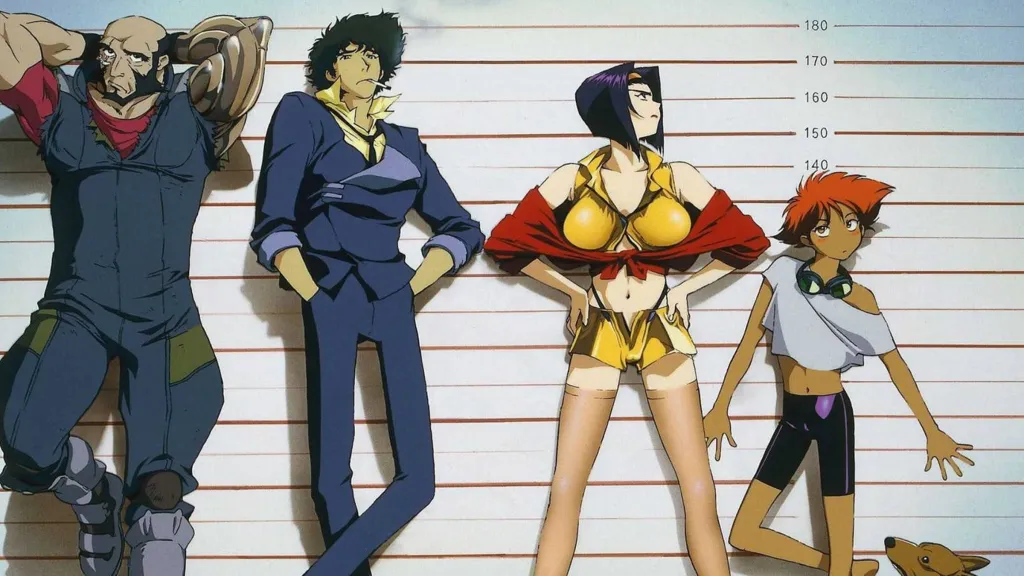
Director Shinichirō Watanabe built Cowboy Bebop as a hyper-stylized fusion of music, cinema tropes, and cyberpunk technology that cemented itself as a sci-fi masterpiece in a single run of 26 episodes. Set in 2071, the series follows a ragtag crew of bounty hunters drifting through a colonized solar system on the spaceship Bebop. The crew takes odd jobs to keep the Bebop fueled and their bellies full, each of them running from a past they refuse to face. The show’s pacing is deliberately unconventional, as most episodes function as self-contained story that uses film genres like Western or noir, often accompanied by new tracks of Yoko Kanno’s score, which use jazz meshed with other genres to echo the tone of each story. These standalone stories nevertheless reveal more about the Bebop crew’s past, pulling them closer to an inevitable reckoning.
1) Dark
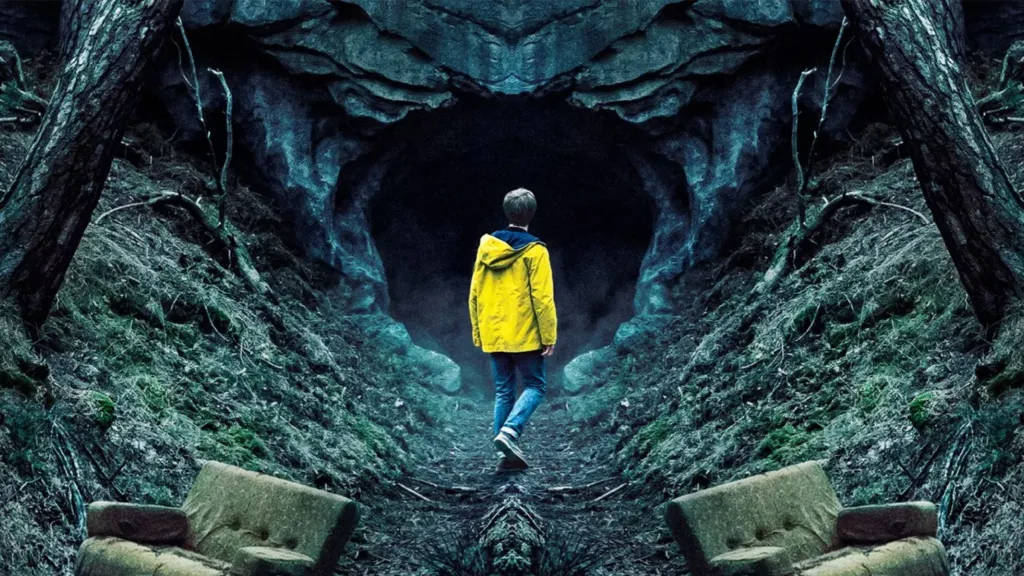
Dark spanned three immaculately planned seasons on Netflix, for a total of 26 episodes. The German-language production begins with the disappearance of a young boy in the town of Winden, which subsequently exposes a massive, multi-generational conspiracy involving temporal wormholes and apocalyptic paradoxes. At the center of the story is Jonas Kahnwald (Louis Hofmann), a young man forced to navigate branching realities and conflicting loyalties to break a perpetual cycle of suffering. Unlike many mystery-box shows that pile up questions with no intention of answering them, Dark had a predetermined endpoint that was sketched out before a single frame was shot, ensuring that even the most bewildering twists paid off. Dark creators and showrunners Baran bo Odar and Jantje Friese also showed an uncompromising commitment to the integrity of the story, sticking to a scientifically rigorous approach to time-travel and quantum physics that trusts the audience.
Which brief science fiction television series do you think delivers the most satisfying conclusion? Leave a comment below and join the conversation now in the ComicBook Forum!
More TV Shows
-
Image Courtesy of Marvel -

Image Courtesy of Prime Video -

Image Courtesy of The CW -
Courtesy of 20th Television Animation / Hulu -

Courtesy of 20th Television Animation / Hulu -
Courtesy of Nickelodeon