For such a beloved series, Warner Bros’ original Harry Potter movies have a surprising number of reasons that have made even the most ardent fans complain about them. Some have shown their age, which is hard to judge, given the first one came out 25 years ago, but even back then, some of the CGI was jarringly poor. The very mention of centaurs, trolls, or Grawp is often enough to open old wounds, and because of the challenge of adapting such lengthy books, each of the filmmakers had to make some difficult decisions. Whole characters were left out to preserve run time, and important sequences, like Tom Riddle’s Gaunt backstory stayed on the cutting room floor. But one important part of the books felt like it was victim to more changes than any other: the final, devastating Battle of Hogwarts in The Deathly Hallows.
Videos by ComicBook.com
Some of those changes were somewhat understandable, because of the sheer scale of the setpiece, but others were so painful that HBO’s upcoming Harry Potter reboot will be gratefully received if only for a second chance to see the true vision of the battle. With a longer run-time and advances in technology since the movies’ release, there’s just more potential. There are some notable honorable mentions here too: Voldemort witnessing Bellatrix’s death in the books felt like a blow, but it didn’t happen in the movie. Likewise Ron and Hermione failing to kill Nagini before Neville managed it gilded his hero turn even more. But both are understandable for how the movie chose to stage the moments, and neither had as major impact as the following five mistakes…
5) Peeves’ Missing Redemption
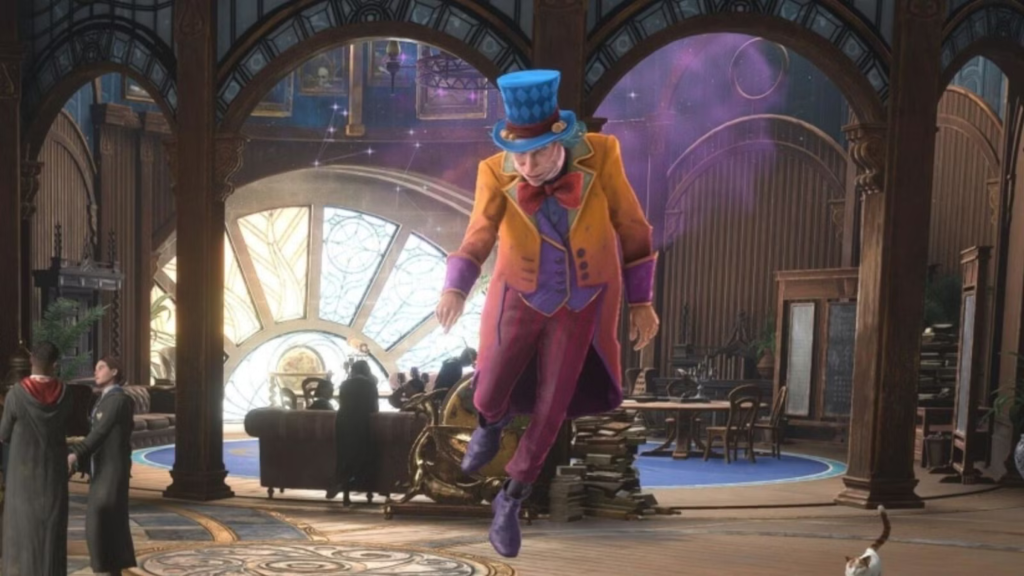
The removal of Peeves from the Harry Potter movies after British comedy legend Rik Mayall was cast will always go down as one of the biggest injustices in fanchise history, but Chris Columbus at least did it to avoid delivering an inferior experience. At the time, there was neither the budget nor the technology to convincingly bring Peeves to life, meaning one of Hogwarts most famous residents was consigned to the cutting room floor. But we already know that the new adaptation of Harry Potter & The Philosopher’s Stone is restoring Peeves, and has cast Peter Serafinowicz to play him. That means we’ll get all of Peeves’ antagonism of Harry and the other students, and crucially, his torment of Dolores Umbridge after Fred and George leave Hogwarts in The Order of the Phoenix.
But even better, we’ll get to see Peeves in the final Battle of Hogwarts. Excised from the movies, Peeves was a necessary cut for the spectacular finale, but in the books, the poltergiest turns out to protect his home, playing a key role in dropping deadly Snargaluff pods on the heads of Death Eaters, with the encouragement of Professor McGonagall. It’s a heroic redemption for the character that fits with the books’ overall story of forgiving the sins of even the most wayward well-intentioned characters. And his return in the show could provide one of the best spectacles of the battle.
4) Grawp Being Cut From the Entire Battle
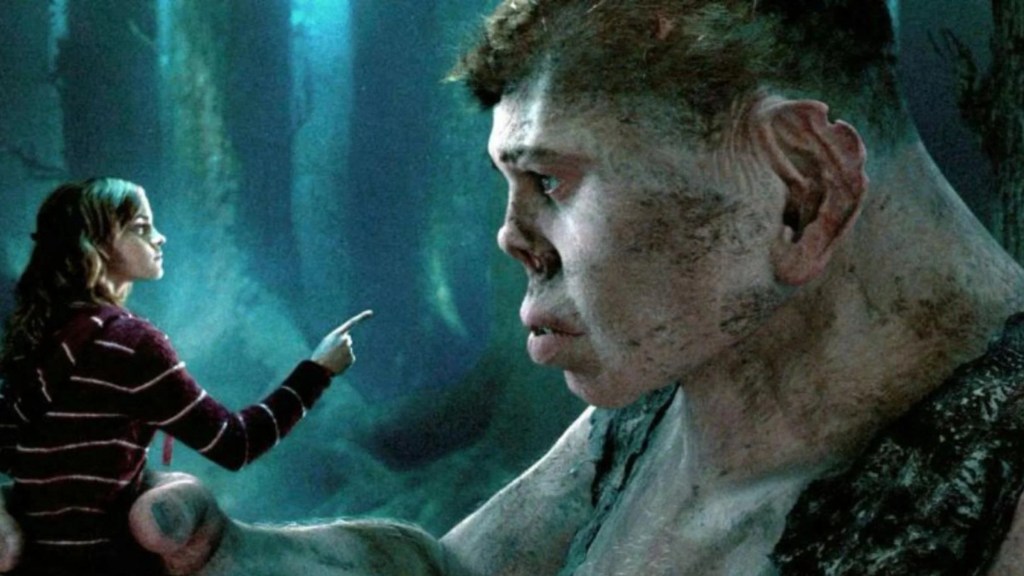
It’s fair to say that the effects work that went into bringing Hagrid’s half-brother Grawp into the Order of the Phoenix movie was… limited, to put it kindly. He was a fun character, and his roughness proved Hagrid’s wholesomeness on two levels: both because he loves his brother despite his brutality, and because his own genetics mean his soft demeanour is the result of an internal conflict with something much darker. But in the movie, he looked like a PlayStation 2-rendered lump, which rather undermined the fact that we were supposed to be as sympathetic to him as Hermione was. And watching The Order of the Phoenix back now, the effects haven’t exactly aged well, either. So leaving him out of his heroic return for the Battle of Hogwarts made sense.
Cut for limitations in the technology, budget and economical storytelling reasons, Grawp was an early casualty of the need to translate a huge event into something that could feel tight and emotional in a limited runtime. The HBO show won’t have quite the same concerns, and can break up the Battle into multiple parts easily, meaning we’ll get to see him come to the aid of the Hogwarts students, single-handedly wrestling Voldemort’s own savage giants. Grawp is another figure who embodies a wider Harry Potter trope: he’s smaller than the other giants, and shouldn’t have a chance against them, but his ferocious passion changes the odds entirely. Which is basically also Harry, Ron, Hermione, and Neville’s stories.
3) The Missing Centaurs & House Elves

In the final Battle of Hogwarts, it’s mostly just human wizards, a few outliers like Professor Flitwick (who was very distantly part-goblin) and Lupin, and the animated Hogwarts statues against mostly human Death Eaters, a werewolf, and a handful of Giants. Considering the wealth of Magical Creatures in this universe, the movie ignoring them all felt odd. That’s because, as the book rightly acknowledges, Hogwarts is also home to lots of non-human residents, who come to the battle to help. In the book, the centaurs, led by Bane arrive, the thestrals defend their home, Buckbeak reappears, and the house elves take up arms against the Death Eaters.
The removal of the magical creatures coming to the aid of the students was yet another case of a creative decision being made for costs that robbed us of a poignant scene, and important message. Harry Potter as a series is about the battle against elitism (much like Star Wars and the Chronicles of Narnia): Death Eaters believe in pure blood theory, and treat magical creatures with disdain they feel is befitting of their lowly status. For some of those creatures to fight back, alongside human allies was a huge deal, rather than the centaurs and the house elves just providing more spectacle.
Kreacher leading the kitchen elves with cries of “Fight! Fight! Fight for my Master, defender of house-elves! Fight the Dark Lord, in the name of brave Regulus! Fight!” while wearing his master’s locket was another full-circle redemption that should have had fans punching the air. Instead it was left out completely, and we can only hope that the new adaptation gives him his moment.
2) Removing The Most Important Message of Voldemort’s Death

The original movies chose to make two big changes to the final battle between Harry Potter and Voldemort, which will hopefully both be undone when HBO gets to the final season. First, the battle itself was moved from the Great Hall with an audience of students to an empty courtyard. That robbed the battle of the pageantry of Harry’s heroism and the idea that the other combatants remained important, and the result was a surprisingly cold battle. The TV series needs to undo that, making Voldemort feel enclosed and trapped by the Hogwarts students who don’t back down, as a reminder that if Harry falls, they will lose a lot, but they won’t give up either.
The bigger change was the nature of Voldemort’s death. In the Deathly Hallows’ second movie, Voldemort eats a spell from Harry and disintegrates away to ash – a still-impressive bit of effects work that presumably ate all of the available budget for any of the magical creatures mentioned already. It makes Voldemort feel more superhuman; an abnormal death seemingly fitting of a God-like threat. But in the book, Voldemort dies in a far more pathetic way, as Tom Riddle’s broken body falls to the floor, lifeless and with no ceremony. It was always one of JK Rowlings’ more astute decisions, as it reminded everyone that ultimately, no matter how hard he fought against the fact, Voldemort was just a man.
1) Fred’s Death Scene Being Cut
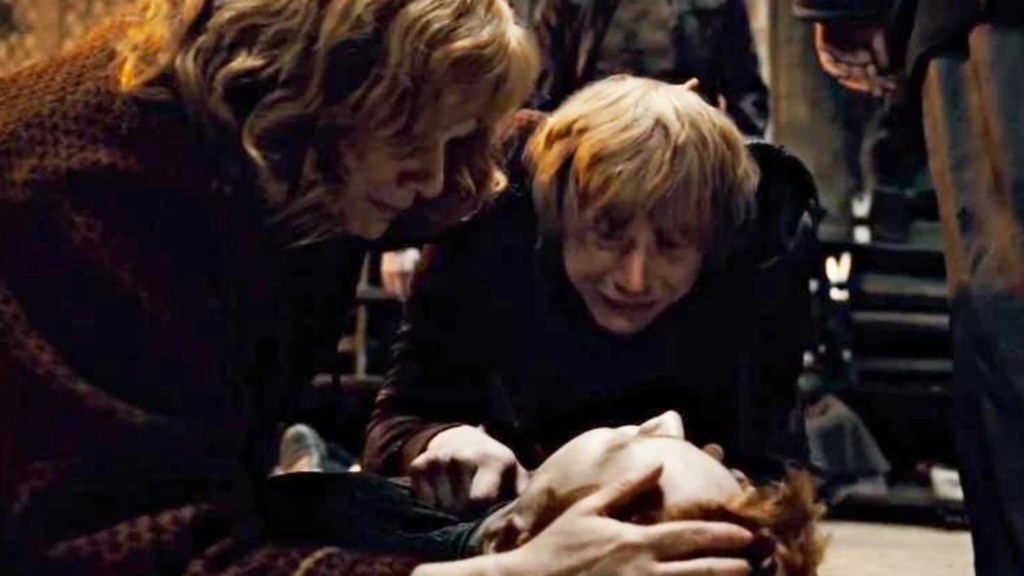
Talk about doubling up the trauma: Fred Weasley’s death at the end of The Deathly Hallows was already one of the most devastating moments in the entire final book, and then the movie adaptation made the controversial decision to not show it on screen. Perversely, that choice actually made Fred’s death worse, rather than making it easier to accept it, and fans have long considered it one of the biggest errors the movies made. In the book, Fred is killed when a stray curse causes an explosion, cutting him off mid-sentence as he jokes with his formerly estranged older brother Percy. Fred died as he had lived, happy even in the most grim of circumstances, and a key member of the Order of the Phoenix.
Crucially, Harry finds out what happened to Fred quickly, drawn by the harrowing cries of his brothers, and somberly helps Percy move his body to safety behind a suit of armor. It’s a touching moment that not only brings the reality of Voldemort’s attack into heartbreaking focus, but which also underlines the utter futility of it. A young man tenderly seeking out a safe spot for his already-dead brother, and Harry pausing to help. Even the book didn’t quite nail exactly how devastating the loss of Fred is, because it’s not shown from George’s perspective directly. Hopefully the movie will right that wrong too.
Harry seeing Fred’s death should act as a catalyst, motivation for Harry, but also emotionally for the audience. It’s a reminder of what Harry has to achieve and the cost of his potential failure. It’s also one of the final things that happens before Harry goes to the Forbidden Forest to sacrifice himself, and along with the deaths of Lupin and Tonks, which orphan their young son, him being torn from his sister is a reminder that sentimentality is no protection from war or evil.
What do you think? Leave a comment below and join the conversation now in the ComicBook Forum!
More TV Shows
-
Image Courtesy of Marvel -

Image Courtesy of DC Studios