Few stretches of Star Wars history have gotten as much screen time as the Clone Wars. The war runs from the final minutes of Attack of the Clones to the fall of the Republic in Revenge of the Sith, and Dave Filoni’s animated The Clone Wars spent seven seasons filling in the years between. That has given Lucasfilm plenty of chances to close old mysteries.
Videos by ComicBook.com
Some mysteries were solved, such as one in Tales of the Jedi – which finally showed Count Dooku erasing Kamino from the Jedi Archives in “The Sith Lord”, and Season 6 of The Clone Wars revealed what really happened to Sifo-Dyas, the Jedi Master who placed the original order for the clones. The questions below are the ones that survived all of those answers, and the list covers the whole war, movies and animated series alike. A few are mechanics that fall apart under a close look, and one is a moral problem the franchise has never really faced.
5. Why Did the Richest Side in the War Field the Worst Soldiers?
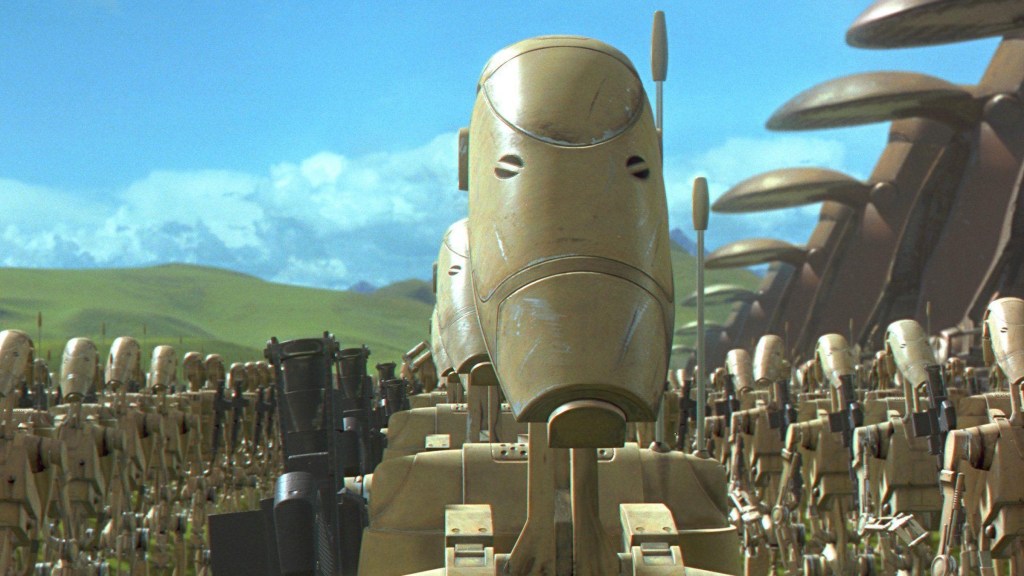
The Separatists had money the Republic could only dream about, with the InterGalactic Banking Clan and the Techno Union bankrolling and arming the Confederacy. The soldier they sent at the clone army over and over was the B1 battle droid, a spindly machine that answers everything with “roger roger” and tends to fall apart after a single blaster bolt.
The droids are played for laughs constantly, which is the strange part. They panic, they bicker, they announce their own deaths, and the series uses them as comic relief in episodes where clones are dying around them. An army designed by the wealthiest coalition in the galaxy ended up as the punchline of its own war.
The Separatists clearly knew how to build better, as the commando droids and the tactical droids running their fleets prove. The usual defense is volume, since cheap droids roll off assembly lines by the millions while each clone takes about ten years to grow. Even so, an economy that could afford elite designs kept leading with the model Mace Windu mocks in Season 7’s “Unfinished Business,” where he offers a squad of them the chance to surrender on the grounds that he has “dismantled and destroyed over 100,000” of them already.
4. Why Did a Republic That Banned Slavery Go to War With an Army It Owned?
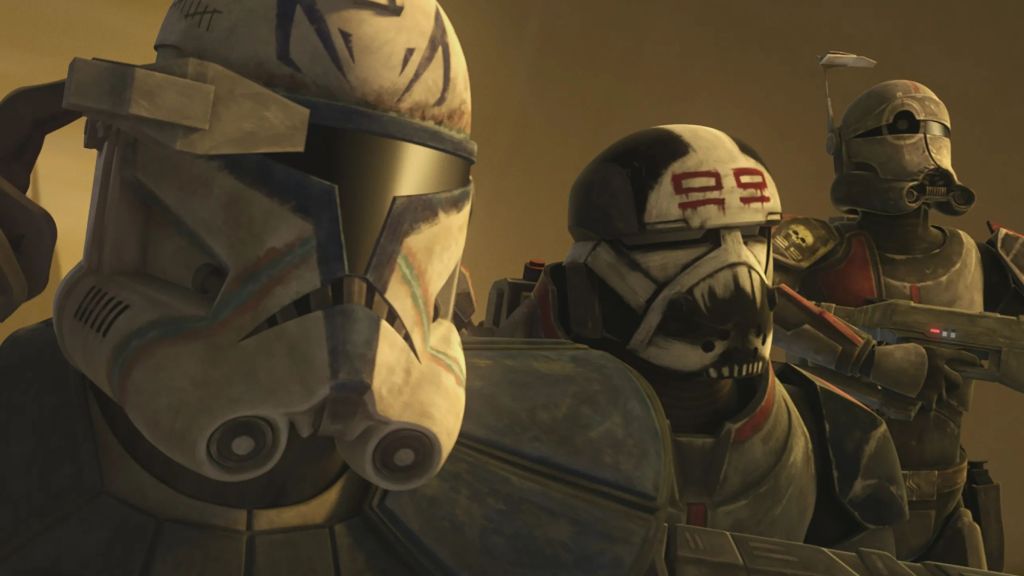
The Clone Wars wants its audience to love the clones, and it works, which makes it harder to look past what Rex, Fives, and the rest of them actually were. Every one of them was grown to order on Kamino and trained from childhood for a war he had no say in. Walking away counted as desertion, which is why Cut Lawquane, the one clone the series lets leave, spends Season 2’s “The Deserter” hiding on a farm.
Nobody on screen ever says the word out loud. Clones are units, they are product, they are an investment the Republic made, and the Kaminoans discuss them the way a shipbuilder discusses a contract. Everybody accepts this arrangement without comment, including the Jedi who spend three years asking these men to die for a government that never once asked them anything.
The contradiction gets louder whenever the Jedi take on slavery elsewhere. In the Season 4 Zygerria arc, Anakin, Obi-Wan, and Ahsoka go undercover to free a colony of Togruta from slavers while commanding soldiers the Republic bought in bulk, and Anakin was born a slave himself. Back in Season 1, the traitor Slick sold out his brothers while accusing the Jedi of keeping the clones enslaved, and he wasn’t entirely wrong about that part. The Empire later made the arrangement plain by phasing the clones out for conscripted stormtroopers, discarding soldiers it had bought.
3. Who Was Actually Paying Kamino for Ten Years?

When Obi-Wan lands on Kamino in Attack of the Clones, Prime Minister Lama Su casually tells him 200,000 units are ready, “with a million more well on the way.” The order came from Sifo-Dyas, a Jedi Master who had been dead for almost ten years, and somebody had been covering Kamino’s bill that whole time without a Senate vote or a line in any Republic budget.
Season 6 of The Clone Wars digs into the conspiracy in “The Lost One,” where the Jedi conclude that Count Dooku guided the army from the start. Yoda puts it bluntly, saying “our enemy created an army for us.” The Council keeps fighting with the clones anyway and buries the discovery, with Yoda ordering that not even the Chancellor be told, which means hiding it from the one man secretly running the whole scheme.
Canon has since explained who set the army in motion. No film or series has shown how something that size was paid for year after year without anyone noticing the money, which is a strange gap for a franchise that opened its prequels with a dispute over trade route taxes.
2. How Did Order 66 Reach Every Clone at Once?
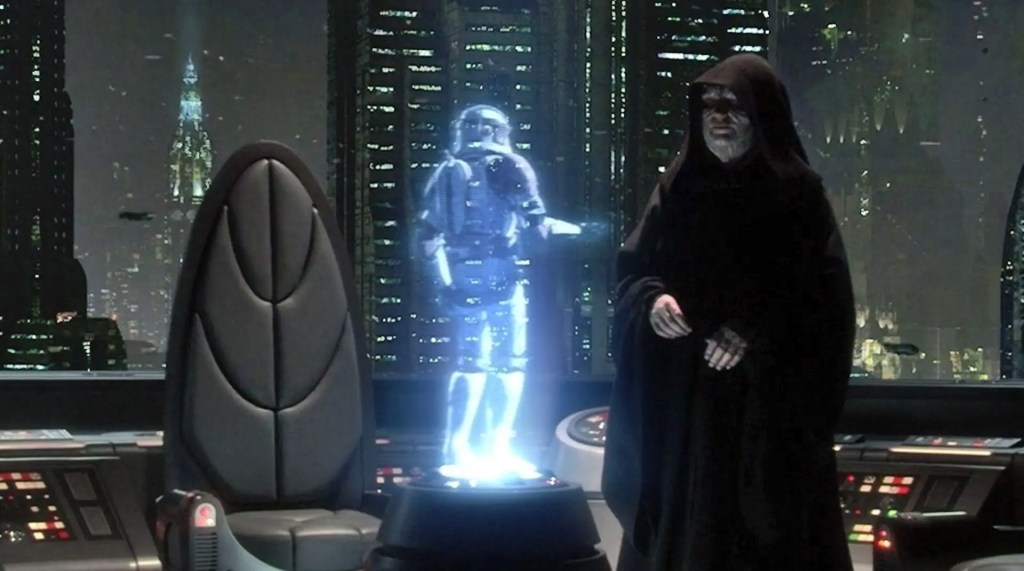
Revenge of the Sith sells Order 66 as a flawless trap. Palpatine gives the command to Commander Cody by hologram, and within minutes of screen time, clones turn on Ki-Adi-Mundi on Mygeeto and Aayla Secura on Felucia. The Clone Wars later showed how Rex struggled against Order 66 in “Shattered.” It lands perfectly as tragedy, though the logistics get shakier the longer you look, especially in a war the animated series shows as messy and full of stranded units.
Seven seasons went into making this war feel enormous and disorganized, with battalions cut off for months at a time, communications jammed, and entire campaigns fought on planets nobody at Coruscant could find on a map. Then three words go out over a comm and every one of those scattered units executes flawlessly and simultaneously, which describes a very different galaxy from the one we had been watching.
Plenty of clones weren’t standing beside a Jedi when the order came, and it’s never clear how a command delivered commander by commander reached every squad at the same moment. Fans have also joked for years that a numbered Order 66 implies 65 others, and the old Legends novels backed them up with more than 150 contingency orders, including one that had the clones remove Palpatine himself. Current canon has left almost all of that blank, so the most consequential command in the franchise arrives with no paperwork behind it.
1. Did the Inhibitor Chips Fix Order 66 or Break It?
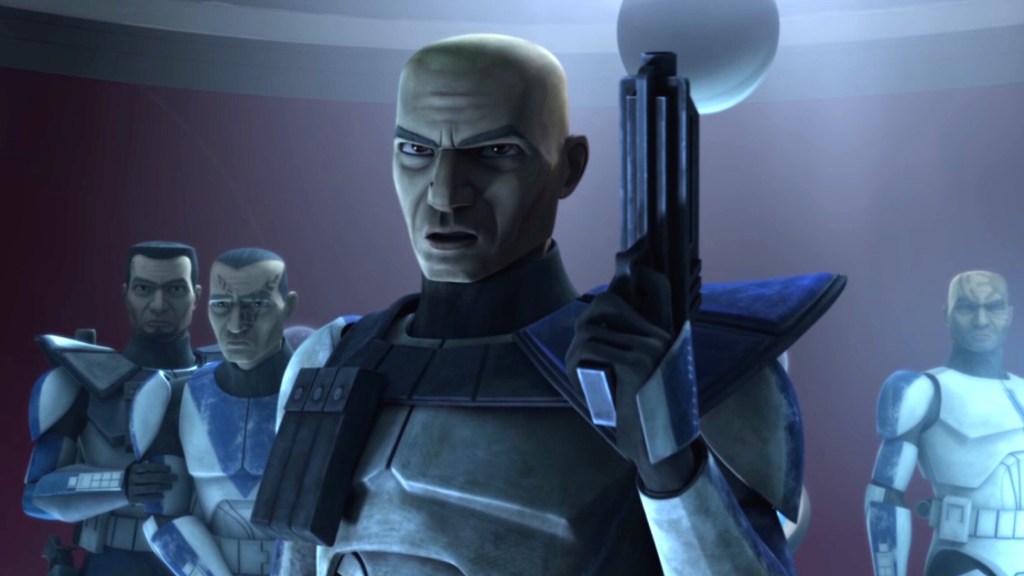
For almost a decade after Revenge of the Sith, the working assumption was that the clones gunned down their generals because soldiers follow orders. Then Season 6 of The Clone Wars, released on Netflix in 2014, revealed through Tup and Fives that every clone carried an organic inhibitor chip that forced him to comply, shifting the blame for Order 66 almost entirely onto Palpatine.
Dave Filoni has said the idea came from George Lucas, who described it to him as something close to a “Manchurian Candidate concept.” It made the clones easier to love and created fresh problems, starting with Rex telling Kanan in Star Wars Rebels that he removed his own chip, a version of events the final season of The Clone Wars later contradicted. Filoni has offered an explanation for the Order 66 plot hole involving Rex and Kanan, and it is a good one, but it is still an answer to a question that did not exist before 2014.
The Bad Batch made it messier. The series showed just how brutal the chips were on the clones themselves, then revealed in “Return to Kamino” that Crosshair had his own removed and kept serving the Empire anyway. A clone choosing that path with no chip in his head complicates the idea that the chip was ever the whole story, and the question it was meant to settle, whether these men could have said “no,” is open again. Fixing a continuity problem by reopening the prequels’ biggest moral question is a strange trade, and a decade on the argument has only gotten louder.
More TV Shows
-
IMAGE COURTESY OF LUCASFILM