A body wrapped in plastic washes up outside a lumber town in Washington state, and 34.6 million people watch it happen. That was April 8, 1990, and the show was Twin Peaks, created by David Lynch and Mark Frost for ABC. It became the highest-rated television movie of its season, won a Peabody, ran 30 episodes, was cancelled in humiliating fashion, and then came back 26 years later to make 18 more hours that critics have been arguing about ever since. Thirty-six years on, every prestige show that drops a stranger into a small town with a secret is working with tools Lynch and Frost built, Stranger Things very much included. That is not a knock on the Duffer Brothers. It is a description of a shape, and of the show that drew it first. It is also still the best version of that shape anyone has managed, which is a claim worth defending rather than assuming.
Videos by ComicBook.com
The shape is specific enough to be broken into parts and counted, which is what the next section does, and common enough that it has been running quietly underneath this genre for three and a half decades. Stranger Things is built on it from the first frame. So is Gravity Falls, whose creator has said outright where he got it. So is most of what the streaming services put out every year with a missing kid on the poster and a diner in the first ten minutes. That much is not seriously in dispute, and the Duffer Brothers have never pretended otherwise, though what they have actually said on the subject turns out to be stranger and more revealing than a straight acknowledgment would have been. The question worth arguing is not whether the engine works, because it demonstrably does. It is which show still runs it best, and answering that honestly means dealing first with a second season that very nearly destroyed the original outright.
Every Supernatural Small-Town Mystery Is Running The Same Four-Part Engine Twin Peaks Built
The form has four moving parts, and once you see them you cannot unsee them. There is a town that behaves like a character rather than a backdrop. There is a disappearance or a death that the whole community organizes itself around. There is an outsider who arrives to investigate and does not understand the local rules. And there is something underneath the ordinary surface that should not be there.
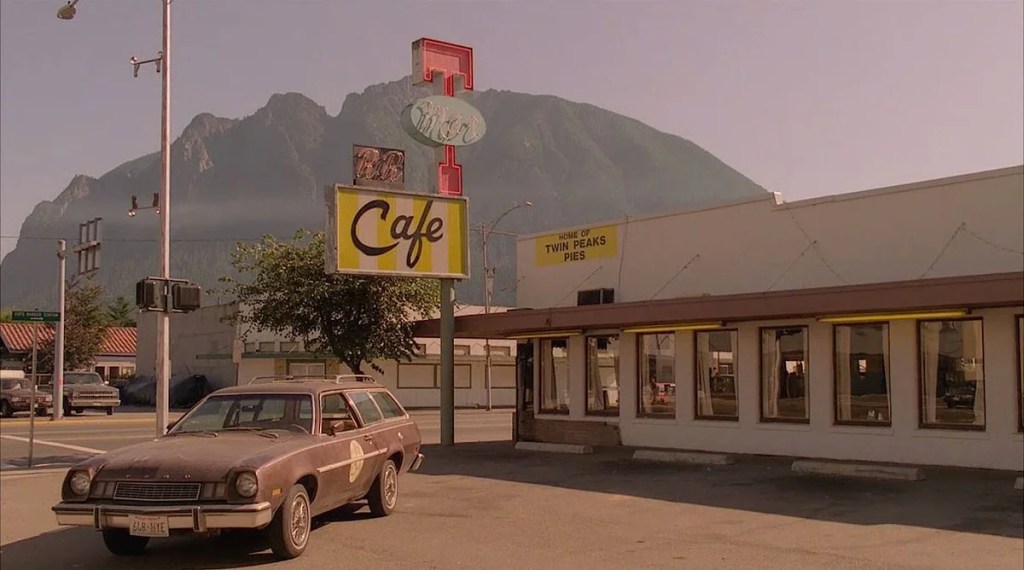
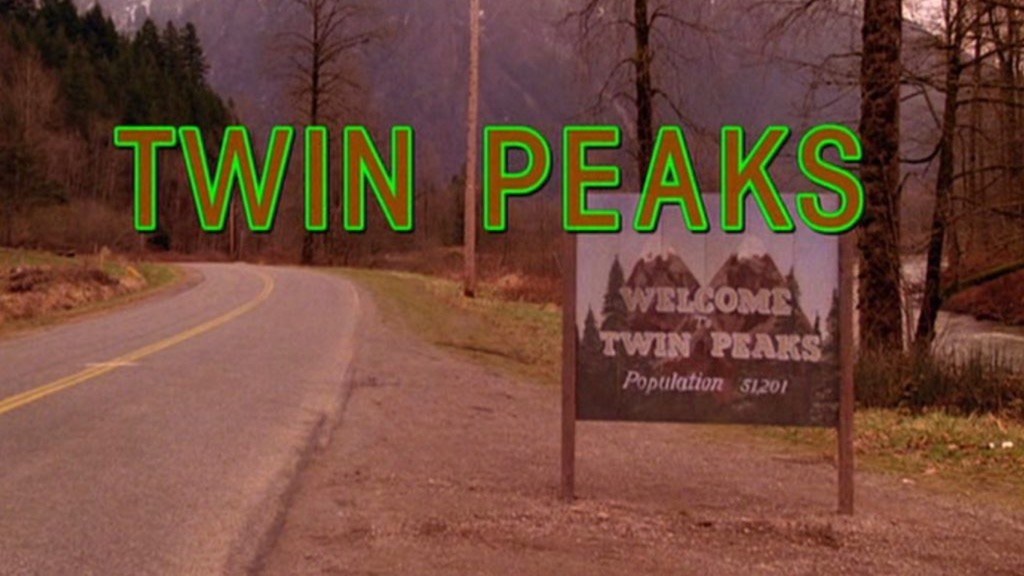
Twin Peaks runs all four at full power. The town has a population sign reading 51,201, a mill, a diner, a sheriff’s station, and whole scenes devoted to cherry pie and a woman who carries a log, none of which advance the plot and all of which are the point. Laura Palmer’s body is the organizing wound. FBI Special Agent Dale Cooper arrives with a tape recorder and an outsider’s delight. And under the Douglas firs there is the Black Lodge, and a thing called BOB.
Now read how Netflix described Stranger Things in its own 2015 announcement, back when it was still called Montauk: a young boy vanishes into thin air, and family, friends and local cops try to uncover the truth about his disappearance, which turns out to involve top-secret government experiments, supernatural forces, and one very strange little girl. That is the same concept with different details.
The Duffer Brothers Never Called Twin Peaks An Influence, Which Is More Telling Than If They Had

This is where the argument gets interesting, because the expected quote acknowledging Twin Peaks as inspiration does not exist. Search the Duffers’ big influence interviews and you get Spielberg, Stephen King, John Carpenter, Alien, Stand by Me, The Goonies, MKUltra and Dungeons & Dragons. Twin Peaks is not in any of them. What does exist is a single line from Matt Duffer, explaining in a 2017 interview why the town is called Hawkins, Indiana instead of something invented: “But we didn’t want to do the Eerie, Indiana or Twin Peaks thing and name it after a fictional place.” So the show was not consciously borrowing. It was consciously avoiding. You do not steer that hard around something you cannot see, and naming the specific thing you refuse to be is a stronger admission of a shadow than any compliment.
Other showrunners have been less shy about Twin Peaks‘ impact, however. Damon Lindelof, who made Lost and The Leftovers, has said “there is no show in television history that had more impact on me than Twin Peaks.” David Chase, who made The Sopranos, put the show’s whole method in one sentence: “Lynch and Frost show it to you and leave you thinking, ‘What did I just see?’ That was revolutionary, and it still is.” Alex Hirsch has said flatly that without Lynch there is no Gravity Falls.
The Case Against Twin Peaks Is Real, And It Is Worse Than You Remember

Anyone making the argument that Twin Peaks is the best small town supernatural mystery has to be honest about the show’s collapse, however, because it was total. ABC pressured Lynch and Frost to reveal Laura Palmer’s killer, and they did in an episode that aired in November 1990 and drew 17.2 million households. The next episode dropped to 13.3 million, and it kept dropping. In February 1991, the network pulled the show off the air entirely for five weeks and then moved it to Saturday nights, where the numbers fell below eight million. It was cancelled after 30 episodes on a cliffhanger that went unresolved for 26 years.
The critical record matches the ratings: Rotten Tomatoes holds the first season at 91% and the second at 65%, and that 26-point drop is the entire criticism in one number. Lynch has said that revealing the killer amounted to “killing the goose that laid the golden eggs,” which is both self-serving and completely correct. Where I come down is that this concession is actually the argument, not a hole in it. The show broke at the exact moment it was forced to give an answer, which is the clearest possible evidence that the mystery was never the point. And then it got 18 more hours in 2017 and spent almost all of them refusing to give answers at all, restoring the show and it’s overall format in a way that cemented its status as the best. To date, Stranger Things‘ ending remains controversial,
due in no small part to the fact that the final season began without a completed script.
Where To Actually Watch Twin Peaks, Because The Streaming Situation Is A Trap
So, now that I’ve convinced you of Twin Peaks‘ greatness, how do you watch it? It’s a little tricky. Seasons one and two are on Paramount+, including the cheaper ad-supported Essential tier, and also on Prime Video, MUBI, and free with ads on Pluto TV. Here is the trap, however: The Return is on Paramount+ Premium only, the Showtime-inclusive tier, so the subscription that gets you the original run will not get you the part this article just spent a section arguing for. Fire Walk With Me, the 1992 feature prequel, is not on Paramount+ at all. It is on HBO Max and the Criterion Channel. Three pieces of one story, two services, one upgrade. The correct order is seasons one and two, then Fire Walk With Me as a bridge, then The Return. And if you don’t want to go to all that work, and subtitles are not a barrier, there’s another show that does the small town supernatural mystery format equally as well as Twin Peaks, just in a more modern way. Netflix’s Dark is the strongest one made since, and it has the complete, planned ending Twin Peaks never got.
David Lynch died in January 2025 at 78, and the strange thing about watching Twin Peaks now is how little of it feels like an artifact. Mark Frost has said the two of them had “a little bit of a recipe forming” for a fourth season before Lynch’s death, and that it is “still kind of too soon” to think about what happens next. The two of them own the rights, which means nobody can hand this town to a stranger. That may be the last and best thing about it. Every show working in this shape has to answer eventually, because a network or an algorithm requires it. Twin Peaks answered once, under duress, and never forgave itself. Then it came back and asked a harder question instead.
More TV Shows
-
Image Courtesy of Paramount+ -
Courtesy of The Sci-Fi Channel -

Image Courtesy of Warner Bros