Almost three years after it began, Glitch’s The Amazing Digital Circus has finally come to an end. It’s fair to say that the finale – “Remember” – which was initially released in theaters before its usual YouTube drop, has divided opinions. Some saw the confirmation of one of the most enduring theories around the show to be vindication, others saw it as a betrayal, and if there’s one thing that everyone can agree on, it’s that incredibly popular series can now very rarely unite the entire fanbase in praise. That said, “Remember” has already been watched more than 30 million times in its first 24 hours, and it’s likely to inspire a lot of conversations. Warning: This article contains some discussion of suicide as well as major SPOILERS for The Amazing Digital Circus, episode 9.
Videos by ComicBook.com
The Amazing Digital Circus‘ big twist that the Circus Members were mere digital copies of the original humans is quite curiously handled: perhaps because a significant portion of the fan base guessed exactly where that was going, it lands without much fanfare. It’s quite a clever decision that allows deeper questions on existence and purpose to be explored, as well as an extended examination of past trauma, framed around ever-controversial character Jax. In the end, we got to see the real-world versions of each of the central characters in a poignant montage that gave each a happy ending their digital surrogates could never realize. But Glitch had other plans for Pomni and her fellow Circus dwellers, and their endings weren’t all equal…
6) Caine
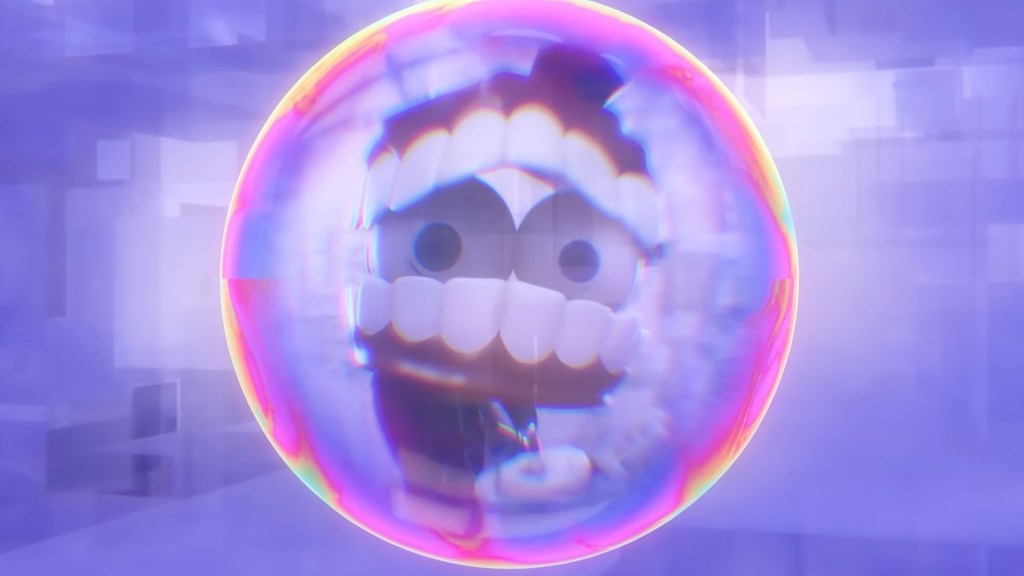
There is perhaps an argument that the villain of The Amazing Digital Circus being redeemed was fitting for the hopecore that emerges in the second half of the final episode, but it’s also incredibly hard not to think Caine’s arc was mishandled. Caine’s characterisation throughout the series worked as a commentary of the dangers of transhumanism – he wasn’t necessarily evil, he was merely singularly focused on completing his purpose. That made him oblivious to his mistreatment of the others, a sort of childlike presence, and given the way lots of the creative world currently feels about AI, he also felt like a fitting meta-commentary.
The choice to redeem him and realize the error of his ways rings a little hollow, in contrast with the more complicated revelation that he, like the Circus Members was completely unable to escape his fate. The “humans” deserved to inherit the Circus, and while there is something to be said for their acceptance of Caine atoning for what happens to Jax, and their failure to break through to him, I still firmly believe the better message was in making Caine pay properly. It’s not entirely illogical that he should realize that he could fulfil his purpose through more benevolent measures than outright torture, but it just didn’t feel entirely right.
5) Ragatha
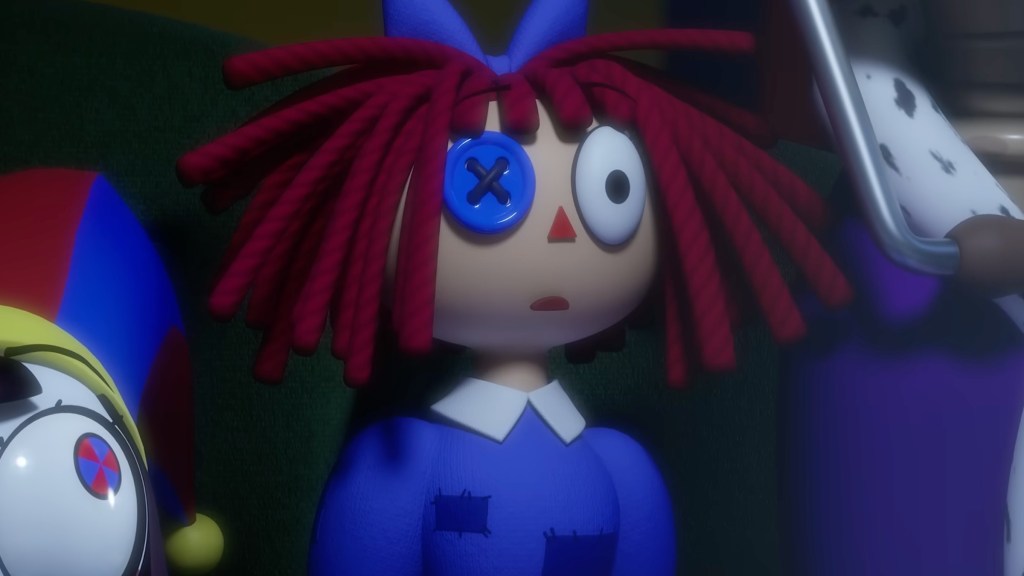
Neither Ragatha nor Kinger feel particularly well-served in the final, because so much time is spent focused on other characters. But that isn’t to say there isn’t something to discuss here. Ragatha’s ending quietly underlines how strong she was as a character, even without knowing it. Her reaction to Jax’s abstraction underlines that, as she says – almost without emotion – that she always assumed she’d be the next to abstract. I do still think the decision to have Pomni tell her that she is her closest friend feels a little too out of left field to be fully earned.
Ragatha reveals to Pomni that she was also Jax’s real friend, and that she seemingly feels some guilt over helping him suppress the truth of what happened with Ribbit. But during Jax’s backstory sequence, it’s also shown that she genuinely tried to still connect with him even as he tried to cut ties to protect himself. We learn that in the real world, Ragatha’s name is Susie J. Akaman, who became a successful businesswoman and cut ties with her abusive mother (the best part of her ending) and set up her own life, becoming an important friend to many. It’s a bit of a shame that she is confronted with her real value only in a completely different realm, but the suggestion that it will help her develop her confidence in the Circus is important nonetheless.
4) Kinger
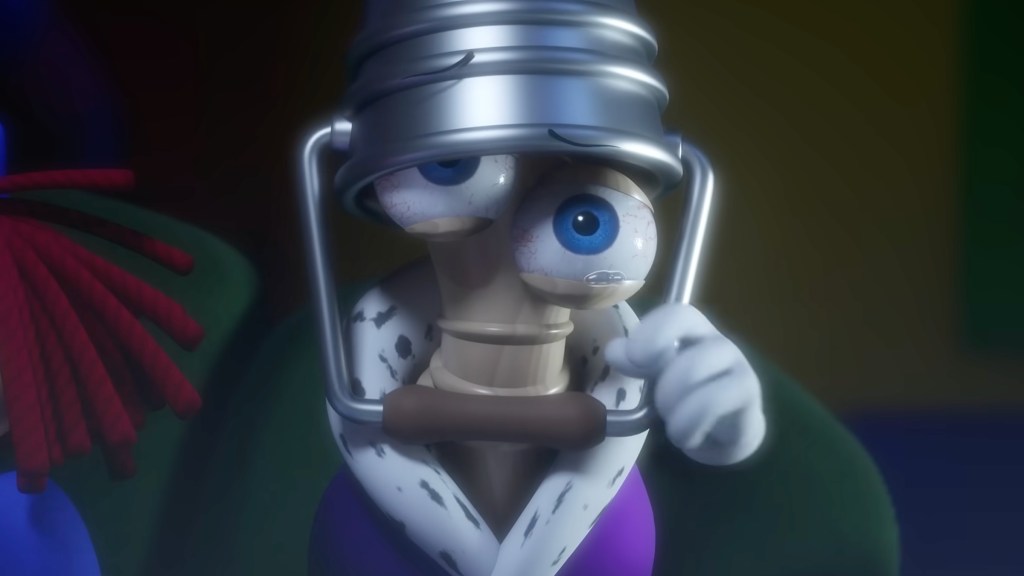
Kinger’s ending mostly happens in Episode 8, with the big action sequence that leads to Caine’s disappearance. He’s given the opportunity to return to his “normal” self when Pomni puts the bucket over his head, and he stays that way throughout the finale, before it’s seemingly confirmed that he recovers his sanity enough to remain grounded even in light. That revelation uncouples his sanity from the traumatic memory of the loss of Queenie, which is at least a merciful development. He also gets an important hero moment (though it’s largely in service of Pomni’s story). We previously knew of his emotional intelligence and that he’d comforted Ragatha at her lowest, and he does the same for Pomni in the finale. When she’s struggling with her failure to deliver on what she sees is her duty – to keep everyone hopeful – he soothes her and reveals how key she is to the rest of the group.
Because of the decision to bring Caine back almost immediately, it feels a little like an interesting part of his story – him being forced to reckon with accidentally dooming the other humans – is resolved all too quickly. Perhaps that would have been too cruel, in the end, and his revealing that they are all just digital brain scans rather overshadows the moment anyway, and rightly so. Eventually, we learn that in the real world, Kinger – AKA Grant is happily married and is confirmed to be a good dad, leading to a small moment of pure joy when we see his reaction. It’s balanced by the sad reveal that he visits the new aquarium for the abstracted to visit Queenie.
3) Gangle & Zooble
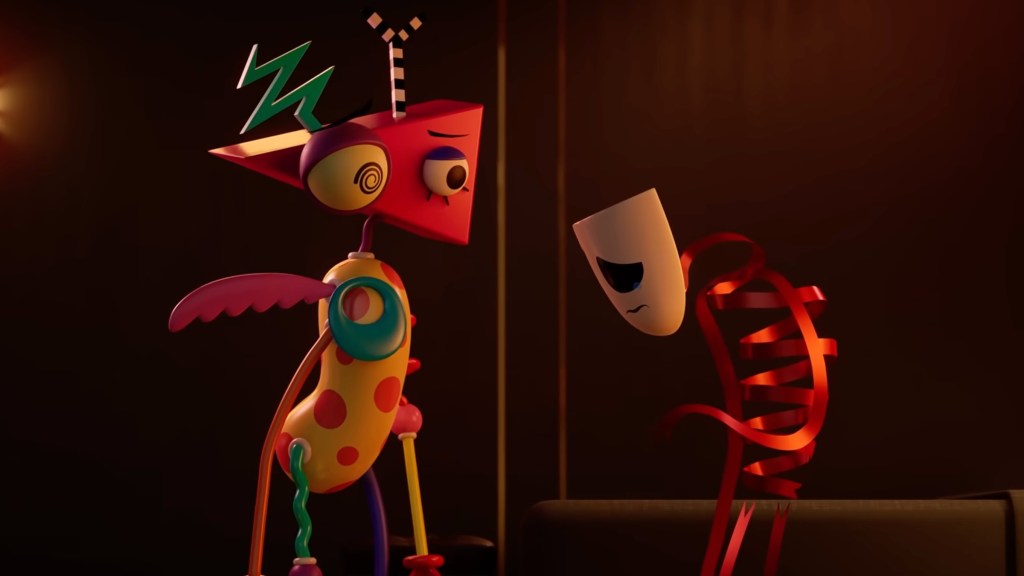
Gangle’s ending is, somewhat inevitably, tied to Jax’s fate, and there’s a subtle value to how she reacts to her tormentor abstracting. The finale could have made a far bigger deal of her reaction, allowing her to angrily vent about her treatment, and the hopelessness that comes from it all being for no reason for Jax abstracts, but the quieter approach is better. Gangle merely wonders why she can’t cry for him, despite wearing her Tragedy Mask. Gangle basically exists as a monument to Jax’s cruelty for those who had hoped his abstraction could be reversed.
Gangle is really the only character who never knew Jax before he turned, other than Pomni, and she only knew him as a villain. She’s an important counterpoint to Pomni in the finale, but it’s still notable that she goes through the performance of grief. Jax’s abstraction – as I’ll discuss when we get to Pomni’s ending – does offer some astute commentary on suicide. Gangle represents one of one of the most tragic results of someone taking their own lives: those who are left behind, and feel, through their own experience with the departed, a perverse sense of relief. That she doesn’t celebrate his “death” speaks to her character.
Zooble is mostly sidelined in the finale like Kinger and Ragatha, but if you paid attention during the credits sequence, you’ll already know why I’ve included them with Gangle. In a fan-service shock, it appears the ending sequence confirms Zooble and Gangle’s relationship progressed to the next level. So Caine really was keen on delivering happiness, after all. To put it more bluntly, yes, they smashed.
2) Pomni
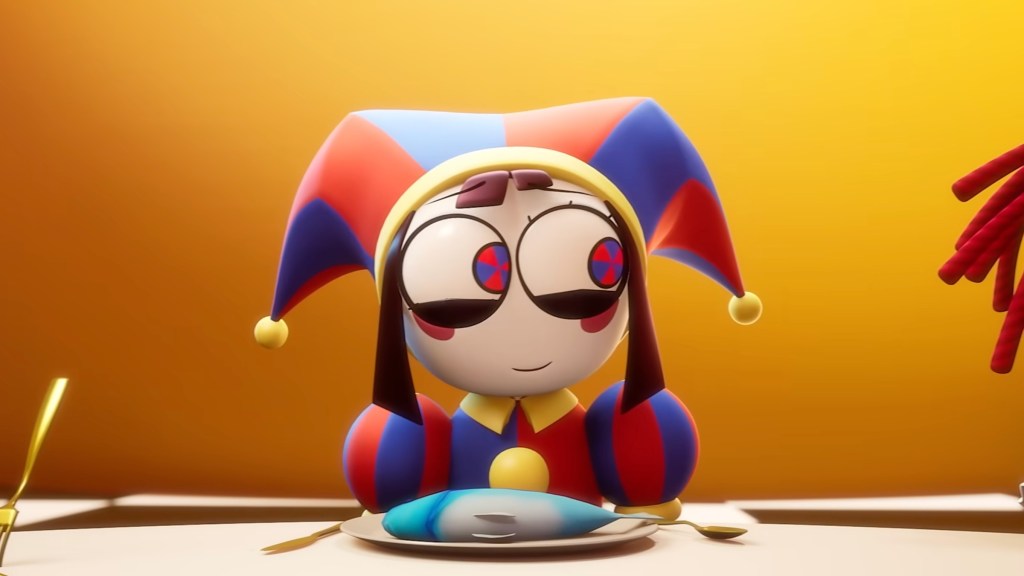
While it might appear that Caine and Jax get the most character development, Pomni actually learns probably the most important lesson of everyone through Jax’s story. Like Gangle, Pomni represents the reality of those left behind, and while her struggle to save Jax after his abstraction feels hopeless, there’s a subtle comment on self-determination that is an important part of frank discussions on suicide. It’s arguably the most difficult challenge, and Pomni, unfortunately, has to come to the tragic epiphany that you cannot help people who do not want to be helped. Is it a healthy message for so many young people to watch played out? That’s certainly a debate that has merit. I found it to be a surprisingly brave move that would typically be avoided by a more conventional happy ending.
Pomni, crucially, isn’t destroyed by the realization that Jax’s fate cannot be reversed, as she might have been earlier in her story. Her determination to maintain everyone’s happiness up and present an image of hope is thoroughly challenged.
1) Jax
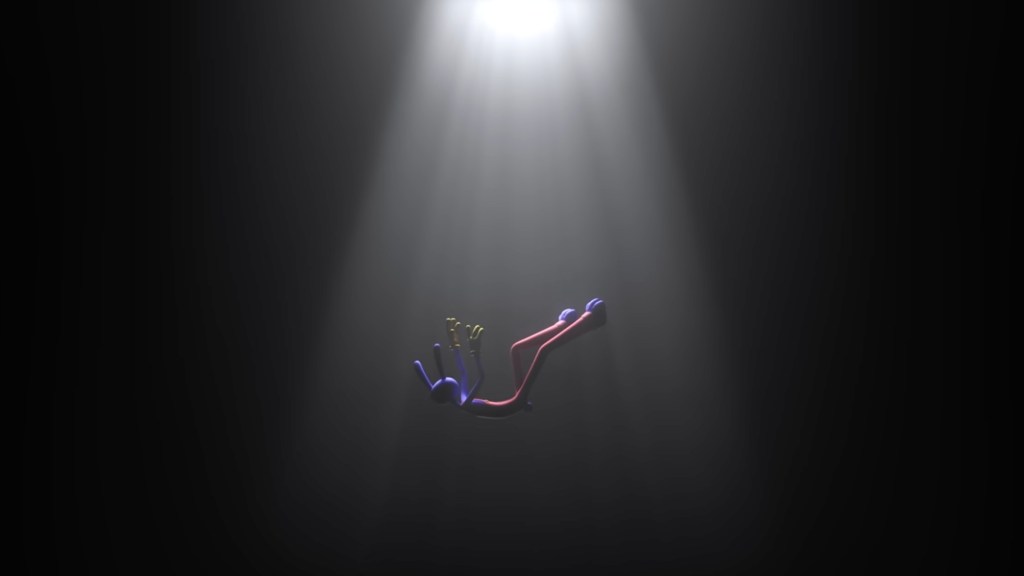
Okay, let’s get it out of the way quickly: Jax’s abstraction is a bold choice, and it was the correct one. It had been threatened several times already, and while it happening may have felt like a betrayal of Pomni stopping it previously, that’s precisely the point. Jax’s story is one of despair, more than it’s one of pure evil, which might sit poorly with some people (particularly those who didn’t like Jax), but you can acknowledge that the creative choices here are still excellent even if you’re not a fan of him generally.
The abstraction happening off-screen is absolutely going to be one of the most debated choices long after the dust has settled, and I think it’s fair to say the significant sequence showing Jax’s backstory is being unfairly misunderstood. The flashback and Pomni going into Jax’s mind doesn’t feel like it’s supposed to set up a redemptive arc where Jax is deabstracted: instead, it’s more about Pomni finding closure for herself and learning that there’s a limit to empathy, as I’ve already said. In the end, Jax exists as a warning to those who close themselves off, and who turn away from all help, as well as an acknowledgement of how difficult it is to resist that sort of self-isolating behavior when you lose yourself to despair.
Jax isn’t forgiven for his past behavior (as may have been the accusation had he been “fixed”, and Glitch made a brave decision to show that sometimes happy endings just aren’t possible for everyone. It is, perhaps, a little weird that Jax’s future condemns him to being a sort of pet, with his mind calmed, unlike the other abstraction victims. It doesn’t really fit with the suicide allegory that keeps being brought up in the fandom.
What do you think? Leave a comment below and join the conversation now in the ComicBook Forum!
More TV Shows
-
Image Courtesy of Marvel -

Image Courtesy of Prime Video -

Image Courtesy of The CW -
Courtesy of 20th Television Animation / Hulu -

Courtesy of 20th Television Animation / Hulu