“These are the voyages of the starship Enterprise. Its continuing mission: to explore strange new worlds…” These famous lines of the classic Star Trek opening monologue are more than just an intro; to fans, they have always felt like more of a promise of exploration and wonder, both in-universe and out; a promise of what the show can deliver. But Star Trek: Strange New Worlds’ latest episode “Four and a Half Vulcans,” takes that (still commendable) passion for exploration when it comes to its story ideas and production, somewhere unexpected: into a bizarre deadpan comedy where half the Enterprise bridge crew becomes Vulcan for a day…
Videos by ComicBook.com
The original ‘problem’ set up by the episode is solved within the first 5 minutes. The Vulcan High Command calls on the Enterprise to save Tezaar, a pre-warp world on the brink of nuclear meltdown thanks to their Vulcan-built reactors. Because the Tezaarans know about the Vulcans, but not about the Federation, and can scan for biological differences, Pike, Chapel, Uhura, and La’an decide to dose themselves with Chapel’s modified serum in order to temporarily become “real” Vulcans, complete with green blood and pointed ears. But things quickly go wrong, as they are wont to do. The serum seemingly can’t be so easily reversed, and the newly formed Vulcans don’t want to change back. On paper, it sounds like an intriguing concept, a classic Trek experiment in identity and perspective. In execution? It’s an episode that raises more questions than it answers — and not always in a good way.
Transformation in Trek Isn’t a New Thing
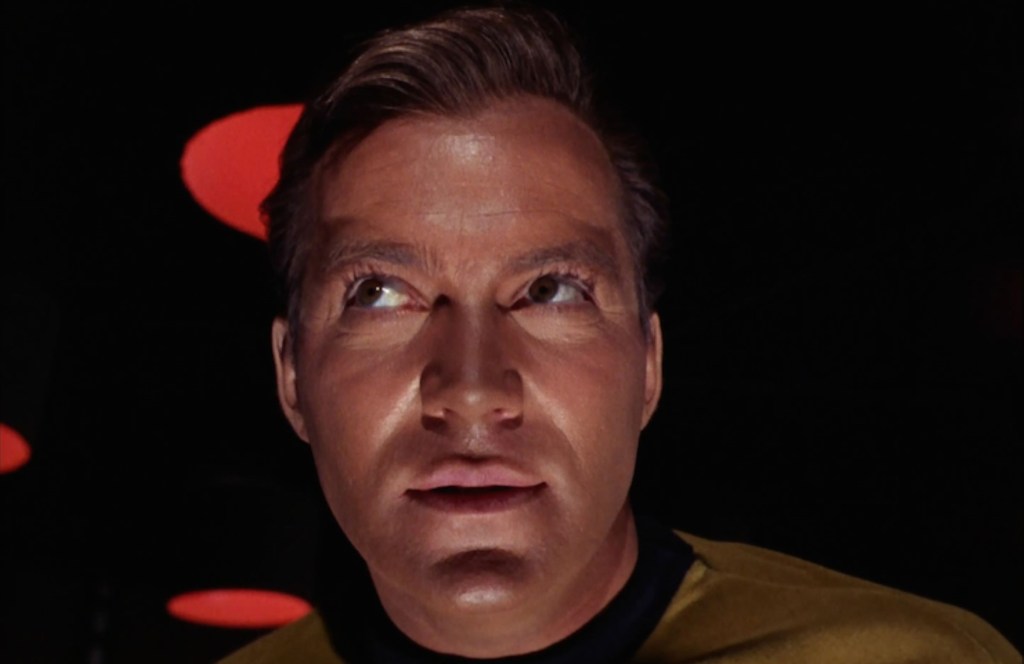
Playing with concepts of identity through transformation both figurative and literal, isn’t new to Star Trek. The franchise has always thrived on exploring these themes, whether its balancing duel parts to an identity or reconciling conflicting priorities and senses of self, in ever inventive ways. From Captain Kirk literally splitting in two in “The Enemy Within” to B’Elanna Torres directly confronting her dual heritage in Voyager’s “Faces,” episodes dealing with identity conflicts and shifts have given the franchise some of its most thoughtful and insightful stories.
Since its inception in 2022, Strange New Worlds has seemed to be particularly preoccupied with the idea of actual bodily changes and changing identities through literal, scientific genetic modification. In its pilot episode, Pike and crew took a similar serum to disguise themselves as members of the native race of the planet Kiley 279 in order to avoid violating the Prime Directive. “Ghosts of Illyria” saw Number One grapple with being a member of the Illyrian race, who were banned from the federation due to their use of genetic engineering. La’an struggles with the shame of being a descendant of the famous genetically modified Kahn and his race of superhumans. But the series’ latest instalment, “Four and a Half Vulcans,” takes this tradition in a much stranger, less satisfying direction. Instead of asking the deeper questions, it leans hard into the deadpan comedy of a team of impassive Vulcans roaming the halls of the Enterprise.
The Trouble With Vulcanizing the Crew
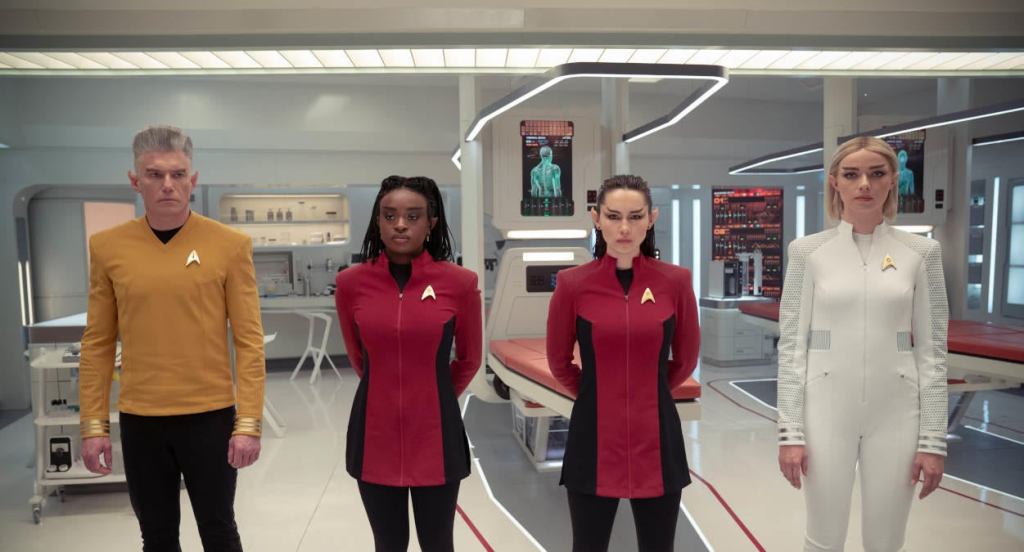
At first, it’s 100% clear why Pike and Co’s transformation is being played for laughs — because it is admittedly objectively funny. Pike’s hair grows taller (a feat few could have thought possible), Chapel multitasks like a machine, and Uhura efficiency-tests her new boyfriend. But the choice to lean so heavily into the comedy of the situation quickly begins to create problems for the episode and its characters.
There’s little explanation offered as to why becoming genetically Vulcan would suddenly, apparently, download centuries of learned logic and restraint into the minds of the crewmembers. Yes, altering their biology would presumably alter their brain chemistry and senses, but as we are constantly reminded, ‘Vulcans feel emotions even more deeply than humans do,’ hence the mastering of control and restraint from a young age and the focus by Vulcan society on logic to counteract these powerful impulses. If anything, suddenly bombarding humans (with human upbringings and experiences) with the heightened senses and emotions experienced by Vulcans should have the opposite effect to making them calm and collected – without Vulcan training in self-control, they should be running riot round the ship, unable to control their mood swings!
Perhaps we can forgive this slight oversight in the interests of story-telling, but instead of using the transformation to offer any meaningful insight into why Vulcans are the way they are, and their choice to live by logic, or even the history and evolution of Vulcans and their culture, the episode reduces the idea of a ‘Vulcan’ to a bundle of quirks and broad stereotypes. Pike reorganizes shifts with ruthless efficiency, sparing little thought for the human need for sleep, Chapel dumps her fiancé (and indeed her entire social circle) to maximize productivity, and Uhura literally brainwashes Beto to go along with her every want and need through a mind meld.
And then there’s La’an, who for some reason suddenly becomes a power-hungry despot plotting interstellar conquest… There’s a vague explanation offered that her tendency towards more violent impulses as a Vulcan may be down to a combination of her personality, genetics, and the DNA Vulcans still share with their Romulan ancestors, who were a far more aggressive race. But, having introduced this intriguing idea of her being more ‘Romulanesque’ as a Vulcan, there’s no real exploration as to the differences.
For a species that has always stood as Trek’s shining example, practitioners of discipline, restraint, and peace, this isn’t just a reductive episode for Vulcans — it’s borderline mean-spirited.
Vulcan Logic is Lost in Translation
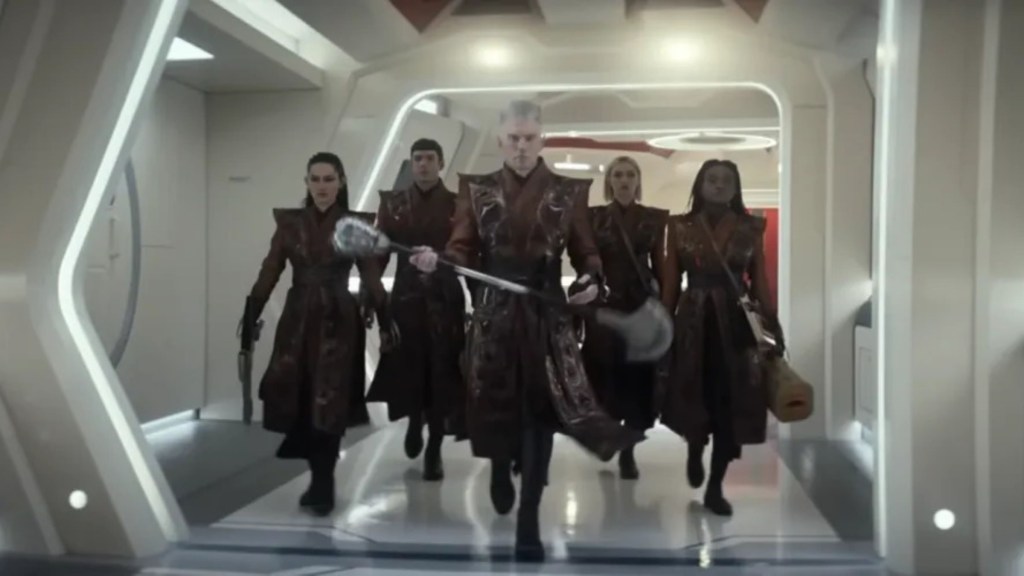
Vulcans have been part of Trek from the very beginning, the first species mankind made contact with; they’ve been foundational to Star Trek since Leonard Nimoy first raised a pointed eyebrow in 1966. Gene Roddenbury’s idea for The Original Series was that the crew that made up the Starship Enterprise would, to some extent, represent the many peoples of Earth and all its diversity (Sulu representing Asia, Uhura Africa, Chekov Russia, etc).
The iconic Mr Spock, as the resident ‘Vulcan’, embodied the optimism that mankind would continue to progress politically, forging friendships and understandings with different cultures and peoples, as well as demonstrating the importance of every single individual within a society. Spock’s struggles with feeling “other” embodied the sense of alienation even from our peers that we have all probably experienced at some point in our lives, and showed how we all belong, regardless of how alone or different we may sometimes feel.
For many fans — particularly those who identify with Vulcans’ struggles to fully understand themselves and regulate their emotions — this representation matters. The universal struggle to reconcile the good and bad within us, balance our emotions and personal needs with those of society and the world around us, and be the best person we can be, is a struggle many fans, especially those who may be neurodivergent, see themselves reflected in. In this sense, Vulcans have always been more than just “pointy-eared logicians.” In Spock, Tuvok, and countless others, we’ve seen layers of discipline, restraint, spirituality, and deep emotional undercurrents. Episodes like The Original Series’ “Amok Time” or Voyager’s “Meld” didn’t just use Vulcans for comedy; they used them to probe what it means to be human, as well as giving us some first-class world-building, helping create a fascinating alien culture by providing insight into Vulcan traditions and ceremonies.
“Four and a Half Vulcans,” unfortunately, reduces that rich heritage Trek has painstakingly built over nearly sixty years to caricature, and doesn’t seem interested in the tradition of using Vulcans to comment on humanity. Instead of offering insight into what it means to be Vulcan, the episode presents Vulcan identity as a set of one-note extremes, essentially using Vulcan identity as a gag reel. Sure, there are chuckles to be had (Anson Mount’s deadpan timing is a gift), but the cost is a flattening of Vulcan culture into a parody. For longtime fans who connect deeply with Vulcans, that just hits wrong.
It’s almost cruel to have one of Trek’s most noble species played for awkward laughs this way. The allegory that once offered meaningful reflection is instead reduced to sitcom-level forced laughs. This isn’t to say Trek can’t poke fun at Vulcans — The Voyage Home and Lower Decks have proven it can, and brilliantly. But those moments work because they balance humor with respect. “Four and a Half Vulcans” doesn’t strike that balance, and it leaves the episode feeling both awkward and oddly mean-spirited. There’s a difference between laughing with and laughing at, and punching down on Vulcans in this way feels almost like petty schoolyard bullying after a while.

Strange New Worlds’ New Episode Weirdly Sidelined Spock
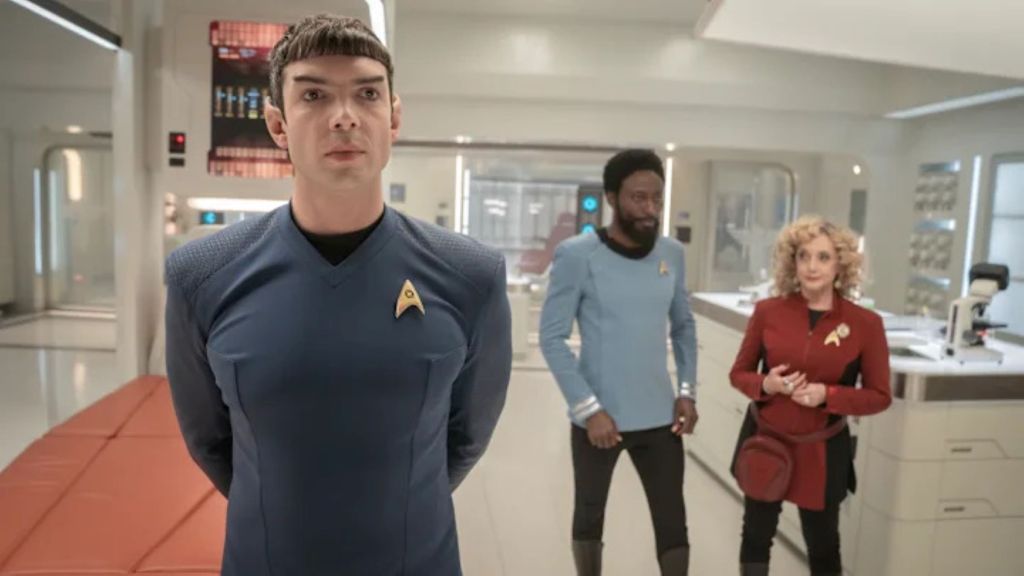
Speaking of school yard bullying, Spock is notably sidelined in this episode, despite being the only ‘true’ Vulcan in the place when you really think about it! He is left to clean up the mess by mind-melding with the crewmembers to reach their inner human ‘katras’ or essence, still buried deep down, and convince them to come to their senses and transform back to their good-old human selves. His half-human heritage, which could have become a natural focal point given the premise, barely factors into the story besides a few jibes from his newly Vulcanised friends that he is only half-Vulcan and therefore now actually the least Vulcan among them. I’m trying not to be offended on his behalf…
This, of course, has very distinct echoes of scenes of Spock’s childhood in the episode “Yesteryear” of The Animated Series or in the J.J. Abrams films, which depicted Spock getting bullied at school for his dual heritage. But what could have at the very least been turned into another thoughtful exploration of Spock’s struggles with his identity instead feels like a missed opportunity buried under sitcom beats and awkward gags. There are a couple of moments where members of the crew offer their apologies upon regaining their humanity, claiming they ‘feel like they understand Spock better now’ but the apology doesn’t feel like nearly enough! The episode would perhaps have felt more rounded had this idea of the crew finally seeing Spock in a new light and his differences saving the day been presented as the central idea.
“Four and a Half Vulcans” Became a Story Without Stakes
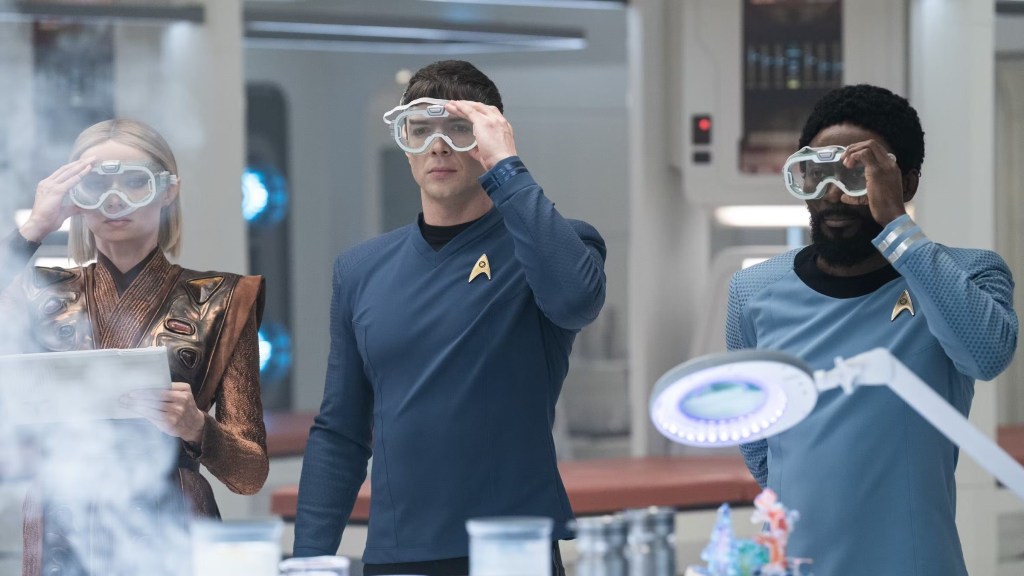
The problem with this episode isn’t just the portrayal of Vulcans or the lack of clear direction and message; there’s also the issue of pacing. Structurally, “Four and a Half Vulcans” undermines itself by brushing aside its central crisis. The Tezaaran planet, facing a potential nuclear meltdown and literally about to blow up, is supposedly why the crew undergoes this risky transformation. But that storyline is resolved almost instantly and forgotten.
Instead, the bulk of the episode is essentially spent on side plots around the various characters relationship drama: Una’s awkward romantic tension with her Vulcan ex, Doug (who admittedly steals the show), Pike’s relationship with his partner Marie, Uhura’s relationship with Beto, even Spock’s relationship with La’an (which we’d still like some clarification on…). What’s left is a string of character skits: Uhura’s control-freakery, Chapel’s inner workaholic, La’an’s near-cartoonish military precision. Kirk’s randomly shoehorned-in visit, where he apparently bonds with Scotty, comes out of nowhere, and Pelia’s comic-relief quips about LSD only serve to confuse the episode further.
None of it feels truly connected, and worse, none of it grapples with the deeper questions that the premise begs. The stakes never feel real, so the “funny” doesn’t land as hard either. What does it really mean to live as a Vulcan? Where’s the line between adopting a culture and appropriating it? Does logic without experience produce wisdom, or just cruelty? The episode doesn’t seem interested in asking. And that feels like a missed opportunity. From exploring Vulcan culture, to using it to comment on the nature of humans, to making the episode fully about Spock and his unique perspectives, there are so many directions the writers could have taken this fascinating tale, yet they seem to attempt to touch on all of them, which has the net effect of achieving none of them.
The Bright Spots
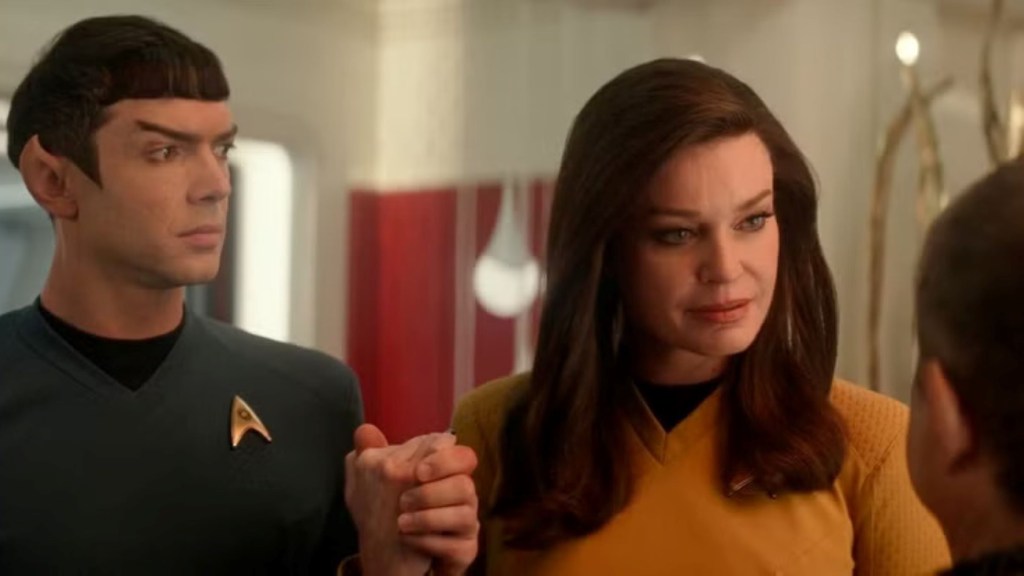
It’s not all bad. Anson Mount once again proves his versatility, turning Pike’s hyper-logical quirks into some genuinely funny moments — his towering Vulcan quiff deserves its own credit. Carol Kane’s Pelia remains a reliable delight, delivering some of the episode’s wittiest, if slightly out-of-nowhere one-liners. And the brief moments of bonding between Kirk and Scotty, while heavy on The Original Series foreshadowing, at least add some texture to their eventual dynamic.
The closing post-credits scene, with Spock trying and failing to teach the hopelessly stiff Doug the finer points of human behavior, captures the kind of situational comedy and fly-on-the-wall commentary on the quirks of humanity that Trek has always done best. It’s just a shame that this wasn’t the focus of the episode itself.
Strange New Worlds has built its reputation on balancing old-school episodic adventure with modern character arcs. That balance has been a little wobbly this season. Between soap-operatic romances and wacky filler episodes, the show risks losing the sense of awe and meaning that Trek is supposed to deliver. “Four and a Half Vulcans” could have been a sharp commentary on identity, assimilation, or even the dangers of over-logic — themes Trek has nailed before. Instead, it settles for surface-level jokes and show-horned subplots.
Strange New Worlds has certainly taken some bold risks before with musicals and even animated crossovers, and often they paid off, but when those risks lead to a stumble, as in “Four and a Half Vulcans,” the show runs the danger of cheapening its themes. If this trend continues, Strange New Worlds could end up sidelining the very qualities that make it stand out in today’s crowded sci-fi landscape.
Final Thoughts on “Four and a Half Vulcans”
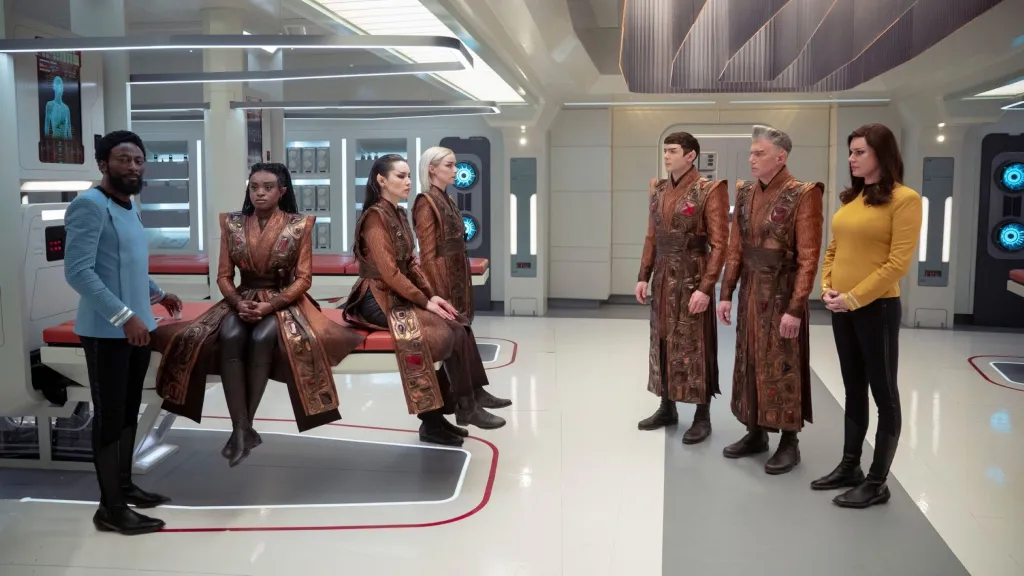
Still, the season isn’t over. With only two episodes left before the finale, there’s room for the series to stick the landing. But “Four and a Half Vulcans” proves that Star Trek at its best doesn’t just dress its characters up in new costumes — it asks what those transformations mean. Hopefully, Strange New Worlds remembers that before its final curtain.
“Four and a Half Vulcans” isn’t the worst hour of Star Trek by any means, but it might be one of the most frustrating. The cast is game, the production is slick, and there are scattered laughs — yet the core idea feels undercooked, even careless.
But this misstep is a reminder: Star Trek doesn’t endure because of gimmicks or gags. It endures because it takes its characters, cultures, and ideas seriously — even when it’s having fun with them.
New episodes of Star Trek: Strange New Worlds Season 3 premiere Thursdays on Paramount+, culminating with the finale on September 11.
Want to stay up to date on the biggest geek entertainment news? Add us as a preferred source in Google – HERE.
Most Viewed
-

Official art by Bastien Lecouffe-Deharme -

A photo of the Retrovolt Arcade taken in 2017, showing several classic arcade cabinets and stools. -
Image courtesy of Tor Books/Macmillan -

Courtesy of Saber Interactive -

Courtesy of TOHO Animation