
Batman has no shortage of incredible storylines that put the Caped Crusader in a dark and gritty light, particularly in alternate universe tales. From Frank Miller’s Dark Knight Returns to Zack Snyder’s Absolute Batman, DC Comics has no shortage of tales that portray the brutality and mental anguish of Batmen from across the multiverse. However, after three years of delays and lost publicity, the Dark Knight’s most underrated series in recent years, Batman: Gargoyle of Gotham, has reached its climactic conclusion with the release of issue #4. Written and illustrated by Rafael Grampá, the finale of this epic Black Label storyline offers one of the most nuanced and vicious depictions of the Dark Knight.
Videos by ComicBook.com
The hype for this Black Label series when it was first announced was immense, as DC Comics continuously advertised it and even made animated trailers for the comic and for the first three issues. However, in part due to Rafael Grampá single-handedly writing and illustrating the series, the release dates stretched out to three years with several long hiatuses. By the end, both DC and general audiences seemed to have forgotten about the series. Still, Batman: Gargoyle of Gotham deserves far more recognition for how it stuck the landing with its conclusion, which summarizes the comics’ themes of identity, rage, systemic inequality, and the nature of violence.
A Batman Defined by Rage and Brutality

Set in the grim world of Earth-46, the basic premise of Batman: Gargoyle of Gotham is that the titular city has become so corrupt and crime-ridden that a young Batman considers faking the death of his Bruce Wayne identity so that he can focus on his crimefighting mission 24/7. It’s always been a long-running debate as to whether Bruce Wayne or Batman is the mask. The tone of this series is immediately set with the depiction of a version of Batman who has almost completely allowed himself to be subsumed by his grief and overwhelming rage at the world that took his parents away from him.
With little to no civilian life to offer balance and to ground him, the Batman of the Gargoyle of Gotham universe expresses brutality that rivals and sometimes even surpasses that of Absolute Batman. This Gargoyle Batman has allowed vengeance to take such complete control of his life that he rarely holds back. This is reflected in his backstory. Right after his parents were killed, Bruce immediately tracked down Joe Chill and used a nightstick to bludgeon the thug so viciously that he became a permanent quadriplegic. As an adult, this enraged Batman continuously pummels criminals to the brink of death, will use hammers as weapons, and is willing to kill his enemies. This is a Batman who has all but abandoned his humanity.
It’s not hard to see why Batman would go down this path, given the all-new rogue’s gallery Grampá created for this series, including Crytoon, Little Joker, Moth-er, Doctorgeist, and his Stadtgeist secret society. These are some of the most twisted, sadistic, and violent villains any version of Batman has ever faced. Doctorgeist and the Stadtgeist embody the themes of the series, as they are obsessed with having people release their “dark aura,” giving in to their darkest impulses, and cleansing Gotham in a city-wide purge. In fact, during Bruce’s time at Arkham, members of Stadtgeist tried to have him embrace this dark aura, but it was too destructive and maddening for even them to control. Batman instead channeled this darkness to become Batman.
Doctorgeist and his Stadtgeist society represent what would happen if Batman fully gave in to his darkness and thirst for vengeance. Like Batman, they believe that violence and surrendering to one’s worst impulses will make Gotham better, when all it really does is hurt the poor and aid the wealthy. This is best shown by how the villains are manipulated by Gotham’s wealthy elite, the Concordia Club, to carry out this purge to further the Club’s scheme to rid the city of its impoverished populace. The Stadtgeist society shows why Batman must never allow his hatred and grief to fully consume him, as it will ultimately do more harm than good for Gotham.
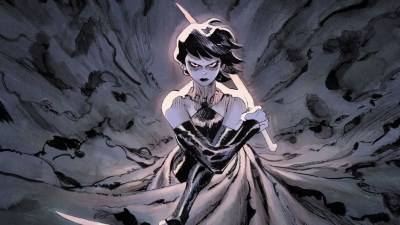
The Power of Batman and Bruce Wayne

Batman: Gargoyle of Gotham #4 concludes in the only way that such story can, and it’s a brilliant reimagining and examination of both the Batman and Bruce Wayne personas and how they can benefit Gotham. After allowing his isolation and darkness to control him for years, Batman ultimately reflects on his self-destructive behavior and realizes the error of his ways. When Doctorgeist has his followers enact their bloody purge, Batman rallies the downtrodden of Gotham in an epic battle for the city. The battle may have left Gotham in ruin, and the Concordia Club may have succeeded in their goal of taking control of the city in the aftermath, but Batman’s transformation ensures that he’s now their worst nightmare.
The battle for Gotham leaves thousands dead, but in the end, Batman and his followers emerge victorious by defeating the Stadtgeist army. Instead of allowing his inner darkness to continue controlling him, Batman shows mercy and even saves Doctorgeist’s life when he’s almost killed by the villain Crytoon. Batman adopts three vigilante kids nicknamed the Ratz and has them join his crusade. Together, they take on a Robin Hood approach, stealing from wealthy criminals and giving to the poor. As for Batman himself, he’s taken on one of his most fearsome costumes of all time, with a ghoulish vampire aesthetic with giant mechanical wings. It’s a terrifying sight that shows Batman will never give up his mission to punish Gotham’s corrupt.
More importantly, Batman not only decides to re-embrace his Bruce Wayne identity, but uses it to further help Gotham and defeat the Concordia Club. Naturally, he begins using his own wealth to help the impoverished of Gotham. He also gives more funding to Arkham to help rehabilitate traumatized kids so that they don’t go down a similar path as he did. However, the biggest surprise occurs when Bruce joins the Concordia Club. Bruce uses his status as a member of Gotham’s one percent to infiltrate and dismantle the city’s most powerful and corrupt organization from the inside. It’s a brilliant strategy that few versions of Batman have implemented before. Bruce Wayne is no longer just a civilian identity; he’s the Dark Knight’s greatest weapon in taking down Gotham’s elite.
Batman: Gargoyle of Gotham ends with an explosive finale that examines what the Batman and Bruce Wayne identities mean and that has the hero ultimately exploiting and balancing the extremes of both personas. It’s a brilliant argument that Batman mustn’t let his anger cloud his true mission of helping Gotham become a better place for its citizens. For like a gargoyle, Batman is a dark and enigmatic figure who watches over Gotham as its loyal and fearsome protector.
What do you think? Leave a Comment below and join the conversation in the ComicBook Forum!
More Comics
-

Image Courtesy of DC Comics -
Image Courtesy of Marvel Comics -
Image Courtesy of Marvel Comics -
Image Courtesy of Marvel Comics

![Heaven Is Worse Than Hell in a Perfect Event Horizon: Pandemonium #1 (Early Review) [EXCLUSIVE]](https://comicbook.com/wp-content/uploads/sites/4/2026/10/event-horizon-pandemonium.jpg?w=300)
