The X-Men have become superlatively popular over the decades, and there are numerous reasons for that. Villains are an important part of this formula, and one of the most important of these is Apocalypse. Over the decades, Apocalypse has become integral to numerous aspects of the X-Men mythos, especially in the Krakoa Era. Krakoa Era mastermind Jonathan Hickman promised that he was going to change En Sabah Nur forever, and he definitely did; the villain played a huge role in the beginning of the status quo, and got more fleshed out as a character than ever before. In fact, readers got an entirely new chapter in the origin of the character in X-Men (Vol. 5) #13-15.
Videos by ComicBook.com
This new origin tied into the first event of the Krakoa Era, “X of Swords”, as well as playing off of hints and prophecies from House of X/Powers of X. It did a ton for Apocalypse as a character, more than any story had since the mid ’90s Rise of Apocalypse miniseries. However, while this story is expertly written by Hickman with amazing art from both Leinil Yu and Mahmud Asrar, it’s also one of the worst things that has ever happened to the Egyptian mutant. The Krakoa Era was very inventive, and it often paid off. However, this time, it basically ruined the character.
“X of Swords” Tried to Give Apocalypse Layers but It Ruined Every One of the Character’s Previous Stories
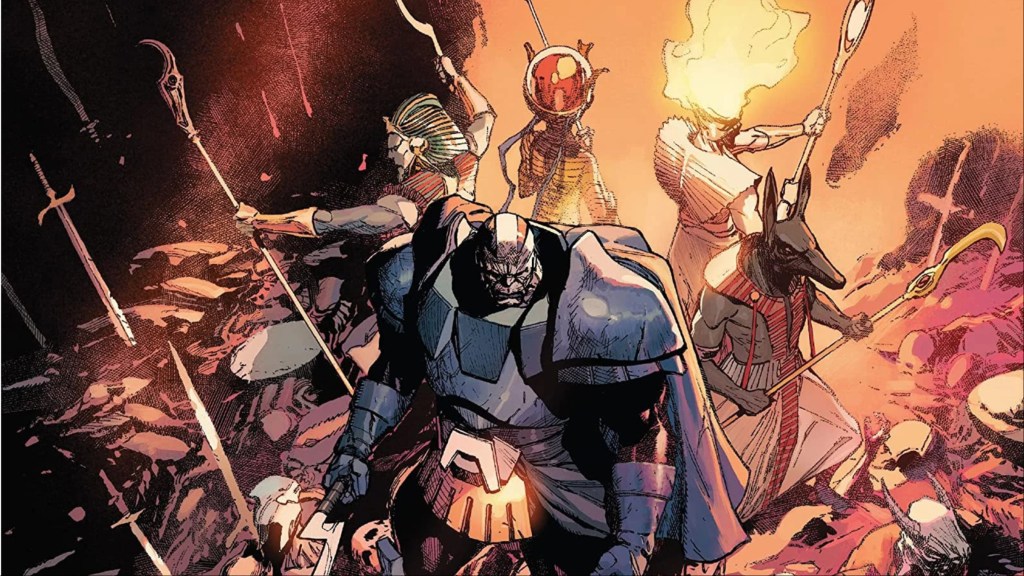
Hickman’s run on X-Men (Vol. 5) wasn’t perfect. There was a lot of set-up that would be abandoned as the era continued, but one of the highlights of book was Apocalypse. He was one of the leaders of the mutant island, and every issue he appeared in was perfect. The introduction of Arakko started laying the foundations for the lore of “X of Swords” and Apocalypse was all tied up in that. Soon, we’d get the foundations of the contest between Krakoa and Arakko, and X-Men (Vol. 5) would fill in the lore of Okkara, the first mutant nation, and Apocalypse’s role in the history of the older mutant civilization.
Issues #13-15 would go back thousands of years, to when En Sabah Nur found the mutant continent of Okkara. He met Genesis there, who had also taken up a more Darwinistic way of looking at life. In fact, Hickman made it so Genesis was way more into “survival of the fittest” than Apocalypse; she was the more hardcore believer, and was more about combat, while En Sabah Nur was more into the theory, acting as a traveling teacher of Darwinism. Basically, he was brain and she was the hands. They fell in love, had children, and became leaders of Okkara, which was eventually attacked by the demons of Amenth. The Okkarans did their best to fight off the demonic horde, but eventually, the only way to do so was to send the majority of Okkarans in Otherworld, after the Twilight Sword broke Okkara into Krakoa and Arakko, and battle the demons. Genesis made Apocalypse promise he’d create a powerful army to fight the demons in the future, and the Okkarans became the Arakkii, eventually losing the war against Amenth and joining the horde.
So, on the surface, this seems like a pretty cool story that fleshes out Apocalypse’s origin and connects it all to the then-current X-Men status quo. However, there are a few problems. To begin with, it makes Genesis way more important than she already was, making her what amounts to Apocalypse’s mentor in a lot of ways. It’s kind of strange to think that the villain, who at this point in his life had already defeated Rama-Tut at least once and had gained his Celestial enhancements, was playing second fiddle to someone he just met. It felt like the story was mostly there to make Genesis more important, but the worst was still to come.
Basically, the story made Apocalypse’s “survival of the fittest” ethos altruistic. Genesis wanted him to spend the millennia building an army of the most powerful beings on Earth so he could save the world. Everything he had done from the end of Okkara to “X of Swords” wasn’t to conquer the world, but to save it. At any time, he could have warned everyone that eventually an army of demons was going to show up that they’d all need to go up against, but instead he yelled about survival of the fittest, burying the lede. It was such a weird change to his origin, because it takes so many of his stories that came before this one and hurts them. Altruistic Apocalypse was an extremely weird idea, because it feels like no one thought out what it would mean for the rest of his history.
Adding Altruism to Apocalypse’s Origin Made No Sense
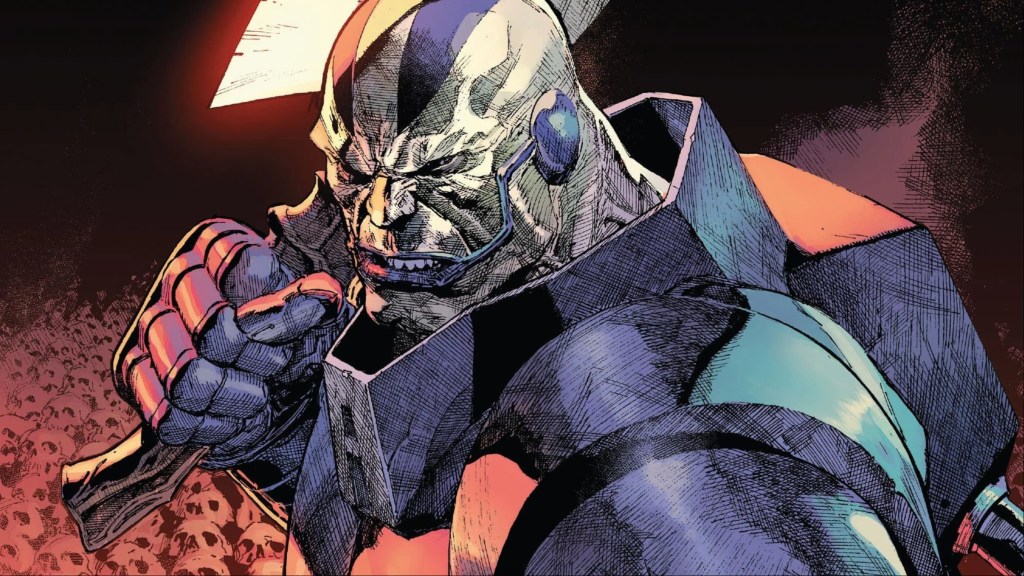
X-Men (Vol. 5) #13-15 are impeccably written flashback stories that gave readers some important lore with exciting moments. The battles between Okkara and Amenth were gorgeously drawn by Yu, with Asrar delivering the final duel between Apocalypse and Genesis perfectly, using what we learned from the previous two chapters of the story to make the duel an emotional, climactic battle. It all worked brilliantly, and X-Men (Vol. 5) #13-15 are three of the best parts of “X of Swords”. However, that doesn’t change how much damage that this story did to Apocalypse.
It made Apocalypse into just a wife guy. There’s nothing wrong with being a wife guy, but it doesn’t work for a villain that had been positioned as what amounted to the “dark lord” of the mutant world. Instead of learning that he helped create the ideas at the center of the Arakkii, we learned he was just a student. It changed him as a character in ways that didn’t really jibe with what we had seen before. It’s a fantastic suite of stories that completely ruin the character at the center of them in a way that no one expected.
What do you think? Leave a comment in the comment section below and join the conversation on the ComicBook Forums!
Most Viewed
-

Image Courtesy of Netflix -

Image Courtesy of Hulu