Marvel Comics grew into a cultural juggernaut since the debut of Fantastic Four #1 in 1961, partly because of the MCU, but mostly because the House of Ideas was able to create characters and stories that resonated with fans, making household names of Spider-Man, Hulk, Wolverine, and more. For decades, comics were part of everyone’s childhood, and starting in the ’80s, mainstream comics started to become more popular than ever with all audiences. The ’90s would see comics hit the big time and Marvel was leading the way, the success of books like Spider-Man (Vol. 1) #1, X-Force #1, and X-Men (Vol. 2) #1 making them the premiere purveyor of comic books. At the beginning of the decade of extreme, Marvel seemed unassailable.
Videos by ComicBook.com
However, today we know that wasn’t the case at all. Marvel led the industry in the early ’90s, but they did it by playing into the collectors’ bubble. Print runs went up, sales went down, and eventually, the bubble burst, almost taking Marvel with it. The writing was on the wall for a while, though, and Marvel decided to do the weirdest thing imaginable to get sales – split up their publishing line into five different imprints. It’s one of the most bizarre things that the publisher ever did, but most fans nowadays don’t even know it happened.
Marvel’s Bankruptcy Woes Led Them to Become the Houses of Ideas
The story of Marvel Comics in the ’90s is one of hubris almost destroying the comic industry. In fact, in reality, you can blame the entire bubble on Marvel Comics. The publisher did everything they could to push their books as collector’s items and everyone just sort of followed them, as well as the rise of the gimmick and variant covers. Their desire to not share profits with creators led to the Image exodus, which pumped even more air into the bubble. Marvel’s business decisions in the decade of extreme are some of the dumbest you can imagine, honestly.
The 1991 X-Men reboot was wildly successful, as were the Spider-Man books. However, everything else in the ’90s started to fall past the event horizon of a black hole. Throughout ’92-’95, Marvel kept trying to replicate X and Spidey successes of the early ’90s with their other characters, but it never worked. Eventually, the only Marvel books that were selling were the X-Men and Spidey and Marvel started to panic. This period in the ’90s was full of new publishers and imprints popping up, with some like Vertigo having massive success. All of these imprints led Marvel to make a strange decision.
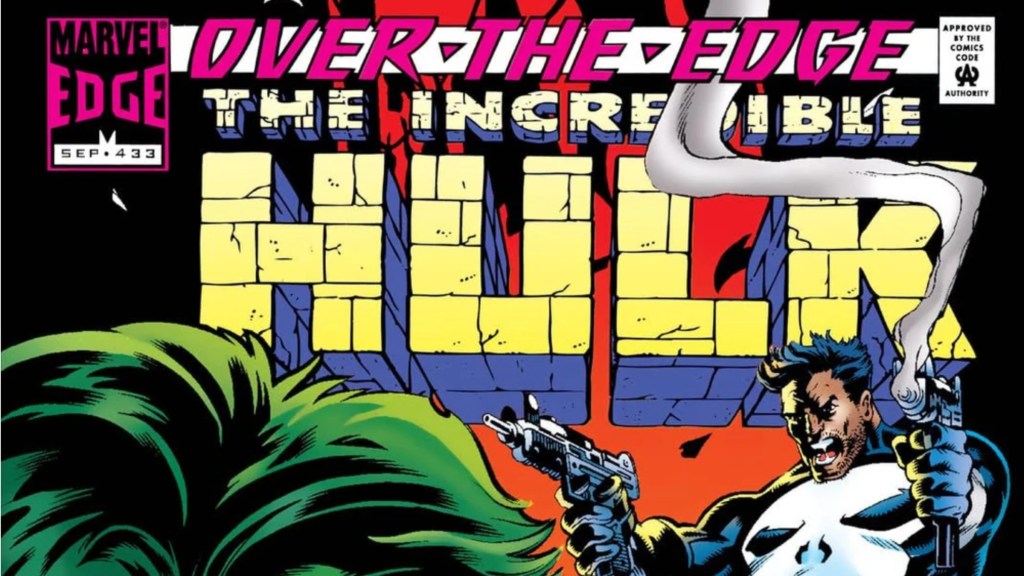
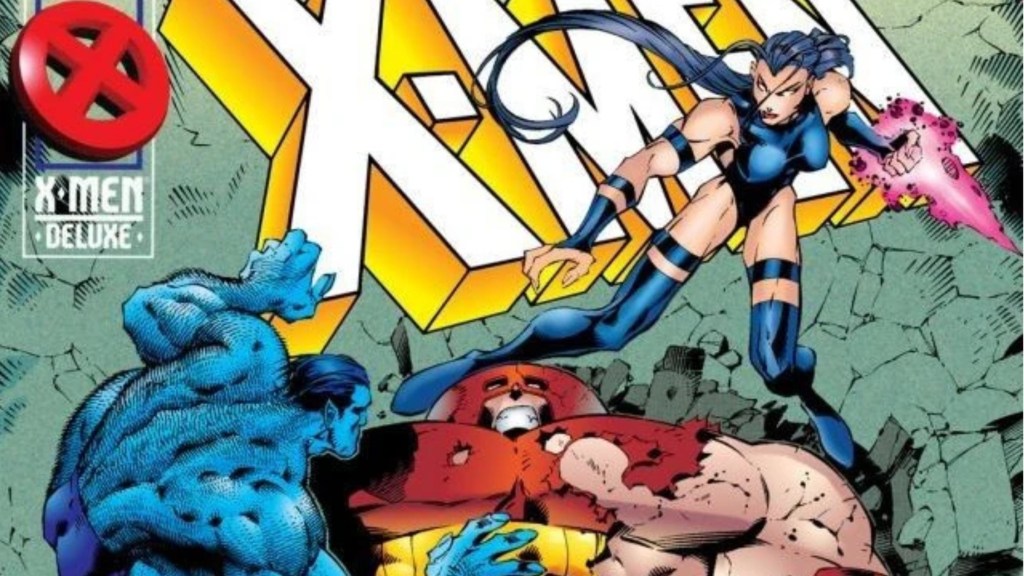
Instead of, say, getting better writers, artists, and editors, the House of Ideas split its publishing line. Marvel was now five “companies” for lack of a better term. The five imprints each focused on a different part of the Marvel Universe. The X-Men and Spider-Man books had their own imprints, there was the Marvel Universe imprint, which starred the classic heroes, the Marvel Edge imprint, which was the street-level books along with Incredible Hulk and Doctor Strange, and the Alterniverse, which was the home of alternate universe books like What If…?.
Each book in an imprint had a special corner box to let you know what imprint you were reading. The X-Men and Spider-Man books were basically unchanged, while the Marvel Universe and Marvel Edge line started to ’90s-up their heroes, with Avengers: The Crossing and “Over the Edge” being the big stories when it started. Meanwhile, the Alterniverse put out the one-two punch of Ruins and The Last Avengers Story (only one of those is actually good). Each of these imprints would have their own events and crossovers, with one big one between them all for the year.
On the one hand, it’s an interesting idea, but it also goes against the spirit of what made Marvel popular. The House of Ideas rose to the top because of its shared universe; splitting up the universe in any way just felt wrong. You’d rarely get crossovers between characters from two different imprints, which is the least Marvel thing ever. On the other, you could also tell where all the money was going. The X-Men and Spider-Man lines were the ones with all the hot creators, while the other lines would have to do with lesser talent (although this was during the Mark Waid/Ron Garney Cap run; however, Marvel never actually liked the success of that book), which led to them continuing not sell.
Back then, rumors were flying that Marvel split its line like this so they could sell off the characters that weren’t popular. There were constantly rumors about the survival of the company. One of things I think that fans were not around back then don’t realize is how scary it was to be a Marvel fan. The publisher wasn’t doing well outside of the X-Men and Spider-Man. One of the biggest rumors was that they would license characters to Image Comics, which would prove to be almost true when the Marvel Heroes line were handed to Rob Liefeld and Jim Lee in ’96.
As you may have guessed, this whole thing was a massive failure. The Marvel Universe, Edge, and Alterniverse lines didn’t boost the sales of those books; fans still mostly bought X-Men and Spider-Man books. By the time “Onslaught” split up the Marvel Universe, the various imprints were dead and Marvel would end up going back to normal by 1997 (when their books all got fold-out covers that had the list of characters and what happened in the last issue). Marvel was panicking in the mid ’90s and decided to try the imprint game. It’s didn’t make sense back then and it makes even less sense now.
The Imprint Approach Never Worked Out for Marvel
Imprints were huge in the early ’90s, as the various comic companies tried to ride the wave of success. However, by 1995, the rest of the industry had moved on from this, because most of them ended up failing. Marvel trying to use it to save themselves from bankruptcy was definitely a panic move and the fact that it failed isn’t all that surprising. Marvel chasing the collector bubble destroyed most of their publishing line, so separating them was never going to fix the problem.
The five imprints was Marvel’s biggest gimmick of the ’90s and it worked about as well as the rest of them. The irony is that two years after it ended, Marvel tried something similar with Marvel Knights, except this time, they went out of their way to get the best talent they could. The imprint idea wasn’t a bad one, it was just done in the worst possible way. Instead of trying to fix the problems of their books, they just split them up and expected fans to swoon. It was honestly more damaging than anything else; it played into readers’ fear of the company splitting up. Marvel did some strange things in the ’90s, but this one will always be the strangest.
More Comics
-
Image Courtesy of DC Comics -

Image Courtesy of Marvel Comics -
Image Courtesy of DC Comics