
Less than one hundred copies of 1943’s Wonder Woman #6, the first appearance of Cheetah, exist. And of those, less than thirty are in condition like this copy on auction. For DC Comics fans, the hardest thing about collecting is that many of the publisher’s most iconic, long-lived characters debuted more than eight years ago, during the so-called “Golden Age of Comic Books.” Though widely read and printed, these stories survive in vanishingly small numbers into the present day because they predate the very concept of preserving or collecting comic books. Seen as a disposable medium for children, classics like the first appearances of Superman, Batman, and Wonder Woman were more often than not thrown out after reading. Couple this with their aforementioned status as some of the most recognized, enduring characters in popular culture, and it’s no wonder that these issues sell for a fortune.
Videos by ComicBook.com
Those astronomical prices aren’t reserved for household names, however. Fan favorites heroes like the Justice Society of America and iconic villains like Cheetah are also highly prized. While Wonder Woman may be widely derided among comic book fans for her less-than-impressive rogues’ gallery, Cheetah is the undeniable exception, and a worthy nemesis to the greatest super-heroine in comic books. She debuted early in William Moulton Marston and H.G. Peter’s character-defining Golden Age run, and became a recurring foe to Wonder Woman even then. Decades later, she’d become one of the only Wonder Woman foes to return from the Golden Age – and it’s that Silver Age first appearance that for many fans is the closest they’ll ever come to owning Cheetah’s debut. However, for one well-heeled Wonder Woman collector, Heritage is giving them the chance to own the real thing, CGC (Certified Guarantee Company)-graded at a 6.5. Just ten copies exist in this condition, and only eighteen copies exist in a higher grade.
How Cheetah Became Wonder Woman’s Defining Villain
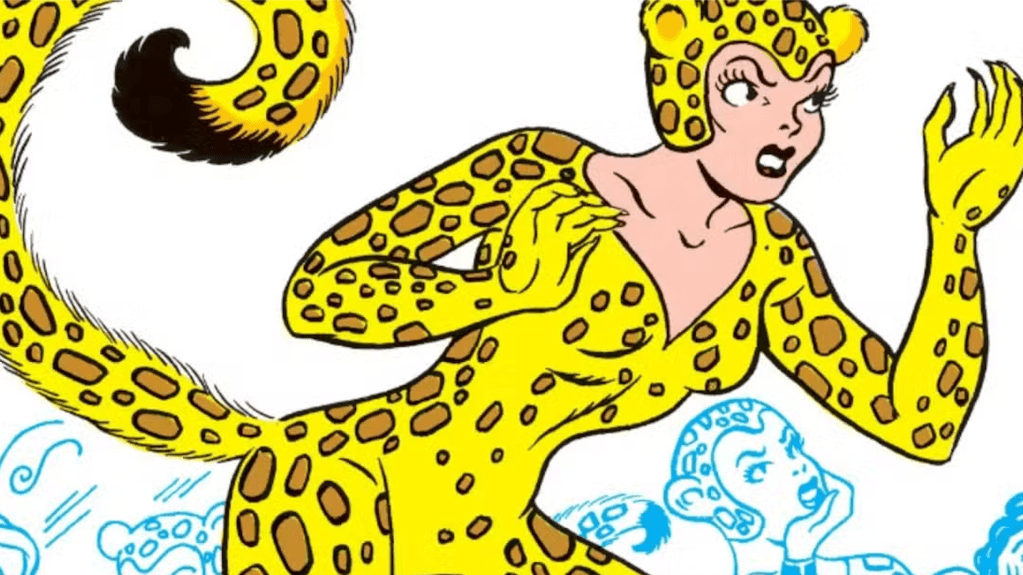
Since 1943, there have been two major versions of Cheetah: the pre-Crisis on Infinite Earths Priscilla Rich and the post-Crisis Barbara Minerva, with primary difference between the two being their origins. Priscilla Rich is a socialite suffering from diassociative identity disorder, developing the criminal persona of “Cheetah” after a nervous breakdown. Barbara Minerva is literally transformed into a cheetah-woman after ingesting a potion prepared for her by a tribal priest in Africa. The Barbara Minerva reinvention is reflective of George Perez’s reimagining of Wonder Woman, which was “inspired by Walt Simonson and his take on Thor and by Ray Harryhausen. If you’re looking to challenge the gods, fighting skeletons, hydras, I figured what if Wonder Woman were done, before CGI, by Ray Harryhausen?” With this as his guiding principle, Perez heightened the mythological aspects of Wonder Woman’s world, placing her in conflict with gods and monsters, and reinterpreted Cheetah to suit this world.
Priscilla Rich was a villainess for a different era, and for a different Wonder Woman. Lacking super-powers, she was never a strong physical threat to Wonder Woman, and instead challenges Wonder Woman’s wits. In a confusing bit of continuity, the Silver Age Priscilla Rich is technically a separate character from the Golden Age Priscilla Rich, owing to a storytelling conceit that was later the impetus for Crisis on Infiinite Earths. The DC stories of the 1940s and early 1950s took place on Earth-Two, while all DC stories post-1956 (beginning with Barry Allen’s first appearance in Showcase #4) took place on Earth-One. Therefore, the Cheetah that Wonder Woman battles in Wonder Woman #160 and #166 is – despite sharing a name, backstory, costume with her – not the Cheetah she fought back in the Golden Age. There is also a middle, forgotten incarnation of Cheetah, Priscilla Rich’s niece “Debbie Domaine,” who was introduced and promptly forgotten as a replacement for Rich in 1980’s Wonder Woman #274.
As with many Golden Age DC characters, although Priscilla Rich bears little resemblance to what most fans and readers think of as “Cheetah,” her first appearance is still venerated as the starting point for what the character would evolve into. George Perez was able to take the idea of “Cheetah” and turn her into a meaningful foil for the Wonder Woman character, an inversion of Wonder Woman’s role as a divinely-empowered protector. Critically, Perez presents Cheetah’s bloodlust and malice as divine punishment for Barbara Minerva’s real and perceived evil and impurity, akin to real mythological figures like the Gorgon. It’s this aspect of Cheetah’s character that makes her such an interesting nemesis to Wonder Woman, serving as a mirror to Wonder Woman’s own origins and character. For subsequent continuity reboots New 52 and Rebirth, Cheetah has retained some variation of this “cursed by the gods” origin, which was also used for the Absolute universe’s version of the character.
Why a Cartoon Series Is the Real Reason We’re Still Talking About Cheetah
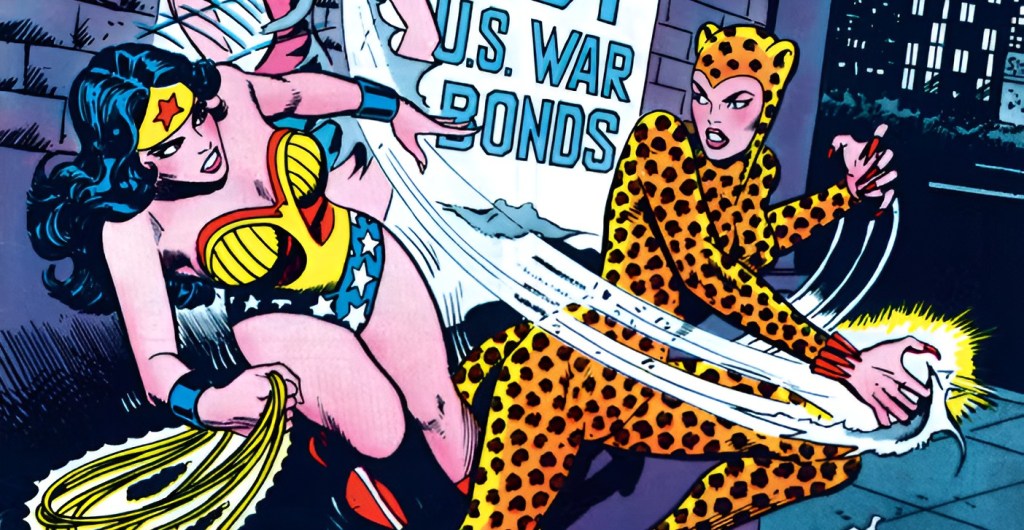
As one of the only Wonder Woman villains to appear in the Silver Age, Cheetah was the natural choice to serve as Wonder Woman’s nemesis in the 1973 series The Super-Friends, which originated the concept of the “Legion of Doom,” an anti-Justice League comprised of the arch-foes of each of the Justice League members. For Wonder Woman, Cheetah was chosen as that arch-foe, alongside Giganta. Running in some form for more than a decade, The Super Friends was a generation’s first exposure to the DC Universe, and as such, plays an outsized part in their determination of who the most important and iconic DC heroes and villains are. For super-villains especially, it helped define who were considered the most important members of a hero’s rogues’ gallery, as with Solomon Grundy or Gorilla Grodd.
Together with George Perez’s redefinition of the character, The Super Friends made Cheetah the first character that comes to mind when you say “Wonder Woman villain.” In the decades since The Super Friends’ 1973 debut and Barbara Minerva’s 1988 first appearance, Cheetah has been elevated from a sporadic figure in Wonder Woman comics to a constant – compare her half-dozen combined appearances in the 1960s and 1970s to her dozens in the pre-Flashpoint 2000s. As the basis for every reintepretation that’s come since, Priscilla Rich’s first appearance serves as the origin story not only for a character, but a concept. The creativity that later writers have been able to apply to reshaping her serves as one of the best examples of how DC’s Golden Age continues to impact its universe eighty years on. This serves to explain the $9k value that Wonder Woman #6 is currently held at in 6.5 graded condition, as well as the $700 and climbing price-tag for the sample on auction at Heritage. With two weeks left to bid, that $9k could very well prove the floor for this iconic book, as collectors may not have the chance to bid on another copy for years.
Who’s your favorite Wonder Woman villain? Leave a comment below and join the conversation now in the ComicBook Forum!
More Comics
-
Image Courtesy of Marvel Comics -
Image Courtesy of DC Comics -
Image Courtesy of DC Comics -

Image Courtesy of Marvel Comics -
Image Courtesy of Marvel Comics

Forum Conversation: Favorite piece of Frank Frazetta Artwork
Go to ForumOh there are so many great pieces from Frank Frazetta! I’ve always loved Death Dealer and the Destroyer is another contender.
The Silver Warrior!
Also the Buck Rodger’s covers he did for Famous Funnies.