
Let’s be honest, when it comes to classic, critically acclaimed mature readers books, DC beats the pants off Marvel. The House of Idea had their own creator-owned imprint in the ’80s, the Epic line, but it never got the kind of attention that Vertigo would in the years to come. Since DC’s success with their ’90s mature readers imprint, Marvel has tried several times to create their own to match it, but the problem with their mature readers comics is that they didn’t do thoughtful, indie comic-tinged series. Usually, it was just more violent superhero stories involving lower-level characters from across the Marvel Universe. Marvel has some great longform series, but very few of them are mature readers books that can stand with the likes of Watchmen. However, 23 years go, Marvel put out a book that would do its hardest to join that illustrious lot: Supreme Power.
Videos by ComicBook.com
The Marvel MAX line began in 2001, part of new editor in chief Joe Quesada’s plan to get the publisher back on track. Another part of this plan was fixing the Spider-Man books, and he chose writer J. Michael Straczynski for The Amazing Spider-Man. The Babylon 5 creator (he was the showrunner and wrote the vast majority of the show) had entered the comic industry with 1999’s amazing Rising Stars and had his own imprint at Top Cow, an Image production house, where he worked with artist Gary Frank on Midnight Nation. Straczynski and Frank would would get tapped for the new series, which was a modern reimagining of a forgotten Marvel great, 1984’s Squadron Supreme 12-issue maxiseries. What followed was a series that came close to making Marvel the home for serious superheroes.
Supreme Power Paid Homage to a Classic By Going Its Own Way
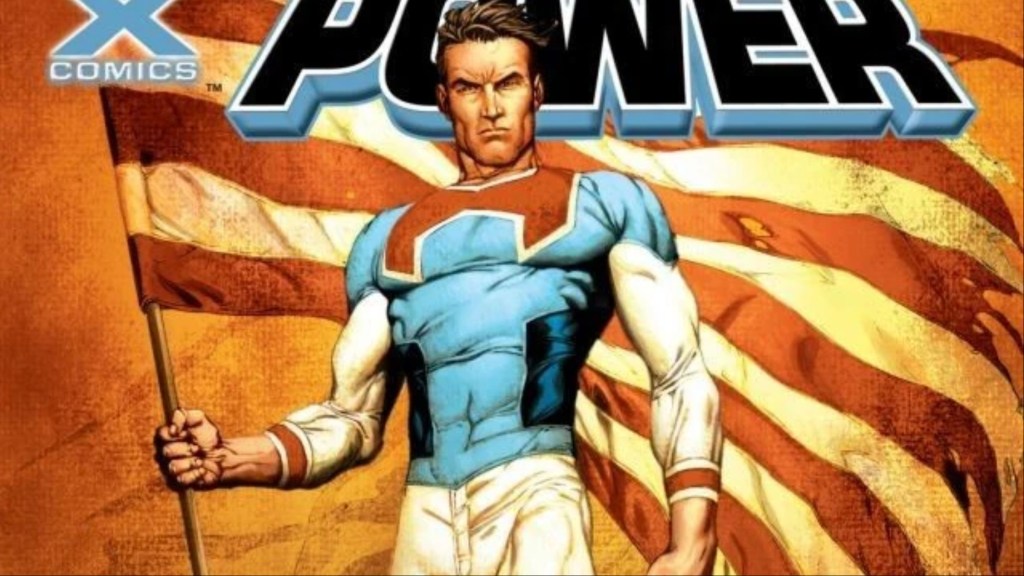
Squadron Supreme, for those that don’t know, is one of the best ’80s Marvel stories. Following the titular team, an alternate universe Justice League pastiche created so that the Avengers could beat up and boss around the distinguished competition’s greatest team, they decide to take over their world after beating their arch-rival for the umpteenth. They reason this is the easiest way to keep everyone safe, creating a “benevolent” fascist system where everyone is taken care of, but they have only the rights the team wants them to have. A group of heroes who left the Squadron because of the situation and villains come together for a final battle which ends the regime.
This 1984 series was lauded by those who remembered it but it was overshadowed by Watchmen, and established the bona fides for the characters to be placed in a mature readers book for those fans. Now, this isn’t The Sandman (but it also isn’t Preacher); there is some gratuitous nudity and graphic violence, but it’s still a higher minded book. It begins with the story of Hyperion, a boy with amazing power found by the government and meant to be a weapon, who gets released onto the world when more superpowered people start showing up, beginning something of a superhuman arms race.
After 9/11 and the protests against the Iraq War, a book that was about a government controlled superhero was a big deal, and Straczynski dug into this idea of the man raised to be the perfect American and the lies he was told. He isn’t Homelander or anything (although, remember Supreme Power started two years before The Boys, so make of that what you will), but this idea plays out in his battles against Knighthawk, a wealthy black man going after racist police. Hyperion is also sent against Squadron stalwarts like Power Princess (who’s nude most of her first few appearances) and Dr. Spectrum (who is sort of a co-nemesis with the government for a period in the book), and the whole thing builds towards the beginning of the real Squadron Supreme.
The 18-issue series was very popular; Straczynski is amazing at superheroes, and Frank’s art was flawless. It was a book that fans loved, and it sold rather well for a mature readers comic at a time when even Vertigo was having a hard time with sales. So, as so common in the history of the House of Ideas, Marvel got greedy and decided to continue the series, and the implied adaptation of the ’80s classic, on the regular line because it could sell more copies. However, fans wanted to get the mature readers comic we were promised (I was included in this number, by the by), and it only lasted seven issues, never getting to the big conclusion.
Marvel’s Cupidity Robbed Readers of the (Supreme) Power We Were Promised

Marvel promised a mature readers reboot of Squadron Supreme, enticed readers with an amazing 18-issue series, and then bait and switched them without so much as a by your leave. Supreme Power was the kind of high concept, mature superhero book that could have been even bigger if we got the rest of the story in that format; however, Marvel decided money was more important and destroyed the whole thing. We had already seen a regular all-ages version of this story; we wanted something meatier from the House of Ideas and instead we got what we always got.
Later, Marvel would try to bring the Supreme Power universe back with Ultimate Power, from Straczynski, Brian Michael Bendis, Jeph Loeb, and Greg Land, crossing them over with the Ultimate Universe. However, this was in the doldrums of the Ultimate Universe and Land’s (let’s call them) art references made the book a laughingstock, killing any hope of a return. Supreme Power is still worth hunting down, but it’s also the ultimate case of what might have been. This was basically The Boys with a writer who wasn’t trying to mock superheroes and one of the best artists in the history of comics, and it could have done wonders for Marvel to finish it as it was promised. As it is, we’ll always have 18 stellar issues of peak to look back on fondly.
What do you think about Supreme Power? Leave a comment in the comment section below and join the conversation on the ComicBook Forums!
More Comics
-
Image Courtesy of Dark Horse Comics -
Image Courtesy of Marvel Comics -
Image Courtesy of Marvel Comics -
Image Courtesy of DC Comics -
Image Courtesy of Marvel Comics -
Image Courtesy of Marvel Comics
![Forget Spooky Season, IDW Is All About Godzilla Season With Some Huge Upcoming Releases (& We Have the First Look) [EXCLUSIVE]](https://comicbook.com/wp-content/uploads/sites/4/2026/09/idw-godzilla-exclusive.jpg?w=300)
