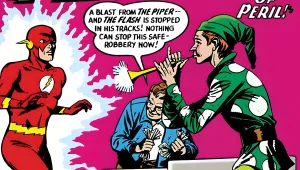
Alan Moore is widely considered the greatest writer to ever work in the comic industry. The British scribe got his start on the UK comic scene, working at 2000A.D. and Warrior before coming over to the United States and taking over as writer of Saga of the Swamp Thing. His work changed superhero comics forever, bringing a literary sensibility to the superhero, and is some of the best produced by a comic writer ever. He is often given credit for maturing the medium, adding more complex themes, with his work at DC Comics and on the indies giving readers some of the most groundbreaking comics ever.
Videos by ComicBook.com
Moore’s books have become some of the most praised in the history of the medium. While not every Moore comic is a best of all-time masterpiece that fans will read forever, the amount of them that are is frankly somewhat obscene in the best possible way. These are the ten best Alan Moore stories in comic history, tales that took comics to new heights.
10) The Nemo Trilogy
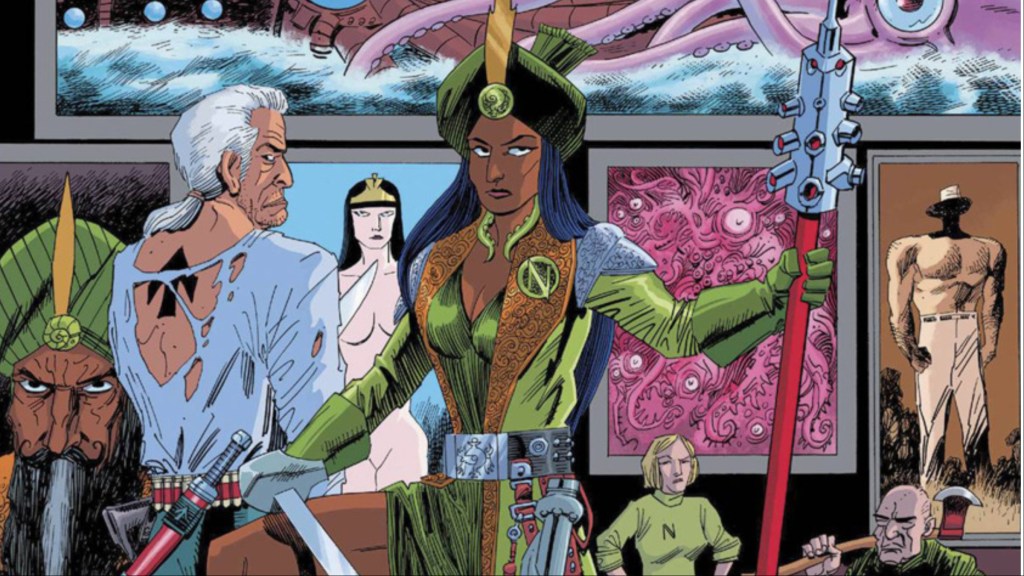
Moore left the Big Two after contract problems with Watchmen and has worked on the independent scene ever since. He’s created numerous properties during the last few decades, with the League of Extraordinary Gentlemen becoming especially beloved. Moore and co-creator Kevin O’Neill gave readers some amazing stories, creating an entire universe of everything that was public domain. One of the best moments of the series is the Nemo Trilogy, consisting of Nemo: Heart of Ice, Nemo: The Roses of Berlin, and Nemo: River of Ghosts, following the life of Janni Nemo, daughter of the former captain of the Nautilus, and her clashes with the immortal queen Ayesha. It’s the story of one ordinary woman in an extraordinary world and it’s one of the most beautiful stories Moore ever wrote.
9) League of Extraordinary Gentlemen, Volume 2
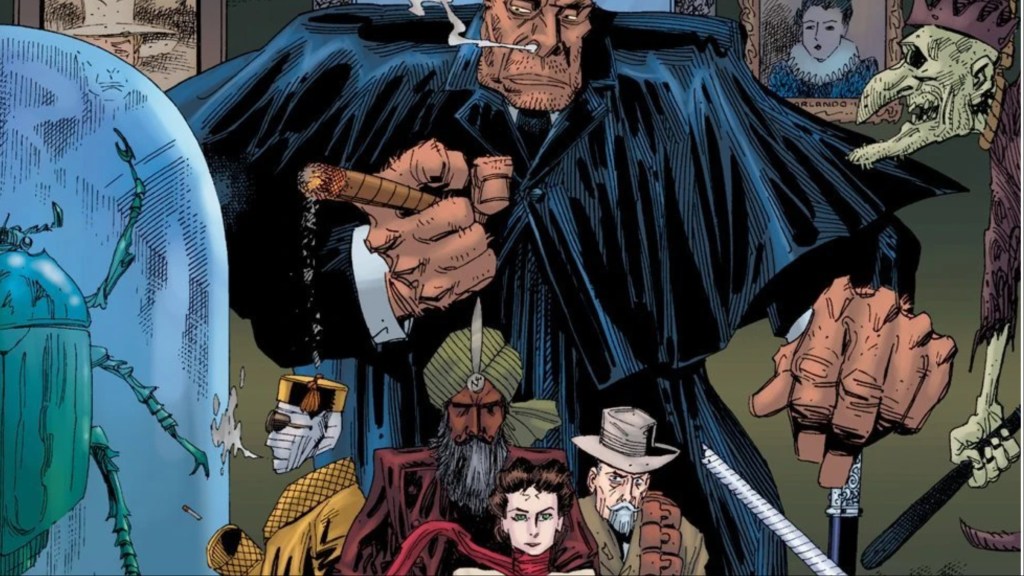
Taken all together, the League is one of Moore’s best books that isn’t Watchmen and the highlight of the series came in League of Extraordinary Gentlemen Volume II, by Moore and O’Neill. This story opened up not long after the first one ended, with John Carter and Gulliver Jones realizing the Martian Mollusks they had been fighting against on the red planet have gone to Earth. The League is called in to deal with their scourge in this retelling of War of the Worlds, with just a hint of The Island of Doctor Moreau thrown in for good measure. This story is outstanding, taking all of the characters on a journey that readers will not forget. On top of the brilliant main story, the back-up feature The New Traveller’s Almanac took readers across the universe that Moore was creating, giving hints on where the story would go in the future.
8) “For the Man Who Has Everything…”
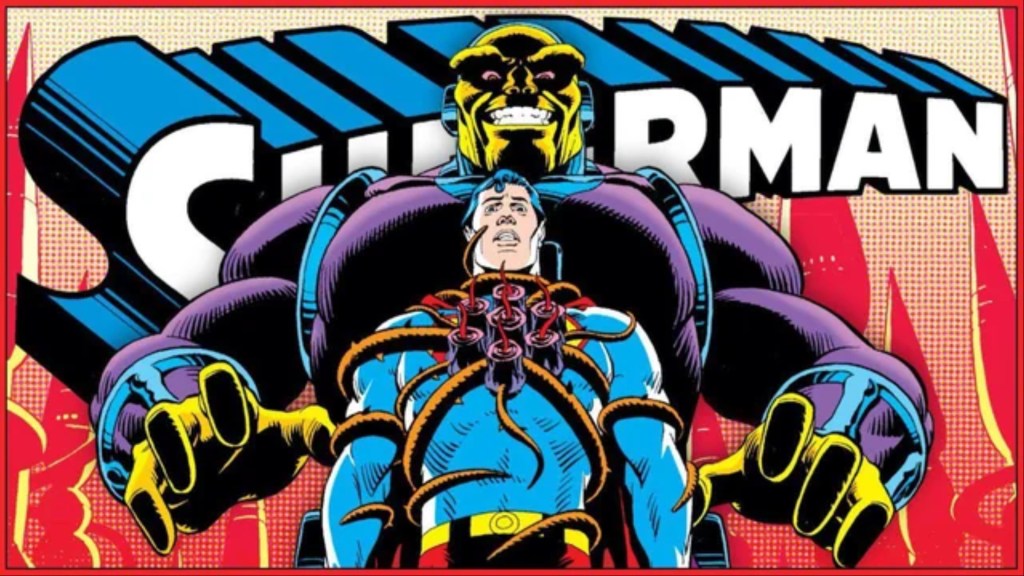
Alan Moore wrote three stories with the Man of Steel and they are among the best Superman stories of all-time. Superman Annual #11, by Moore and Watchmen artist Dave Gibbons, is the classic “For the Man Who Has Everything…”, which sees Batman, Robin, and Wonder Woman find Superman entwined in the Black Mercy, a plant that gives you your heart’s desire while killing you. Behind this is Mongul, and suddenly the three heroes’ only chance to survive depends on Superman breaking from the Mercy’s implacable grip. This story is breathtaking, showing just how far Superman will go to save the day, as well as containing one of the most frightening Supes moments ever, when he simple says, “Burn.”
7) Saga of the Swamp Thing #21-24
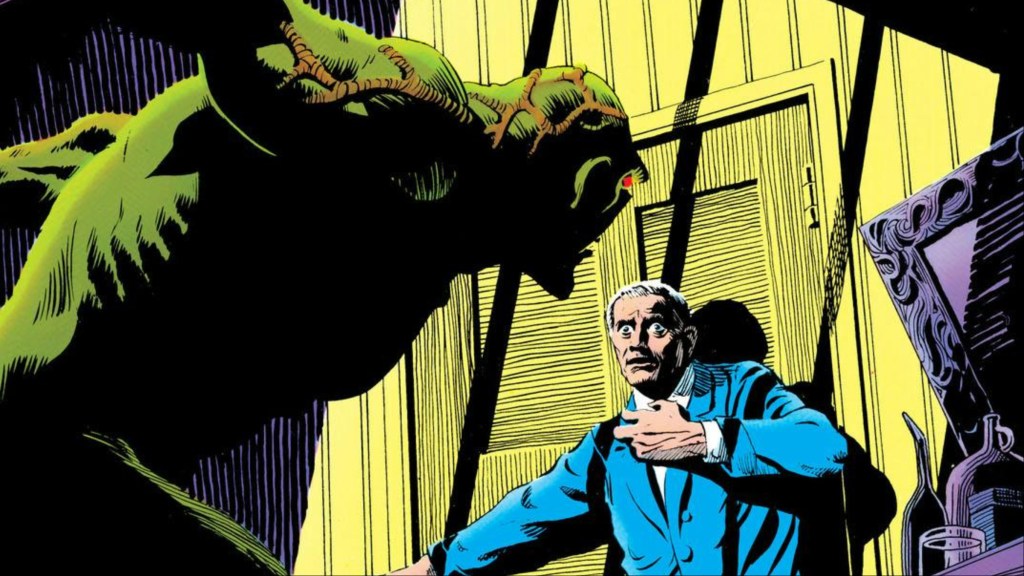
Alan Moore’s time on Swamp Thing has been praised from here to high heaven for the last 44 years and it all kicked off with these fantastic four issues, with artists Stephen Bissette and Jon Totleben. After the Sutherland Corporation takes the “dead’ Swamp Thing to their headquarters, they hire Jason Woodrue, the Floronic Man, to autopsy the muck-encrusted mockery of a man and readers learn that everything they thought they knew about him was wrong. Woodrue then launches an attack on the Earth using what he learned from the monster, with only Swampie able to stop him. This is the first taste of Moore that most American readers got and it was beyond perfect. There’s no better way to be introduced to a writer than this fantastic little yarn.
6) “Whatever Happen to the Man of Tomorrow?”

With Crisis on Infinite Earths ending the DC Multiverse, there was time for one last story with the classic Superman, who was about to be completely revamped in Man of Steel. Moore demanded the right to write it and we got “Whatever Happened to the Man of Tomorrow?”, with Curt Swan and George Perez from Superman #423 and Action Comics #583. Superman’s enemies get a lot more violent, testing him like never before, when his identity is revealed on national television. Surrounded by foes out to hurt him and his loved ones, he escapes with them to the Fortress of Solitude, enduring the most dangerous siege in comics before finding out the mastermind behind everything. This is the perfect ending to pre-Crisis Superman, a story that feels classic and modern at the same time with an amazing ending.
5) Watchmen
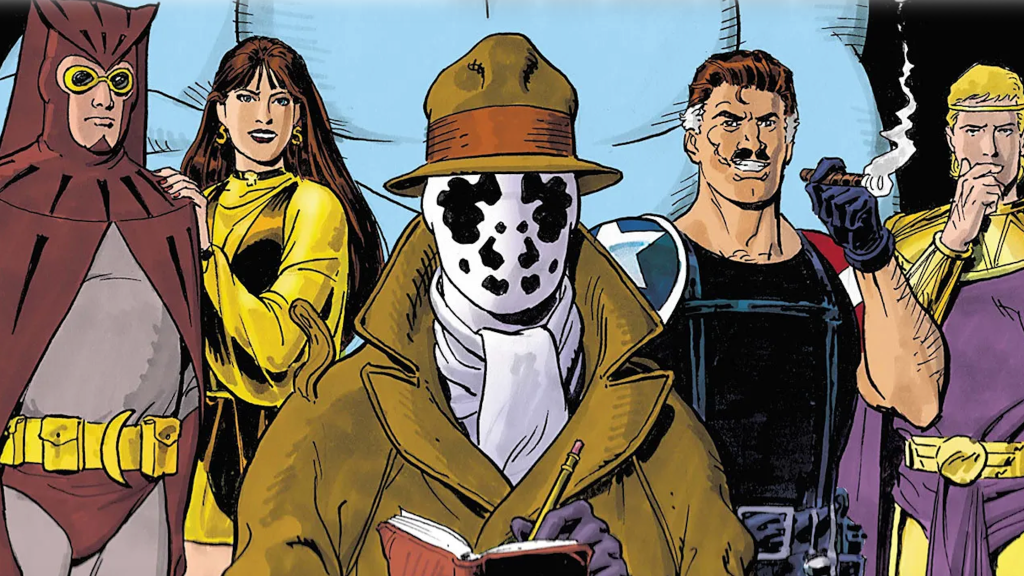
Many consider Watchmen to be the greatest comic of all time. The 12-issue series from Moore and Dave Gibbons took re-imagined versions of the Charlton characters and put them in an alternate reality 1985, creating a story that has enthralled generations. This comic is the one given the most credit for the maturation of the medium, a deep story that used the mechanics of comic books in novel ways to make its various themes hit that much harder. It is a masterwork, one that will continue to be praised for as long as humans love comics.
4) “American Gothic”
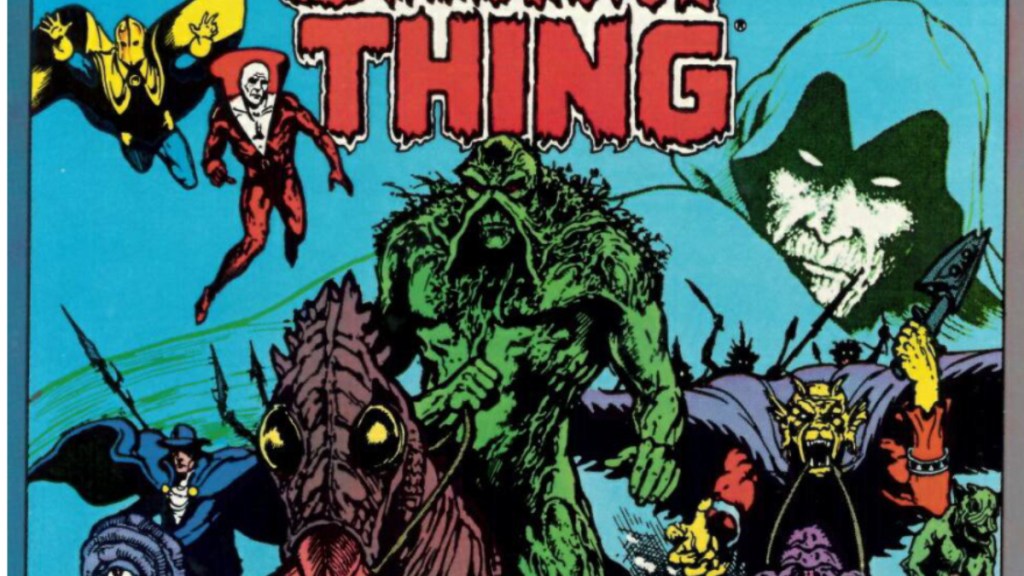
“American Gothic” is the pinnacle of Moore’s Swamp Thing, which is saying something. Running through Swamp Thing (Vol. 2) #37-50, with artists John Totleben, Stephen Bissette, Rick Veitch, Stan Woch, and Ron Randall. The story was the first team-up between Swamp Thing and John Constantine, as the British mage learns of a plot to unleash the Great Darkness on the universe, the embodiment of nothingness, while Crisis is ravaging existence. Moore is able to create amazing horror superhero stories that look into the dark heart of the United States, talking about the violence, racism, and sexism that has defined the nation’s history. It’s perfect horror and one of the finest moments in ’80s comics.
3) V for Vendetta

V for Vendetta, by Moore and David Lloyd, began in Warrior magazine in the UK, before that title folded. Eventually, Moore would be able to bring it to DC so that he and Lloyd can finish it, creating one of the most important political comics ever. The story takes place in a fascist police state United Kingdom after a limited nuclear war, with normal Londoner Evey ensnared in the world of anarchist rebel V. What follows is a story that proved to be more prescient than we could have possibly imagine. This story is a masterpiece, a leftist anarchist polemic about fighting conservatism and its cousin fascism.
2) Miracleman

Miracleman was one of the lost masterpieces of the comic industry for decades. Much like V for Vendetta, Moore began the story in Britain in Warrior. There it was called Marvelman, based on an old British version of Captain Marvel. The 18-issue series, with artists Gary Leach, Alan Davis, Chuck Austen, and John Totleben, told the story of Michael Moran, a reporter in his 30s who realizes that he has superpowers when he says the word, “Kimota!” The book over its three arcs tells the story of his rediscovery and the truth behind his powers, all as a hidden evil rearing its ugly head. This is the first major superhero deconstruction by Moore and it remains one of the best things ever made. Even all these years later, after decades of superhero deconstruction, this story holds up as one of the truly great stories of the medium.
1) From Hell

From Hell is Moore’s comic masterwork, a series that will give readers a whole new perspective on Jack the Ripper. Moore and Eddie Campbell’s ten-part story took readers to the streets of Whitechapel, focusing on Inspector Frederick Abelline and the Ripper’s victims, Annie Crook, Mary Kelly, Polly Nichols, Anne Chapman, and Liz Stride, as well as the royal surgeon Sir William Gull, who Moore posits is the Ripper. Moore and Campbell are able to create an engrossing narrative, bringing the late 19th century London to life in all of its ugly splendor. There are two versions to read – the original black and white and a newer version colored by Campbell. Either way is great, as this is easily one of the best comics you’ll ever read in your life.
What’s your favorite Alan Moore story? Leave a comment in the comment section below and join the conversation on the ComicBook Forums!
More Comics
-
Image Courtesy of Marvel Comics -
Image Courtesy of Marvel Comics -
Image Courtesy of DC Comics -
Image Courtesy of Marvel Comics -

Image Courtesy of Marvel Comics