Marvel’s secret sauce isn’t the hard reboot. It’s controlled elasticity. Unlike their distinguished competition at DC Comics, who’ve embraced the universe-shattering crisis event as routine housekeeping, Marvel has historically maintained a fascinating love-hate relationship with the very concept of reboots. Since Fantastic Four #1 hit shelves in 1961, Marvel has steadfastly clung to a single continuous timeline for its main universe (Earth-616), preferring to bend continuity rather than break it.
Videos by ComicBook.com
When Marvel has attempted convenience-driven resets, the results have backfired spectacularly. One More Day (2007) solved an editorial preference — “single Spider-Man” — by vaporizing a marriage that had generated rich stakes, spawning fifteen years of reader resentment. Heroes Reborn (1996–97) was a transparent market fix that exiled icons to a pocket universe under Image Comics’ aesthetic, only to hastily revert everything months later. The infamous Clone Saga stretched a three-month storyline into a two-year quagmire trying to reset Peter Parker without admitting it. Despite this, Marvel’s greatest strength remains its commitment to emotional continuity. It’s why the MCU has thrived with the same approach: not perfect continuity, but meaningful continuity.
3. The Ultimate Universe (2000) — Necessary
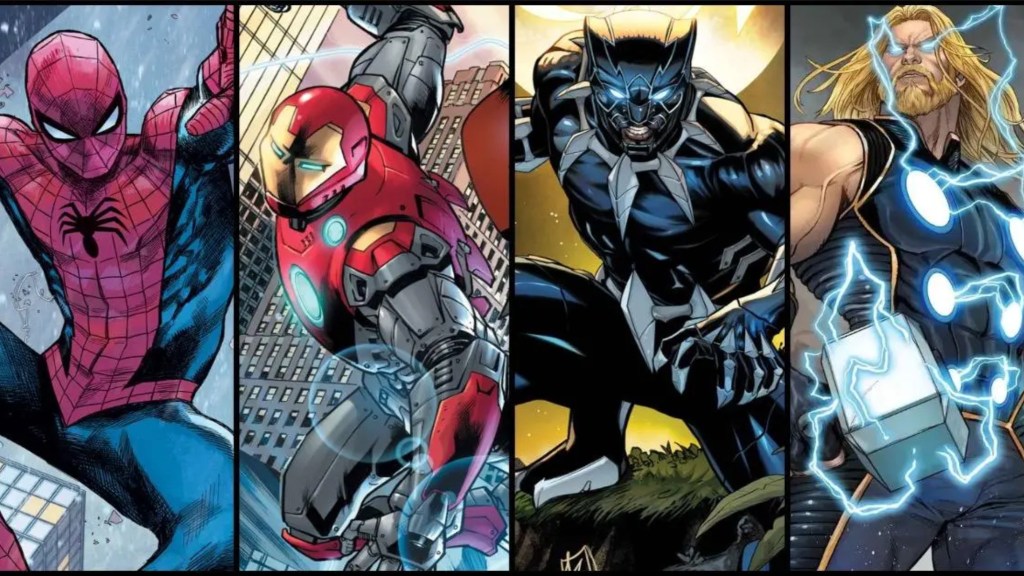
By the late 1990s, Marvel was in trouble. Years of declining sales and complex, impenetrable continuity had alienated casual readers and newcomers. The company was also recovering from bankruptcy, and they needed something fresh to win back audiences. The Ultimate Universe was Marvel’s solution to these problems. In 2000, Marvel Comics launched the Ultimate Universe (Earth-1610), a bold experiment that reinvented iconic characters like Spider-Man, the X-Men, and the Avengers (renamed The Ultimates) for a new generation.
The goal was simple: strip away the baggage of over 40 years of dense continuity and reintroduce these heroes with modern sensibilities, updated origins, and a fresh perspective. The Ultimate Universe began with Ultimate Spider-Man, written by Brian Michael Bendis and drawn by Mark Bagley, retelling Peter Parker’s origin story for a younger audience.
From there, Marvel expanded the line with Ultimate X-Men, The Ultimates, and Ultimate Fantastic Four, each offering a more grounded, often darker take on Marvel’s classic characters. The Ultimate Universe cut through the overwhelming history of Earth-616. You didn’t need to know decades of backstory to enjoy Ultimate Spider-Man or The Ultimates. Anyone could pick up the first issue and jump into a world that felt familiar but refreshingly new. Verdict? The Ultimate Universe revitalized Marvel Comics, inspired the Marvel Cinematic Universe (MCU), and introduced beloved characters like Miles Morales.
2. Heroes Reborn (1996-1997) — Unnecessary
Desperate times call for desperate measures, but not all measures are good ones. By the mid-1990s, the comic book industry was in the middle of a speculative bubble, and when it burst, Marvel declared bankruptcy in 1996.
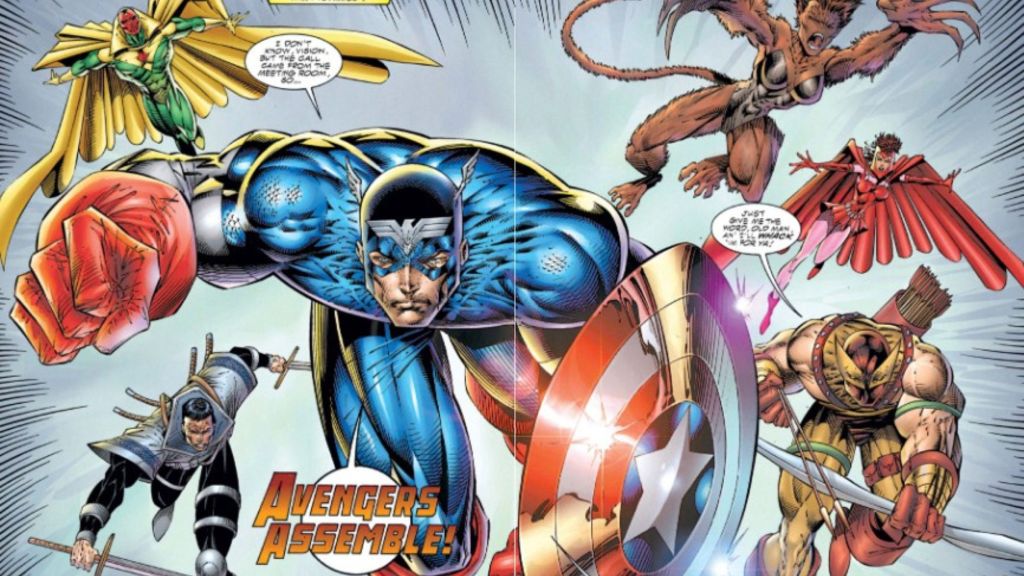
In 1996, Marvel launched Heroes Reborn, a year-long event that rebooted iconic franchises like The Avengers, Fantastic Four, Iron Man, and Captain America. These characters were transported to a pocket universe created by Franklin Richards (the son of Mr. Fantastic and Invisible Woman) as a last-ditch effort to save them from being erased during the Onslaught crossover event.
In this new reality, the heroes’ origins were retold from scratch, with updated designs and storylines meant to appeal to a modern audience. Marvel outsourced creative control to star artists Jim Lee and Rob Liefeld — superstars from Image Comics — who brought their signature ’90s aesthetic to the project. For 12 months, the Heroes Reborn titles operated in this alternate continuity before the characters were returned to the main Marvel Universe in 1997’s Heroes Return. While it temporarily boosted sales, the changes were poorly received, and the characters were quickly returned to their original continuity. It felt more like a marketing gimmick than a genuine reboot. Heroes Reborn taught Marvel what not to do with its characters.
1. Secret Wars (2015) — Necessary

Ultimate Universe had been hugely successful in its early years. However, by the mid-2010s, its popularity had waned. Rather than let the Ultimate Universe fade away, Marvel used Secret Wars to tie up its loose ends and salvage its best elements — most notably Miles Morales, who became a central character in the main Marvel Universe.
Secret Wars (2015) is a celebration of everything Marvel had built over 50 years. The main Marvel Universe (Earth-616) and the Ultimate Universe (Earth-1610) were destroyed in a cosmic cataclysm, along with countless other alternate realities. What remained was Battleworld, ruled by none other than Doctor Doom. This nine-issue series (written by Jonathan Hickman and illustrated by Esad Ribić) saw Marvel’s greatest heroes and villains struggle to survive in this strange new world, while Doom ruled as an omnipotent god. Reed Richards (Mr. Fantastic) ultimately led the charge to overthrow Doom, restore the multiverse, and rebuild the Marvel Universe from scratch.
The multiverse had always been a part of Marvel’s storytelling, but it was often treated as a side concept rather than a central one. Secret Wars allowed Marvel to lean fully into the multiverse, acknowledging its vast potential while also consolidating it.
What do you think? Let us know in the comments!
Most Viewed
-

Image Courtesy of Prime Video -

Image Courtesy of A-1 Pictures