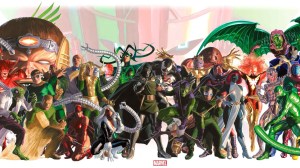
The Fantastic Four was the first superhero comic created by Marvel Comics. The comic book told the story of a family who took a spacecraft into orbit and returned with superpowers thanks to cosmic radiation. Reed Richards, his future wife Susan Storm, her brother Johnny Storm, and Reed’s best friend Ben Grimm became Mister Fantastic, the Invisible Woman, the Human Torch, and the Thing. From the start, they had incredible villains, from the Mole Man and Doctor Doom to Puppet Master and Namor, the Sub-Mariner. However, what sold this new comic book was the covers, and throughout history, the team’s book had some of the best in history.
Videos by ComicBook.com
While it is almost impossible to break it down to just five Fantastic Four covers, here are the ones that most represented change in comics.
5) Fantastic Four Vol. 1 #352
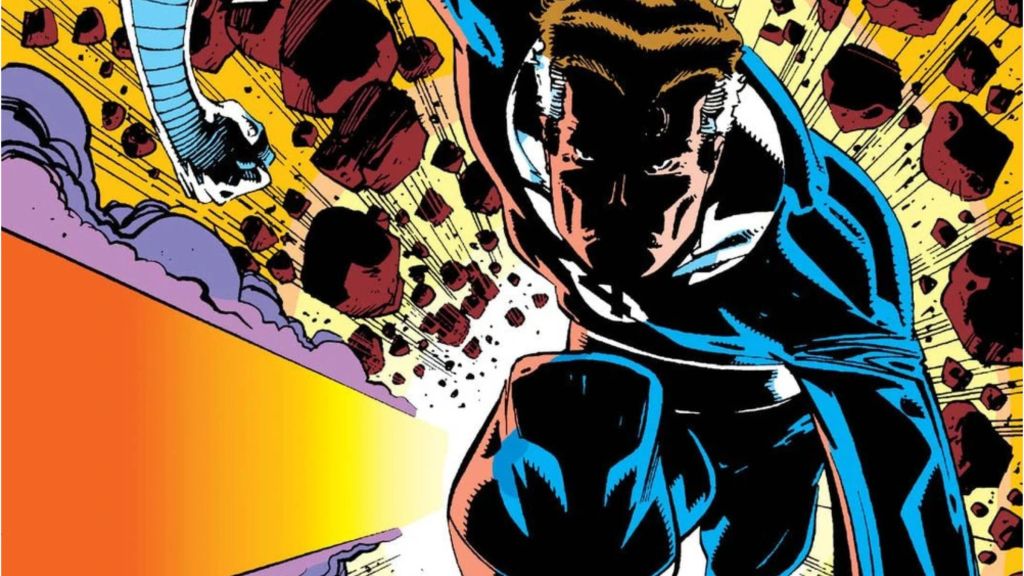
Fantastic Four #352 came out in 1991, and the cover and interior art were all from Walt Simonson. There was a lot to love about this cover, but the most important part is that it was one of the first times that Marvel used the cover as part of its story. The cover had Reed Richards busting out of a pile of rocks and running toward the reader. Once inside the comics, it showed that Reed and Doctor Doom were fighting through time, bursting into other timelines and dimensions.
The entire layout has a clock and time stamp that shows that each page in the time-jumping duel can be read in two different orders. One of the stops in the battle’s order was the cover itself, which has its own time stamp, making what is usually just an image to sell the comic a part of the actual story. This book is also important as being the first appearance of the Time Variance Authority’s Minutemen police force, including Justice Peace.
4) Fantastic Four Vol. 1 #100
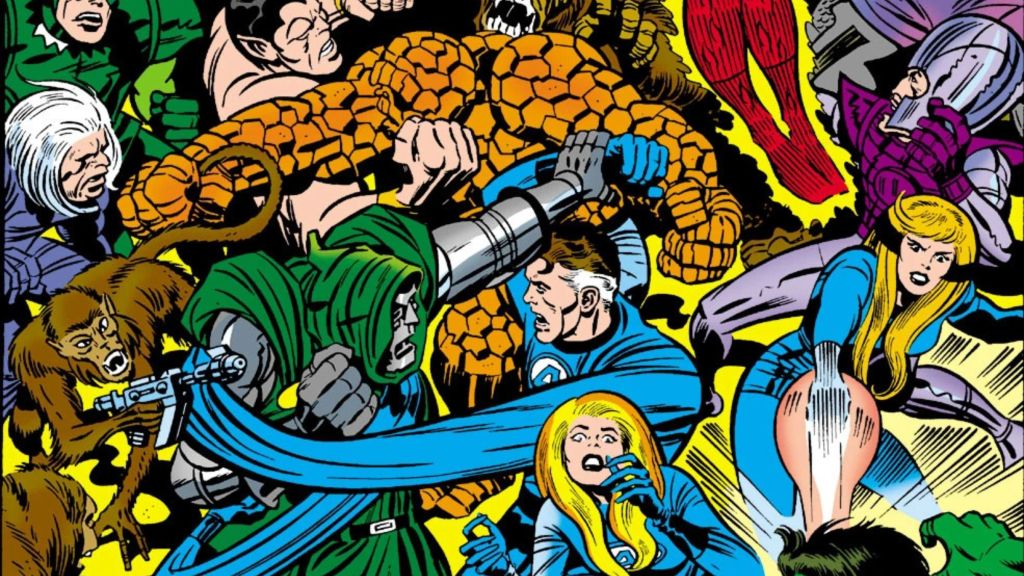
Fantastic Four #100 is obviously an anniversary issue, and Marvel Comics did two things with this cover that made it special, and among the best in comic book history. The first thing that the company did was ensure that Jack Kirby, who had co-created the team, was the one doing the cover art. The cover itself was by Kirby and Joe Sinnott, and it celebrated the 100th issue of Marvel’s First Family by ensuring the co-creator of the team drew the book itself. Kirby would leave the title two issues later.
However, the book also used the cover to celebrate Kirby’s long-time work on the team by adding every major villain they faced on the cover. The Fantastic Four were fighting several villains, with Doctor Doom, the Frightful Four, Puppet Master, the Red Ghost and his Super-Apes, Dragon Man, the Mad Thinker, the Hulk, and the Sub-Mariner. This was impressive, since it added Hulk to the bottom to ensure everyone they fought was there. It also tied into the story as Puppet Master and Mad Thinker brought together duplicates of all the classic villains to fight the team.
3) Fantastic Four Vol. 1 #4
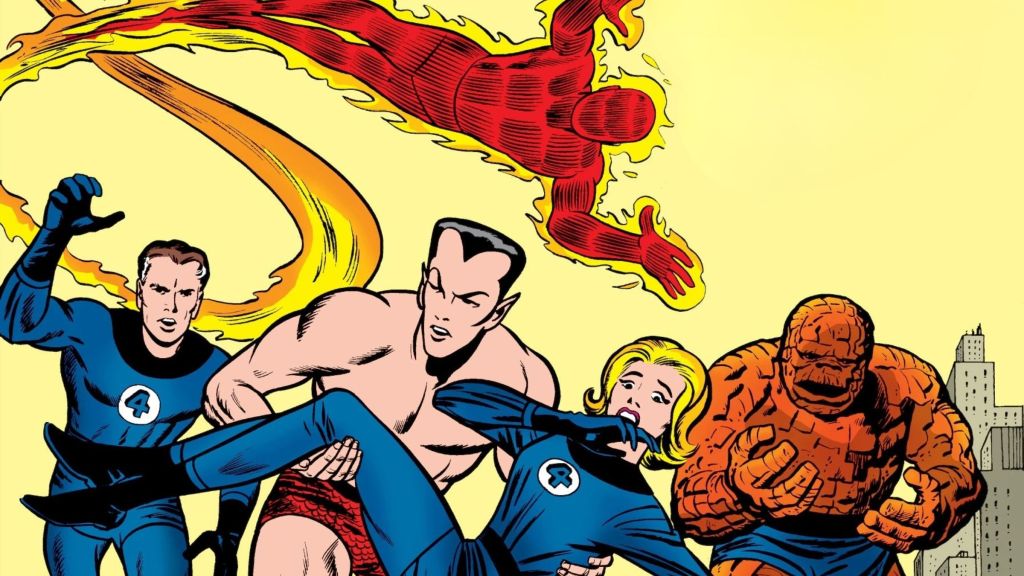
Fantastic Four #4 did something special for long-time comic book fans. While the first Fantastic Four comic was the first superhero comic Marvel published, there were heroes by its former company, Timely Comics, that pre-existed World War II. One of these debuted in The Avengers, with Captain America coming to the modern era as a returning hero. However, one of Cap’s old teammates in the Invaders returned in this Fantastic Four issue and became an immediate antagonist.
Jack Kirby drew the cover, and it was exciting for anyone who read comics in the 1940s to see Namor back and now a part of Marvel Comics. In the story, a runaway Human Torch finds an amnesiac, derelict Sub-Mariner. Restoring his memory unleashes his fury on the surface world. This brings back a classic anti-hero and creates a new part of the Marvel Universe that previously didn’t exist, and it remains a near-perfect reintroduction to the Sub-Mariner. The cover also perfectly hints at the upcoming Namor and Sue storyline.
2) Fantastic Four Vol. 1 #49
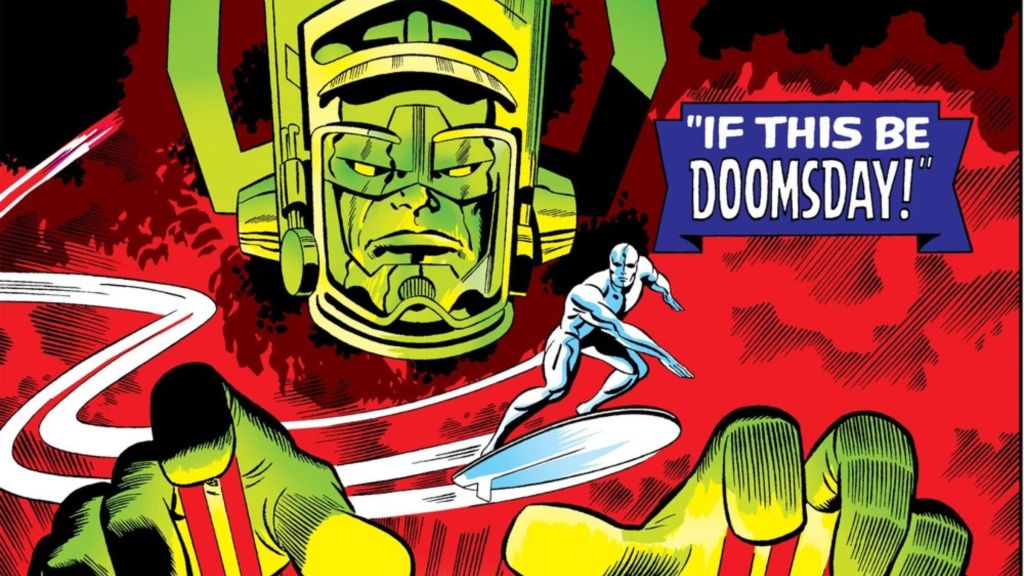
It’s hard to decide which cover was more important between Fantastic Four #48 and Fantastic Four #49. Issue #48 showed the Watcher announcing the coming of Galactus, which was a major turning point in Marvel Comics and in the exploits of the Fantastic Four themselves. However, issue #49 actually showed Galactus and the Silver Surfer on the cover, and this is the one that really changed everything about Marvel when it comes to the cosmic corner of the universe.
Seeing Galactus as a giant towering above the Earth is impressive, and the Silver Surfer flying through space is just as impressive. Both of these characters would go on to become major players in future storylines, and their debut appearance really set up the future of cosmic Marvel, entities from the start of the universe, and the idea that Earth is just a small place in the grand scheme of things. This was another Jack Kirby cover, and it makes sense because he is the one who really helped form the genesis of cosmic Marvel.
1) Fantastic Four Vol. 1 #1
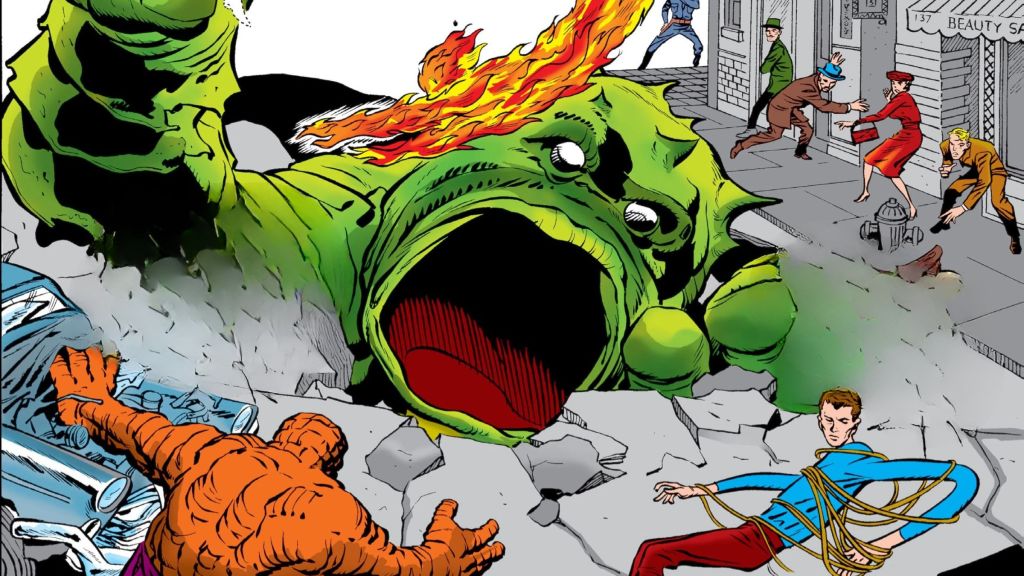
The one Fantastic Four cover that changed Marvel Comics more than any other was the first one. Fantastic Four #1 was released with a cover date of November 1961, and it had a cover with Jack Kirby as the artist, and the inks commonly attributed to George Klein. This cover had the first appearance of Reed, Sue, Johnny, and Ben, and it had them fighting against one of Mole Man’s monsters. It was a staple of Kirby’s covers, with the monsters often towering over the struggling heroes.
This cover depicts the heroes battling a giant monster. As the first superhero comic book created by Marvel, it was what caused the new company to become an instant success in the revived superhero genre. Many fans describe this issue as the start of the “Marvel Age of Comics,” and it allowed Stan Lee and Jack Kirby to become massive stars, even though Kirby had worked on superhero comics in the past, including early appearances of Captain America.
What do you think? Leave a comment below and join the conversation now in the ComicBook Forum!
More Comics
-
Image Courtesy of Marvel Comics -
Image Courtesy of Marvel Comics -

Image Courtesy of DC Comics -

Image Courtesy of Dynamite Entertainment -
Image Courtesy of DC Comics -
Image Courtesy of Marvel Comics