Marvel crossovers are the backbone of the shared universe concept, a way to bring together characters from different corners of the Marvel world in a single storyline that feels larger than life. They allow Marvel to explore what happens when individual ideologies clash, when relationships are tested, and when the stakes are raised beyond what any single hero can handle. The history of Marvel crossovers dates back to the 1980s, when the publisher realized the potential of unifying its stories into larger, interconnected events.
Videos by ComicBook.com
Secret Wars (1984) is often considered the first true Marvel crossover, and it set the tone for what these events could accomplish. Before that, characters would appear in each other’s books, but there wasn’t a single, overarching story pulling them together. Crossovers changed that, giving readers a sense that the Marvel Universe was one cohesive world where everything mattered. Over time, they’ve evolved from simple team-ups to massive, multi-title sagas, with events that touch every corner of the Marvel landscape.

7. Age of Apocalypse (1995)
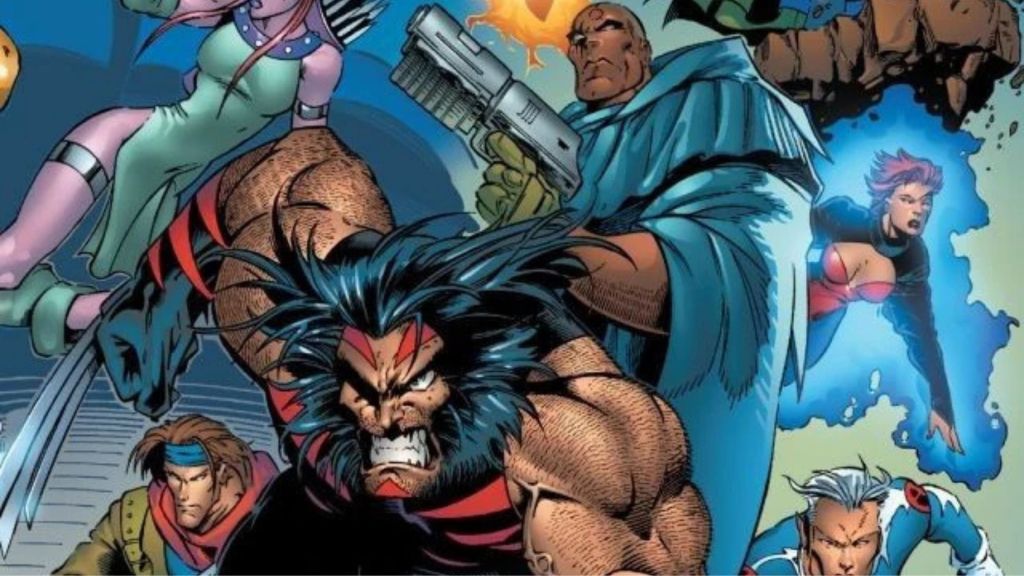
The Age of Apocalypse was one of Marvel’s boldest alternate reality experiments, and it paid off spectacularly. The story begins with Legion, Charles Xavier’s son, traveling back in time to kill Magneto but accidentally killing Xavier instead. This action creates a dystopian reality where Apocalypse rules the world, and Magneto leads the X-Men in Xavier’s place. Familiar characters were given radically unfamiliar roles — Cyclops as a villain, Wolverine losing a hand, and even an evil version of Beast. Fans were captivated by the sheer audacity of this storyline, which dared to rewrite decades of history.
6. Infinity Gauntlet (1991)
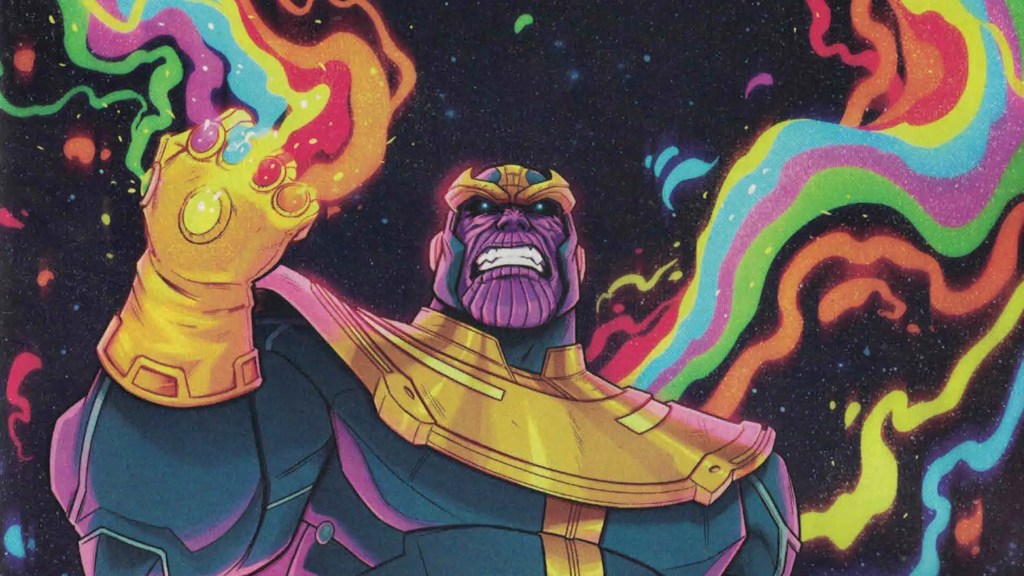
Before the MCU made Thanos a household name, Infinity Gauntlet was the event that cemented him as one of Marvel’s most iconic villains. The story revolves around Thanos collecting the six Infinity Gems (now Stones in the movies) and using them to wipe out half of all life in the universe with a snap of his fingers — yes, the infamous “snap” originated here. What follows is a cosmic-level battle where Earth’s greatest heroes — along with cosmic entities like Galactus and Eternity — try to stop the Mad Titan. The stakes had never been higher, and the sheer scale of the event redefined what a Marvel crossover could accomplish.
Rather than being a generic power-hungry villain, Thanos is tragic, driven by his obsessive love for the personification of Death. This added emotional depth made the story more than just a series of fight scenes. While the heroes ultimately prevail, thanks to Nebula’s betrayal of Thanos, the event left a lasting legacy, influencing countless Marvel stories for decades to come.
5. Secret Invasion (2008)
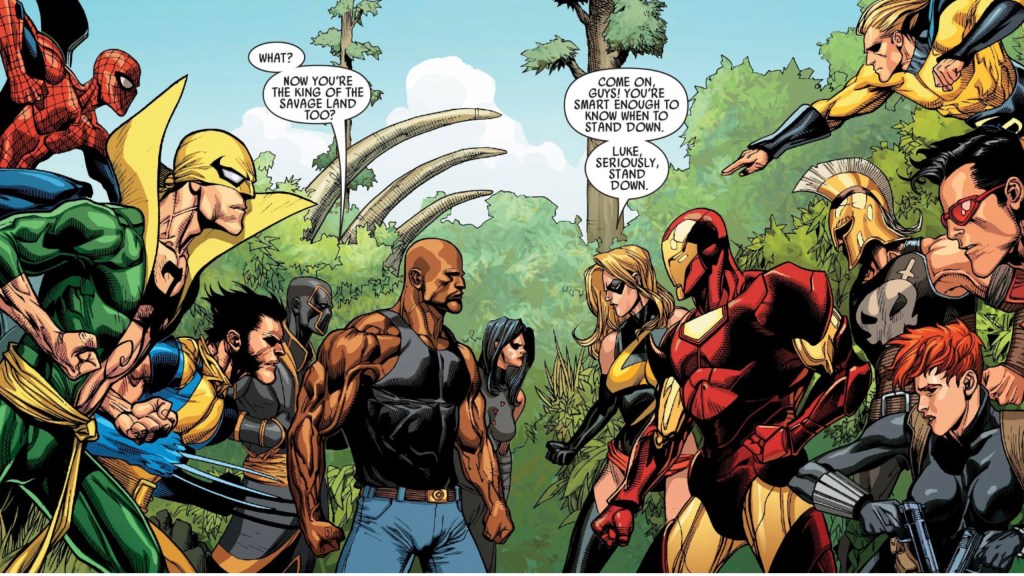
Secret Invasion was a paranoia-fueled crossover that flipped the superhero genre on its head. The story revealed that the Skrulls, a shape-shifting alien race, had been secretly infiltrating Earth for years, replacing key figures in the Marvel Universe, including some beloved heroes. The tagline, “Who Do You Trust?” perfectly captured the vibe of the event, as it became increasingly difficult to tell friend from foe.
While the action-packed battles were entertaining, the real drama lay in the personal betrayals and the unearthing of secrets. When it was revealed that some heroes had been Skrulls for years, it forced readers to rethink past stories in a completely new light. Though the resolution wasn’t perfect, with some fans criticizing the rushed ending, Secret Invasion remains a masterclass in suspense and world-building, proving that sometimes the greatest threats come from within.
4. Civil War (2006-2007)
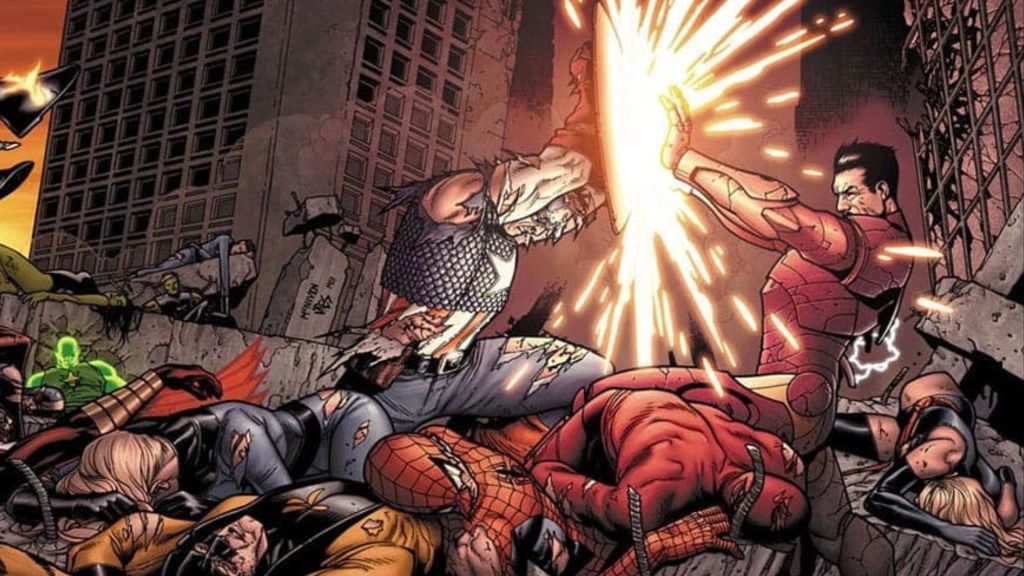
Civil War kicked off when a superhero-led disaster in Stamford, Connecticut, killed hundreds of civilians, leading to the introduction of the Superhuman Registration Act. This law required all heroes to register their identities with the government, splitting the superhero community into two factions: Iron Man’s pro-registration side and Captain America’s anti-registration resistance. The resulting conflict wasn’t a typical “good vs. evil” fight but a morally complex battle where both sides had valid arguments, forcing readers to choose where they stood.
3. House of M (2005)
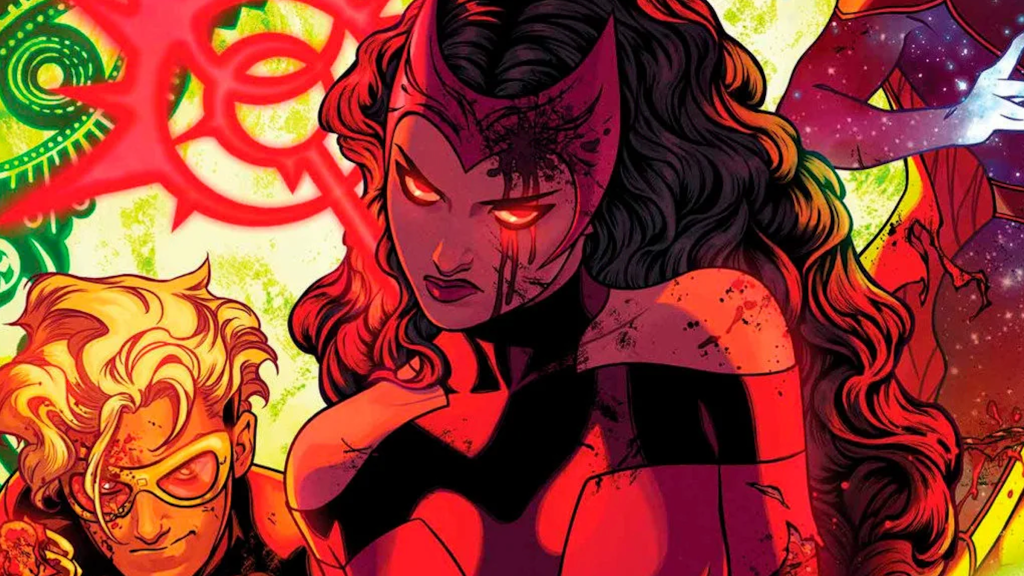
“No more mutants.” With those three words, Wanda Maximoff (Scarlet Witch) changed the Marvel Universe forever in House of M. The event begins with Wanda, struggling with grief and mental instability after losing her children, creating an alternate reality where mutants are the dominant species, and Magneto rules the world. While the heroes eventually manage to set things right, Wanda’s final act of despair — erasing the mutant gene from most of the population — left the mutant community devastated, reducing their numbers from millions to just 198.
2. Secret Wars (1984-1985)
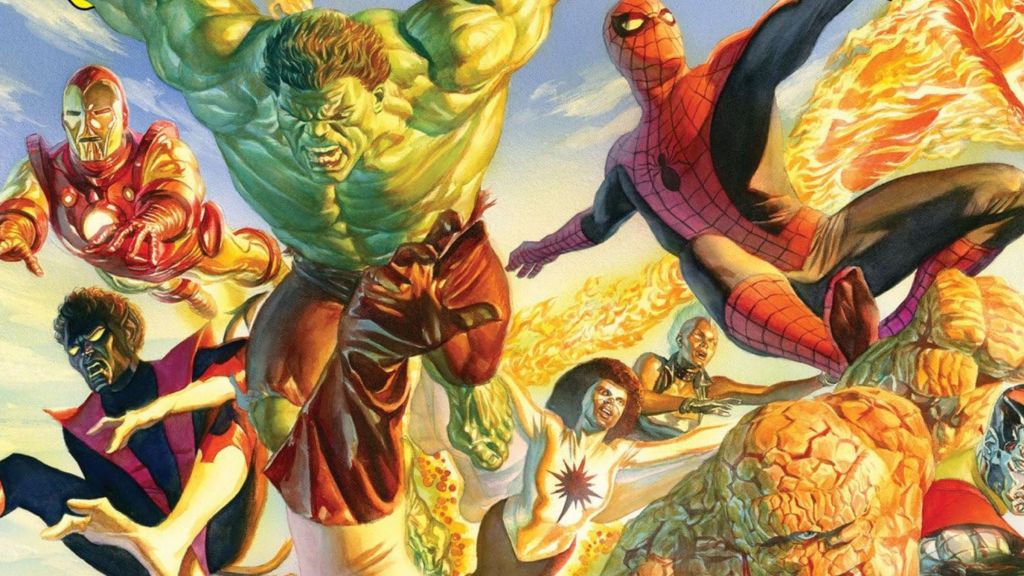
The original Secret Wars was Marvel’s first major crossover event, and it set the standard for all that followed. The premise was simple yet groundbreaking: a cosmic entity called the Beyonder kidnaps heroes and villains from Earth and forces them to battle on a distant planet called Battleworld. The event brought together characters who rarely interacted, creating iconic moments — Spider-Man gaining the black symbiote suit, Doctor Doom stealing the Beyonder’s power, and the Hulk holding up an entire mountain to save his team.
1. Infinity War (1992)
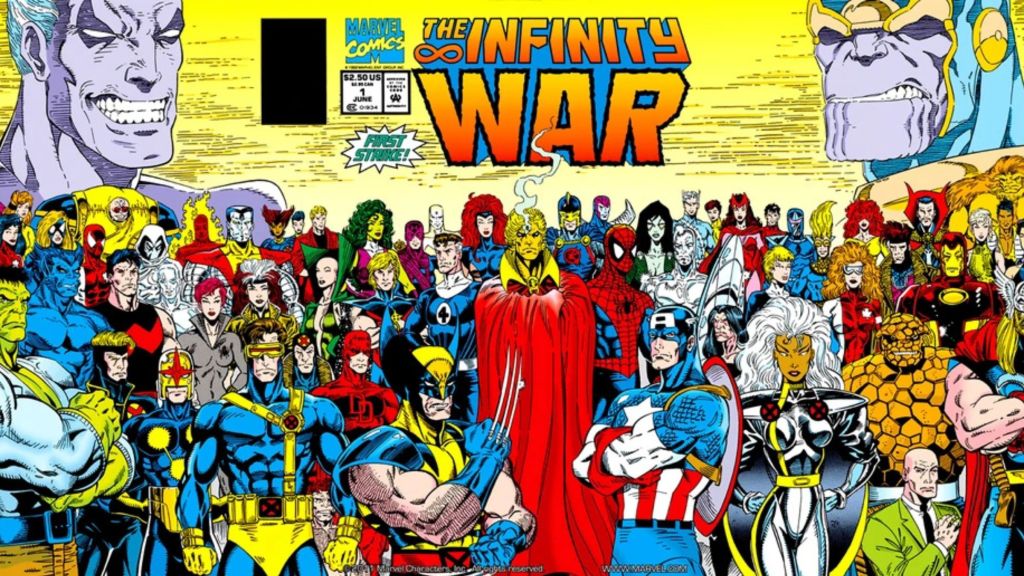
Though often overshadowed by Infinity Gauntlet, Infinity War deserves its spot as one of the most important and impactful Marvel crossovers. The story picks up where its predecessor left off, with Adam Warlock now in possession of the Infinity Gauntlet. However, his evil half, Magus, emerges as the primary antagonist, leading a campaign to conquer the universe using doppelgängers of Marvel’s greatest heroes. The stakes are just as cosmic as before, with alliances forming and breaking as the heroes face not only Magus’ forces but also their own insecurities and flaws reflected in their evil counterparts.
The event also expanded the cosmic side of Marvel, featuring heavy involvement from characters like Adam Warlock, the Silver Surfer, and the Guardians of the Galaxy. Though not as universally acclaimed as its predecessor, Infinity War built on the foundation of Infinity Gauntlet, cementing Marvel’s cosmic narratives as some of the most ambitious and influential stories in comic history.
What do you think? Leave a comment below and join the conversation now in the ComicBook Forum!
Most Viewed
-
Courtesy of Lionhead Studios -
Courtesy of Eight-Bit -

Image via Prime Video -

Courtesy of Toei Animation