2025 has seen an incredible number of games, including AAA titles and smaller, more experimental games. And every once in a while, a video game comes along that feels tailor-made for a second life on the tabletop, like this instant hit game. A game with rich characters, episodic adventures, moral tension, and mechanics that already feel like they’re begging for dice, character sheets, and a GM behind a screen. These games worm their way into fan communities not just because they’re fun, but because they ignite imagination. They make players want to build stories, create new heroes, and keep the world alive long after the credits roll.
Videos by ComicBook.com
And in 2025, no game captured that spirit quite like Dispatch. No one could have predicted how big it would become. What started as a sleeper hit, an indie superhero narrative game built around tough choices, evolving powers, and emotional character arcs, became a certified fan favorite and one of the best games of the year. It exploded across streaming platforms, social media, and fan art communities. And when Critical Role produced a one-shot themed around it, the game shot into a different stratosphere entirely, showing exactly why it absolutely needs a tabletop RPG adaptation ahead of a Season 2.
Dispatch Would Be Perfect for Table Top

The appeal of Dispatch lies in its structure. The game is built on episodic missions; tight slices of story where heroes respond to crises, uncover secrets, and build relationships. That format is practically a love letter to tabletop RPGs. It mirrors the natural rhythm of short arcs, one-shot adventures, and long campaigns. Every chapter in Dispatch feels like a session of play waiting to happen. A tabletop adaptation would allow the game and world to come to life in ways video games just can’t capture, even narrative-focused ones.
The characters in Dispatch aren’t just superpowered: they’re flawed, uncertain, emotional, and human. They make mistakes. They question themselves. They choose between what’s easy and what’s right. This makes the world an incredible foundation for players to bring their own heroes into. In a tabletop format, GMs could design “Assignments” modeled after the game’s signature cases: rescue operations, moral quandaries, conspiracies, small personal stories, or city-shaking disasters, while players shape consequences in a way only tabletop roleplaying can explore.
Mechanically, Dispatch’s focus on abilities that evolve through tough choices would translate beautifully into advancement systems inspired by stress tracks, power trees, or narrative scars. Even its radio-communication structure, the very thing that gives the game its name, could be replicated in session tools or mechanics that reward quick thinking, improvisation, and split-party decision making. GMs could play this role, providing an in-game hint system delivered through radio communications.
But the biggest reason Dispatch would thrive as a TTRPG is simple: its world is big enough to grow, but small enough to feel personal. That balance is the holy grail of tabletop design, and Dispatch hits it naturally.
Mutants and Masterminds Needs a Successor
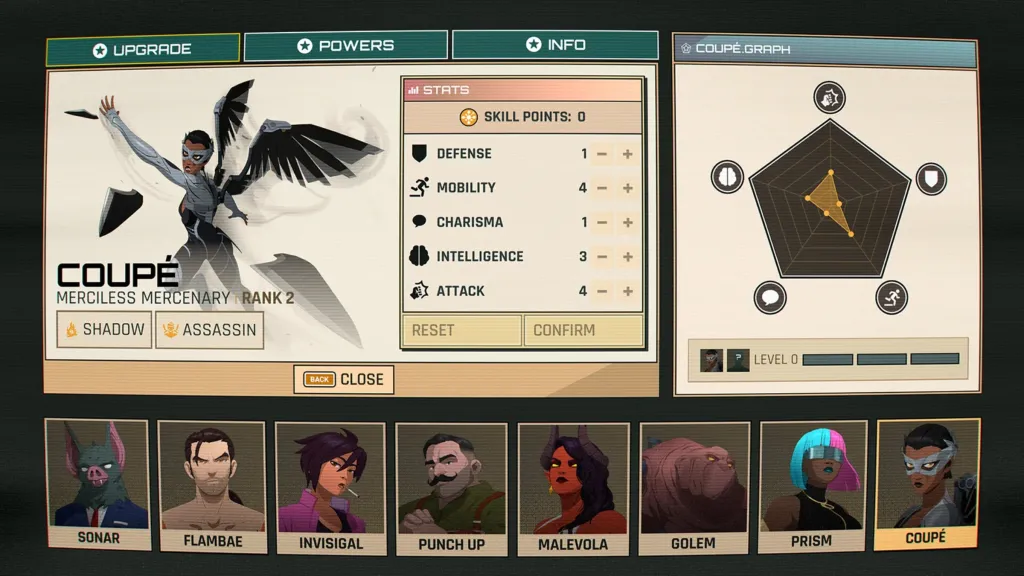
When it comes to superhero Tabletop RPGs, Mutants & Masterminds has long been the reigning champion of the genre. It’s flexible, crunchy, and deeply customizable. But it has never achieved widespread mainstream appeal, partly because of how cumbersome the points system is, and certainly not on the level of Dungeons & Dragons or modern breakout indie hits. Superhero TTRPGs remain niche, not because players don’t want them, but because few titles give them an accessible, emotionally resonant entry point. Dispatch could be that entry point.
It offers all the hallmarks superhero fans crave: powers, dramatic threats, a city teetering between hope and despair, but grounds them inside a narrative structure that feels intuitive for players new to TTRPGs. While Mutants & Masterminds leans heavily into mechanical depth, Dispatch would bring something different to the table: clarity, theme-driven design, and narrative-driven gameplay. And frankly, the superhero TTRPG scene is hungry for something new. The market has proven time and time again that players want roleplaying systems built on emotion and identity, not just stat blocks.
That’s where Dispatch has an advantage. It already has a fanbase. It already has name recognition. And thanks to its clean, modular story design, it could easily power short four-session arcs, Monster-of-the-week style campaigns, intimate character-driven sagas, and longform superhero epics. With the right system, be it lightweight narrative mechanics or a mid-weight engine similar to Daggerheart, Dispatch could become the modern superhero TTRPG the industry has been waiting for, especially with the place that Marvel and superheroes are in right now.
Critical Role Could Take the IP Even Further
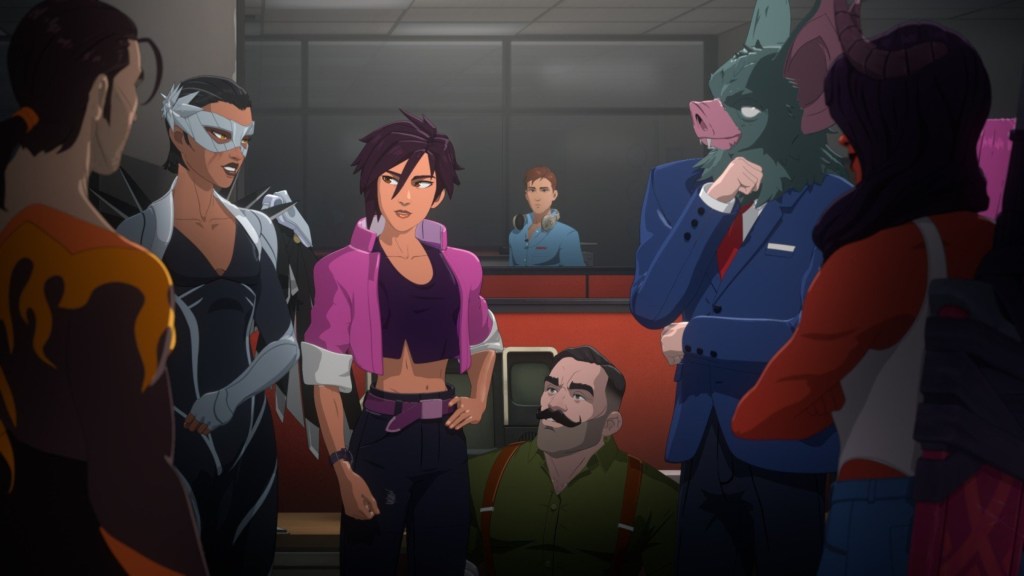
While Dispatch and Adhoc Studio have certainly earned their praise and reputation, a major part of the game’s success is Critical Role’s involvement. It completely changes the landscape. Their storytelling reach is massive. Their production polish is top-tier. And their ability to turn RPGs into cultural events is unmatched. The fact that Critical Role already ran a Dispatch one-shot is enormous. It gave the game visibility far beyond its initial launch audience, and it sparked immediate conversation about what a tabletop adaptation could look like.
But imagine a full TTRPG release backed by Darrington Press, not just a one-shot, adjusting another TTRPG. Critical Role’s publishing arm has already proven it can produce high-quality, modern TTRPG systems with broad appeal. Daggerheart is a perfect example: a new fantasy system gaining traction despite competing with giants like D&D and Pathfinder. A Dispatch TTRPG under their banner would have built-in marketing that could allow for numerous tie-ins, sourcebooks, and future expansion support. This could be the first superhero TTRPG with mainstream cultural momentum behind it. And because Critical Role is already familiar with Dispatch’s tone, characters, and themes, they’re uniquely positioned to do the world justice.
Beyond the entertainment value, Critical Role’s involvement would signal something important to the industry: that superhero TTRPGs deserve the same production quality, narrative richness, and community support as fantasy systems. While Mutants & Masterminds has its place, and I’ve certainly enjoyed my time with it, Dispatch and a more accessible superhero TTRPG could change the hobby as we know it.
What do you think? Leave a comment below and join the conversation now in the ComicBook Forum!
Most Viewed
-

Image courtesy of Sony -

Image Courtesy of A-1 Pictures -
Image courtesy of Warner Bros. Pictures