Despite being somewhat niche, I have always loved stealth games. Even though those who perform incredibly well rarely have a huge impact on the industry. Games like Thief and Dishonored are often beloved by fans, but most gamers move on from them. Occasionally, a game will come along that has good sales, but even then, it rarely receives the same type of support as multiplayer or action-heavy games. So when a big stealth game is soon to be released, fans of the genre are always excited.
Videos by ComicBook.com
While Dishonored 3 may never happen, developer Cyanide is taking matters into its own hands. Styx: Blades of Greed is poised to be the spiritual successor to Arkane’s legendary series. It openly embraces ideas from other stealth games while maintaining and evolving the core gameplay loop that made players like me love the other Styx games. With this title arriving so early in 2026, I am hopeful that the stealth genre will continue to grow.
Styx: Blades Of Greed Is The Sequel Dishonored Fans Deserve
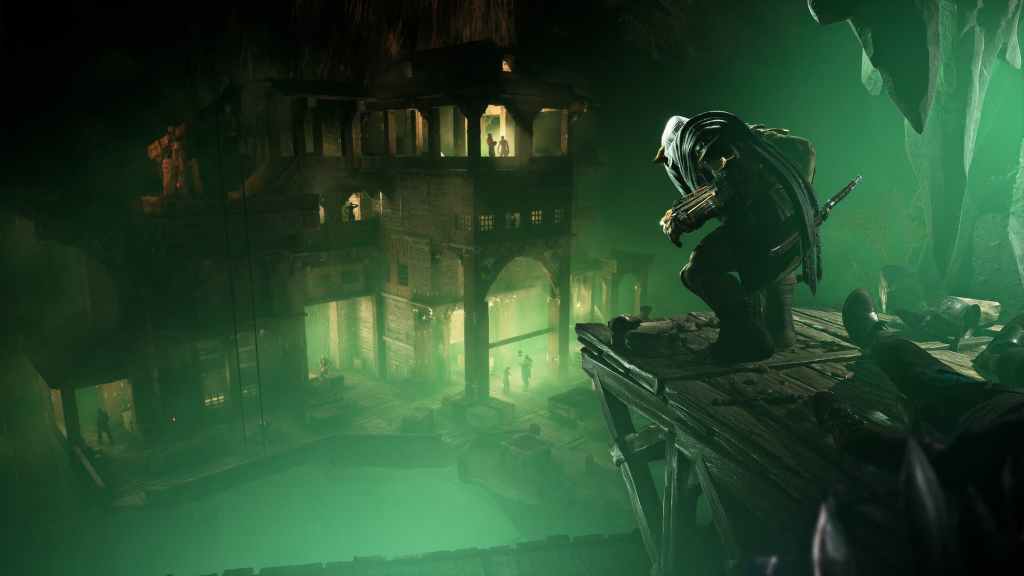
The Styx series has always been focused on stealth. From its earliest entries, it rejected the idea that players should be equally effective in open combat. Instead, it rewarded patience, observation, and clever use of the environment. So while combat is rarely the best solution, players are often given multiple options to solve encounters and puzzles. That philosophy immediately connects it to Dishonored, one of the most highly rated stealth franchises of all time.

Styx: Blades of Greed builds on that foundation rather than diluting it. There has been increased focus on vertical level design, multiple infiltration routes, and abilities that encourage experimentation rather than brute force. These are the same design pillars that made Dishonored and Dishonored 2 enduring favorites among stealth fans, and Styx’s new Quartz-based powers give me more Dishonored vibes than ever before.
I still remember Dishonored and how my friend let me borrow his copy in high school. I’d enjoyed stealth games in the past, but this was the title that elevated the genre for me. I spent hours with Dishonored, crouched on rooftops, studying patrol routes, feeling like every successful infiltration was my own solution rather than the game’s suggestion. Styx has always captured a similar feeling, especially in how it treats failure as a lesson instead of a punishment. Styx: Blades of Greed could be the penultimate title that rekindles that feeling for me and many others.
Stealth Games Are Getting An Upgrade With Styx

Stealth games have evolved significantly since the days of Thief: The Dark Project. Early titles relied heavily on sound, light, and minimal interfaces. Later games like Splinter Cell refined mechanical precision, while Dishonored expanded the genre through immersive sim design and supernatural abilities. Styx: Blades of Greed sits at an intersection of these philosophies.
It emphasizes environmental awareness and enemy behavior while layering in modern systems like skill progression and flexible mission design. This approach reflects lessons learned from the best stealth games of the past two decades. When stealth is treated as a secondary mechanic, it often feels underdeveloped. Styx: Blades of Greed avoids that trap by making stealth the only viable path. Every system supports sneaking, observation, and manipulation of the environment.
Every system supports sneaking, observation, and manipulation of the environment. This clarity of design is something modern stealth games desperately need. The upgrade is not about flash or spectacle. It is about refinement. Better AI routines. Smarter level layouts. Tools that encourage creativity without overwhelming complexity. These improvements show that stealth games can evolve without abandoning their identity.
The Future Of Stealth Games Is Uncertain

Despite many games receiving critical acclaim, stealth games remain a risky investment. Studios like Arkane, responsible for Dishonored, have faced internal and external challenges. Even beloved franchises like Splinter Cell have remained dormant for years. Publishers often prioritize broader appeal over niche excellence, leaving stealth fans underserved. Forced stealth sections in popular games have also left players with a bad attitude toward the genre as a whole.
And then there is Star Wars Outlaws, one of the more recent and high-profile games. While ambitious, it faced criticism for shallow stealth mechanics and inconsistent enemy AI. The game proved to be a lesson and a major setback for the stealth genre. Fans were left in uncertainty, unsure if other developers would take a risk if even a Star Wars stealth game could fail.
That uncertainty makes Styx: Blades of Greed feel like more than just a sequel. Cyanide is returning to this beloved fan favorite series eight years later, suggesting there is still room for stealth games that respect player intelligence, embrace slower gameplay, and offer creative freedom in problem-solving. The success or failure of this release will matter. If it performs well, it could reinvigorate the genre. If it struggles, it reinforces the industry belief that players are not interested in stealth.
That is a heavy burden for any game, but Styx is uniquely positioned to carry it because it already understands its audience. Styx: Blades of Greed does not promise reinvention. It promises respect for stealth as a craft. In an industry often obsessed with scale and spectacle, that restraint feels refreshing. Whether it reshapes the genre or simply reminds us why stealth games matter, its arrival is something worth paying attention to for fans and those interested in the genre.
What do you think? Leave a comment below and join the conversation now in the ComicBook Forum!
Most Viewed
-

Image Courtesy of Crunchyroll -

Image Courtesy of TOHO -

Image courtesy of Marvel Studios -

Image Courtesy of Good Shepard Entertainment/Sony Interactive Entertainment