Batman: Arkham City is one of those rare perfect games, a terrific fusion of worldbuilding, storytelling, and gameplay that stands the test of time — and there’s no part of it that’s better than the combat. Building off the success of Arkham Asylum, Arkham City escalated the tension and expanded the scale in some key ways that benefited everything that had worked in the previous game. This included the combat, which became tighter and more refined.
Videos by ComicBook.com
While later games in the series would continue to add complexity to the mechanics and titles like Marvel’s Spider-Man and LEGO Batman: Legacy of the Dark Knight would take clear influence from this style, Arkham City refined it to an art form. In the last fifteen years, even as the primary combat style shifted to more along the lines of games like Dark Souls, Arkham City‘s almost rhythmic approach to combat and counters delivered an all-time great style. A decade and a half later, I still think Arkham City has the best combat I’ve ever seen in a video game.
Why Batman: Arkham City’s Combat Is So Good
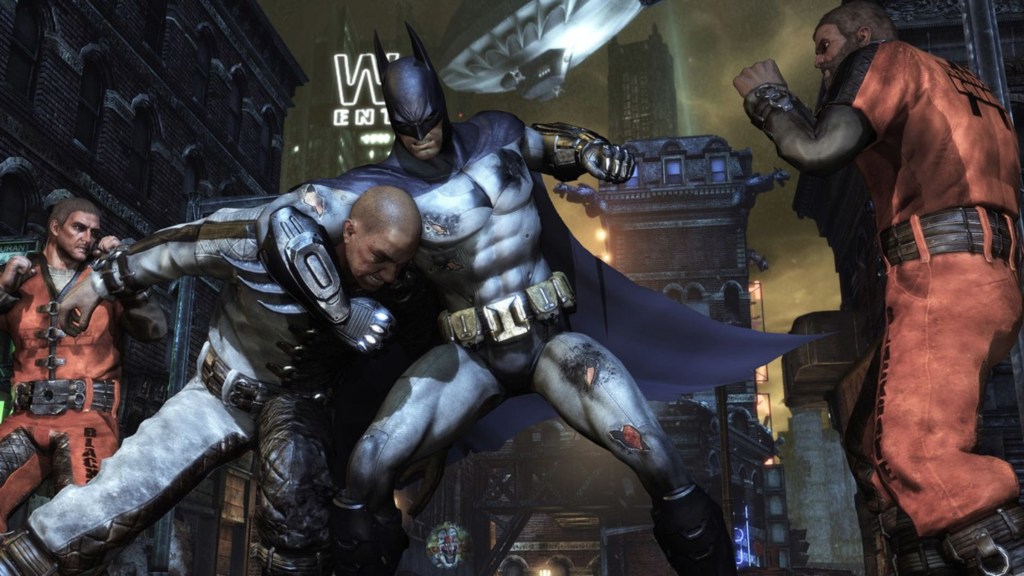
Batman: Arkham City built upon the foundation of the previously released Arkham Asylum in some key ways that ensured it became the gold standard of modern gaming combat. Arkham Asylum had established the Batman franchise’s approach to fighting with a subtle focus on finding the rhythm in every encounter. To accommodate this, the game simplified the combat while leaving plenty of room for experimentation. There’s only one pure attack button that players usually have to use in combat, although a flourish of the cape could string into the ensuing combo, stun enemies, and give room for the Dark Knight to refocus his attack. The inclusion of gadgets like batarangs, grappling hooks, and explosive gels added layers of potential creativity to the combo system, allowing players to thread together combos with ease.
The biggest advantage of this style was the way it incorporated counters. With a simple press of a button, Batman could counter a basic physical attack, keeping the combo alive while also preventing the player from being hurt. When done correctly, this allowed every encounter to flow with a gorgeous brutality, allowing Batman to bring down scores of enemies with relative speed that never felt out of control. That was the baseline combat for the series, leaving room for Arkham City to improve on it. More enemies were introduced that couldn’t simply be countered, requiring the player to add in more styles of attacks or specific dodges to keep their counters going. More places for environmental throws were added, with the larger world map of “Arkham City” allowing for a wider space for players to dish out damage.
The combat could even easily be tweaked in terms of difficulty without overcomplicating it, reducing the warning that players saw from attacking enemies as a means of keeping the gameplay the same but upping the challenge by forcing the player to keep a better eye on the hordes of enemies surrounding them. Complications like guns, swords, and unstoppable enemies only added complexity to the combat without breaking the underlying approach. It’s a simple style of combat that’s easy to learn and tricky to master — the kind of mechanic that makes for the best games. The various gadgets, weapons, and takedowns Batman could deploy only added to that sense of high-octane action, giving players reason to throw themselves more eagerly into combat. Even beyond being a primary way to gain experience and unlock more tools, this approach encouraged players to try out new methods until they found their ideal way of keeping up that Bat-Combo to extreme heights.
I Still Haven’t Found Gaming Combat I Like More Than Arkham City
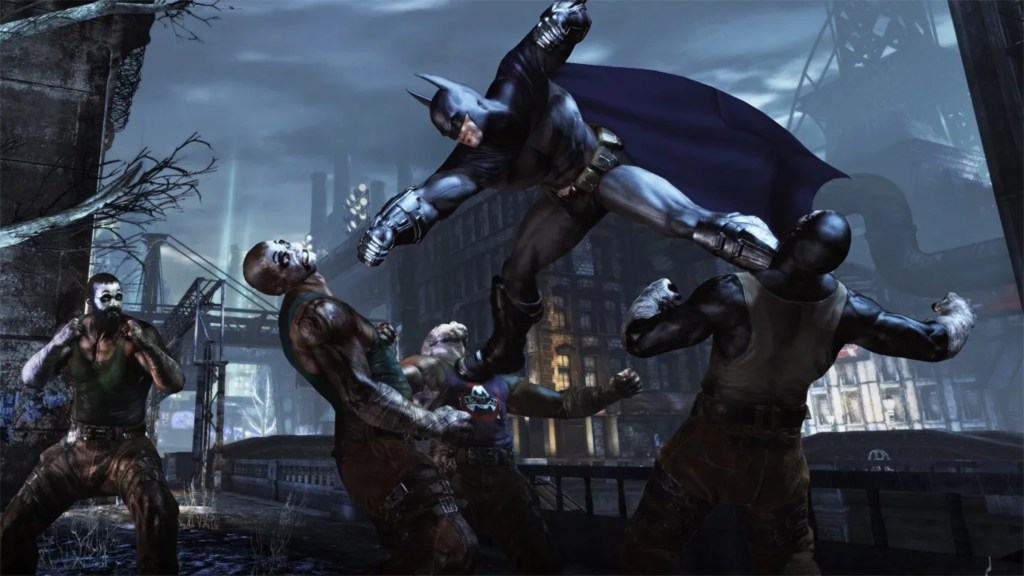
In the nearly fifteen years that have passed since Arkham City first landed, I’m not sure I’ve found a game with a combat system I like more. Arkham Asylum codified the mechanic while Arkham Knight added more complexity to it, but Arkham City is where the style was perfected. Being able to blend attacks with gadgets became more seamless, while the counter system became tighter. It allowed for Batman to jump from enemy to enemy with ease, racking up wild combos in quick succession. I still remember climbing the Xbox Live leaderboards while playing through Arkham City as a college student, barreling my way through hordes of enemies in pursuit of a perfect run of the Combat Challenge Mode courses.
Pulling off wild combos in quick succession became one of the main draws of the experience, daring players to push themselves to the limits. I’ve seen plenty of other games that play with counters and combos, with the countless soulslike games putting emphasis on the importance of counters and dodges. Those games put emphasis on the combat being punishing; damage was overwhelming, leaving players feeling desperate. Other games may have given you a more impressive set of powers or overpowered you, but Arkham City gave you the freedom to find the combat style that fit you.
Arkham City found the right balance between forcing the player to keep on their toes while still feeling like they’re delivering a good amount of damage. Additional characters introduced in the series, starting with Arkham City’s Catwoman, highlighted how this approach could also apply to different characters with alternative methods of combat. The underlying combat mechanic is one of the most engrossing I’ve ever experienced. Even 15 years later, with plenty of games that have built upon what Arkham City accomplished, I don’t think I’ve ever found a combat style I loved more.