Video games have been pulling from superheroes since the early days of the medium. Going all the way back to games like Superman for the Atari 2600, superheroes have been a consistent presence in the gaming world. Arcade games like X-Men and Marvel vs. Capcom, and home releases like Spider-Man 2 or the upcoming Wolverine have kept the spandex crowd in players’ hands for generations.
Videos by ComicBook.com
However, the natural fit of the power fantasy in the gaming space does come with a caveat: a lot of the time, core elements of the superheroes are lost in the adaptation process. This is often a casualty of the game design, as some thematic throughlines about characters are hard to translate into the gaming medium. One of the earliest — and best — examples of this can be found in a Nintendo game from 34 years ago that highlights a challenge game developers still face when adapting superheroes.
Return Of The Joker Is A Good Game, But Not A Good Batman Game
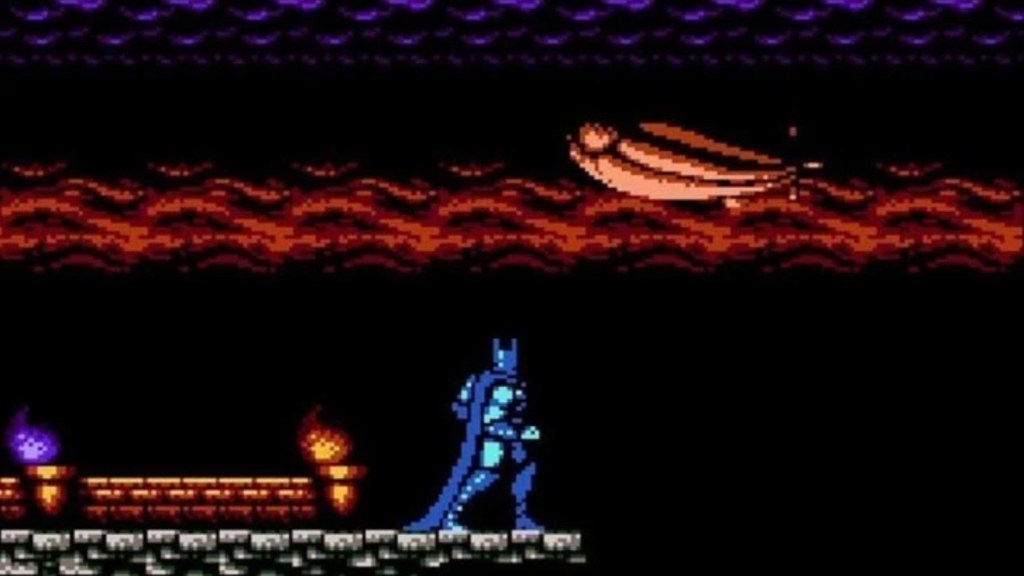
Released December 20, 1991, Batman: Return of the Joker was a fun riff on the shoot ’em up genre that saw players take on the role of the Caped Crusader while chasing down his nemesis. While the previous Batman game on the NES had been tied into Tim Burton’s Batman, the follow-up was an original story. As an NES action game, Return of the Joker is actually a pretty good action title, earning solid reviews from the press at the time of release. Much of the focus was on the visuals, a good showcase of the colorful variety that developers could still bring to the 8-bit space.
Batman himself is a standout aspect of the game’s visuals, with a certain understated flourish to his cape that is especially impressive for the time. As a superhero-tinted Contra or Shinobi riff, there’s plenty of platforming action and exciting boss battles to justify a deep-dive. However, the game also gives Batman a wrist-mounted cannon that fires batarangs that cause enemies to explode on contact, which really doesn’t feel like a move Batman would do. There’s a certain run-and-gun approach to Batman in this game that eschews his physical combat skills, his abilities as a detective, or the larger, colorful world of the DC Universe. Instead of feeling like a Batman game, Batman: Return of the Joker feels like a Contra sequel with a Batman coat of paint.
Superheroes Usually Have To Change For Gaming
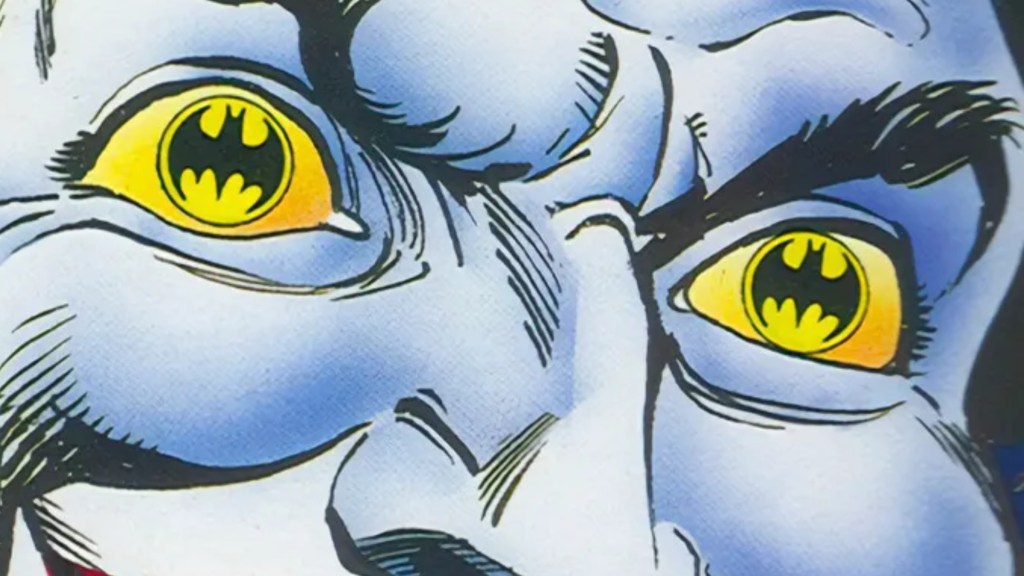
One of the interesting conundrums that comes with adapting a superhero for video games is the way the developers have to weigh the balance between authenticity to the source material and the necessity of gameplay mechanics. An action-driven game like Batman: Return of the Joker needs to give players plenty of enemies to bring down, but it also does this in a way that doesn’t feel very conducive to Batman as a concept. Seeing the Dark Knight, who is famously averse to firearms in most iterations, using an arm cannon to blow up attackers is a wild sight for fans of the character.
However, especially given the era, it would have been harder to bring the character to life in a way that felt fully consistent with the source material. Superheroes often have to change on some fundamental level to fit into the game world. Take the Injustice series, which uses a multiversal story and power-enhancing drugs to justify the fighting game mechanics at the core of the experience. The Batman: Arkham series of titles does a great job of reimagining the spirit of a Batman story in the narrative, but the hard-hitting gameplay pushes the limits of what the in-universe “non-lethal” Batman can get away with — especially in Arkham Knight, where players can ram into random people with the Batmobile.
It’s something the series shares with Spider-Man games like Insomniac’s take on the Wall-Crawler, who has to automatically and retroactively have deployed web-bombs to enemies to keep the game’s internal logic from breaking when a player sends a goon swinging off the side of a building. Those games are a lot of fun, but they also don’t necessarily reflect the comic universe in their standard gameplay. Sometimes, the games try to avoid this by putting in-universe limits on the heroes, explaining the restraints in terms of gameplay options — but this can lead to something like Superman 64, which overcommitted to the potential of flight as a game mechanic and led to a drab game as a result.
Franchises like Marvel Ultimate Alliance and titles like The Adventures of Batman & Robin for the Super Nintendo or Deadpool VR highlight some of the ways releases have been able to properly find the balance between tight gameplay and authentic adaptation of the source material. Even decades of games later, though, they are few and far between. More often than not, games follow the trend set by Batman: Return of the Joker and focus on the gameplay over the adaptation. That’s not a bad decision, given that this is a game first and it needs to actually be engaging to justify a player becoming immersed in the experience. It’s just interesting that this remains a challenge for developers, given just how far gaming has come since the days of the 8-bit Batman shooting exploding wrist-mounted Batarangs at a blimp.
Most Viewed
-

Courtesy of Sony Pictures Animation / McDonald's -
Image Courtesy of Marvel Comics -
Image Courtesy of Lucasfilm