Blizzard has a library of some of gaming’s biggest modern hits, with plenty of high-end successes across several genres. While they’ve been a dominant force in the RTS and MMORPG spaces for a while, they’ve only really gotten a foothold in the shooter arena thanks to Overwatch. However, things were almost very different for the company.
Videos by ComicBook.com
In the early 2000s, StarCraft almost got a third-person spin-off that could have made Blizzard a rival to Bungie for the shooter crown. Focused on a stealthy agent moving around the established world from a new perspective, StarCraft: Ghost‘s focus on online multiplayer could have been a real game-changer. Here’s how Blizzard’s shooter could have become a Halo killer, and why the full game never made it to shelves.
StarCraft: Ghost Could Have Been An Entirely New Kind Of Blizzard Game
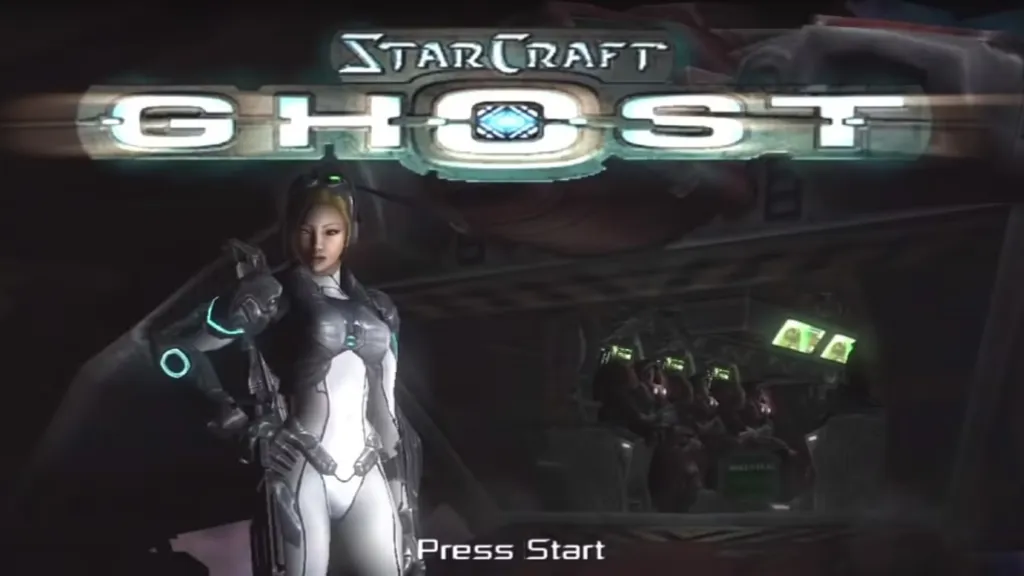
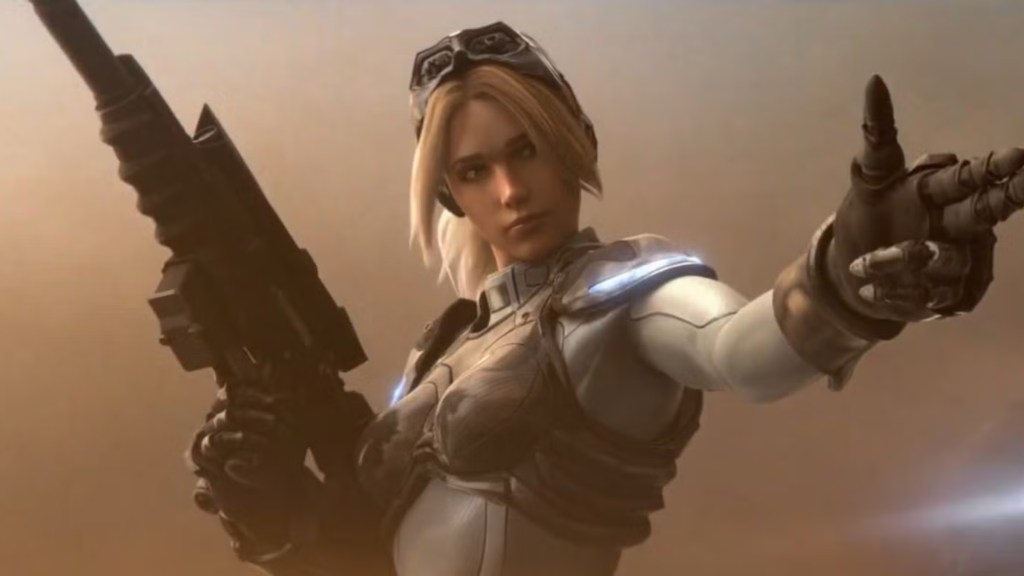
Initially intended for the PlayStation 2, Xbox, and GameCube, StarCraft: Ghost could have been Blizzard’s attempt to unseat Halo in gaming — but development woes ended up sinking the spin-off. Announced in 2002, Ghost would have been a big departure for the sci-fi franchise. Instead of the standard top-down RTS approach of the rest of the series, Ghost would have been a third-person stealth shooter. The game would have centered on Nova, a graduate of the Terran Ghost program. The game would have explored the character’s backstory while following her investigation into a rebel movement fighting against Arcturus Mengsk and the Terran Dominion.
However, after discovering a conspiracy involving a new experimental process of enhancing Ghost agents, Nova would have potentially gone rogue and threatened Mengsk’s rule. Gameplay seems to have taken cues from other action games of the era, with a focus on stealth and combat that feels like a fusion of Splinter Cell and Halo. Players would have been able to use Nova’s Ghost abilities to sneak into dangerous situations, while using a large arsenal of weapons and vehicles, while fighting against various enemies.
The game was even intended to have a multiplayer mode that would have included standard shooter modes like deathmatch and capture the flag, as well as unique moves like “Mobile Conflict” and “Invasion.” The game would have been an interesting new look at the StarCraft franchise, bringing the player’s focus to a ground level not previously seen in the series. As a fan of the series, I can remember being distinctly excited for this development and couldn’t wait to get my hands on the finished game.
Why StarCraft: Ghost Never Got Finished
StarCraft: Ghost was meant to be a collaboration between Blizzard and Nihilistic Software, with an intended release date in 2003. However, a series of delays during development ended up ruining those plans. In 2004, Nihilistic left the project — although Blizzard told the press at the time that the company had completed their work on the game. Development was moved over to Swingin’ Ape Studios, with development picking back up for an intended 2005 release. In the process, though, Ghost‘s GameCube port was formally discontinued. The argument was that the GameCube’s relative lack of online support compared to the Xbox and PS2 was to blame, suggesting that Blizzard and Swingin’ Ape Studios saw the game’s online multiplayer options as a key element of the game’s appeal.
Although the game was shown off at the 2005 E3 and a cinematic trailer for the title kept fans excited, the release date was delayed another year. By 2006, though, it was clear the game was not finished, and StarCraft: Ghost was put on an indefinite hiatus. One suggestion about this circumstance is that with the growth of the next generation of consoles, like the Xbox 360 and the PS3, the work needed to update the title for the newer consoles would have severely impacted the process. Notably, the game still wasn’t formally counted among Blizzard’s cancelled titles. In 2008, Blizzard’s co-founder Frank Pearce argued that the game was still technically in development, but that the success of World of Warcraft and the development of StarCraft II had taken attention away from the title.
Ghost’s Impact Still Influenced StarCraft

StarCraft: Ghost remains one of the most intriguing games to never be released. If Blizzard had been able to complete development, then Ghost could have become a genuine competitor for titles like Halo and brought the publisher into the online shooter space years before Overwatch debuted. It would have expanded the StarCraft lore in some exciting ways, especially in the way it was meant to depict the cosmic scale of the series from a more personal, character-driven space. It could have also cemented Nova as a direct foil to Kerrigan, a former Ghost who was transformed into the Queen of Blades by the Zerg.
Although Ghost never saw the light of day, the direction still impacted the future of StarCraft. Initially intended as a tie-in, the novel StarCraft Ghost: Nova by Keith R. A. DeCandido explored the character’s backstory and is (along with its sequels) still considered to be part of the formal StarCraft canon. Nova had a minor role in StarCraft II, appearing in both Wings of Liberty and Heart of the Swarm as a dangerous wildcard that the players can align with or come up against. StarCraft II: Nova Covert Ops was released as a DLC mission pack for StarCraft II, focusing on Nova in the aftermath of the game’s epic conclusion.
Still, years later, it’s worth considering how Blizzard (and the gaming space as a whole) could have been impacted by StarCraft: Ghost. An early build of the game was leaked in 2020, giving players a taste of what the title could have been. Perhaps with StarCraft: Ghost, StarCraft would have become a higher priority for the company and wouldn’t have gotten the chance to conclude the main story with Legacy of the Void. Maybe the publisher wouldn’t have felt the need to create a new shooter, which would have negated Overwatch (and the various games that were released in response to that game’s success). As it stands, StarCraft: Ghost instead remains a fascinating case of what could have been.
More Gaming
-

Courtesy of Capcom