Combat in Crimson Desert lies to you at first. Can you believe it? It pretends to be simple, something you can overpower with instinct and quick-witted fingers, something that bends easily to repetition. Early fights reinforce that illusion, letting you press forward without asking much in return. It feels good, almost effortless. But that version of combat is a mask, and it does not stay on for long.
Videos by ComicBook.com
Stay with it, push past that early comfort, and something begins to shift beneath your feet. The rhythm changes. The rules stop feeling fixed, and suddenly, every encounter begins to ask you a different question. What once felt like a straight line turns into a web, with threads branching in every direction depending on what you choose to do in a single moment. Nothing is handed to you, nothing is clearly explained, yet everything is there waiting to be uncovered. When it finally clicks, combat stops being something you perform and becomes something you understand.
Hidden Mechanics Change How You Approach Combat

There is a moment where the game stops letting you get away with surface-level mash play. The same attacks that carry you through the droves of fodder at the beginning, begin to fall short as enemies push back in ways require different strategies to deal with. For example, enemies with tower shields do not respond kindly to mash play, as your attacks will just bounce right off. Giant enemies do not flinch at your strikes, allowing them to crush you when the please, if you’re just pressing attack.
Your same and familiar patterns start to break apart when these enemies are encountered, and, it can feel like the game is suddenly working against you. In truth, it is inviting you to see what has been there the entire time. The depth was never locked away, only ignored. It demands that you slow down and pay attention in ways you may have resisted early on. That demand is where the real learning begins.
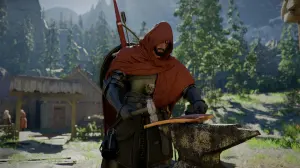
Look closer, and the cracks in that simplicity reveal something far more intricate. Timing begins to matter in ways that change the outcome of entire encounters. Positioning stops being incidental and starts shaping the flow of every fight. Certain abilities carry hidden properties that cut through resistance, shift momentum, or create openings that did not exist a second earlier. Once you recognize those moments, combat transforms. You are no longer reacting. You are deciding. Every movement starts to carry intention instead of habit. That awareness reshapes how you approach even the smallest encounters.
That shift is where Crimson Desert finds its identity. It does not overwhelm you with complexity upfront, nor does it flatten its systems to keep things comfortable. Instead, it waits, letting you discover its depth at your own pace, eventually forcing it out of you if you wait too long. Every fight becomes a space for interpretation, where success depends on how well you read what is happening in front of you. It turns combat into a conversation rather than a sequence. And once you hear it, you cannot unhear it. The game begins to feel less like something you control and more like something you engage with.
Unlocking Abilities Turns Combat Into a Strategic Playground
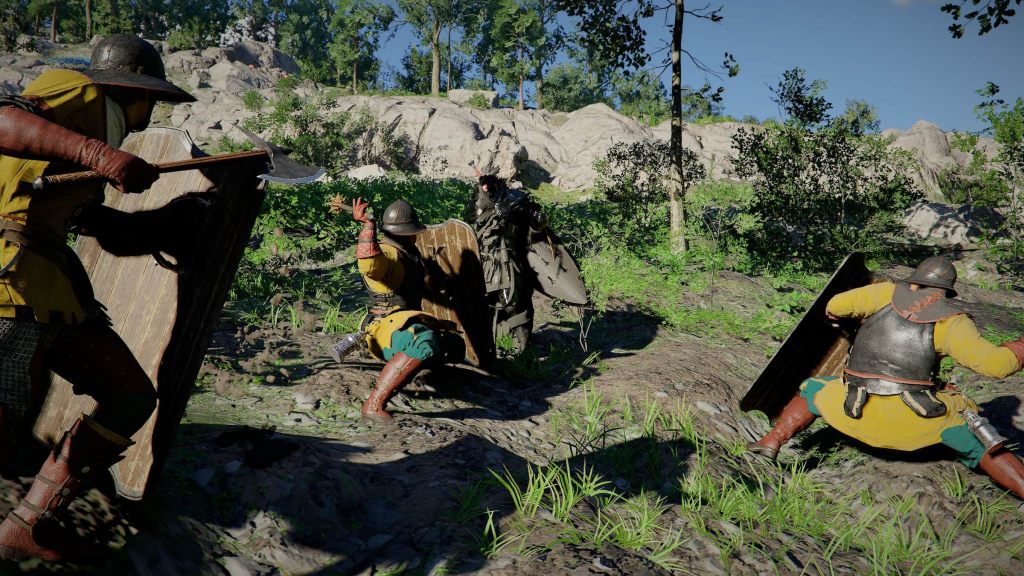
Progression in Crimson Desert does not just make you stronger. It expands your vocabulary. New abilities do not simply add damage or speed; they introduce entirely new ways to engage with enemies. What begins as a simple and limited set of options begins to stretch outward, offering new angles, new solutions, new possibilities. Combat opens up, not gradually, but all at once, like a door you did not realize was there. Each unlock feels becomes a reward, and a mastery hits like a revelation.
As those abilities begin to overlap, the experience changes again. Each encounter becomes a space where ideas can be tested, where different approaches lead to different outcomes, where creativity matters as much as execution. You start to see connections between mechanics that were invisible before, chaining actions together in ways that feel intentional rather than accidental. The fight is no longer something you endure or mash through. It becomes something you shape in real time. That sense of control builds with every successful interaction. It encourages you to push further into the system rather than pull back from it.
That is when the difficulty starts to make sense. When you reach enemies that are punishing to let do as they please, combat reveals itself as precise, even fair, built around systems that reward awareness rather than brute force. The game does not ask you to be faster or stronger. It asks you to understand, and once you do, every encounter becomes an opportunity to express that understanding, to navigate the web in your own way, to turn what once felt chaotic into something controlled.
That is where Crimson Desert’s combat truly comes online. It may take time to reach this point, but if you keep at it, combat becomes a space for mastery rather than survival. This is no Dynasty Warriors, and the shift from that type of fodder-slaughtering gameplay changes everything about how Crimson Desert feels to play.
What do you think? Leave a comment below and join the conversation now in the ComicBook Forum!
Most Viewed
-

Image courtesy of Wizards of the Coast -

Courtesy of Bones Film -

Image Courtesy of Marvel Comics