Managing the complex interactions between characters is something that both Dispatch and Baldur’s Gate 3 do well, even if they are from vastly different genres. The superhero response team of Dispatch and the high fantasy adventures of BG3 both have opportunities where players can learn about and befriend certain characters to help them shine through their unique strengths. For fans of that style of gameplay, one indie title doubles down on that concept, creating a medieval adventure worth trying.
Videos by ComicBook.com
Although somewhat like a Telltale-style story-driven game full of narrative branching choices, Dispatch‘s core gameplay was more like a strategy title. Sending out specific superheros to fix problems based on their strengths helped you form stronger bonds with them, leading to better endings if you were more successful. On the other hand, taking the time to go on specific character quests in Baldur’s Gate 3 helped forge bonds across Acts, sometimes even leading to romantic subplots that made the overall narrative far more personal.
Sovereign’s Tower Has Players Command A Cast Of Fantasy Characters For Unique Tasks
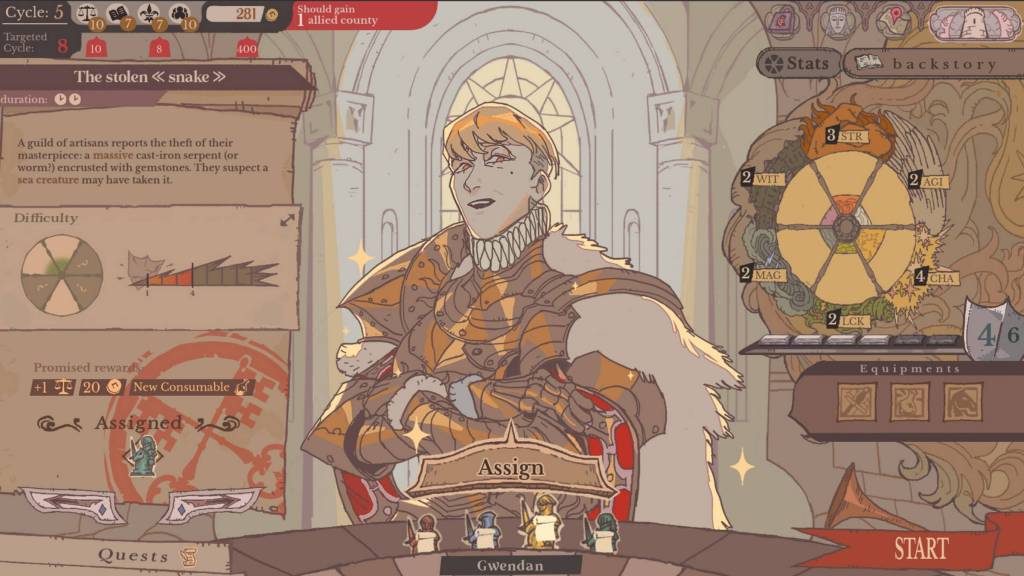
Sovereign’s Tower takes the initial concept of Dispatch to its full potential, where your divine ascension as a leader of a magical tower puts you in command of a Round Table full of Knights, Mages, and other fascinating medieval characters. To keep peace in the realm, you must manage the personal egos of everyone you recruit, delicately assigning them tasks through quests that need the right hand for the job. As your kingdom grows, tasks become more complicated, forcing you to rely on those you trust more and more.
Every single choice in Sovereign’s Tower has a key impact, as you manage a full court of unpredictable heroes who all have their own agendas. Learning how to judge the character of people in your service is crucial to success, so forming deep relationships will help you understand who is suited for what quests. As other rulers seek to challenge you, you must address a number of problems that affect your kingdom daily, creating a style of leadership that benefits your people the most.

The drama of this game comes from the careful political maneuvering of every character, with you encouraged to either stay loyal to some faces or stab them in the back for success. Keeping those around you happy sometimes works, but you often have to make tough calls that will cause your loyal court members to leave and swear vengeance against you. The affinities you build with Merchants, Scholars, Nobles, your Treasury, and ordinary People are complex, with advisors rarely offering clean solutions to the myriad of problems a kingdom’s leader must face.
Building Relationships With Different People Is Similar To Party Dynamics In Baldur’s Gate 3
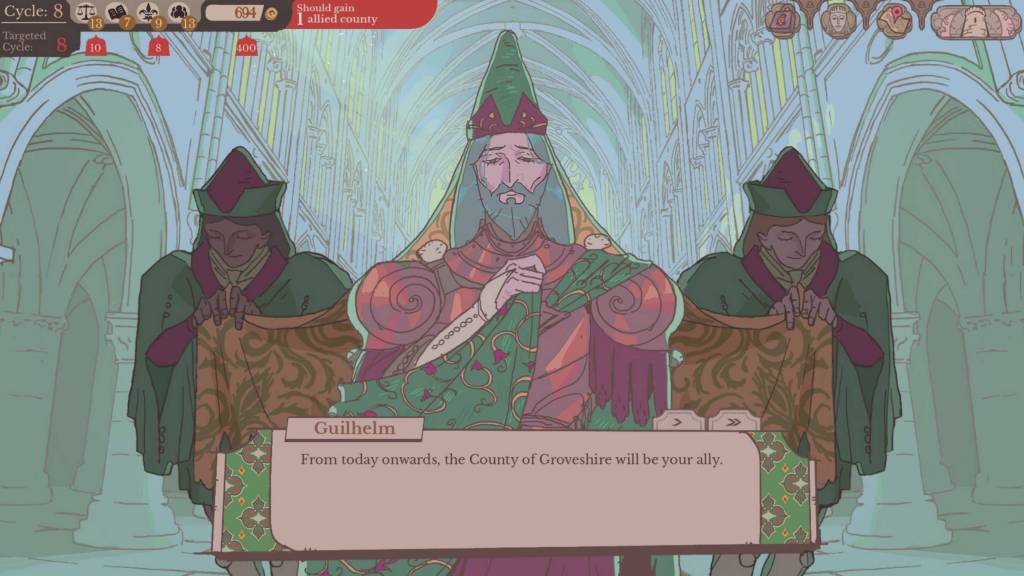
Similar to how party features in BG3 work, the relationships you build in Sovereign’s Tower last a long time, influencing how certain problems can be solved. Romance can cause entanglements too, with your personal bonds sometimes getting in the way of what the kingdom largely needs. When you interact with your selection of unique Knights, each of them have individual backgrounds you can dive into through meaningful conversation to better understand where their allegiances lie. Among each Knight, they have the following stats:
- Strength
- Agility
- Charisma
- Magic
- Wit
The combination of these skills are needed for specific quests, with some having higher chances of success if a character has a higher score in any one category. The difference between a Critical Success and Critical Failure is surprisingly thin, with a bit of luck involved similar to a d20 roll in BG3. Thankfully, if things go horribly wrong, a Demon can help you rewind time to make a more informed decision. As you expand your influence and annex new lands, new positions in your court will open up, with alliances building a stronger team of heroes at your side.
Sending Out Specific Faces For Jobs Based On Their Strengths Mimics Dispatch In Many Ways
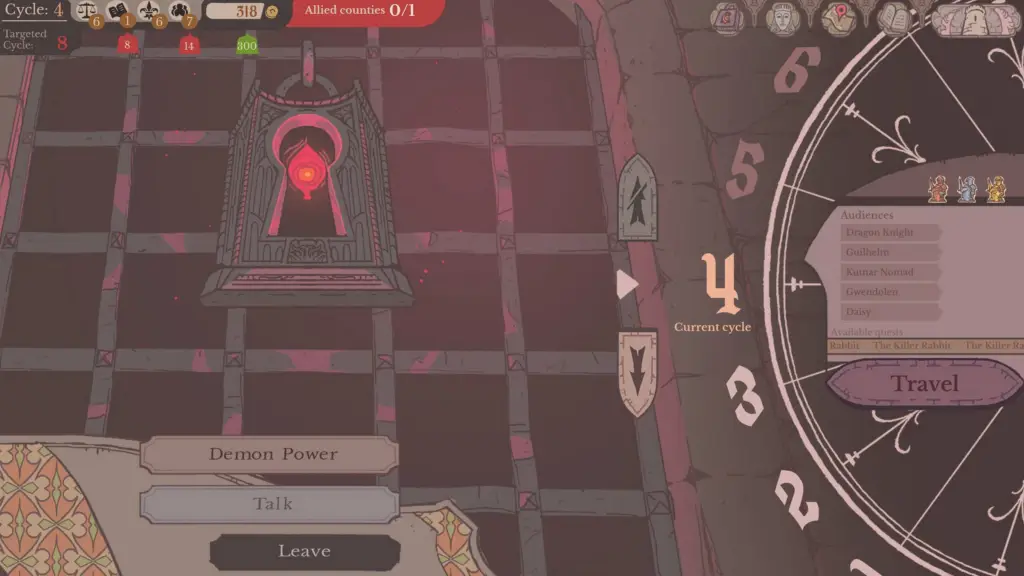
The statistics of Sovereign’s Tower is far more involved than Dispatch, or even the D&D mechanics seen in Baldur’s Gate 3. Some characters have secrets that prevent you from seeing the full picture of their strengths, but a helpful Intendant is there to gather dirt on your closest allies. Romancing statues can even aid you in personal bonds, giving you guidance on how to build trust with another character. Regardless of the information you obtain, though, crafting mechanics can give you an extra advantage as well.

Running into problems with fantasy companions is easier to fix through some of the features you unlock through Annexes of other lands. Some examples include the Witch’s Alchemy Room, where you can buy special potions and items to bolster the skills of Knights before they go off on missions. Upgrading and fixing weapons also gives your court the best opportunity to succeed, giving stat boosts or other bonuses depending on the character. By picking the right dialogue options too, your characters will have an easier time achieving victory for your growing kingdom.
Your Tower holds many secrets too, including new areas where other bonuses can be found. Unlike Dispatch, this game provides many, many ways to alter or modify your characters beyond simple dialogue choices, letting you build up loyal followers into reliable Knights to spread your will. With incredible art and many unpredictable moments to adapt to, Sovereign’s Tower is a unique take on the point-and-click genre that innovates on other popular titles that have come before.
What do you think of Sovereign’s Tower from its existing demo? Leave a comment below or join the conversation in the ComicBook Forum!
More Gaming
-

Image Courtesy of Kwalee/New Blood Interactive/DreadXP -

Courtesy of Bandai Namco