Adding a new mode is often the easiest way for a live game to signal progress. It creates fresh talking points and can briefly smooth over deeper frustrations. The problem is that novelty fades quickly, and once it does, the underlying structure of the game is what players are left with.
Videos by ComicBook.com
Recently, Highguard added a new 5v5 game mode after frustrations about its original 3v3 mode being far too small for the map sizes available. On the surface, it does succeed in addressing this issue, adding clarity, tighter pacing, and moments of genuine excitement that the game previously struggled to deliver. But dig even a little deeper, and it becomes clear that this mode does not really address Highguard’s biggest issues. The game still feels patchwork in ways that no ruleset change can fix on its own.
Highguard’s Gameplay Swings Too Wildly Between Highs and Lulls
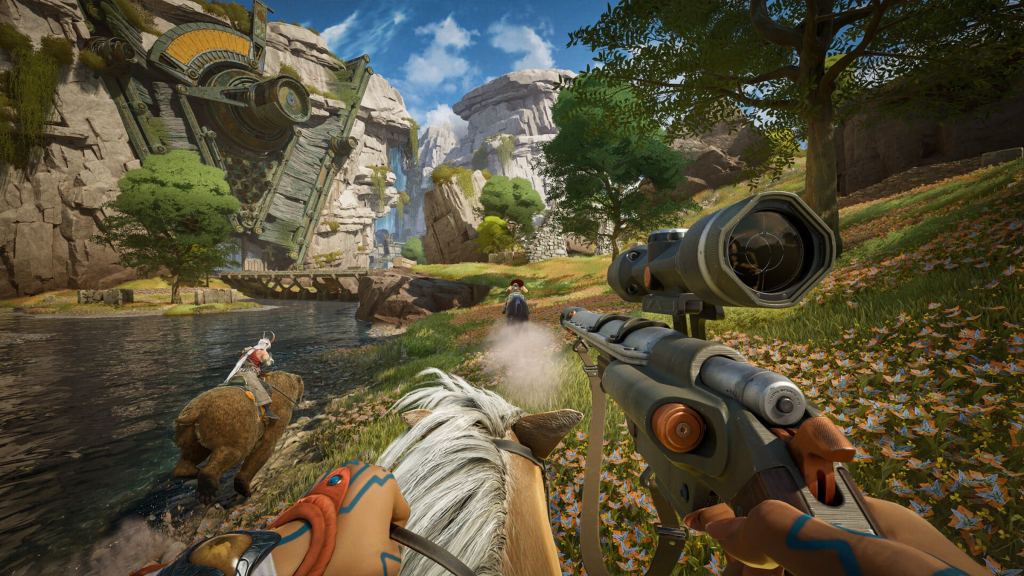
At its best, Highguard can feel sharp and engaging. A coordinated push, a clean ability combo, or a sudden momentum shift can briefly suggest a competitive identity worth investing in. The 5v5 format helps surface those moments more often by narrowing the chaos and giving players clearer objectives to rally around.
The issue is how quickly those highs collapse into lulls. Matches regularly fall into stretches where nothing meaningful happens, either because one team has snowballed too hard or because the systems do not provide enough pressure to force engagement, or worse, the systems encourage the lulls themselves. Instead of sustained tension, Highguard often delivers spikes of fun separated by long stretches of waiting for something interesting to happen. And no, mining rocks is not interesting nor fun.
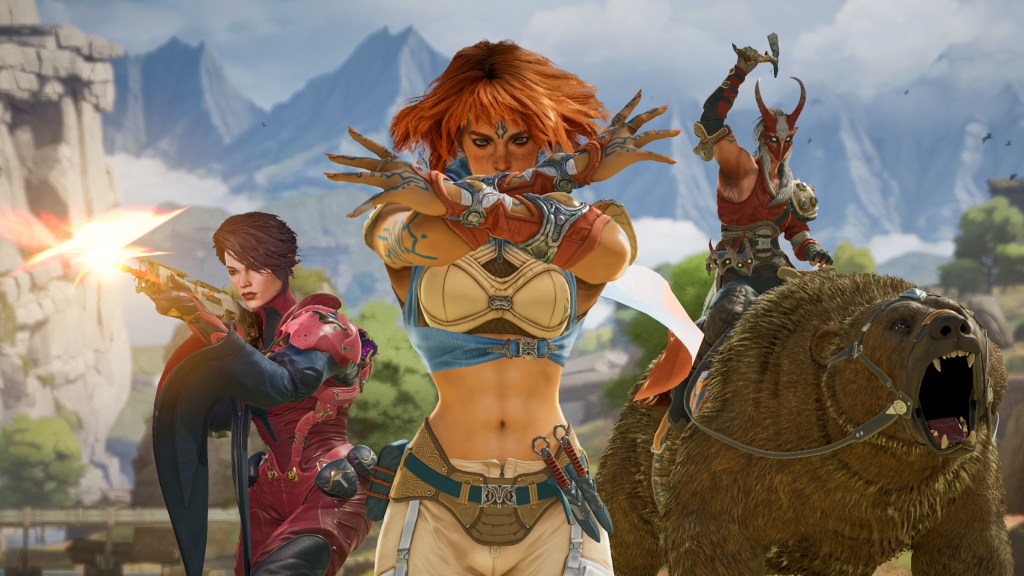
This inconsistency is not just a pacing problem. It points to a deeper lack of cohesion in the game’s design. Abilities, maps, and objectives often feel like they were built in isolation rather than as parts of a unified loop, which really adds the patchwork feeling. The result is a game that struggles to maintain momentum, even in a mode specifically designed to tighten and encourage more of it.
The 5v5 mode does improve readability and structure, primarily by giving players more to interact with in the game’s massive maps. However, it cannot compensate for a foundation that lacks an interesting flow. Competitive games live on rhythm. Players should feel like every decision nudges the match forward. In Highguard, too many moments feel inert, as if the game is waiting for players to manufacture excitement rather than generating it naturally.
Highguard Still Doesn’t Have a Character You Instantly Remember
Strong competitive games almost always anchor themselves with characters that stick. Before Overwatch even launched, players knew Tracer. Her personality, silhouette, voice, and playstyle were immediately readable. She gave the game an identity before anyone had touched a payload. She was basically the poster girl of the game, well before its release.
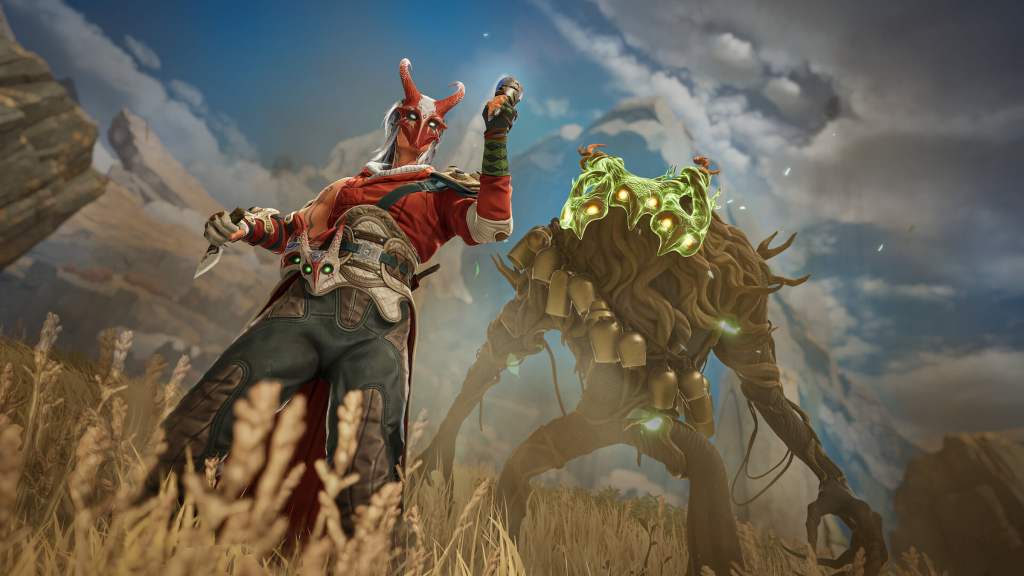
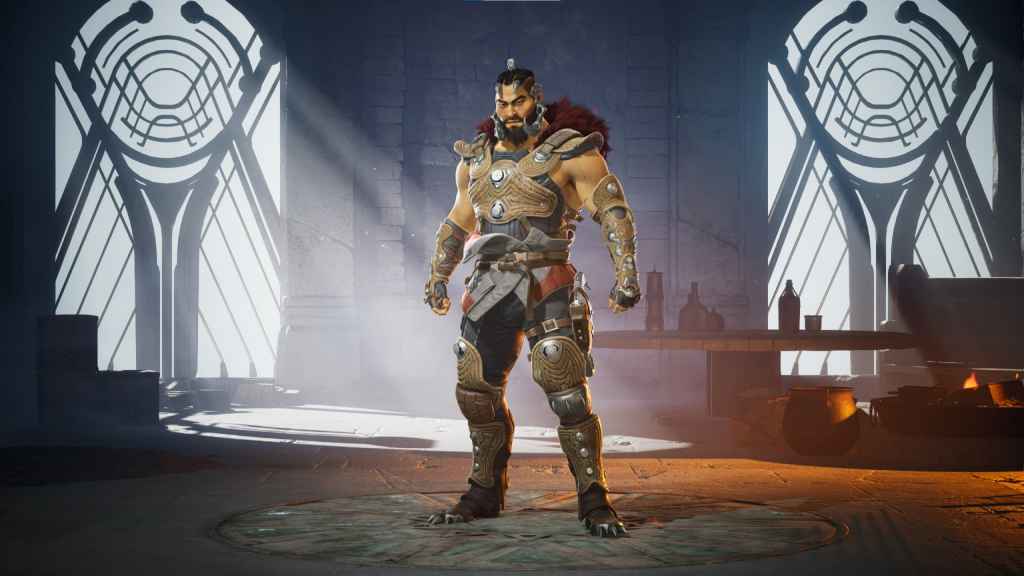
Highguard does not have that at all. Its cast feels serviceable but anonymous, built around familiar archetypes without the sharp edges needed to make them memorable. Characters are more than their designs, too. Each one needs a personality that resonates with the playbase in some way. The problem is that current designs blend together personalities that barely surface, and nothing about the roster demands attention outside of mechanical function.
This matters more than it might seem. Characters are not just tools; they are emotional entry points for people to care. Players will install a game just because they want to play the ditzy woman with wings because she’s charming. They want to play that big, burly ape with an intellectual personality. There is a resonance that must occur for players to care. That resonance gives players something to latch onto, something to main, argue about, and identify with. When a game lacks standout characters, it becomes harder to care about its long-term future, even if the mechanics are technically sound.
The problem is not that Highguard’s characters are offensively bad. It is that they feel safe and generic, as if designed to check boxes rather than make statements. In a crowded multiplayer space, that is a death sentence. Players remember bold choices, even flawed ones. They forget polite competence.
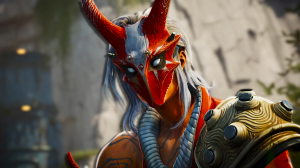
The 5v5 mode does nothing to address this absence. No amount of structural refinement can make players emotionally invest in characters who do not leave an impression. Without a face of the franchise, Highguard struggles to define itself beyond being another team-based game in an already saturated genre.
Highguard’s new mode is not useless. It adds moments of clarity and excitement that the game badly needed. But it also highlights how much work remains. Uneven pacing and a forgettable cast are not problems that can be patched around forever. Until Highguard commits to a stronger identity, both in how it plays and who it asks players to care about, no mode, no matter how well-intentioned, will be enough to fix what is holding it back.
What do you think? Leave a comment below and join the conversation now in the ComicBook Forum!
Most Viewed
-

Courtesy of Crunchyroll -

Image Courtesy of TOHO -

Image Courtesy of WIT Studio