The Legend of Zelda is one of the definitive video game franchises of the console market, a long-running series of massive adventures that have helped define the action-adventure genre as we know it. It’s an underlying game design that has been consistent across different generations of consoles and with a broad spectrum of players. More than anything, there’s a consistency that, while mocked by some, also makes it an enduring generational franchise.
Videos by ComicBook.com
However, there are some outliers in the series’ history, like Hryule Warriors. Debuting on the Wii U in Japan on August 14, 2014, this 12-year-old title was a completely different beast than most of the franchise. Although it maintained a lot of the visual markers and worldbuilding touches of the core series, it was also a very different game — which makes sense when one remembers this one was developed by Omega Force and Team Ninja as a Nintendo-themed answer to Dynasty Warriors. Over a decade later, the game still stands out for just how much it missed the core point of the Legend of Zelda franchise, even if it still managed to become a fan favorite sub-series.
Hyrule Warriors Misses The Point Of Legend Of Zelda
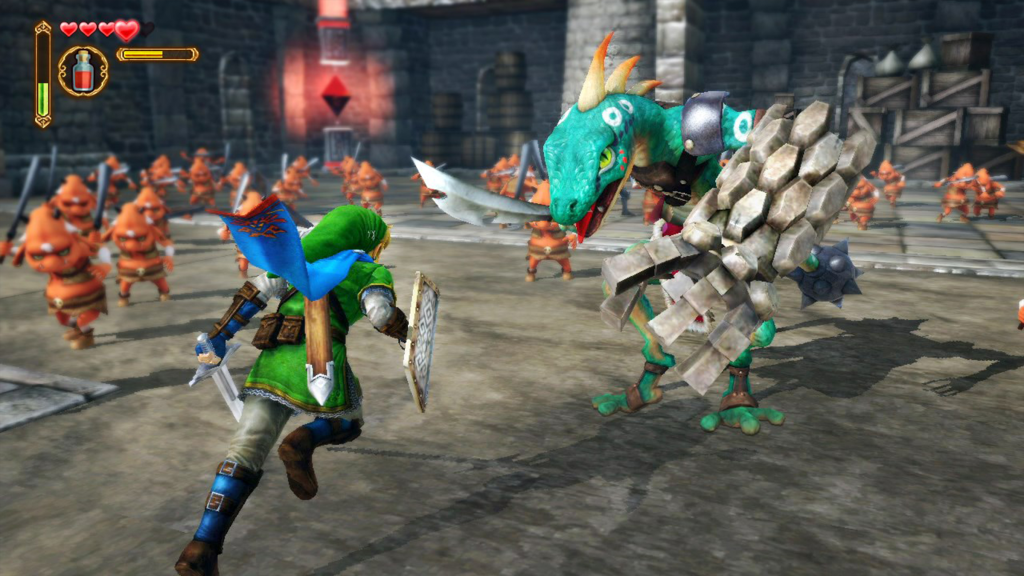
Hyrule Warriors may be a lot of fan-service-heavy fun for Legend of Zelda fans, but it has never really worked on a functional level as an entry in that series. One of the key aspects of Legend of Zelda has always been the immersive sense of adventure. The game formula, regardless of whether it is in 8-bit on the NES, with 16-bit pixel art, as clunky polygons on the N64, or any of the hi-def reinventions of the 21st century, that open landscape and natural excitement of extended exploration is the central mechanic. You find hidden treasures, you duel uncovered monsters, and you explore a world. In the ever nebulous action-adventure genre, the Zelda franchise has always leaned more into the latter element far more than the former. Hyrule Warriors flips that around and fixates on the massive scale and big action, replacing the deliberately timed combat of the mainline Zelda series with waves of disposable flunkies that lack any of the distinct personality or design aesthetic due to the inherently repetitive nature of this Dynasty Warriors-style game design.
I say all this as a fan of that series, which embraces an over-the-top and bombastic approach to a typically rewarding effect. It’s fun to play those games, and Hyrule Warriors has that kind of enjoyment too. The problem is that it does this at the cost of the game design identity that has always defined the series. Even the embrace of multiple playable characters with different move sets betrays the typical way Legend of Zelda gives players a relatively blank slate in Link that they can project their version of the experience on. By contrast, Hyrule Warriors leans into the extended cast of characters for gameplay versatility, losing a key aspect of that Zelda experience. Hyrule Warriors just isn’t a Legend of Zelda game in its very DNA, even despite all the cameos and fan service.
I Still Love Hyrule Warriors, Despite Myself
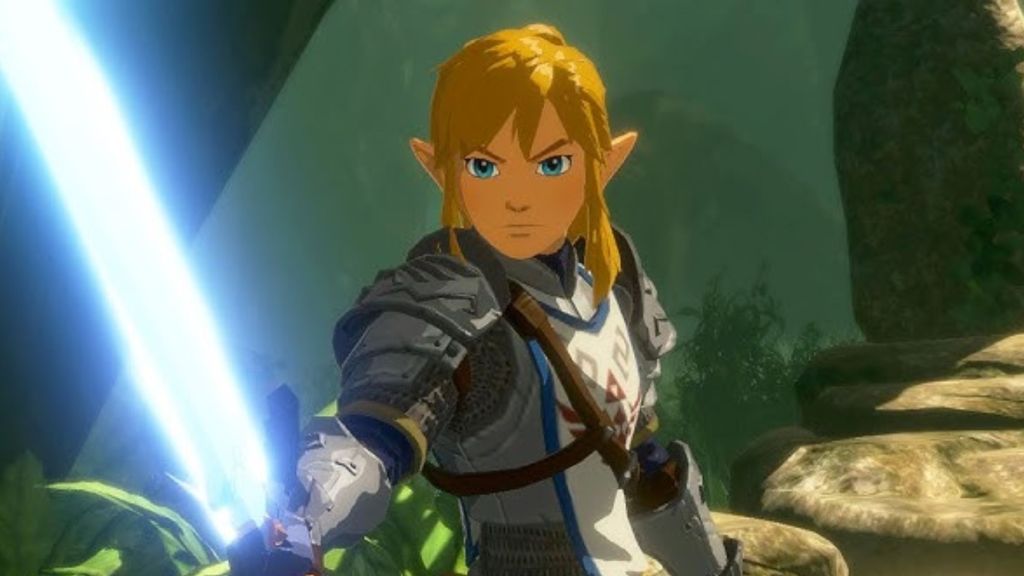
Despite all of that, there’s something just so fun about Hyrule Warriors that I just can’t help but embrace. The series is a love letter to the entire breadth of the franchise, with subtle allusions and subtle easter eggs hidden throughout the landscapes. New characters like Cia offer a dinstict perspective on the cycle of life, death, and rebirth rooted in the story. It’s an excuse to revisit the memorable bosses of previous games without undoing the impact of their original storylines and defeats. The sequels, Age of Calamity and Age of Imprisonment, use the loose connections to the canon to their full advantage to create new settings and worlds full of modern fan favorites. The stories have little do with the actual stakes and scope of the mainline entries, but they’re so weird and wild that they can’t help but be charming. The chance to play as other characters like Midna is a blast for old-school fans of the series, while wrecking through hordes of soldiers as Ganondorf does have a vindictive sense of fun given how often players have been on the receiving end of that vicious powerhouse.
The power fantasy of Dynasty Warriors gameplay may not be a perfect fit with Legend of Zelda, but it does still remain somewhat fun regardless. It doesn’t really fit into the overarching mythology and may just be odd at times when it could be epic, but there’s a “go for broke” sense of fun baked into Hyrule Warriors that just feels infectious at times. The result is a game that’s just plain fun, with all those Legend of Zelda touches just adding to the big showy elements. It’s a series that, as a die-hard Zelda fan, I should see as pure fan service with none of the weight or texture that makes me love the main games so much. Conversely, that fan service can still make me smile — and the action, while nothing like the core Zelda experience, scratches a different gamer itch. Even if I don’t care for them necessarily as Legend of Zelda games, Hyrule Warriors is a blast as a completely different type of game with those visual markers.
More Gaming
-

Courtesy of Wizards of the Coast -
Image Courtesy of Kwalee