Boomer shooters are incredibly prevalent for a multitude of different reasons. For one, they’re significantly cheaper to develop, given their retro aesthetics. They also generally move at a high speed that’s different from many of the more realistic modern shooters. And nostalgia is always going have a certain appeal. Nostalgia, however, for shooters is often relegated solely to that mid-1990s style, but that’s not the only type of nostalgia to mine. And thankfully, Sprawl Zero understands that.
Videos by ComicBook.com
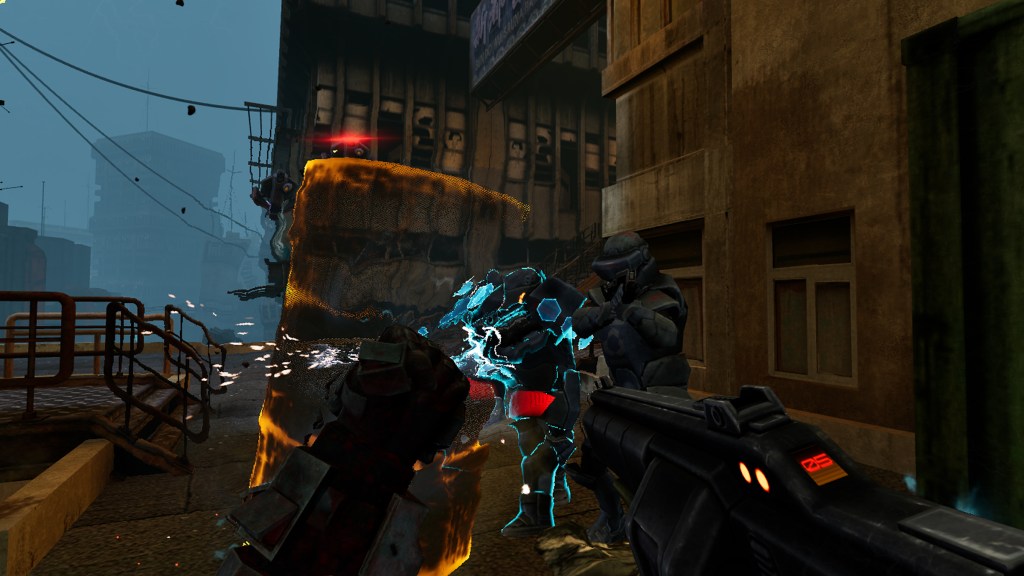
Sprawl Zero instead pulls heavily from the early 2000s era of first-person shooters, including games like Halo: Combat Evolved, Half-Life 2, and F.E.A.R. These references are even explicit, at times. Sprawl Zero‘s heavy emphasis on slow-motion gunplay evokes F.E.A.R. Players can toss bits of the environment at enemies à la Half-Life 2‘s Gravity Gun. And there’s even a club-like weapon that is quite similar to Halo 3‘s Gravity Hammer.
Sprawl Zero‘s Grimy Visuals and Techno-Rich Soundtrack Perfectly Evoke the 2000s
But these small overlapping similarities are just part of the overall vibe that demonstrates how deeply Sprawl Zero is spiritually linked to that trio. It has the muddy, brown and orange-ish textures that were prevalent in that era and, when played at modern resolutions, looks as sharp as a 2003 game being played on a PC from 2008 to show off a new graphics card. Not every level is bathed in brown, but this description helps paint a picture of the dourness of the world that permeates even when the colors change.
The soundtrack also does quite a bit of heavy lifting placing players in that era. It’s full of the early turn of the century techno that pounds hard when the bullets are flying but also brings in the kind of chanting vocals that would fit right into Ghost in the Shell‘s soundtrack. It all crescendos with “mirRor” by bødyWash, which is from 2024, but absolutely feels as though it came out two decades ago. It’s a Creed-like butt rock anthem that would be the title song of the soundtrack from an old action movie with 21% on Rotten Tomatoes, and it’s a perfect match for Sprawl Zero‘s credits.
Sprawl Zero nails the predictable presentation it is going for, and its gameplay is solid and isn’t too dissimilar from its influences. Firefights are quite fast and depend on the player’s ability to use everything they can to take out enemies. Guns can only fire what’s already in the magazine and must be tossed after they dry up. Throwing weapons and seamlessly snatching a new one off a corpse is always a thrill.
Certain oddities hold it back from reaching its true potential, though. Players can’t sprint while using the gravity tethers, which unnecessarily slows down the pace and makes it too easy to drop a slab of concrete that was intended to go through an enemy’s torso. Shields are also annoyingly resilient (something the developer addressed in a recent patch). It feels as though chucking objects should damage said shields more, which would give more importance to the gravity tether and open up a more involving loop that would have players throwing objects to pierce shields and then hurling bullets to land the killing blows. Bosses are limited in their design, too, since the low ammo count means they need to die quickly or constantly have grunts flood in order to resupply players with fresh guns.
Overall, having to constantly switch weapons and stay on the move makes Sprawl Zero‘s combat decent enough, but it’s obvious how it could be further streamlined. The aforementioned update has moved the game in the right direction, so hopefully more patches like this are in the works. It already has an interesting twist stemming from the more liberated design present in the shooters of old and a few tweaks could let it hit its full potential.
Sprawl Zero Should Inspire More Teams to Look Into This Era of Shooters
Even with its stumbles, there’s a charm to this generation of first-person shooters worth emulating. They’re not quite boomer shooters, yet they also aren’t exactly the Call of Duty-esque ones that followed. The titles in this genre from the early 2000s weren’t yet swayed by Call of Duty’s push toward realism and were often more unique as a result, something most cleanly represented in the now-dead TimeSplitters series. Shooters were more creative when they weren’t finding a new historical war to slot themselves in. They had some of the design principles of boomer shooters but weren’t completely handicapped by realism just yet.
The ability to strike between two eras also applies to the visual appeal of this middle generation. While pixel art has its place, it’s not uncommon, given the persistence of homages and re-releases. This is what makes the specific look 2000s shooters have so appealing. It’s still a cost-effective measure that doesn’t call on teams to spend millions of dollars rendering pores and peach fuzz and means the games in question can still achieve a retro look that isn’t as ubiquitous.
Developer Maeth has dabbled in this specific niche before with Sprawl Zero‘s predecessor Sprawl, which was more or less like if a cyberpunk Doom Eternal hit the PS2. However, there should be more developers looking to this period in shooter history and its brown-orange levels, techno-rich soundtracks, and more fantastical mechanics. DOOM and its ilk changed shooters and should be respected through modern interpretations. But a lot of the other first-person shooters that came after also have value, and it’s up to more teams to realize that.
What is your favorite first-person shooter from the early 2000s? Tell us about that game and why you love it in the comments.
More Gaming
-

Image Courtesy of Sony Interactive Entertainment