There are moments when a game does more than just succeed. It resets expectations and quietly redraws the boundaries of what players believe a genre can be. Baldur’s Gate 3 was one of those moments, not because it chased trends, but because it committed so fully to craft, player freedom, and confidence in its own systems.
Videos by ComicBook.com
That is why the question of what comes next matters so much. With Baldur’s Gate 3 now firmly in the rearview mirror and Larian Studios stepping away from Dungeons and Dragons, curiosity naturally shifts toward Divinity. Not just a new Divinity game, but a post–Baldur’s Gate 3 era Divinity, shaped by everything Larian learned while building the most influential CRPG in years, with none of the guardrails or obligations of a licensed universe.
How Baldur’s Gate 3 Changed the Ceiling for CRPGs
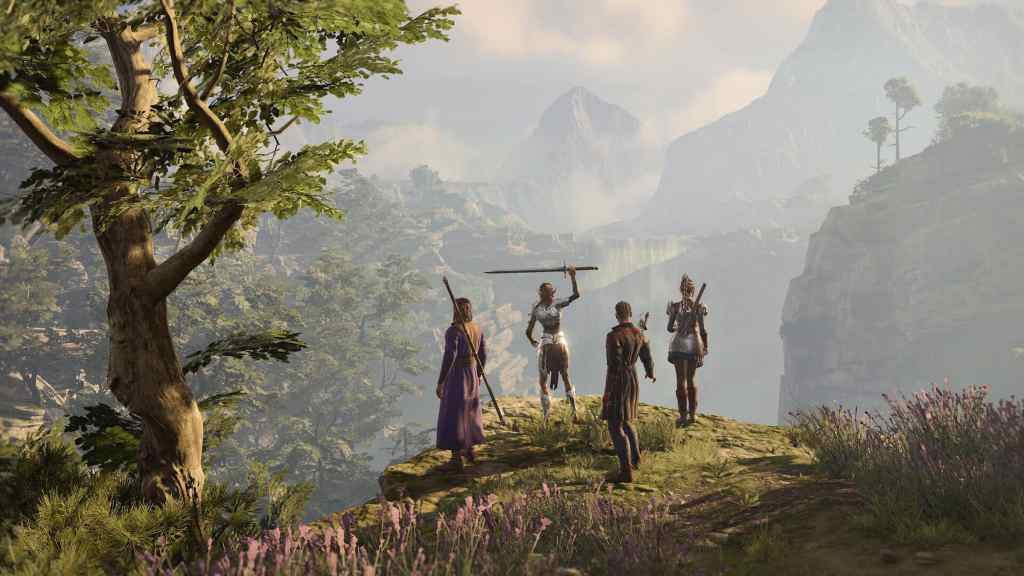
Before Baldur’s Gate 3, Larian was already respected. Divinity: Original Sin and Divinity: Original Sin 2 were beloved by CRPG fans who valued systemic design, emergent combat, and stories that reacted meaningfully to player choice. But Baldur’s Gate 3 pushed those ideas into a completely different weight class, and reshaped the definition of what that means in an RPG.
The most obvious shift was production value. Fully voiced companions, cinematic conversations, reactive cutscenes, and a sense that nearly every decision had tangible consequences became the baseline, not the exception. Larian showed that CRPGs did not have to compromise on presentation to preserve depth. That matters for Divinity because players are no longer going to accept a step backward in immersion or polish. Frankly, it wouldn’t make sense for Larian to move the goalpost backward themselves, for themselves.
More importantly, Baldur’s Gate 3 normalized complexity without making it feel hostile and overbearing. It invited players into deep systems with confidence, presenting in ways that felt welcoming, even to those who know the rules already. This aspect isn’t something new for Larian, though. The developer has always been good at this, going back to the original Divinity and even the experimental ambition of Dragon Commander, but Baldur’s Gate 3 proved that a massive audience will engage with dense mechanics if the game respects their intelligence and the content is presented in a welcoming way. A future Divinity now inherits that expectation. It cannot simply be Divinity: Original Sin 3 in spirit alone. It has to feel like the next step forward in how CRPGs communicate depth to players.
What Divinity Gains Without D&D’s Rules and Lore
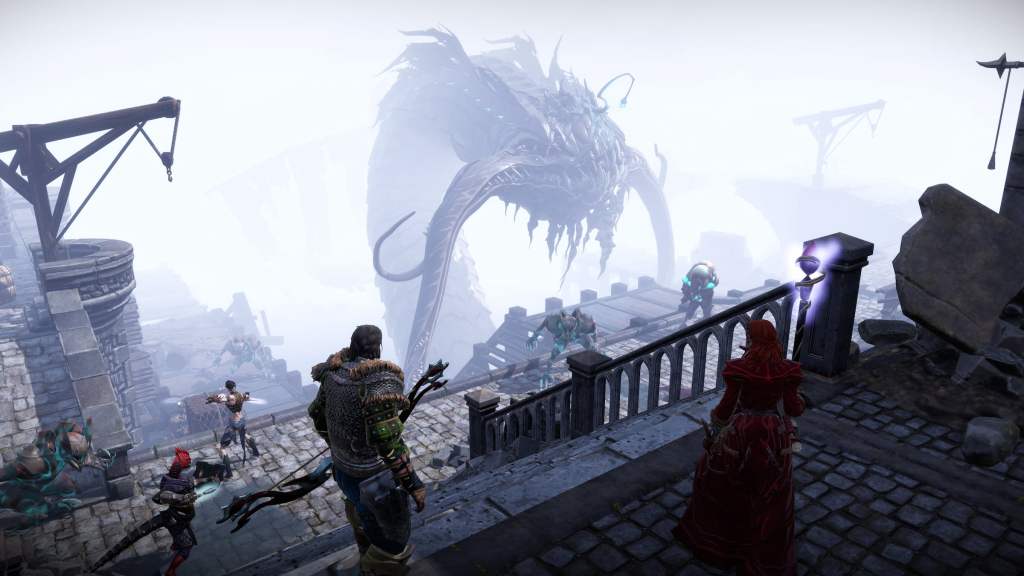
As iconic as Dungeons and Dragons is, it came with significant limitations. Spell lists, class structures, and lore expectations shaped what Baldur’s Gate 3 could and could not do right from the onset. Larian worked wonders within those boundaries, managing to even weave a bit of their Divinity juice into the mix, but true Divinity exists in a space where the studio answers only to itself.
That creative freedom means Larian could do something utterly incredible, if BG3 is anything to go by. Divinity’s magic system has always leaned toward experimentation, from elemental interactions to status effects that feel more like toys to exploit than rigid rules. Without D&D’s framework, Larian can reimagine progression entirely, blending narrative identity, combat roles, and player expression in ways that feel more fluid than traditional classes.

There is also the matter of tone and worldbuilding. Rivellon has always been a strange place, willing to mix sincerity, oddity, absurdity, and melancholy in the same breath. Baldur’s Gate 3 embraced humor, but Divinity has historically leaned harder into weirdness and surprise. A post-Baldur’s Gate 3 Divinity could lean fully into that identity again, using its own lore to explore themes that might have felt out of place in the Forgotten Realms. Or, it could dive down a new rabbit hole that has yet to be touched on or even discovered.
Perhaps most exciting is how Larian could push reactivity even further. Baldur’s Gate 3 was reactive within the constraints of a known universe. Divinity has no such burden. Major story shifts and mechanical consequences could become even more extreme when there is no expectation of canon preservation or franchise consistency. The fact that Divinity is known for its weirdness means that even more of that, pushed to higher boundaries, will come off as normal. This is a great thing for Larian, having built itself on Divinity’s name.
The Pressure of Following a Genre-Defining Success
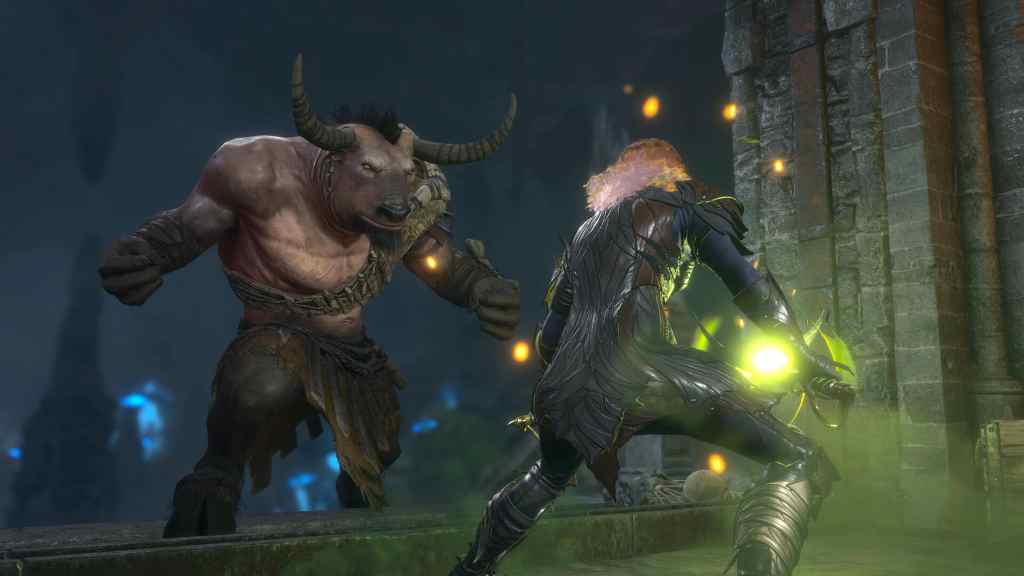
Of course, all of this freedom comes with an enormous amount of pressure. Baldur’s Gate 3 forcefully seized the throne for CRPGs as a whole; it raised expectations specifically for Larian. Anything they make next will be compared to it, fairly or not.
This is not unfamiliar territory for the studio. Divinity: Original Sin 2 lived in the shadow of its predecessor, a significant success for Larian in its own right, and still managed to refine and expand nearly every system. Dragon Commander was a risky hybrid that did not fully land, but it demonstrated Larian’s willingness to experiment even when the outcome was uncertain. That history suggests a studio that is not interested in playing it safe just to chase another hit.
Still, the stakes are different now. A post Baldur’s Gate 3 Divinity cannot simply be good. It has to justify why it exists in a world where Baldur’s Gate 3 already set such a high bar. This means Larian pretty much needs to redefine the CRPG genre a second time, with their own IP, and without D&D’s support. That likely means deeper systemic storytelling, bolder narrative risks, and mechanical ideas that feel surprising even to longtime fans.
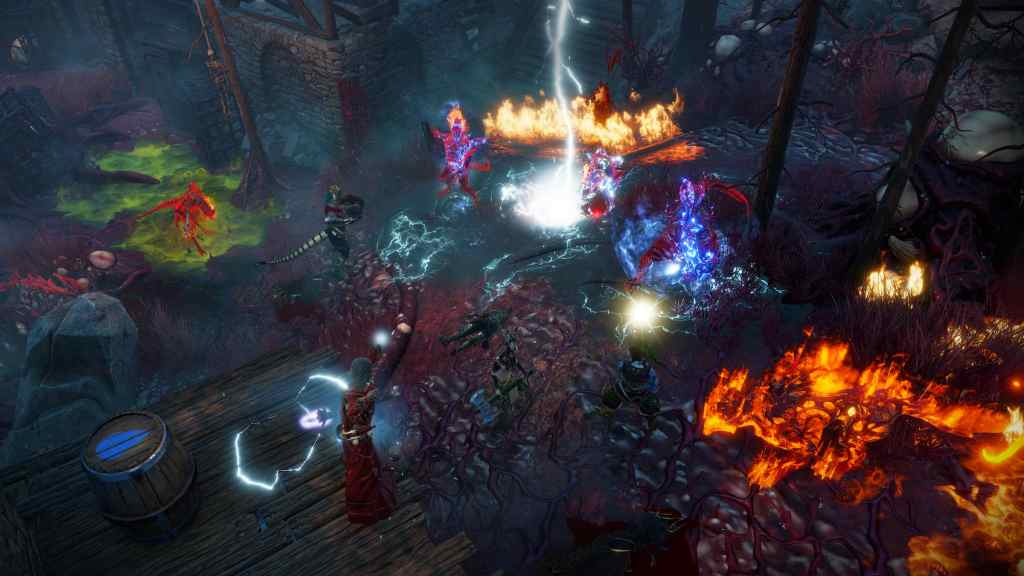
The safest prediction is that Larian will not try to recreate Baldur’s Gate 3 beat for beat. Divinity has always been its own thing, and the smartest move may be to embrace that identity harder than ever. If Baldur’s Gate 3 was about perfecting a classic formula, then the next Divinity could be about bending and breaking that formula in ways only Larian would attempt.
In the end, curiosity is the right response. Not concern, not hype fatigue, but genuine interest. A post-Baldur’s Gate 3 era Divinity represents a studio at the peak of its confidence, returning to an IP that helped define its voice. Whatever it looks like, it almost certainly will not be small, safe, or predictable, and that alone makes it one of the most fascinating projects on the horizon.
What do you think? Leave a comment below and join the conversation now in the ComicBook Forum!
Most Viewed
-

Image courtesy of Warner Bros. Pictures -

Image Courtesy of TOHO -

Image Courtesy of Crunchyroll