Mario Kart has been an interesting case study for the evolution of racing games. Launching on the Super Nintendo in 1992, the racing game was a straightforward title that quickly embraced the “easy to learn, hard to master” approach that often defines the best Nintendo titles. As the series has evolved, the core gameplay has remained the same, even as the graphical elements have improved and the gameplay options have become more complex.
Videos by ComicBook.com
Mario Kart World is the latest entry in the series, speaking to how the franchise’s originally limited tracks have expanded into an open-world setting full of wonder and challenge. Along the way, though, one mechanic from the very first game in the series has evolved from a secondary skill set into a necessary talent. Here is how drifting became one of Mario Kart‘s most important skills to master.
How Super Mario Kart Established Drifting
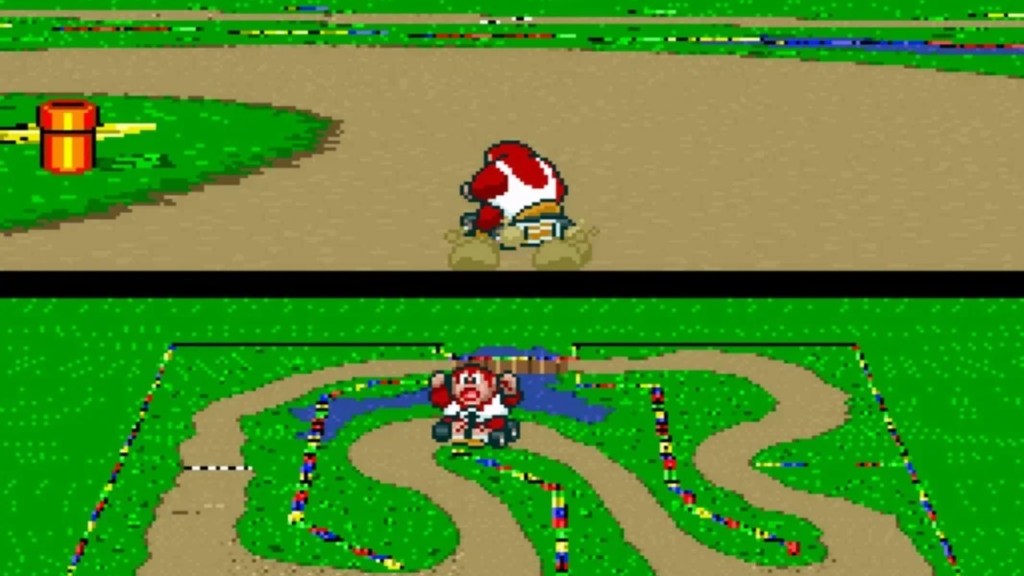
Drifting in racing games used to be a tricky skill that gave expert players a minor edge over their opponents, but Mario Kart titles increasingly turned it into a necessary skill to win races. In older racing games, the focus was entirely on successfully traversing the track above all else. Even in Super Mario Kart, the key to victory was knowledge of the tracks and skilled driving around them. Although drifting could be found in older titles like the arcade game OutRun and the PlayStation launch title Ridge Racer, drifting became more common as time wore on.
An example of this evolution can be seen across Mario Kart games. The inaugural entry in the series, Super Mario Kart, featured drifting as an option for races that was hard to master. While it can be a useful tactic in that title, it’s not necessarily a requirement for players to win. In fact, drifting was primarily a secondary skill that only advanced racers really tried to perfect, as a poorly timed drift could ruin a race. You could still win a race fairly handily so long as you kept your focus on the track. Mario Kart 64 made drifting more important, adding a minor speed boost for successfully holding a drift for an extended period. However, it was still far from neccesary.
With each subsequent Mario Kart title, though, drifting became more and more crucial to the experience. Actually pulling off a drift at the right time would deliver a sudden burst of speed, which could give the player an edge on the right turn or in a sudden straightaway. Races could be determined one way or the other on a good drift. However, drifting became something entirely different once racing games began to embrace and experiment with the 3D game design, leading to more evolution in the Mario Kart titles.
When Drifting Became The Norm
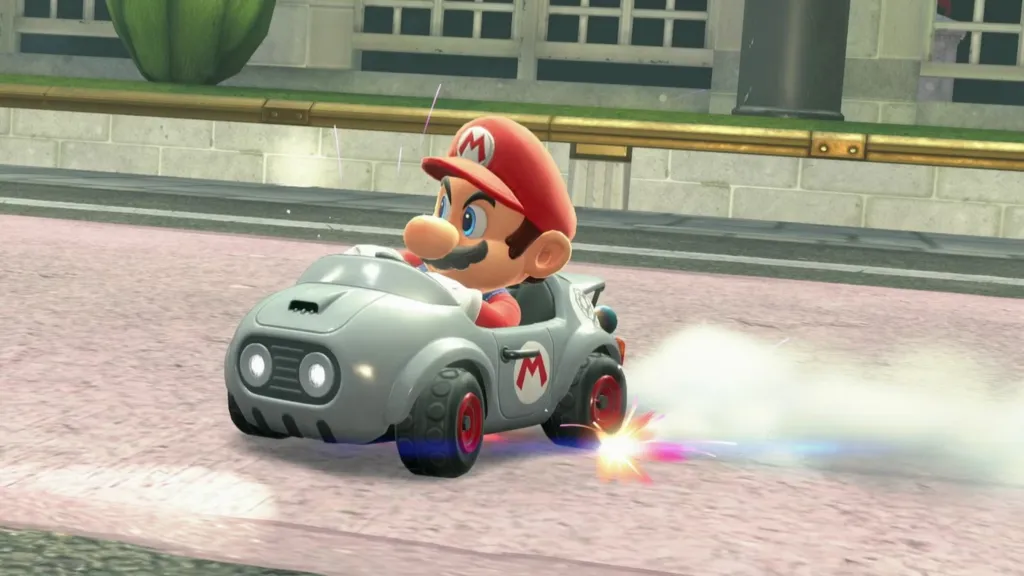
Mario Kart 64 made drifting important, but Mario Kart: Double Dash! made it crucial. That game increased the speed boost that came from successfully pulling off a longer drift, visually signified by sparks from behind the car turning blue. This was a useful tactic in Double Dash in particular, especially considering how jumping the karts wasn’t nearly as vital to start the movement. These little bursts of speed became the key to avoiding traps on the map or maneuvering around larger maps.
This also gave Double Dash a gameplay connection to other racing games of the era. Increasingly, realistic racing games like Gran Turismo and arcade-heavy titles like Burnout all started using drifting as a more important mechanic. It stopped being a way to move around the map and instead became the primary form of tricky gameplay, allowing players to side-step hindrances in the road and often rewarding a good one with a stronger racing position or a sudden burst of speed. It stopped being a trick and became mandatory. Even then, it doesn’t compare to what drifting has become in modern racing titles.
Mario Kart Took Drifting From A Minor Skill To A Mandatory Tactic
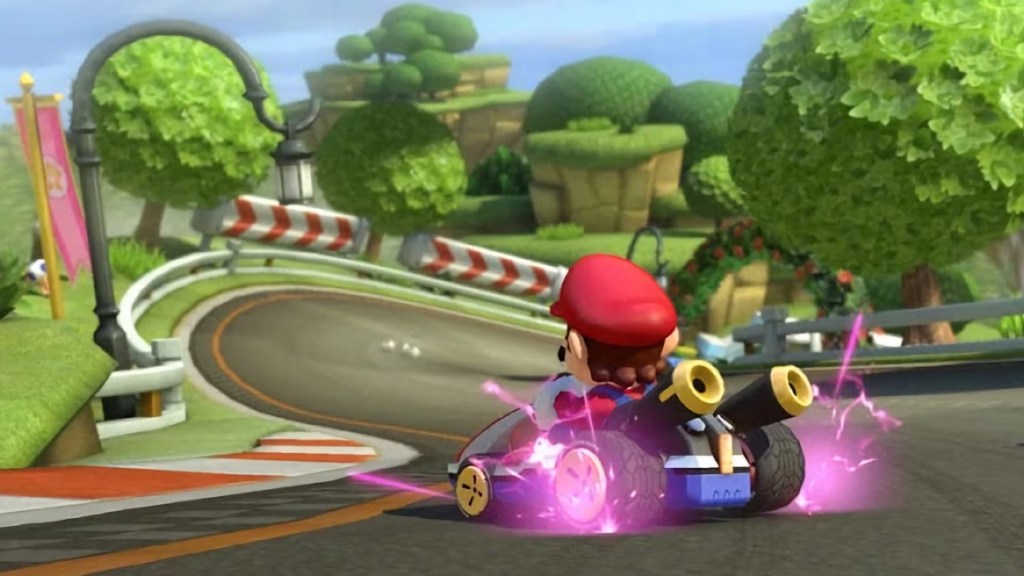
A prime example of how drifting has evolved in racing games can be found in comparing the drifting from Super Mario World to how it works in titles like Mario Kart 8 Deluxe or Mario Kart World. Those games feature maps that increasingly rely on drifting to successfully run. It’s not even just about getting a speed boost, but actually maneuvering around the maps requires good timing on the sudden turns that drifting can allow.
The speed boosts provided by drifting have transformed into an entire strategy, with players hopping from one drift to another to increase their speed and gain sudden power boosts. Mario Kart World leans even further into this, challenging players to take sudden bursts of speed in the wider worlds by sliding across the road and picking up quick bursts of speed.
It’s a fascinating evolution of a gameplay mechanic that’s been there since the beginning of the series. Drifting was a useful trick to master originally, but it wasn’t always necessary to win. As the series has gone on, it’s become more crucial for any player who seeks to earn a victory on the track. It’s a game mechanic that’s been around for decades, but has become mandatory for fans who want to actually win.
Most Viewed
-

Courtesy of Lionhead Studios -

Image via Prime Video -

Courtesy of Toei Animation