In the years before mobile phones and modern consoles could bring players to entirely new worlds, it was the arcades that served as the primary meeting place for gamers. Arcade cabinets were the name of the game, with some consistent genres often dominating any room they were in. This included the run-and-gun side-scrollers, a genre often best exemplified by the success of Contra.
Videos by ComicBook.com
Almost a decade after that game launched, however, one of the best examples of that genre ever hit arcades around the world. Launching on April 19, 1996, SNK’s Metal Slug quickly became a favorite thanks to its blend of tight gameplay, challenging levels, and charming presentation. Thirty years later, Metal Slug remains one of the best examples of how the arcade era could refine a genre into something special — and is still one of this writer’s absolute favorite arcade games.
What Makes Metal Slug So Special?
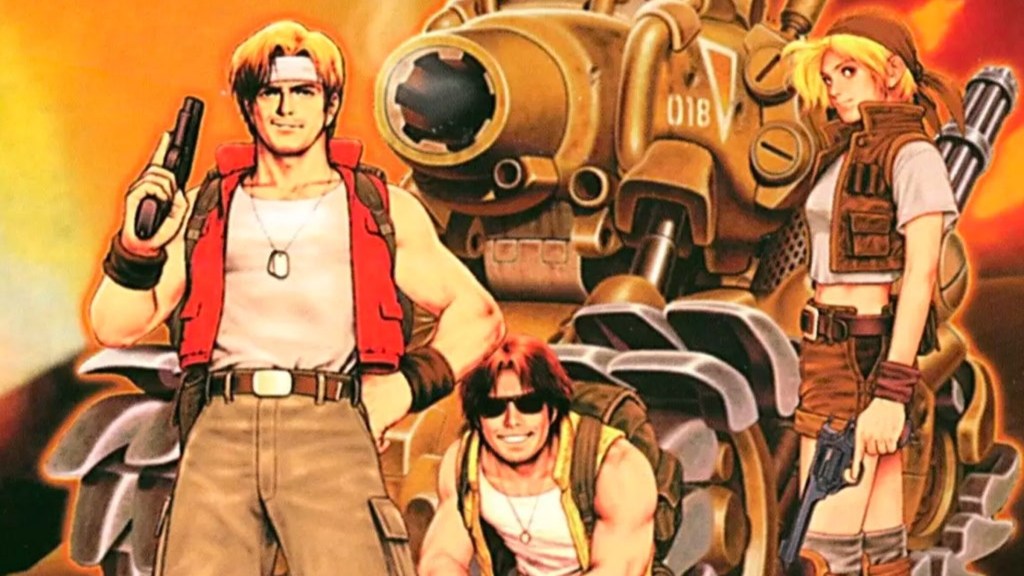
While 3D games and home consoles were increasingly taking a foothold in the gaming culture, Metal Slug was a decidedly simple and very entertaining take on the previous decade’s side-scrolling shooters. At its core, Metal Slug‘s underlying gameplay doesn’t diverge too hard from something like Contra. The arcade game allowed for two players and put them against hordes of enemy soldiers. Designed for the MVS arcade system that helped propel SNK to success in the era of widespread arcades, the 2D visuals for Metal Slug made it more easily adaptable for arcade machines and later consoles like the Neo Geo. However, the technological advancements made before the game launched allowed the developers to really use the pixel art to its full potential.
The backgrounds were well illustrated to add depth to the world, while the characters themselves were made up to be somewhat cartoony in comparison to similar titles. This allowed the game to efficiently showcase personality and land unexpected comedy beats, giving the entire game a more charming presentation than most of its peers. The game followed Captain Rossi and Lieutenant Roving of the Peregrine Falcon Strike Force, two commandos assigned to a mission to bring down the villainous General Donald Morden in an effort to undermine his plans for world domination. The gameplay was tightly constructed by Nazca Corporation, which was later absorbed by SNK.
Rather than just give the player simple enemies to overcome, the series gradually embraced a brighter and lighter tone to great effect. Players found themselves dealing not just with villainous commandos but with armies of aliens, mummies, and zombies. Combat put emphasis on moving quickly to adjust to invading armadas while also using machine guns, grenades, and plenty of other firearms to bring down massive tanks and small armies. There’s even a fun tweak on the formula in the form of a close-quarters attack that can deliver plenty of damage to an enemy if the player gets close enough — although that tactic also risks leaving them exposed. This played into the game’s deceptive difficulty, with single-hit kills and overwhelming forces presenting a uniquely difficult challenge for players.
Why Fans Loved (And Still Love) Metal Slug
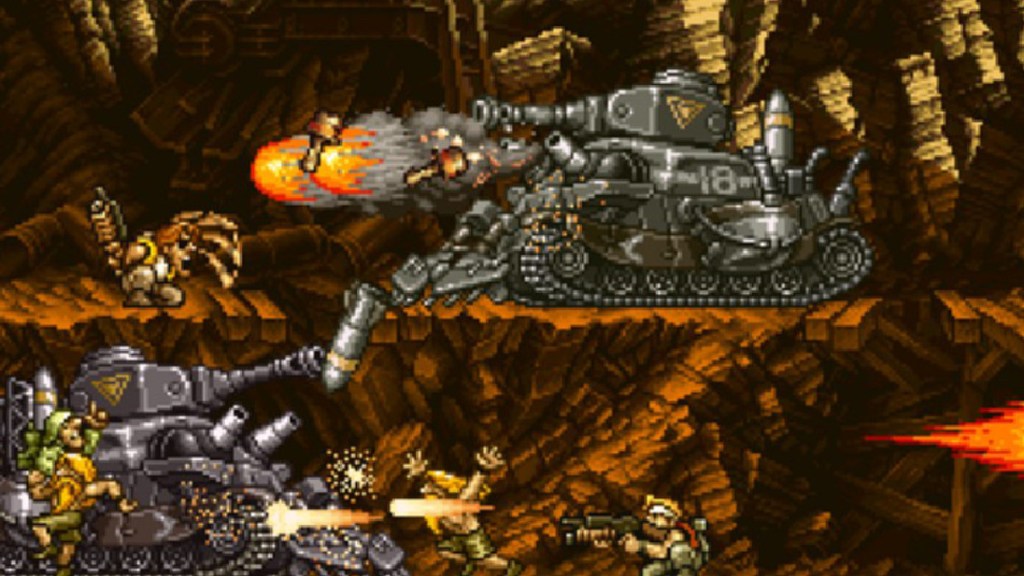
Metal Slug may have been hit with harsh reviews from critics at the time, but the game quickly became an international success for SNK. The arcade game was a smash, quickly leading to ports of the game to home consoles. In an era where early 3D graphics could quickly look dated and forced players and developers alike to rethink gameplay fundamentals, Metal Slug was a tough-as-nails and incredibly charming throwback to earlier eras of the medium. Looking back, it’s easy to see why people like me fell in love with the game. Despite the intense difficulty, there was an inherently fun layer to the colorful settings and bombastic battles that really lent itself well to the game and helped it stand out from the competition.
The gameplay was hard but never necessarily felt cheap. Those challenging aspects made the moments of becoming overpowered — such as jumping into a walking tank yourself — all the more rewarding when they occurred. Metal Slug refined the side-scrolling gameplay of the past in a way that felt effective, engrossing, and entertaining. There’s a reason it resonated with young gamers, particularly, who enjoyed the tight gameplay and were drawn in by the charming visuals, giving us plenty of reason to keep depositing quarters into the machine for another try and advance forward. The game eventually received several sequels and compilation collections, ensuring that later generations got the chance to also test their mettle.
Today, it’s easy to find ports of Metal Slug on various platforms. Despite the thirty years that have passed since the game launched, Metal Slug retains the charming worldbuilding and effective gameplay that made it so successful in the first place. Metal Slug is one of my favorite arcade game franchises ever, and the original game does a great job of challenging players with enough style that it didn’t become frustrating. It’s the kind of timeless game design that developers of the era were striving for, resulting in something that remains as fun to play now as it was years ago.
More Gaming
-

Image courtesy of Moon Studios GmbH -
Image courtesy of Bethesda