Nintendo has had plenty of successes over the years, which have helped cement it as one of the golden standards of the gaming world. Mario, Link, Donkey Kong, Samus, and plenty of other iconic characters have endured across generations of games. As the years have gone on, the more iconic aspects of the franchise have gained more prominence, while newer IP — while still popping up here and there — often failing to reach the heights of the more entrenched franchises.
Videos by ComicBook.com
However, one major exception to that debuted twenty-four years ago and became one of Nintendo’s biggest modern successes. The strange real-time strategy game incorporated a unique aesthetic and a surprisingly dark undertone, befitting a game that forced players to confront the harsh realities and quiet wonders of nature while surviving in a harsh environment. The result was a surprising hit for Nintendo that has steadily become one of Nintendo’s biggest homegrown successes of the 21st century.
How Pikmin Grew
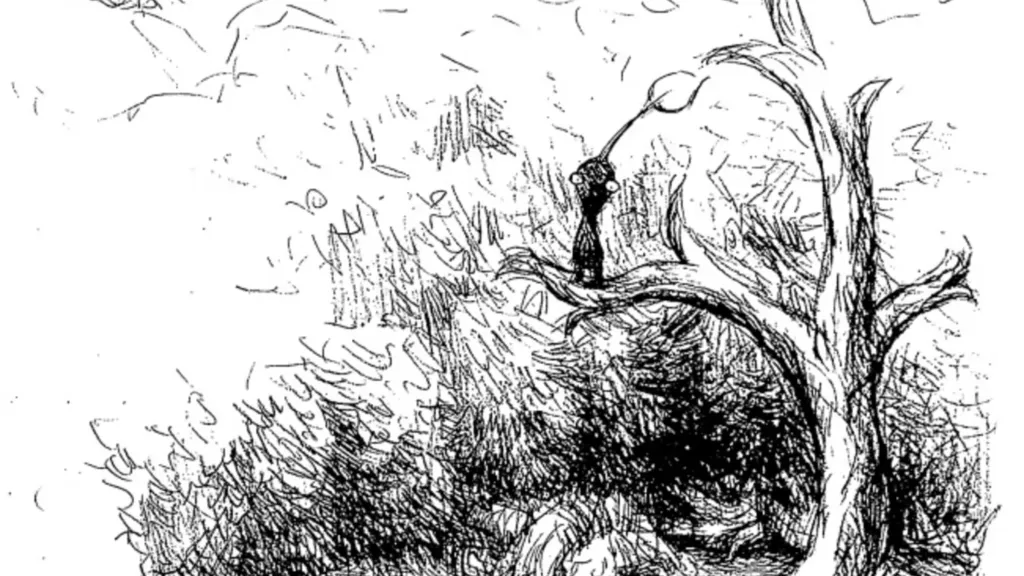
Released over 24 years ago, Pikmin has gone from one of Nintendo’s strangest releases to a hallmark of 21st-century Nintendo. Inspired by Shigeru Miyamoto’s passion for gardening and his envisioning of a team of small creatures working together for a common goal, the concept took some time to fully develop. Shigefumi Hino and Masamichi Abe spent time during the transition from the SNES to the Nintendo 64 experimenting with game concepts.
This included an idea where players would control large groups of A.I. characters by giving them computer chips that would implement new directives like “attack” and “defend.” Junji Morii eventually joined the project, with the developer’s sketches for little plant-life creatures serving as the eventual bedrock for the Pikmin design aesthetic. Looking to bring the same cute eeriness that defines Tim Burton films, the aesthetic of the title became increasingly unique and memorably odd.
As development continued on and Nintendo began moving towards the Nintendo GameCube, the Mario 128 demo proved the console’s potential to include over 100 unique characters on-screen at a time. With this new potential, the game moved into active development for the GameCube with Hino and Abe as directors, with Miyamoto helping take the disparate ideas behind the scenes and threading them together into a more streamlined approach. When the game was formally announced, it was seen as a wild move for the company, with a focus on real-time strategy that no other Nintendo title had really been able to match.
Pikmin Blossomed Into A GameCube Hit
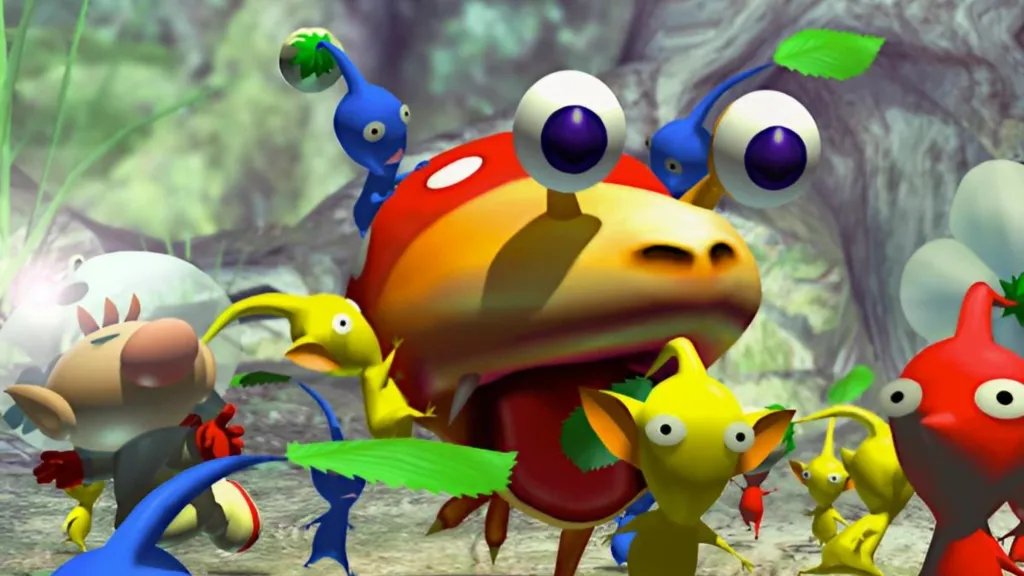
Pikmin was released as one of the early titles for the Nintendo GameCube. The colorful aesthetic, massive landscapes, and unique gameplay separated it from the rest of the Nintendo library. Focusing on the stranded space explorer Captain Olimar, Pikmin follows his efforts to repair his spaceship in time to escape the planet before the poisonous atmosphere kills him. While exploring the planet, Olimar discovered that the natural species of the planet, the titular Pikmin, could be recruited and commanded. Tasked with finding and collecting enough parts of the spaceship to repair it, the game’s ticking clock gave it an inherent level of tension that many other Nintendo games lacked.
The game’s distinct visual aesthetic served as a subversive approach to a story about the harsh realities of nature, with plenty of challenges and puzzles ending in Pikmin picked off or even eaten by the other creatures on the planet. The game was quickly heralded as one of the year’s best games, selling over a million copies within a year and impressing critics with its impressive graphics, inventive gameplay, and tricky challenge. Connecting with audiences and critics alike, Pikmin proved to be a surprisingly addictive new title from Nintendo that quickly spawned an entire franchise.
Over Two Decades Later, Pikmin Is Still Growing

Pikmin may quietly be one of Nintendo’s biggest original successes of the 21st century. While development on the game took some time, the final result was a critical darling and a solid success for Nintendo. The success of the first game subsequently led to a direct sequel, Pikmin 2, which expanded the scope of the adventure and traded the timed-story mode for a greater emphasis on exploration. The success of the game led to Olimar being included in the roster of the Super Smash Bros. series, cementing his place within the greater Nintendo pantheon.
Other titles in the series were increasingly released, including re-releases for the Nintendo Wii and the Nintendo Switch, as well as direct sequels in the form of Pikmin 3 for the Wii U, Pikmin 4 for the Switch, and Hey! Pikmin for the Nintendo 3DS. There have even been some mobile game spin-offs for the series, including Pikmin Bloom and Pikmin Finder. More than that, Pikman has solidified itself as a clear part of the overall Nintendo brand and fit in naturally alongside other enduring creations of the publisher, like the Super Mario and The Legend of Zelda franchises.
Pikmin was a strange RTS game that could have just been a glorified tech demo for a new console. However, thanks to the visual creativity of several of Nintendo’s most legendary developers, the game’s aesthetic and tone fit in neatly with the rest of the publisher’s library. While it might have seemed like a strange addition to the Nintendo pantheon at the time of release, Pikmin has steadily grown into an impressive corner of the publisher’s history.
Most Viewed
-
Image courtesy of MAPPA -
Image courtesy of Daybreak Game Company