Prince of Persia: The Sands of Time was a nearly flawless game when it launched in 2003, invigorating audiences and drumming up new fans for a series that had otherwise been seemingly left behind by an evolving gaming market. It was a critical darling and a major seller for Ubisoft, leading to the quick development of a sequel. It would have to expand on the lore established in the first game, all while adding depth to the lean but effective action-adventure gameplay.
Videos by ComicBook.com
On the latter score, developer Ubisoft Montreal did a good job. Prince of Persia: Warrior Within benefited from a more creative approach to combat and pitted the players against some very inventive enemies and bosses. However, when the game launched in North America on December 2, 2004, the story and character direction left a lot to be desired. Here’s why, over twenty years later, I’m still mad about how Warrior Within messed up the straightforward greatness of The Sands of Time.
A Darker Hero For A Darker Time

Prince of Persia: The Sands of Time remains a high mark in the franchise, but the overly edgy sequel, Warrior Within, still annoys me. Sands of Time was a genuinelly phenomenal game, with a rich story, strong visuals, and compelling gameplay. The adventure was the right level of sincere and subversive to be surprising, with a sense of charm and a commitment to character that made the bittersweet ending all the more effective.
When production began on the sequel, however, more focus was paid to the gameplay than the story. While series creator Jordan Mechner shifted focus to a movie adaptation of the previous game, the development team decided on a dark presentation and deeper gameplay options. From a mechanics standpoint, Warrior Within benefits from some of the changes. An emphasis on defeating enemies and using their weapons adds a more desperate and chaotic element to the combat.
A larger number of bosses added a bit of cinematic vigor to the actual gameplay, and the near-constant combat keeps players on their toes to reflect a more dangerous adventure. However, where the game stumbles is in the presentation and story execution. Ubisoft Montreal also replaced the distinctly colorful landscapes and charming storytelling of the first game with a far darker tone, which made for an atonal sequel to the first game.
What Critics Had To Say About Prince Of Persia’s Darker Turn

Taking place years after the Prince undid the near-apocalypse of the first game, the hero is now on the run from an entity known as the Dahaka, which seeks to destroy him for messing with the flow of time. Along the way, the Prince has developed a grim personality and a greater willingness to use brutal methods to achieve his goals. The effort to differentiate the sequel from the original led the developers to fully commit to the darker tones of this story, almost to the point of self-parody.
The Prince went from a compelling but flawed hero to a grim and humorless “hero,” only out to save himself. His romantic foil went from the naturally entertaining and quietly complex Farah to the far more one-note Kaileena and Shahdee. The visuals took on a grimy aesthetic that didn’t match the high-action adventure of the gameplay, and just left fans who had appreciated the colorful elements of the first game frustrated.
Even Jordan Mechner was put off by the direction. Although he had approved of the overall decision to take the game into a darker direction to differentiate it from the first one, he told Wired at the time that “I’m not a fan of the artistic direction, or the violence that earned it an M rating. The story, character, dialogue, voice acting, and visual style were not to my taste.” Even the game director, Jean-Christophe Guyot, admitted that the team went a little “too far” in their darker touches.
Why I’m Still Annoyed By Warrior Within, Two Decades Later
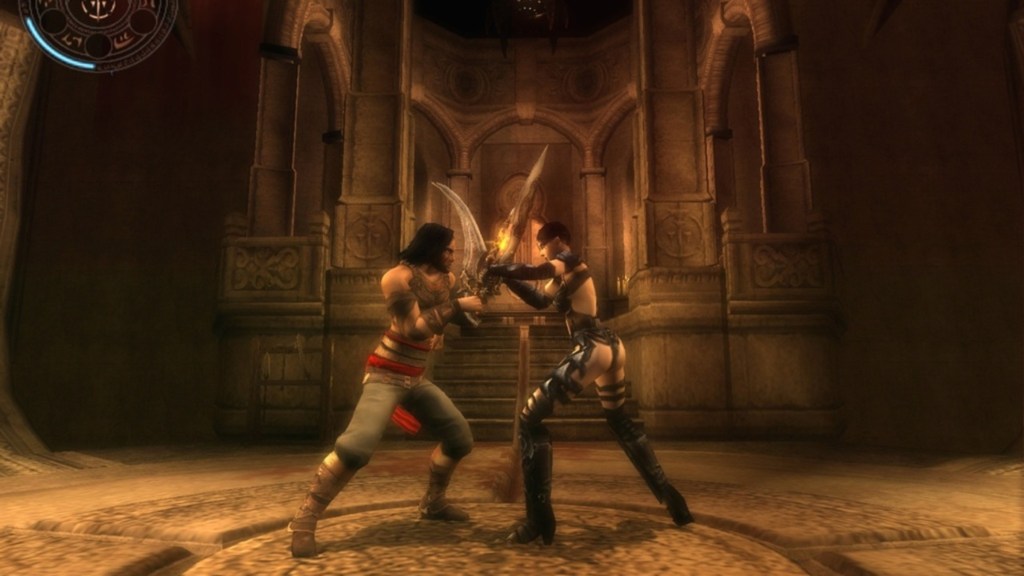
As someone who loved Sands of Time as a pre-teen when it first launched, it was incredibly frustrating to see the colorful design, epic stakes, and a surprisingly grounded riff on a fairy tale romance be replaced with a much darker tone — in terms of combat, aesthetic, and story alike. It all felt like Ubisoft was trying to capture the zeitgeist of the moment, up to and including the inclusion of Godsmack songs in the soundtrack that flew in the face of the first game’s presentation.
The problems with Warrior Within even carried over to Prince of Persia: The Twin Sands, which attempted to strike a happy balance between the two games but struggled whenever it had to switch gears to the Warrior Within-coded “Dark Prince” persona. While the gameplay in Warrior Within was good enough, the actual presentation was frustrating on a lot of levels. It took a measured and three-dimensional approach to love interests and replaced it with female characters who felt like parodies of themselves. It took all the Prince’s darker qualities and amplified them, removing all the aspects that had made him compelling in the first place.
Even the lore became unnecessarily twisted around, with the time-travel mechanics of the first game’s plot only further complicated by dark alternate selves and possible futures. I didn’t grow up with the original Prince of Persia games, but Sands of Time convinced me to go back and hunt down the older titles out of excited curiosity. A year later, Warrior Within sapped away that enthusiasm, and it’s only been in recent years (thanks to the release of Prince of Persia: The Lost Crown) that I’ve regained the excitement that first motivated me to care about this franchise.
Most Viewed
-
Courtesy of TOHO Animation -

Image Courtesy of A-1 Pictures -
Image Courtesy of Marvel Comics -

Image Courtesy of Marvel