Super Smash Bros. was, in retrospect, a very wild idea. The concept takes all of Nintendo’s carefully curated characters and throws them together into a collage of explosive action and vivid motion. It should be a chaotic mess, especially when four players are all fighting on a stage that can transform without warning. In practice, however, it’s become one of the best fighting game franchises ever, and it can all be traced back to the core mechanics established in the first game.
Videos by ComicBook.com
Debuting in Japan on January 21, 1999, Super Smash Bros. was a major hit for the Nintendo 64 that quickly became the standard-bearer for childhood slumber parties and gaming tournaments alike. With 12 available fighters and a surprising amount of depth despite the relatively streamlined controls, Super Smash Bros. offered plenty of players a chance to redefine what exactly a fighting game could be. On the 27th anniversary of the game’s initial release, it’s worth looking back at the origins of the series and what has kept the franchise going in the face of various competitors and changing gamer tastes.
Super Smash Bros. Was Always Meant To Be A Different Type Of Fighting Game
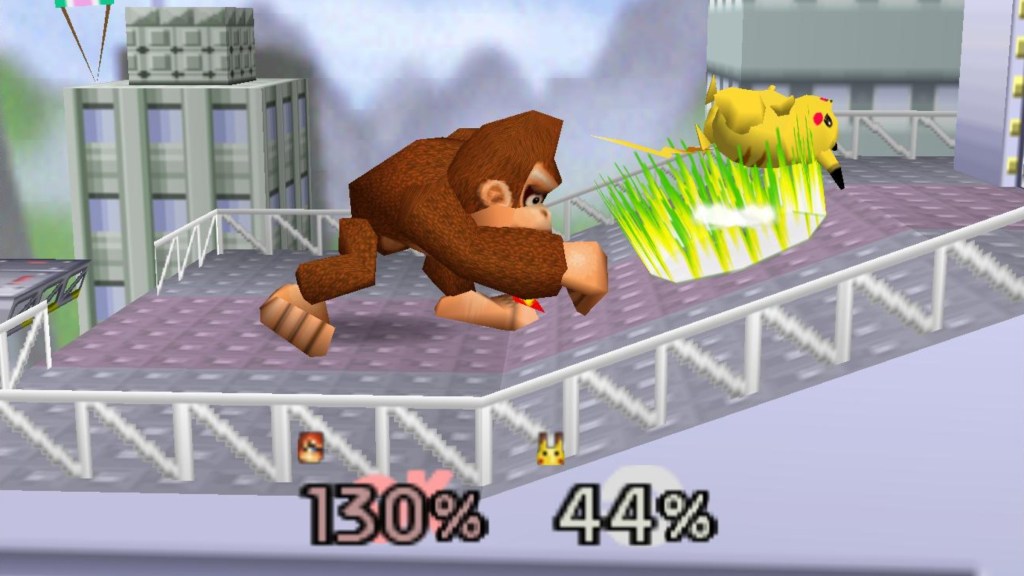
Super Smash Bros. worked on so many levels, and a large part of that can be traced back to the central mechanics that were a part of the game even before it became the Nintendo mascot brawler. The original conception for a four-player fighting game came from developer Masahiro Sakurai, who worked on a prototype concept after an encounter with inexperienced players at an arcade inspired him to make a fighting game that was catered to beginners. Hoping to find a unique selling point for the title, Sakurai’s eventual demo replaced the initial wire characters with Nintendo characters.
Eventually honing the concept to the point where Nintendo would be impressed, Sakurai and fellow developer Satoru Iwata worked with the team at HAL Laboratory to hone the multiplayer experience. Part of the appeal came from creating a fighting game that could be friendly to beginners, with a system that’s fairly easy to learn but deceptively hard to master. This led to a fighting game system that only had a handful of attacks, a fairly limited number of combos, and a combat mechanic that put emphasis on movement and quick adaptation over memorized hitboxes or complicated combos.
The lack of a standard health bar and focus on remaining on the stage encourages creativity and resilience, all while ensuring even seemingly fatal blows can be survived under the right circumstances. The crossover cast all bring their own personality to the title, giving different players idealized combat styles that lean more toward brute strength (Donkey Kong), punishing speed (Pikachu), or stable range (Samus). As a core fighting game mechanic, the original Super Smash Bros. developed a nearly perfect foundation for a unique fighting game that it has only refined and sharpened in the years since. While other entries would add flourishes and tweak the gameplay slightly, the original remains a fundamentally impressive title.
Why Super Smash Bros. Still Rules, Almost Three Decades Later
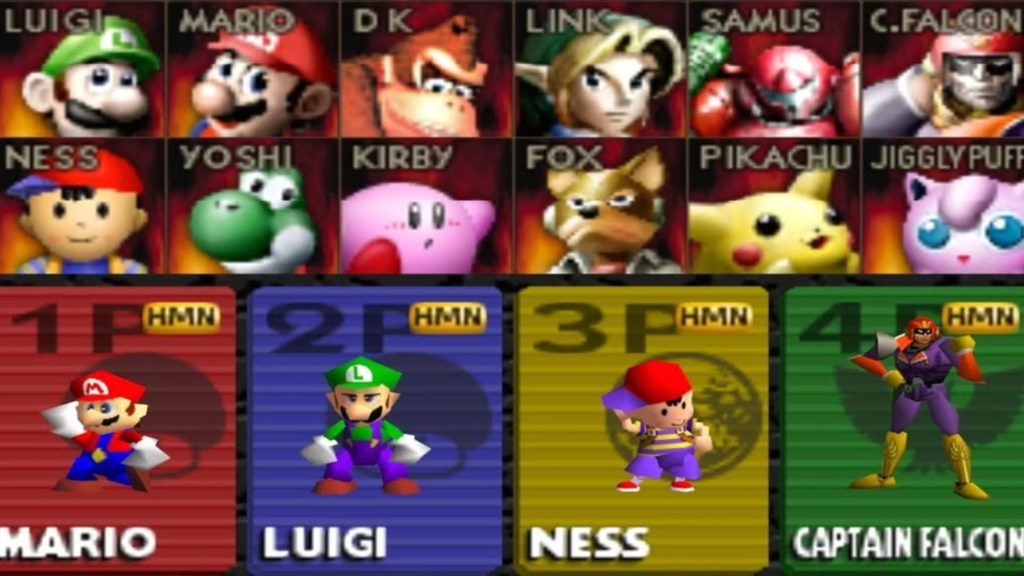
One of the things that makes Super Smash Bros. so good is the way its core mechanics have left the door open for all sorts of invention and experimentation, all while retaining a core gameplay mechanic that reflects the Nintendo ethos of being quick to learn and hard to master. There’s a simplicity to the original Super Smash Bros. that makes it an ideal gaming experience. In the years since, there have been several attempts to replicate the effect of Smash Bros. (including but not limited to Nickelodeon All-Star Brawl, Brawlhalla, PlayStation All-Stars Battle Royale, and MultiVersus), and none of them have ever matched Nintendo’s ability to infuse the action gameplay and distinct roster of different colorful characters.
It helps that Nintendo has such a wide swath of characters that nevertheless feel fitting alongside one another, a testament to how Super Smash Bros. was able to bridge the various art designs into a collective whole. Each sequel has only improved that concept, expanding the cast of characters and adding more complicating factors to the stage design and item loadout. However, it builds on the bones established all the way back in 1999, which had a refined enough core to become something special. The original Super Smash Bros. has gotten plenty of imitators over the years, none of which could match the tight gameplay or inherent sense of whimsy built into the Nintendo presentation. It’s almost alchemy on the part of HAL Laboratory, with all the bright colors and clear characterization that have always helped Nintendo stand out in the gaming space, helping elevate some of the most plainly enjoyable fighting gameplay in the history of the genre. It’s been nearly thirty years, and the original Super Smash Bros. remains as bright an example of the genre as it was when it debuted.