The Legend of Zelda series has always been famous for its massive approach to world-building, but Breath of the Wild and Tears of the Kingdom took it to an entirely other level. The two games introduced players to a truly massive version of Hyrule, where exploration is key to the experience and a non-linear path is the only way forward. The result ended up being games that feel truly epic, in every sense of the word.
Videos by ComicBook.com
It’s hard to imagine that such thoroughly developed experiences could have been expanded, but according to some of the developers on Tears of the Kingdom, that was almost the case. In fact, enough material from one subplot in Tears of the Kingdom ended up being compelling enough to serve as the primary plotline for an entirely separate game, the more action-driven Hyrule Warriors: Age of Imprisonment. The developers think that was the right decision to make in the long run, and it’s hard to argue with the results.
Tears Of The Kingdom Was Almost Bigger

Building off Breath of the Wild, Tears of the Kingdom kept the massive open-ended version of Hyrule from that game, all while introducing new landscapes to explore, like the Sky Islands and the Depths. Tucked away amid all these locations were plenty of challenges, mysteries, and puzzles for the player to solve. It is, without a doubt, massive, larger in scope than what other games could even dream of being. It turns out, the game was actually almost bigger. Tears of the Kingdom director Hidemaro Fujibayashi revealed in a recent interview that many aspects of their world-building for the sequel were purposefully left out of the game, especially when it came to the Sages who took part in the long-ago conflict known as the Imprisoning War.
“If we had shown [the Sages’] personalities and faces,” Fujibayashi explained to 4Gamer, “the story would have naturally grown too much.” Fujibayashi’s not wrong to think that introducing those characters and delving into their story would have detracted from the overall experience of the mainline Tears of the Kingdom game, especially given that the narrative already included ancient warriors and different time periods. It would have also short-changed the older Sages and kept them from getting the kind of attention they deserved.
This is why Fujibayashi said, “I’m truly happy that the Sages have been more carefully picked up upon here in the Imprisoning War.” This left Nintendo room to develop the story elsewhere in Hyrule Warriors: Age of Imprisonment, giving Zelda a chance to step more into the starring role and take the lead in a more action-driven experience that felt more attuned to the Sages and their fates. On top of justifying another game, though, this decision ensured that Tears of the Kingdom didn’t become too cluttered from a narrative standpoint.
Tears Of The Kingdom Is Fantastic As Is, And Didn’t Need To Cannabilize Another Game
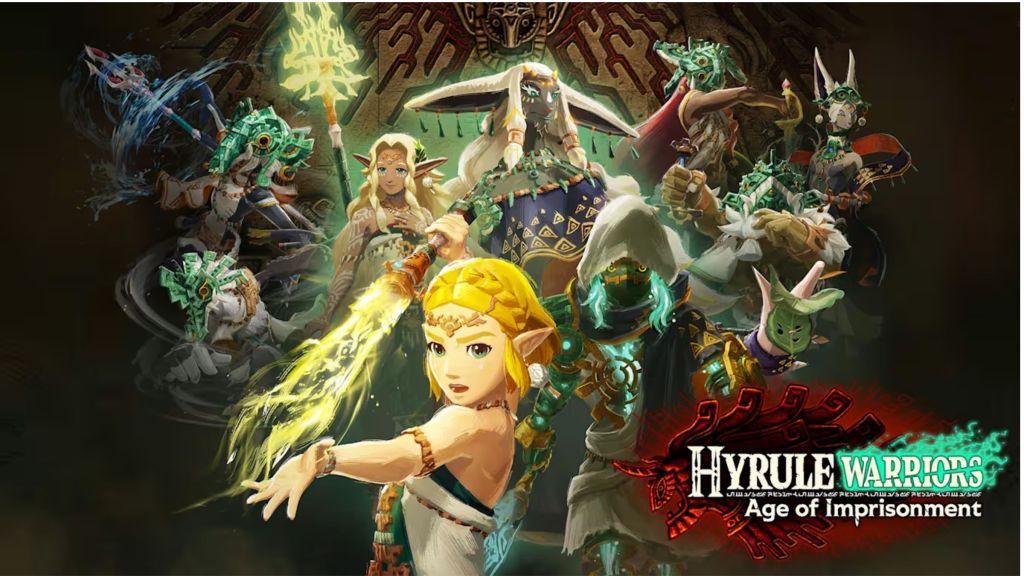
Fujibayashi is precisely right about Tears of the Kingdom. While the biggest game possible sounds great on paper, it was very much the right decision to split the Sages’ storyline somewhat and use it as the foundation for another game. For one thing, Tears of the Kingdom is already a truly massive game, with so many minor subquests and hidden challenges that it can already be difficult to stay on the main path of the narrative.
Further complicating everything with another historical story might have overcomplicated the narrative. It would have also distracted from Zelda’s storyline in the game, which uses the different time period to great effect while reinforcing the themes of lost heroes and destined conflict. Doing basically the same thematic storyline with four other Sages would have lessened the impact of Zelda’s storyline, which was one of the highlights of Tears of the Kingdom. Instead, by shifting gears and allowing the story of the Sages to fuel its own game, Hyrule Warriors: Age of Imprisonment got to give them a real showcase as characters while fitting more neatly into Zelda’s established storyline.
Instead of competing with each other for attention alongside all the other aspects of Link’s adventures, the Imprisoning War and Zelda’s storyline were able to become more directly interwined in their own game, complementing each. Age of Imprisonment also got to matter more in the overarching Legend of Zelda lore, standing alone as a great fantasy story while also fleshing out the epic nature of this iteration of the franchise. Not every good idea has to be spent in a single game, and it can sometimes be better for everyone — from the developers down to the players — for game makers to spread out good ideas across more than one title. Both games are terrific on their own, and the space afforded to both of their complementary narratives is part of that. Tears of the Kingdom was plenty big enough without the additional focus on the Sages, and it’s good that adventure was given its own spotlight.
Most Viewed
-

Image courtesy of Marvel Studios -

Image Courtesy of MAPPA