The Adventures of Elliot: The Millennium Tales has been one of the most pleasant surprises of 2026. Square Enix’s throwback 2.5 adventure game is perfect for fans of older entries in franchises like The Legend of Zelda, creating a vast setting for players to explore and fight their way through. It’s nothing revolutionary, but that’s very much by design. In execution, it’s a perfectly sweet adventure story with good enough gameplay to keep players engaged.
Videos by ComicBook.com
For fans of old-school fantasy adventures, The Adventures of Elliot benefits from a nostalgic touch and tight execution — which was very much the intention of a team that deeply respects the past but wanted to carve out something new. During a conversation with ComicBook, the development team behind The Adventures of Elliot delved into the ways the game design was tweaked for originality, the inspirations that shaped the experience, and if there are any plans in the works for a follow-up.
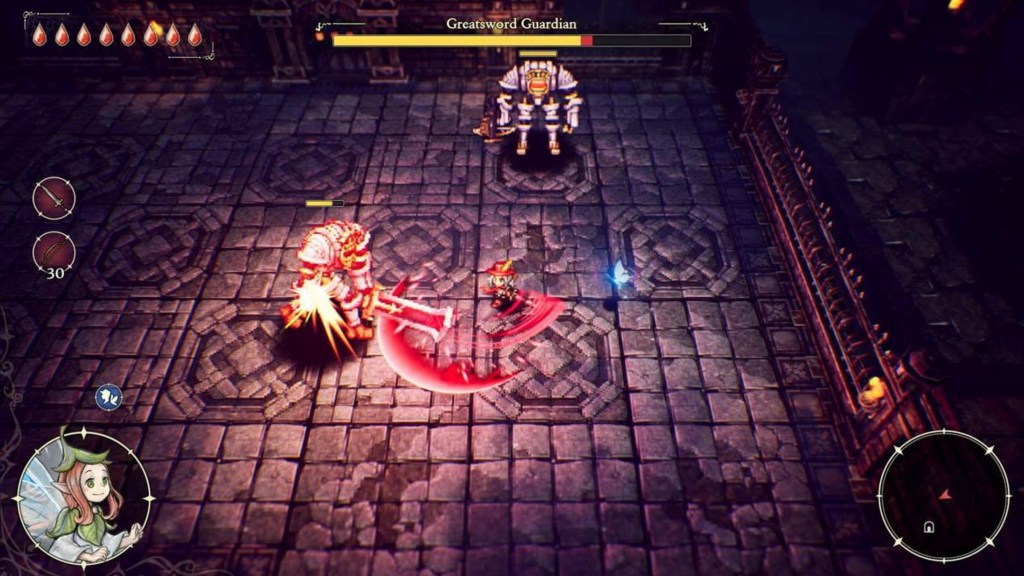
CB: How important was it to pay tribute to older archetypes versus the focus on creating something fully original?
Square Enix: We decided from the very beginning, when constructing the narrative, that we wanted to tell a classic story this time. To give players a story that feels quintessentially Square Enix, we built the narrative around the familiar progression of receiving a request from the king and eventually setting out to rescue a cursed princess, while paying homage to many of our company’s titles, such as Dragon Quest. On the other hand, when I worked as the Assistant Producer on Live a Live, I often spoke with Tokita-san about how a game shouldn’t simply unfold exactly as players expect.
My mentor taught me that it’s important not only to “meet expectations,” but also to “subvert them” in a positive way by surprising players, and I kept that lesson in mind throughout development. The latter half of the story was shaped with that philosophy in mind, and similarly, when it came to the gameplay systems, we were determined to incorporate elements unique to this title, rather than simply paying homage to other works, such as giving players control of the fairy Faie and introducing magic.
CB: Tomoya Asamo’s other games have been turn-based — why was Adventures of Elliot a larger real-time adventure instead? Was there ever consideration to make it turn-based?
From the very beginning of the project, we wanted to introduce HD-2D to a wider audience,
so we felt it should offer satisfying action. Since we had already decided that it would be an
action game, we never considered making it turn-based.
CB: In an era where snarky self-awareness and more mature-presenting takes on the fantasy genre, what excited you the most about Elliot and his sincere fantasy adventure?
The reason we decided to take a sincere, classic approach was that we felt many of our recent titles were of that sort, so we thought it was worth deliberately exploring an approach that others weren’t pursuing as much. That way of thinking also influenced other decisions.
For example, we adopted local two-player play for the same reason. Another factor was that, with so much recent real-world news centered around wars, economic hardship, and other troubling events, I personally wanted to create a game that could, in some small way, offer players a sense of hope, even in difficult times.
CB: Was the pixel art always going to be the visual aesthetic for the game, or were there other options during development?
As mentioned earlier, it had already been decided that this would be an HD-2D action game. After we reworked the concept, we adjusted Elliot’s proportions to better suit a single-player action RPG, and he went through several stages of revisions and refinement before ultimately becoming the Elliot you see in the final game.
CB: What has caught you by surprise about the fan and player reception?
During development, we spent so much time with Princess Heuria and Faie that we naturally grew very fond of them. That’s why we were genuinely surprised when we received comments such as, “They talk a little too much,” or “They could have been a bit more reserved.” However, we also recognize that this reflects an area where we didn’t fully anticipate the wide range of player preferences, and it’s something we see as a point for reflection.
In response to feedback from the Switch 2 demo, we added an option to reduce the frequency of dialogue, but we hadn’t anticipated that we’d continue to receive similar feedback even after the full game’s release. For anyone interested, we’ve released a Steam patch that adds an option that allows players to turn the support character’s voice on or off. The update will be rolled out sequentially across each platform, so please wait just a little while longer.
CB: What was the guiding principle while designing Philabieldia? What were some of the key influences on your approach to world-building?
We began by working out the main story and overall structure of the scenario, and from there, the four eras naturally took shape: the Age of Budding, the Age of Magic, the Age of Reconstruction, and the Age of Safekeeping. We had a clear vision for each one: the Age of Safekeeping was inspired by the medieval period; the Age of Reconstruction depicts a world that has fallen into ruin; the Age of Magic represents the height of civilization; and the Age of Budding is set in a more primitive world. So, I think our guiding principle throughout the design process was to develop each era with its historical and cultural backdrop firmly in mind. Rather than drawing inspiration from any particular source, it was really a logical creative process driven by what the story required.
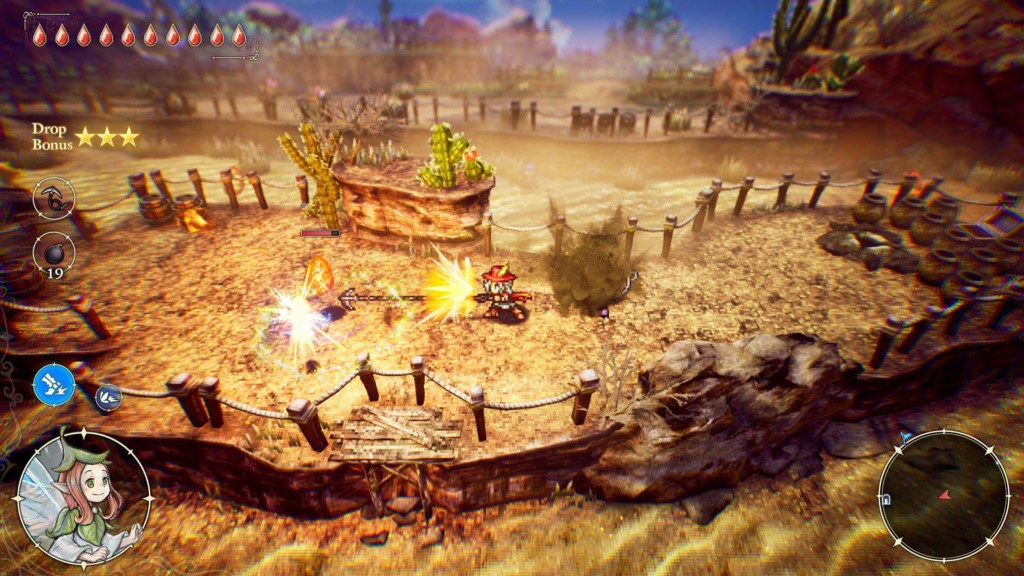
CB: We’ve seen a lot of comparisons to franchises like The Legend of Zelda. How much of an influence did other titles have on The Adventures of Elliot?
It’s a tremendous honor to have our work compared to such a great title. Thank you very much. Throughout development, we consistently looked to Square Enix’s own action RPG series, Legend of Mana, especially the Game Boy entry, for inspiration. The Legend of Mana series was groundbreaking in its fusion of RPG elements with real-time action combat, achieving a compelling balance between the exhilaration of action gameplay and the emotional resonance of an RPG narrative. This closely aligns with the core concept we set out to realize in this title. Building on that foundation, we incorporated elements our team excels at, such as the visual beauty of HD-2D graphics, fairy controls, and a time-travel narrative, to create a distinctive gameplay experience that delivers a balance of “simple yet challenging.”
CB: How does it feel to be part of the larger Square Enix pantheon alongside fantasy genre-defining franchises like Final Fantasy?
I don’t really see it that way myself. As far as we were concerned, we approached this project with the mindset of challengers, taking on the new genre of action within the HD-2D series. We were simply determined to give it everything we could, and now that development is complete, we do feel a certain sense of accomplishment. We’d be delighted if players came away from the game with a sense of HD-2D’s future potential and the possibilities it holds.
CB: Are there any hopes for a sequel? A new game in the setting? A brand new IP — what are the team’s hopes for the future?
At this time, we haven’t begun any discussions regarding a sequel. However, the support and encouragement we receive from players who enjoy the game will always be the biggest motivation for us to move forward. If you’ve enjoyed the game, we’d be grateful if you could spread the word on social media or share your thoughts directly with Square Enix.
The Adventures of Elliot is now available for Nintendo Switch 2, PlayStation 5, Windows, and Xbox Series X/S.
More Gaming
-

Courtesy of Ubisoft